
I've rebuilt a lot of horns on a lot of cars, and I can tell you the Road Runner beep beep horn is the only one I've ever had a customer ask me to fix before he asked me to fix the brakes. That tells you something about how much this one accessory means to the people who own these cars. The road runner beep beep horn wasn't a throwaway option in 1968. It was close to the whole point of buying the car.
Car Features
6 min read
The Beep-Beep Horn: The Road Runner's Signature Sound
The road runner beep beep horn was engineered, not slapped on, and it remains one of the most emotionally important parts on the whole car for owners today.
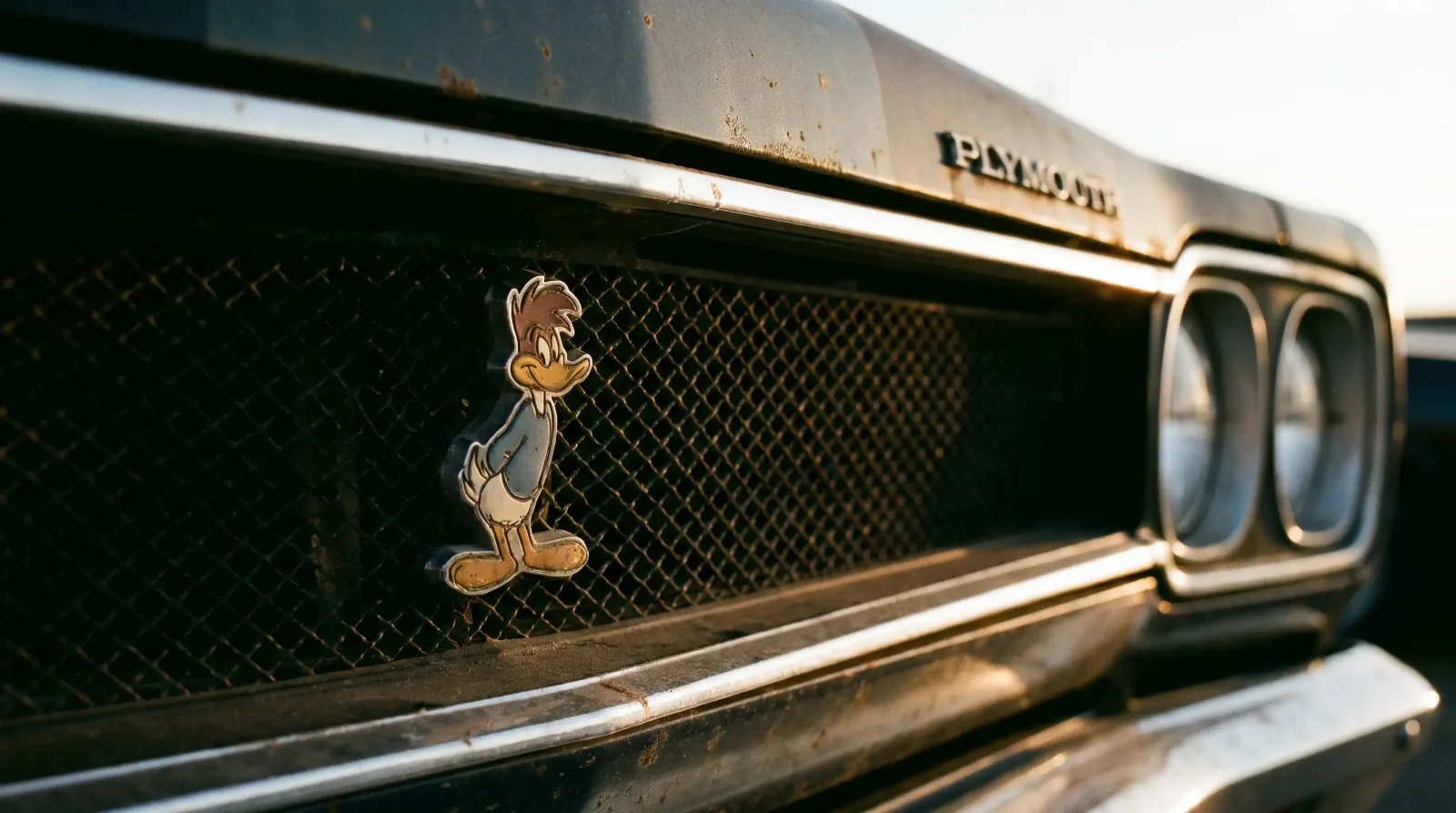
What actually made that sound
The stock horn setup was a two-tone unit engineered to mimic the "beep beep" sound from the Road Runner cartoon, and Plymouth spent real engineering hours getting it right instead of slapping a generic aftermarket horn on the car and calling it close enough. It ran off the same 12-volt system as everything else under the hood, mounted up front near the radiator support, wired through a relay like any other horn circuit of the era. Nothing exotic about the electrical side. The trick was tuning two separate horn units to hit the right two notes in the right sequence so it actually sounded like the cartoon instead of just sounding like two horns going off close together.
Anybody who has swapped a horn on an old Mopar knows the wiring is not complicated. Getting the tone right without the benefit of a factory reference recording, back in 1968, before anyone could just pull up the cartoon on their phone to compare, that's the part that took real work. Plymouth engineers reportedly went through several rounds of tuning before landing on a horn combination that satisfied Warner Bros and satisfied their own ears.
Why it mattered more than the horsepower number
You can put a big cam and a strong 383 in plenty of Mopars from this era. What you cannot put in just anything is a horn that makes every kid on the block turn around because they know exactly what car just drove by. That horn did more to build a crowd around a parked Road Runner at a drive-in than the engine bay ever did, and I say that as a guy who has spent his whole career caring more about what's under the hood than what's making noise on top of it.
How the horn fit into the rest of the electrical system
The horn circuit tied into the same steering column mounted horn ring most Mopar owners are familiar with from other B-body cars of the era, which means diagnosing a bad horn usually starts at the steering wheel contact ring before you ever get near the horn units themselves. I always tell customers to check that ring contact first, because a lot of "dead horn" complaints turn out to be a worn contact point rather than a failed horn unit, and it saves everybody time and money to rule that out before pulling anything off the radiator support.
Once you've confirmed the ring contact and the relay are both good, testing the horn units themselves is straightforward with a basic multimeter and a 12-volt test light, the same process you'd use on any period horn. What is not straightforward is retuning a horn that has drifted from its original pitch, since there is no factory service bulletin walking a technician through recreating that exact cartoon tone. Most shops that specialize in these cars keep a known-good reference unit on hand specifically for comparison purposes.
What goes wrong on an original horn today
Fifty-plus years later, the most common issue I see is corrosion inside the horn housing itself, which flattens the tone and turns that distinctive beep beep into something closer to a dull honk. The wiring harness around the horn relay is also a usual suspect, since these circuits sat close to the radiator and took a lot of heat cycling over the decades. None of that is exotic knowledge, it's the same kind of electrical gremlin you'd chase on any car this age, but owners get a lot more emotional about a Road Runner horn not sounding right than they do about almost any other minor fault on the car.
A lot of clubs now keep a reference recording of a correctly tuned horn specifically so members can compare their own car's sound and figure out if theirs has drifted out of tune from age or from a well-meaning but incorrect replacement part.
The bigger deal behind the horn
None of this horn engineering happens without Plymouth first striking a licensing deal with Warner Bros to use the Road Runner character at all, and that side of the story has its own twists worth reading if you want the fuller picture, including how the negotiation actually came together and what Plymouth had to pay for the rights. worth a look too if the licensing side interests you as much as the mechanical side does.
You can also read the background on how the whole 1968 model came together, since the horn was only one piece of a much bigger sales strategy that Plymouth was betting on that year.
"I've had guys bring me a numbers-matching Road Runner with a perfect drivetrain and a horn that sounds like a dying kazoo, and fixing that horn is the job they actually care about most that day. That tells you the horn isn't a novelty on this car. It's part of the mechanical identity, same as the 383 is."
- Mike Sullivan
What to check if you're buying one
If you're shopping for a Road Runner and the seller can demonstrate the horn working correctly, that is a small but genuine signal about how the car has been maintained overall. It is a cheap thing to fake with an aftermarket unit and a hard thing to fake well, since most reproduction horns do not nail the exact tuning of the original two-tone unit. Anyone serious about buying should ask to hear it in person before assuming the listing photos tell the whole story.
If you want to go looking, you can shop classic Runner listings and start comparing what condition and originality actually cost in the current market. A working, correctly tuned horn is a small detail on paper, but it is one of the first things longtime Mopar people check when they walk up to a car at a show.
| Component | Detail |
|---|---|
| Horn type | Two-tone unit tuned to mimic cartoon "beep beep" |
| Voltage | Standard 12-volt system |
| Common failure point | Internal corrosion, relay wiring near radiator support |
| Licensing partner | Warner Bros |
It is a small mechanical detail with an outsized reputation, and that's about as accurate a description of the whole Road Runner concept as you can give in one sentence.
Sources and notes
Related Reading
Have a
Plymouth Road Runner
for Sale?
Reach thousands of serious classic car collectors across the US.
Sell It Here →
Are You a Classic Car Dealer?
List your full inventory and connect with targeted classic car buyers.
Join as a Dealer →
#Plymouth Road Runner
#mopar history
#1968 Road Runner
#road runner beep beep horn
#Warner Bros license
#classic car parts

About the author
Mike Sullivan
Detroit-area muscle car enthusiast and restoration specialist with three decades of hands-on experience working on American iron.
Related Listings - Plymouth Road Runner

Comments
Be the first to comment on this article.