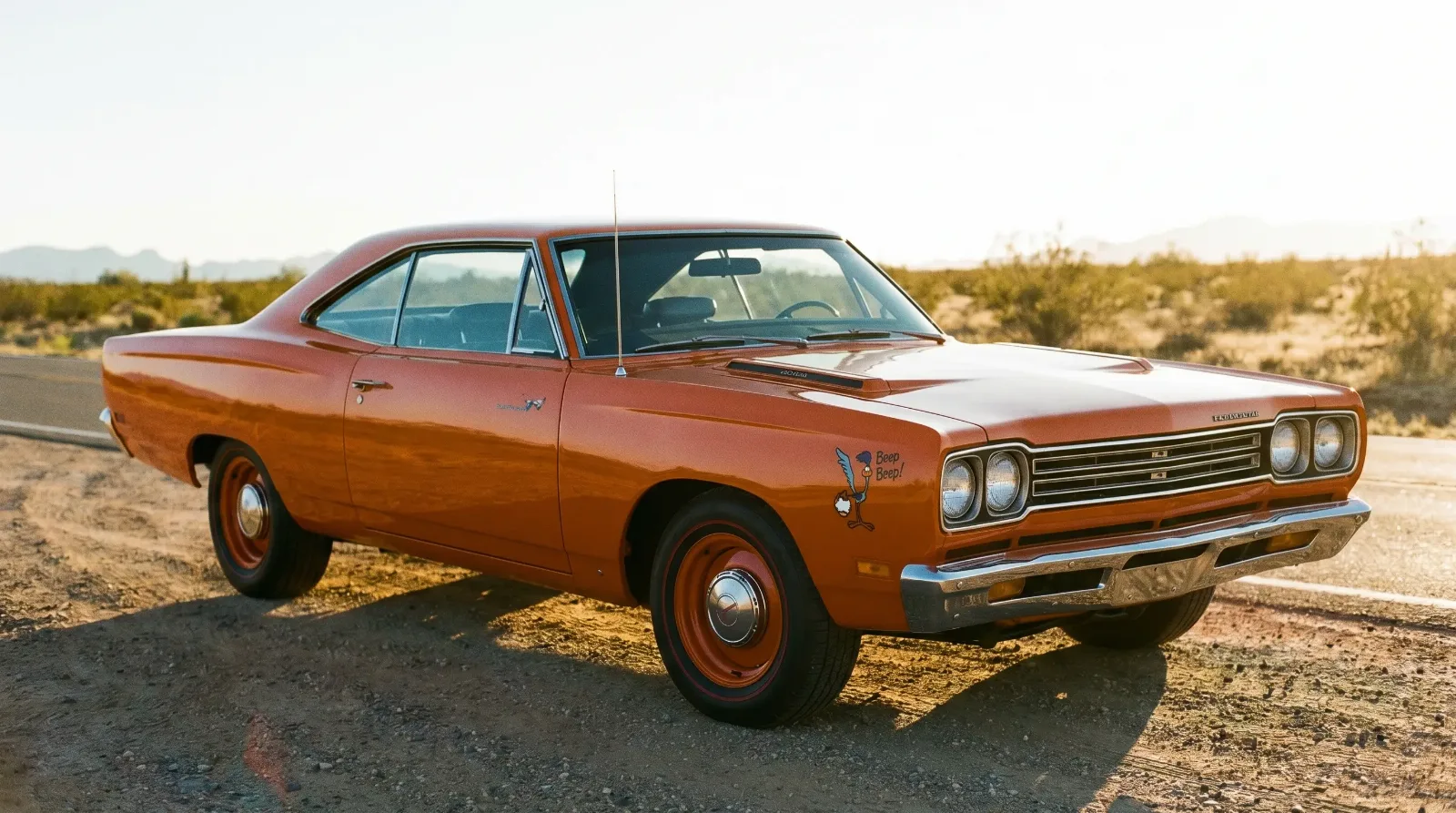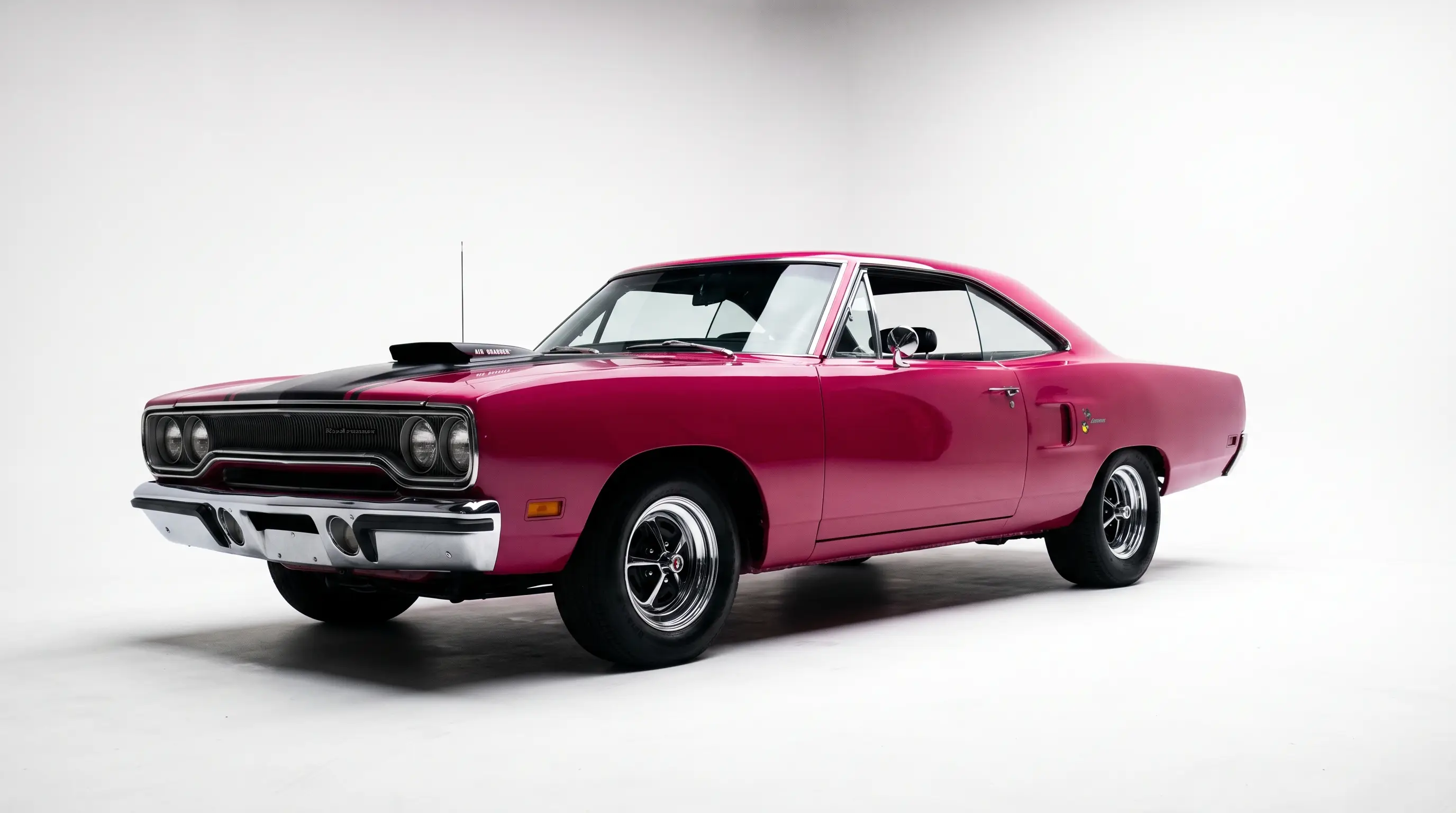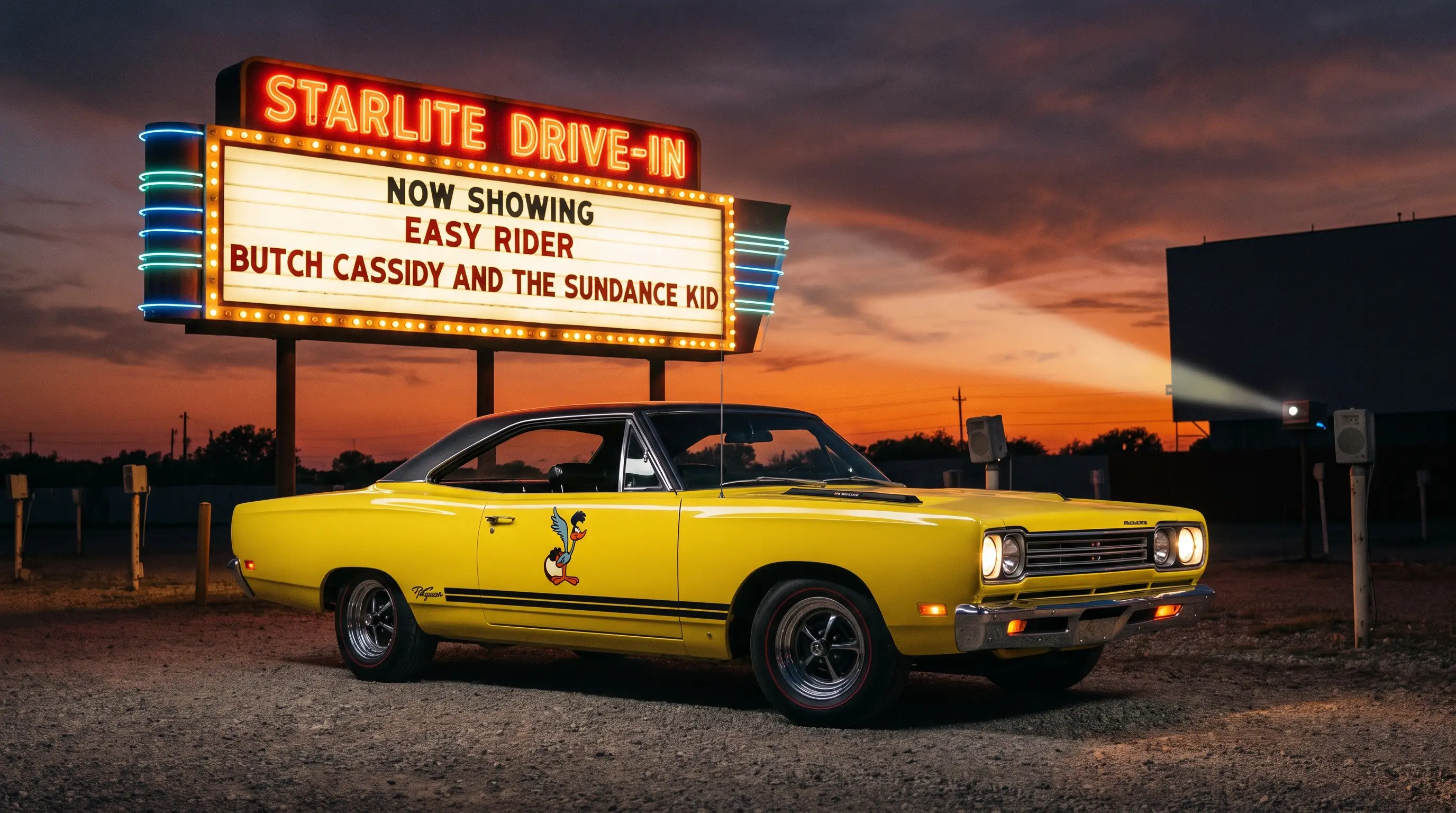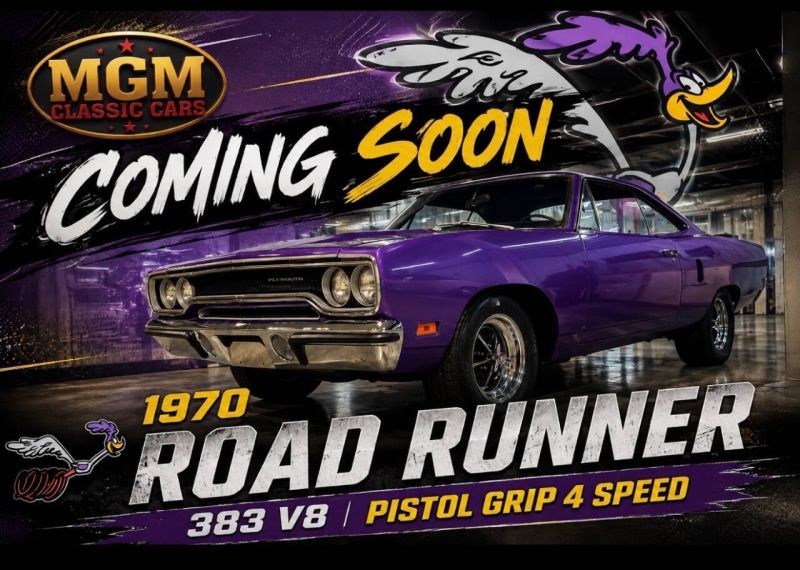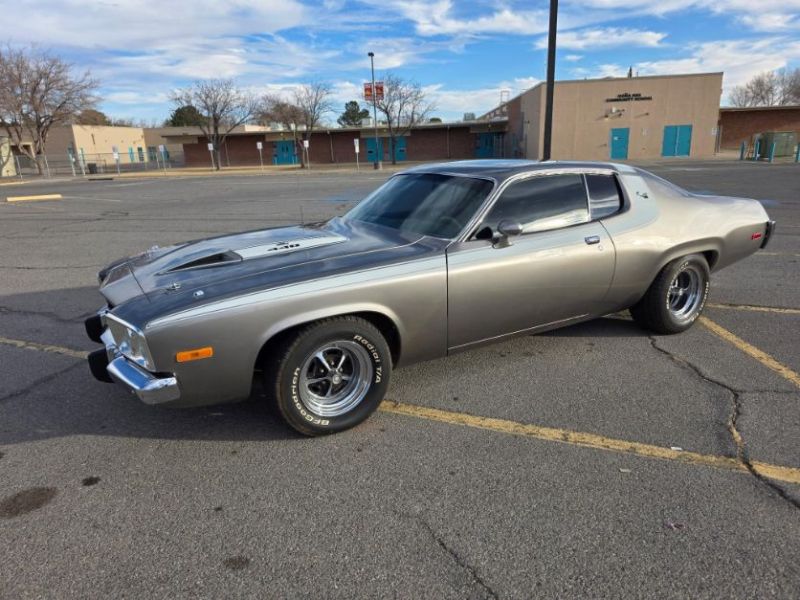
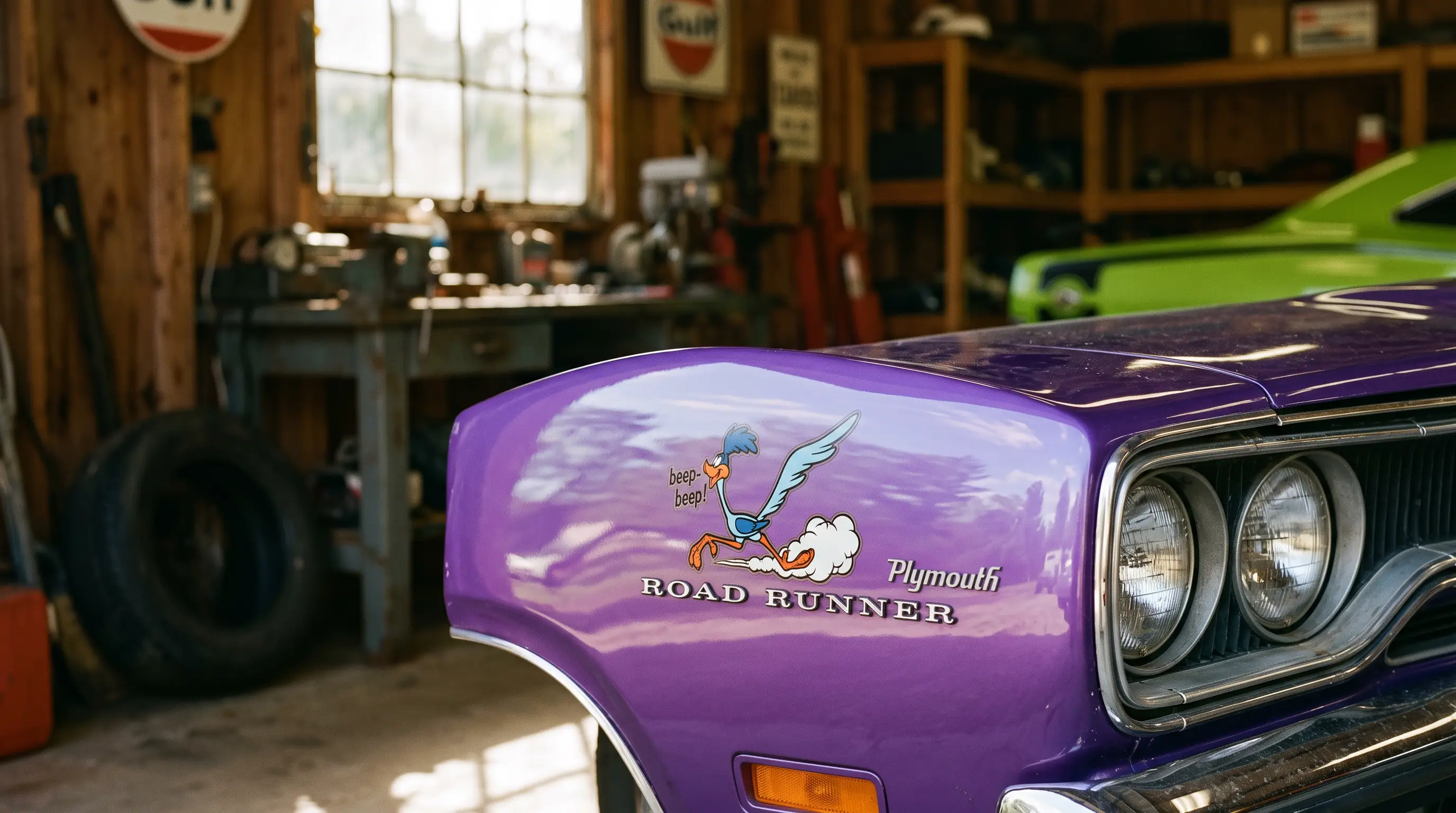
A kid standing in a 1968 Plymouth showroom would have noticed the decal before the engine badge, a small cartoon bird stamped on the fender, mid-stride, dust kicked up behind it like it had just outrun something. That little piece of art is where the road runner cartoon decals story begins, and it is a bigger design decision than its size on the sheet metal suggests.
Getting the bird right
Licensing the Road Runner name and likeness from Warner Bros came with real creative constraints. Plymouth could not simply hand the job to an in-house designer and let them draw whatever version of a roadrunner they liked. The character had to match the studio's established look closely enough to be recognizable, while also translating cleanly to a small decal that would survive years of sun exposure, road grime, and the occasional car wash without losing its detail.
The result was a simplified, slightly stylized version of the cartoon bird, legs blurred mid-run, that became instantly identifiable even reduced down to a few inches on a fender. It appeared on the exterior badging, on the horn button, and inside on the dash and floor mats in some model years, a consistent visual signature carried across the whole car rather than a single sticker slapped on for show.
Where the decals actually showed up
The fender badge is the most recognized placement, but Plymouth spread the cartoon art further than most buyers remember. Floor mats in certain years carried a printed bird graphic. The horn button, tied to the Road Runner's famous beep beep horn option, often featured its own small illustration. Some print advertising and dealer materials used a more expressive, animated version of the bird than the restrained badge on the actual car, giving Plymouth two slightly different visual registers, a tame one for the sheet metal and a livelier one for the marketing.
That distinction matters for restorers today. A car being sold as fully documented and original needs decals and badges that match what a given model year actually carried, not a later or more elaborate cartoon graphic borrowed from an ad campaign or a different year's parts bin.
The interior graphics buyers forget about
Exterior badging gets most of the attention when people discuss the Road Runner's cartoon branding, but the interior carried its own set of graphics that are easy to overlook and easy to lose over decades of ownership. Floor mats with the printed bird graphic wore out through normal use faster than any exterior decal, since they took direct foot traffic every single time someone got in or out of the car. Original examples in good condition are consequently harder to find than the exterior decals, which at least benefited from being fixed in place rather than walked on.
The horn button graphic faced its own durability problem, years of thumb contact wearing away at the printed or applied detail long before the rest of the car showed comparable wear. Restorers chasing full interior correctness often find these smaller, more fragile graphics to be the hardest pieces of the whole cartoon branding package to source in genuinely original condition, harder in some cases than the more visible and more heavily reproduced exterior fender decal.
Why the art held up as a design choice
Cartoon branding on a serious performance car was a risk in 1968. Skeptics inside and outside Plymouth worried a bird decal would undercut the car's credibility as an actual muscle car rather than a novelty. That risk mostly evaporated once buyers saw the whole package together, the aggressive stance of the car itself, real horsepower under the hood, and a small joke on the fender that suggested the car did not take itself too seriously. The decal worked because it was restrained rather than cartoonish in application, a small, well-drawn detail rather than a loud graphic wrapping the whole body.
That restraint is part of why the graphic aged so well. Decades later, the fender bird reads as a period-correct signature rather than a dated gimmick, the kind of detail collectors specifically look for when verifying a car's authenticity rather than something they wish Plymouth had left off.
"The bird on the fender is maybe three inches long, and it's still the first thing most people point at when they walk up to one of these cars. Good design does not need to be big to do its job."
- Nora Beckett
The reproduction market today
Demand for correct decals has supported a fairly robust reproduction industry for decades now, with several suppliers offering kits sized and shaped to match specific model years. Quality varies more than buyers expect. Vinyl thickness, adhesive quality, and print resolution all differ between suppliers, and a decal that looks correct in a catalog photo can still read as noticeably wrong once applied next to an original example in good condition. Serious restorers tend to favor a handful of suppliers with a track record of close accuracy, and will often pay a meaningful premium over a generic kit to get graphics that hold up to close inspection.
For a driver-quality car built to be enjoyed rather than judged at a concours event, this level of scrutiny matters less. A reasonably accurate reproduction decal set does the job of completing the car's look without requiring the buyer to chase down archival-grade accuracy. The distinction only becomes financially important once a car is being represented, and priced, as a numbers-matching or fully documented original, where every detail down to the fender bird gets scrutinized.
Verifying decals on a car you are considering
For buyers evaluating an original or restored Road Runner, the cartoon decals are a small but genuinely useful authenticity check. Placement, size, and pose should match documented references for the specific model year, and any replacement decals on an older restoration should be noted honestly by the seller rather than passed off as original. None of this is a dealbreaker on its own, decals wear out and get replaced on cars that have been driven and loved for fifty years, but the details are worth asking about before you settle on a price.
The cartoon art is only one thread in a much larger branding story that runs through the car's advertising and its licensing deal with Warner Bros. Read the background on how that whole identity came together, and if you want to see how Plymouth used the character in period print and television campaigns, the story on the car's advertising history is worth a look too. For buyers ready to see decal-correct examples currently on the market, you can shop classic Runner listings and compare how sellers document their cars' original graphics.