
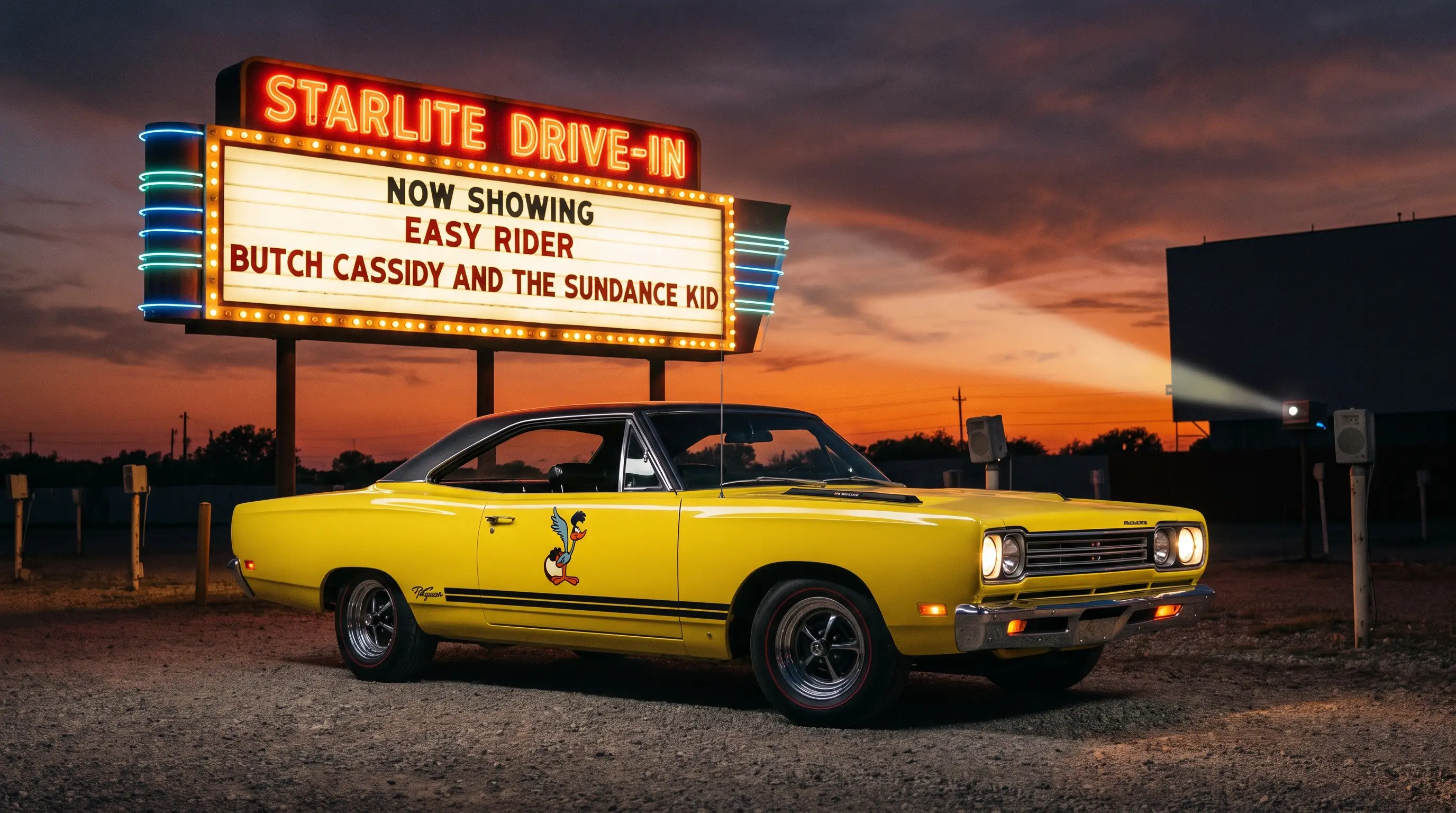
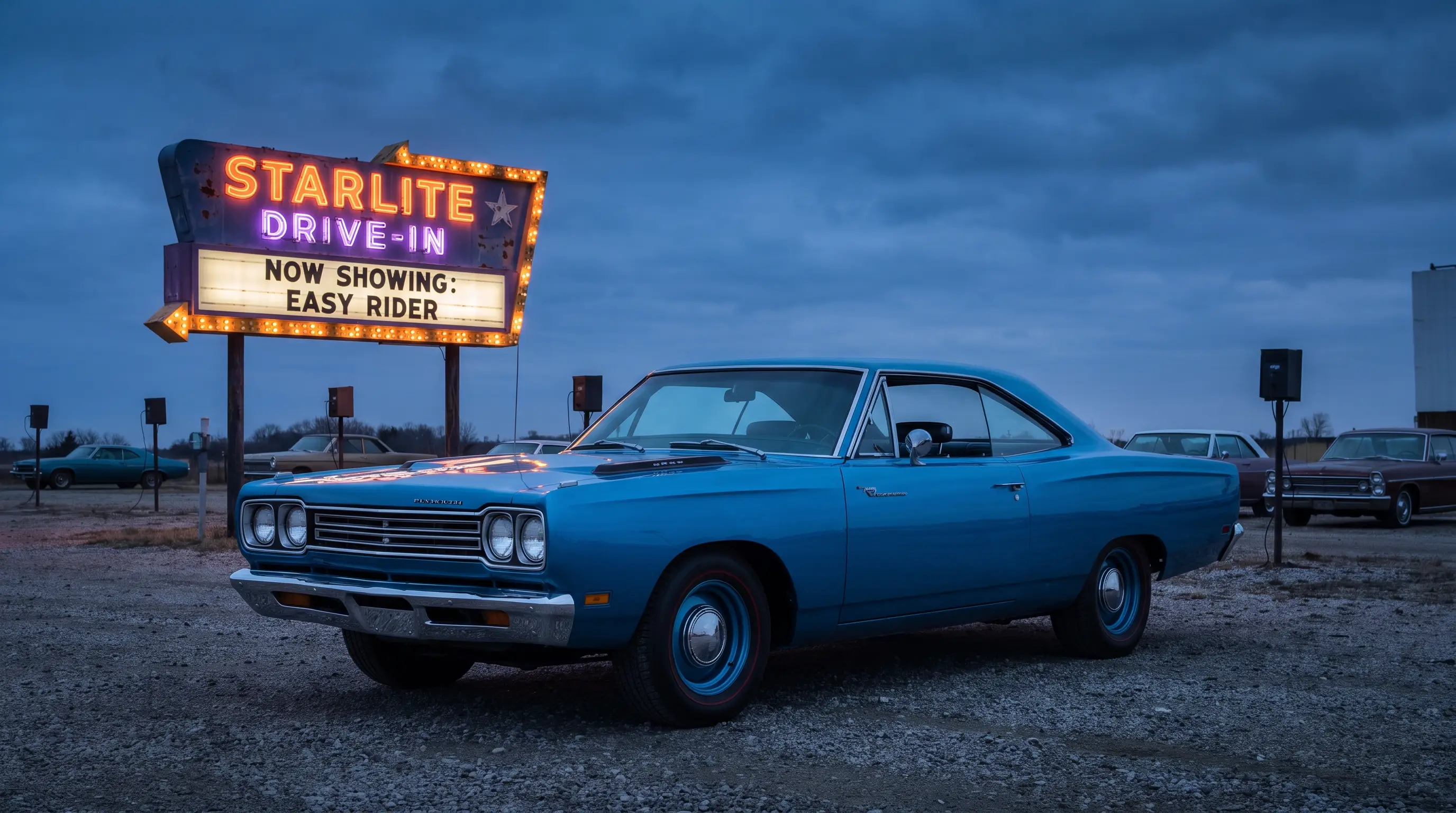
A boy stands at a drive-in on a summer night in 1969, and before he sees the car he hears it. Not the engine, though that comes soon enough. First there is a horn, and it does not blare or honk the way a car horn is supposed to. It says beep-beep, two cartoon notes lifted straight off a Saturday morning television screen, and everyone in the lot turns to look. That sound is the reason a stripped-down Plymouth became something more than a fast machine. The road runner beep beep horn was a joke the whole country was in on, and it is the thread that ties a muscle car to a cartoon bird and both of them to a decade that has never quite let go.
Car Features
10 min read
Beep-Beep and Beyond: The Road Runner in Cartoon and Muscle Culture
The road runner beep beep horn turned a stripped Plymouth into a cartoon icon, and it is the reason the car is remembered with affection the muscle era rarely earned.
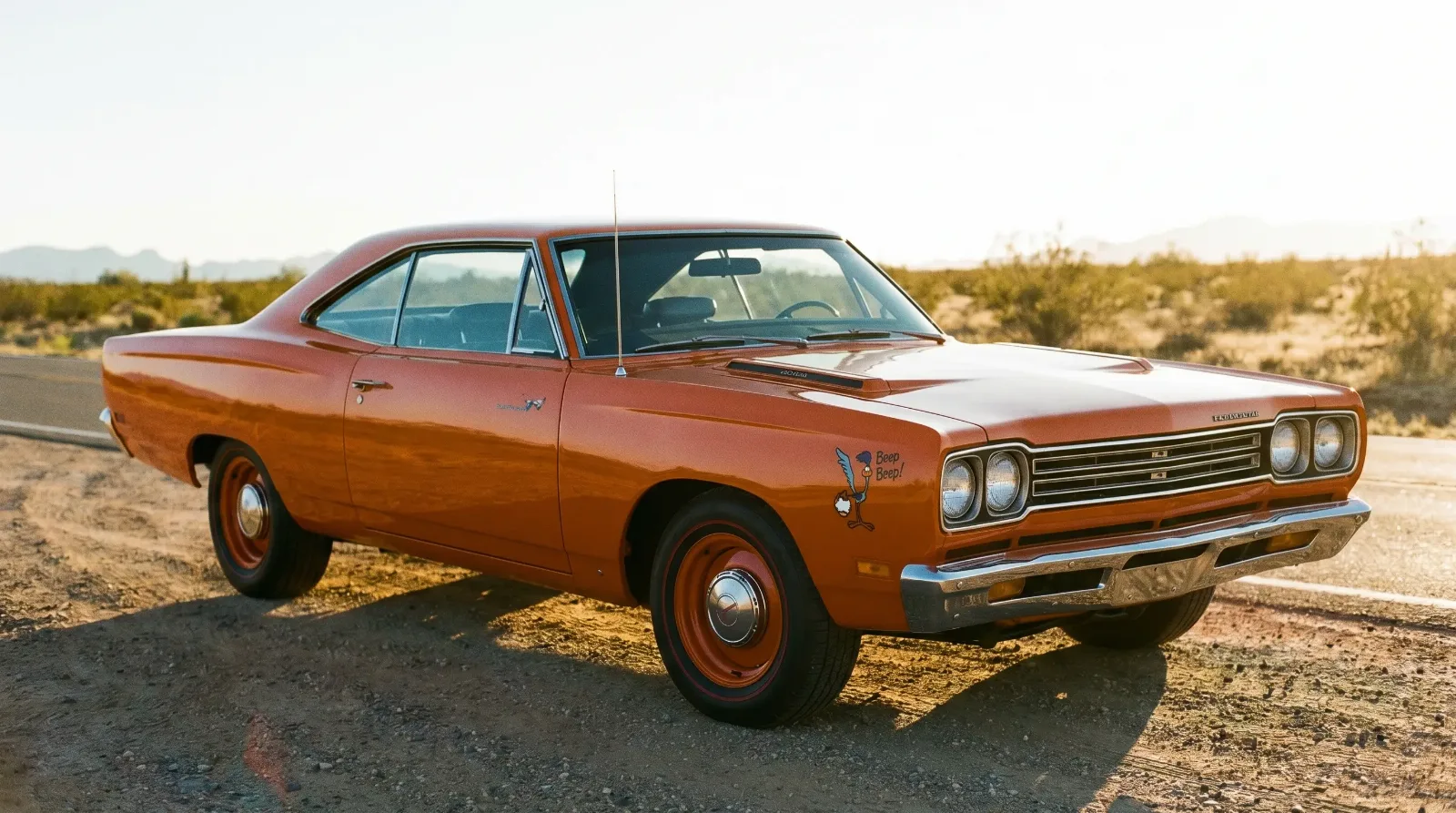
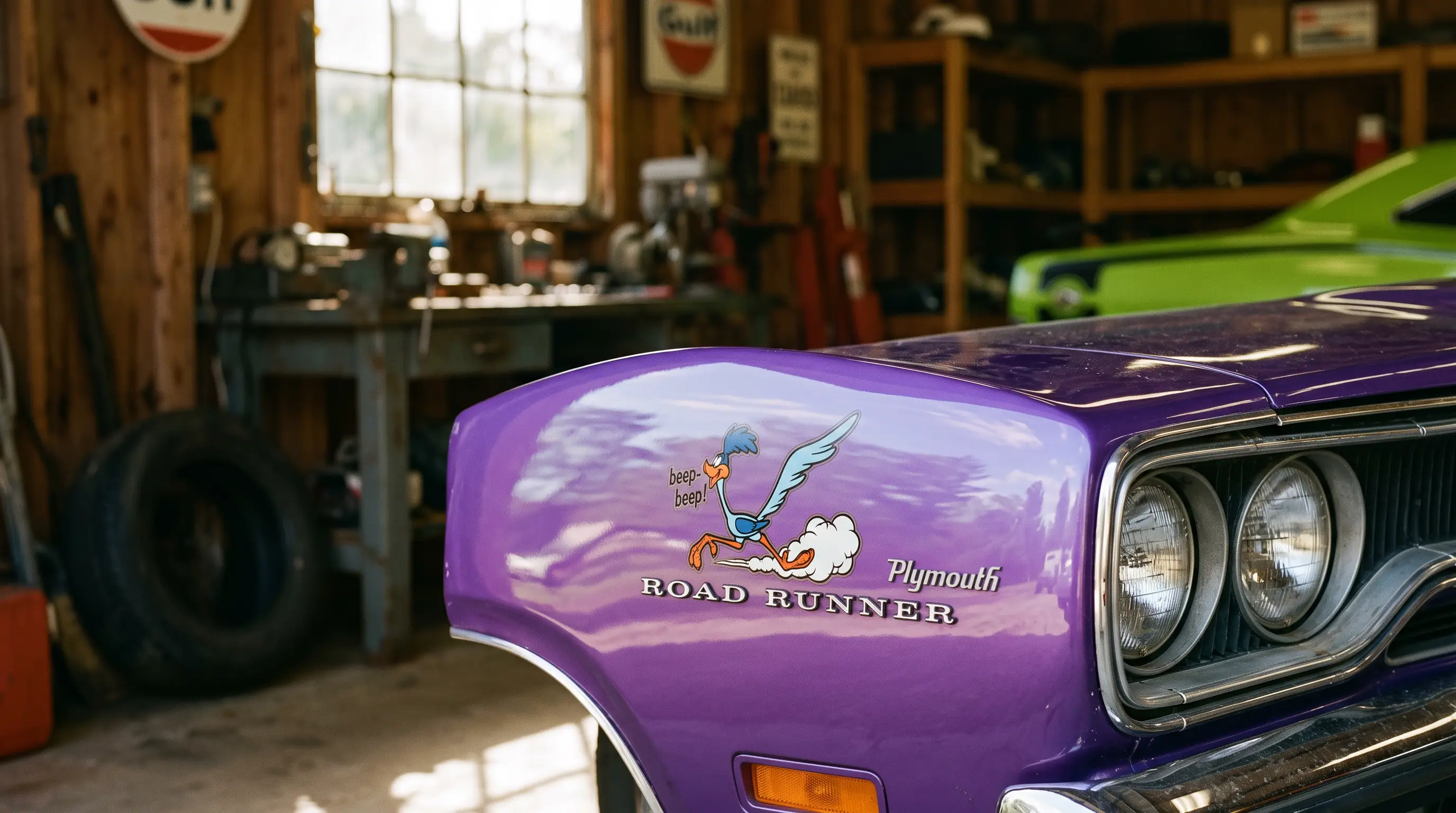
Most muscle cars sold on menace. They wore names borrowed from fighter planes and Italian exotica, and they scowled at you from the magazine pages. Plymouth did the opposite. It named its car after a bird that spent every episode humiliating a coyote, licensed the likeness from Warner Bros., and put a little decal of the character on the door. Then it made the horn match. The gamble was that people would laugh and then buy, and they did, in numbers that shocked the men who signed off on the whole strange idea.
The horn that took real work to get right
The beep-beep is the detail everyone remembers, and it is easy to assume Plymouth just wired up any old horn and called it done. It did not. The company reportedly spent about 10,000 dollars developing the horn on its own, on top of the broader licensing deal, to get the tone to match the cartoon closely enough to satisfy the agreement with Warner Bros. Engineers modified a standard horn until the two notes landed where they were supposed to, somewhere between a car and a character, reportedly moving from an initial meep-meep toward the beep-beep that stuck. The result became the single most identifiable sound in muscle car history.
Think about what that says. A company built a serious performance car, one that could be ordered with a 426 Hemi, and then invested in making its horn sound silly on purpose. The seriousness and the silliness were not in tension. They were the same joke. The car was fast enough to back up the wink, and the wink was what set it apart from every grim-faced competitor on the lot. You could not hear that horn and take yourself too seriously, which was exactly the point.
A cartoon that was already about speed
The choice of character was smarter than it looked. The Road Runner cartoon, built by Chuck Jones and his team at Warner Bros., was a show about one thing: velocity. The bird did not fight. It ran. It outran gravity, outran elaborate schemes, outran a coyote who wanted nothing in the world except to catch it. Every episode was a chase, and the bird always won by being faster. Borrowing that character for a car was not a random grab at cartoon goodwill. It was a promise about what the car would do.
Children who grew up watching that bird streak across the desert became the young adults with a paycheck and a hunger for a first fast car. Plymouth reached them through a shorthand they already understood. You did not need a paragraph of ad copy to explain what a Road Runner was for. The name did the work. The bird meant speed, cheerful and total and slightly ridiculous, and that is precisely the character the car turned out to have. For the fuller account of how that image was built and sold, our our plymouth road runner retrospective traces the marketing decisions from the first sketch onward.
There is a tenderness in that transaction that is easy to miss. Plymouth was not simply borrowing a logo. It was borrowing a feeling that already lived in people, the particular joy of a Saturday morning and a bowl of cereal and a bird who could not be caught. When the company put that bird on a car, it handed a young buyer a way to carry a piece of childhood into adulthood at seventy miles an hour. You were not just buying speed. You were buying back a small, bright part of being nine years old, and doing it in a machine your father might have found faintly ridiculous. That was the quiet genius of it.
The advertising leaned all the way into the joke. Plymouth ran print campaigns full of cartoon energy, promising a car that would run and hide from the competition the way the bird ran from the coyote. It was playful in a way the grim GTO ads never attempted. The tone told you the company was comfortable being the class clown, and comfortable knowing the clown could outrun the whole class.
The drive-in, the drag strip, the street
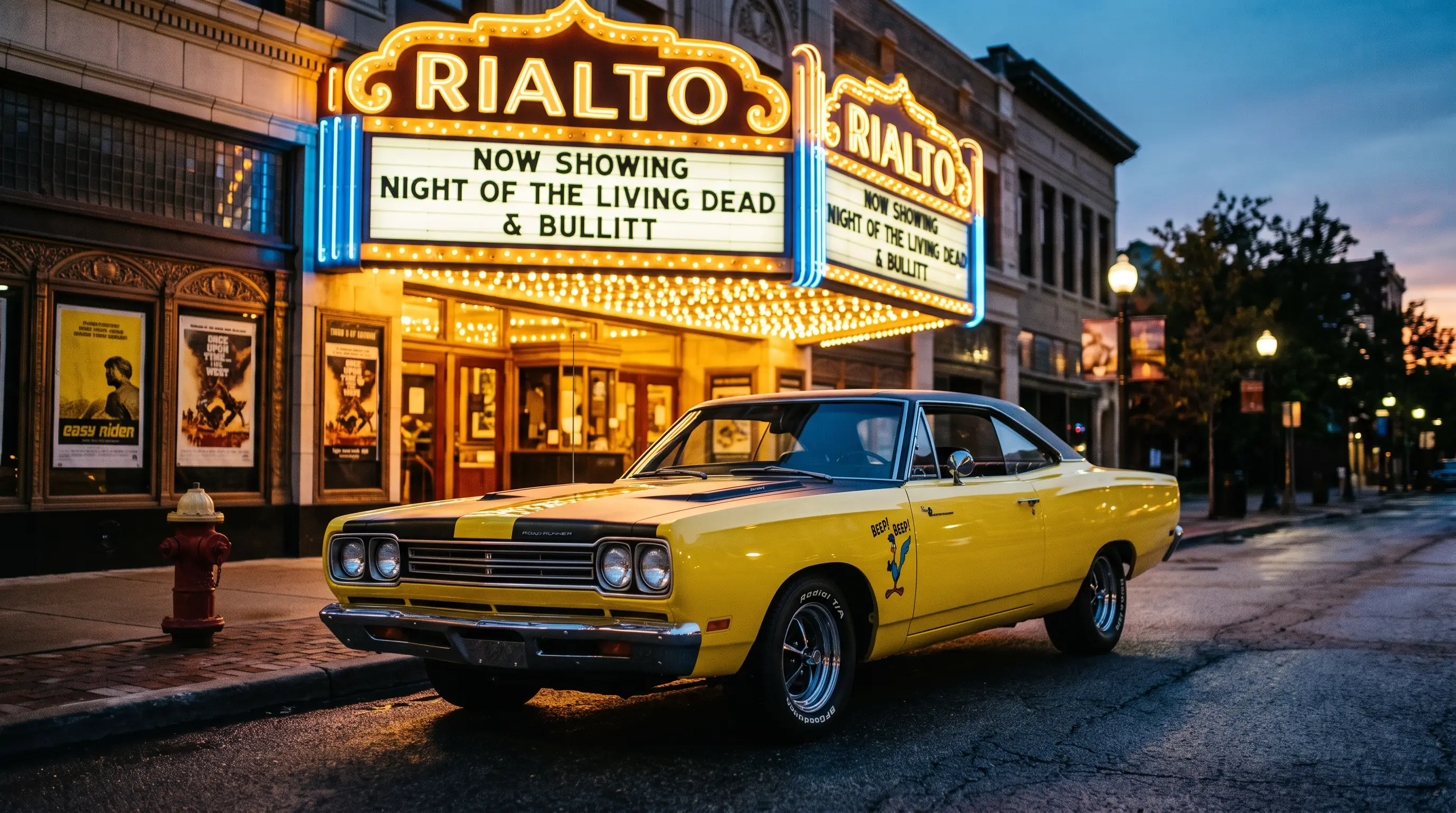
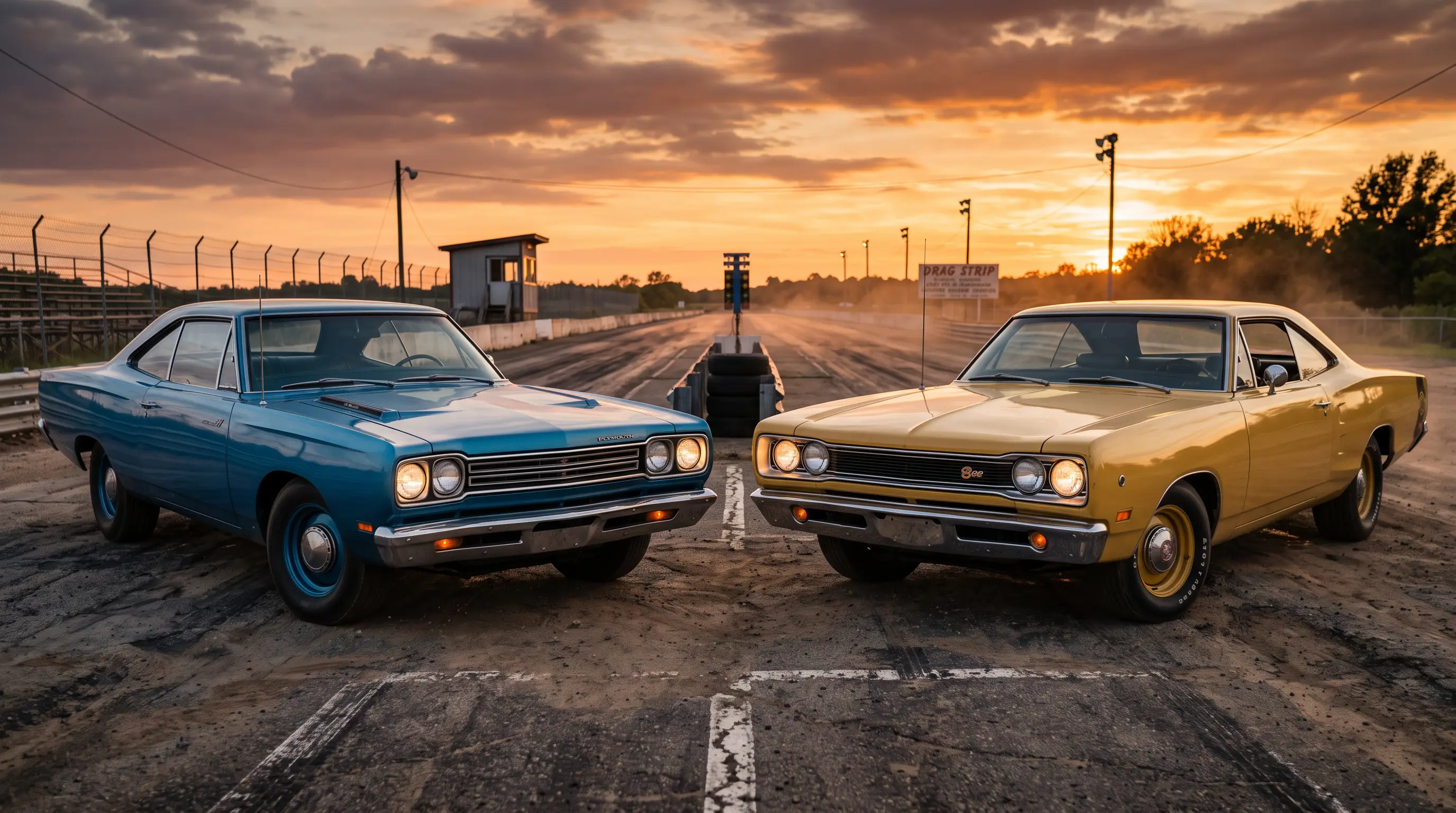
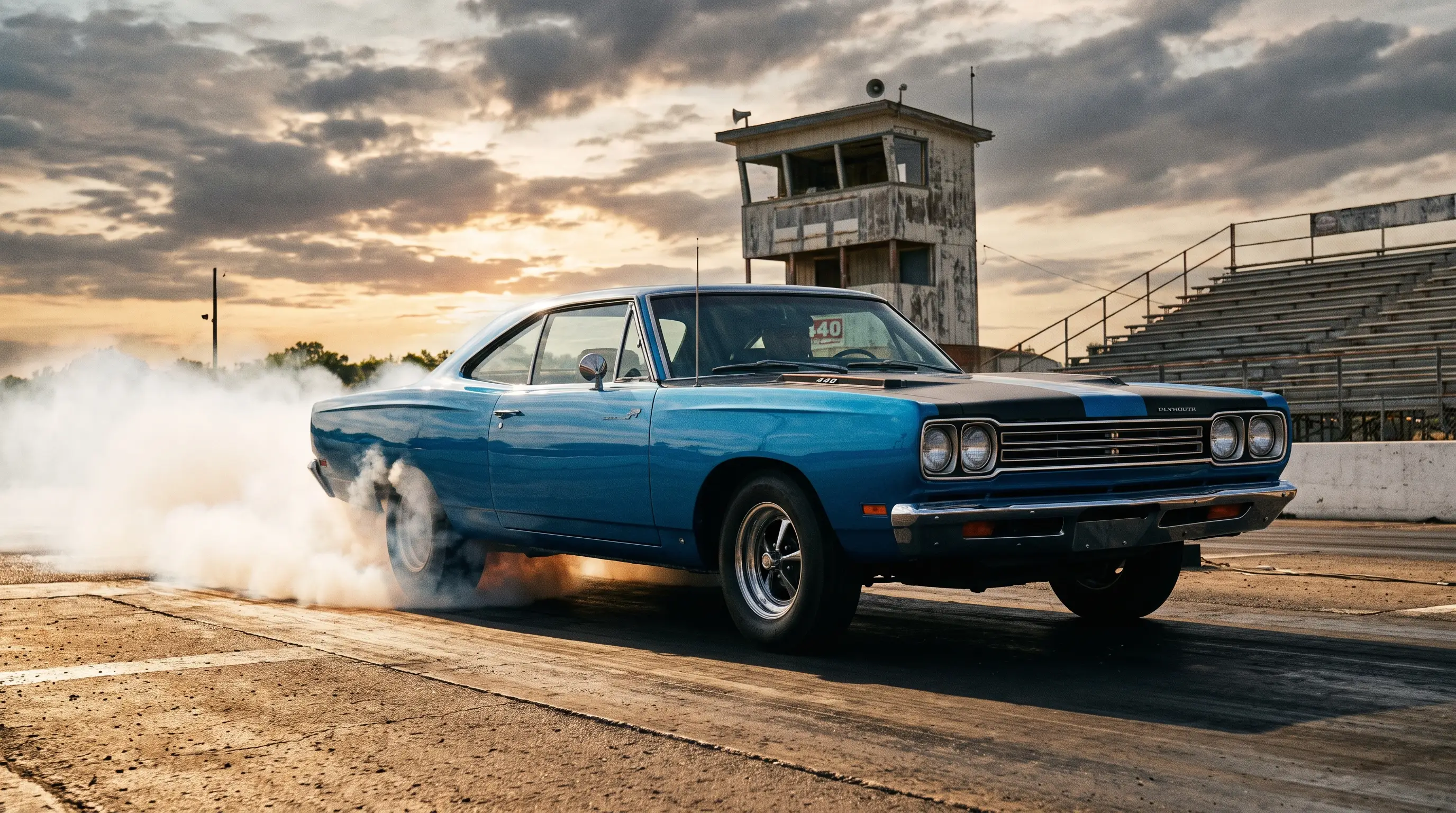
Culture is where a car actually lives, and the Road Runner lived in the loud, social spaces of late-1960s America. It belonged to the drive-in, where the horn announced an arrival better than any amount of chrome. It belonged to the drag strip, where the cheaper cars let ordinary kids race something genuinely quick. It belonged to the main street cruise on a Friday night, where the whole ritual was about being seen and heard in a car that said something about who you were.
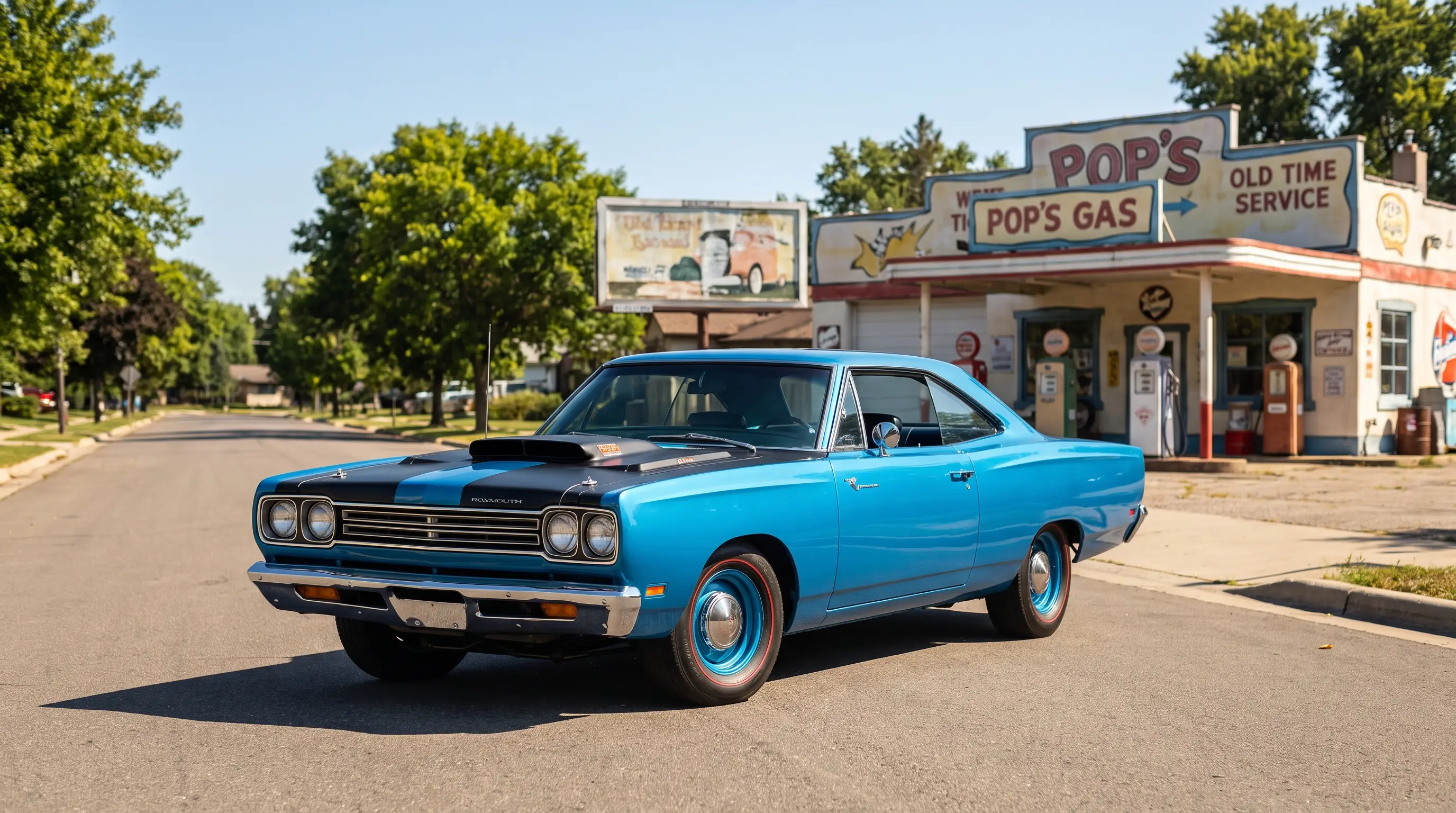
What the Road Runner said was specific. A loaded luxury muscle car announced money. A stripped Road Runner announced priorities. It told everyone in earshot that you had spent your cash on the parts that made it fast and skipped the carpet and the console and the bright trim. There was a working-class pride in that, a refusal to pay for show, and the cartoon horn turned the whole statement into something you could laugh about instead of brag about. The car had swagger without pretension, which is a hard trick and a big part of why people still love it.
| Cultural touchstone | Why it stuck |
|---|---|
| The beep-beep horn | The most recognizable sound in muscle car history |
| The Warner Bros. bird decal | A cartoon likeness on a serious performance car |
| The stripped cabin | Signaled priorities, not poverty |
| The Air Grabber hood | A theatrical scoop that opened for effect |
| Drive-in and cruise culture | Where the car was heard before it was seen |
The theater of the machine
Plymouth understood showmanship in a way that went beyond the horn. The Air Grabber hood on later cars was pure theater, a scoop that a driver could open to reveal a snarling graphic and feed cold air to the engine, a small piece of drama you could deploy at a stoplight. It was function and performance art at once. None of it was strictly necessary. All of it was the point, because the Road Runner was never only about elapsed times. It was about the feeling of driving something that let you be a little bit of a character yourself.
That theatrical streak is why the car photographs so well and why it keeps showing up wherever the 1960s and 1970s get remembered. It looks like what it was, a bright, brash, honest expression of a specific American moment. The bird on the door was not subtle. It was not supposed to be. Subtlety was for the cars that cost twice as much and took themselves twice as seriously.
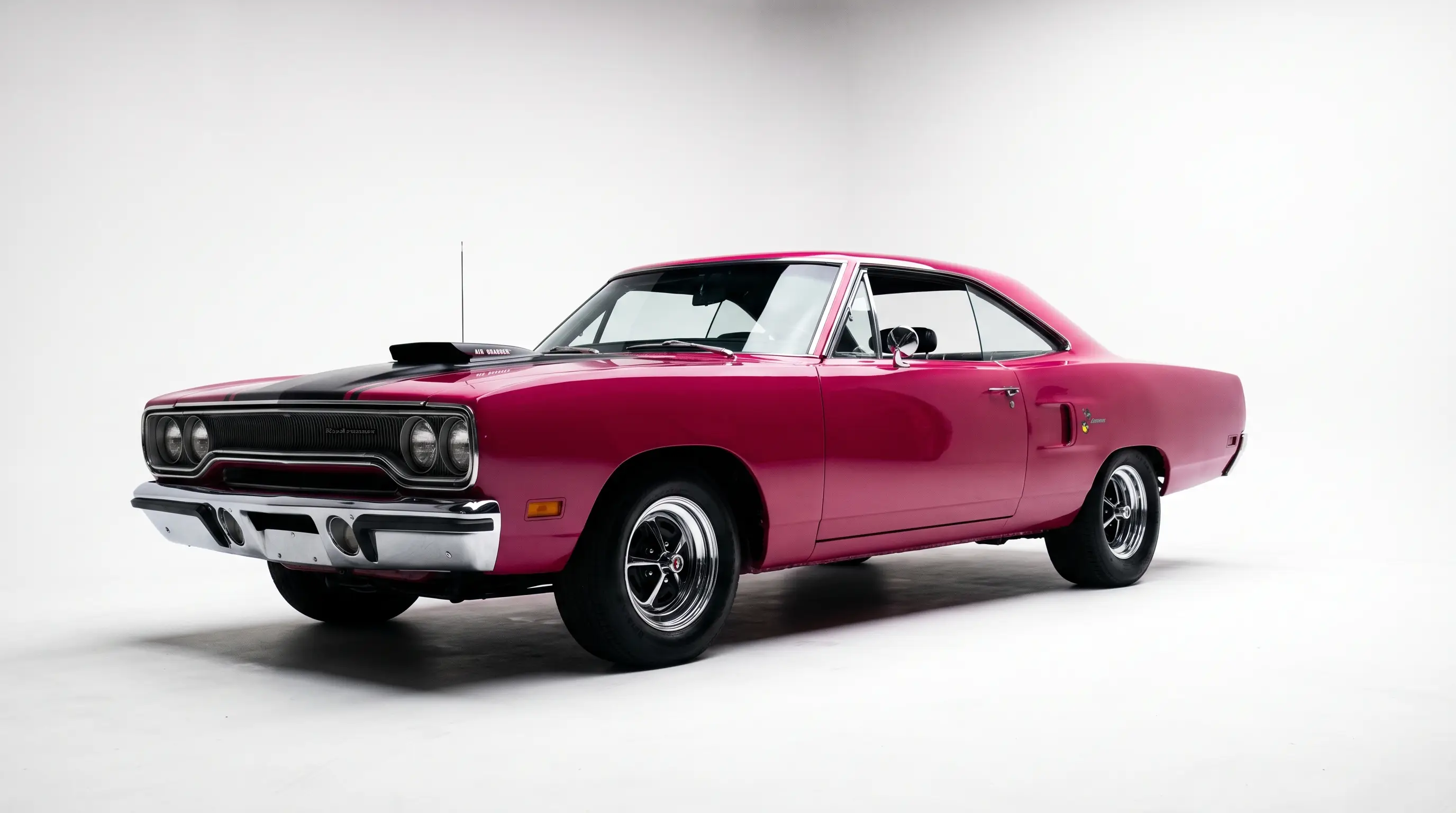
The color palette carried the same spirit. Plymouth offered its Road Runners in shades with names built for laughter, high-voltage greens and oranges and purples that no luxury brand would have touched. Cars left the factory in hues that seemed to shout across a parking lot. The paint was part of the personality, another way the car refused to behave the way a fast machine was supposed to behave. A person did not order one of those colors to blend in. They ordered it to be the loudest, happiest thing on the road, and the horn finished the sentence the paint started.
"You can restore the paint and rebuild the engine and get every casting number right, but the thing you are really preserving is a sound. Turn the key, press the horn, and for two silly notes you are back at the drive-in on a night that ended fifty years ago."
- Nora Beckett
Why the joke outlived the era
Muscle cars died, more or less, in the middle of the 1970s. Insurance killed some of them. Emissions rules and fuel prices killed the rest. The Road Runner name limped on and then faded like the others. But the cultural memory did not fade, and here the cartoon turns out to have been the masterstroke nobody fully planned. A car named after a beloved character carries that character's affection with it. People who never cared about quarter-mile times still smile at the bird and the horn, because they grew up with the cartoon and the car borrowed all of that warmth.
That is why the Road Runner sits in the collective memory a little differently than its rivals. It is not just fast and rare and valuable, though it is all of those. It is fondly remembered in a way that the more serious muscle cars are only respected. The horn did that. The bird did that. A marketing gamble that insiders feared would embarrass the company instead gave the car a second life as a piece of pop culture that outlasted the muscle era by decades.
You can see it at any car show today. People walk past rows of chrome and horsepower with polite interest, and then they reach the Road Runner, and something shifts in their faces. They lean in. They ask the owner to press the horn. And when those two silly notes ring out across the field, grown adults grin like the children they were when they first heard the sound on a television screen. No other muscle car does that. A Chevelle earns a respectful nod. The Road Runner earns a laugh and a memory, and a laugh is a harder thing to buy than horsepower.
If the origins of that gamble draw you in, you can keep exploring the first-year car where the whole cartoon-and-horsepower idea was proven. And if the sound in your head has turned into something more like a longing, it is worth seeing what still survives and finding a classic Runner for sale that still wears its bird and still says beep-beep the way it did the night that boy first turned around in the drive-in to look.
Sources and notes
- Plymouth Road Runner - Wikipedia
- The $50,000 Secret Hidden In Every Road Runner's Horn - HotCars
- How the Plymouth Road Runner's Beep Beep Horn Works - HotCars
- In-Motion Classic: 1971 Plymouth Road Runner - Curbside Classic
- Plymouth Road Runner - Grokipedia
- Plymouth RoadRunner - Year-by-Year: History, Engines, Production - Muscle Car Club
Related Reading
Article
The Plymouth Road Runner Story: How a Cartoon Bird Became Budget Muscle King
Article
The 1968 Road Runner: The Budget Muscle Car That Changed Everything
Article
Road Runner Engines: 383, 440 Six Barrel and the 426 Hemi
Article
The Warner Bros Deal: Licensing the Road Runner
Article
High Impact Colors: Plymouth's Wild Palette
Article
The Road Runner Decals and Cartoon Art
Article
The Road Runner in Advertising
Article
Road Runner vs Super Bee: Cartoon Muscle Wars
Article
The Road Runner in Movies and TV
Article
Famous Road Runner Owners
Article
The Road Runner in Hot Wheels and Toys
Article
The Road Runner Name and Cartoon Legacy
Article
Why the Road Runner Became a Cult Icon
Article
The Road Runner at the Drag Strip
Article
The Rapid Transit System: Plymouth's Muscle Caravan
Article
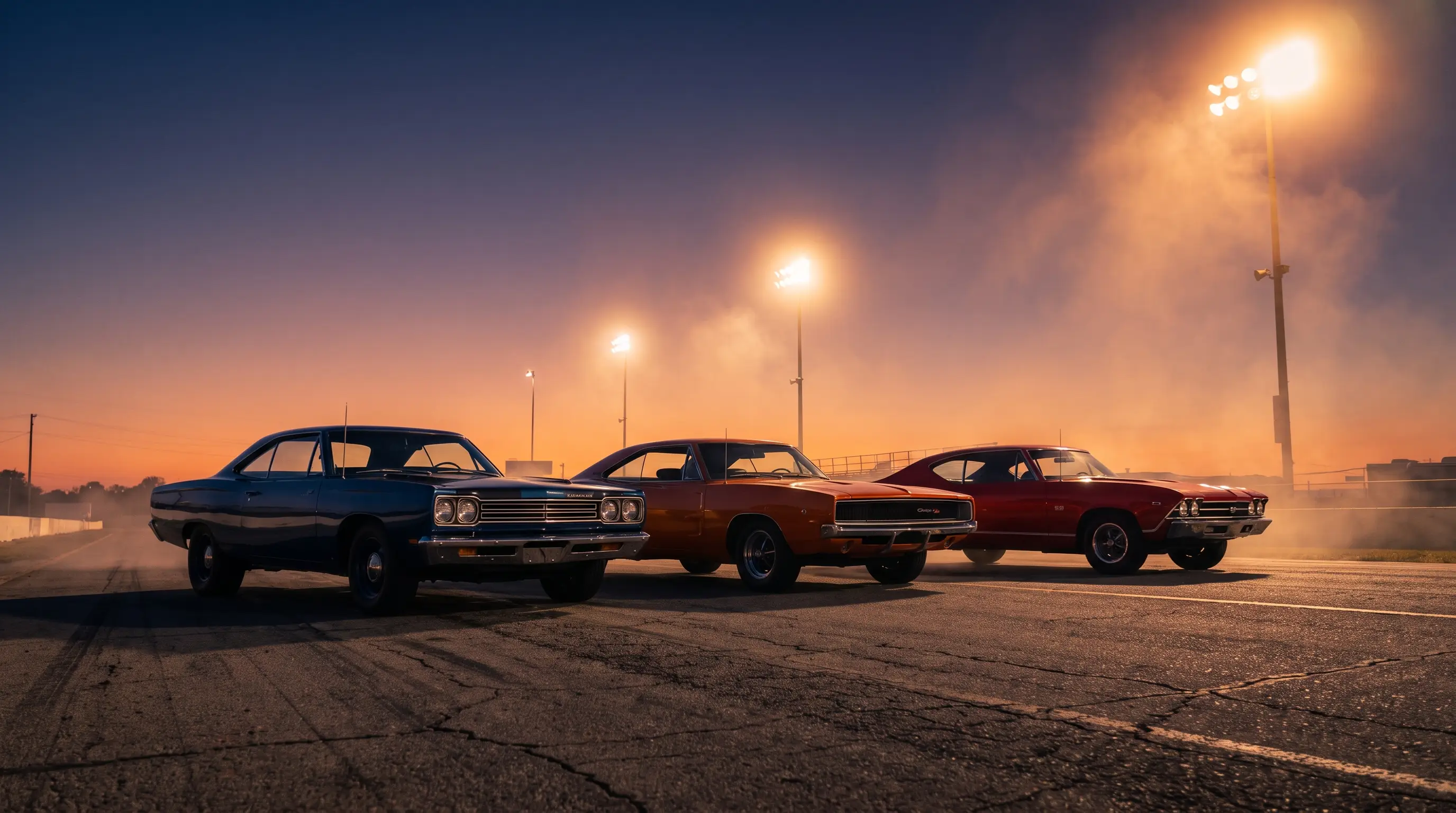
Road Runner vs Charger and Chevelle: The Muscle Hierarchy
Have a
Plymouth Road Runner
for Sale?
Reach thousands of serious classic car collectors across the US.
Sell It Here →
Are You a Classic Car Dealer?
List your full inventory and connect with targeted classic car buyers.
Join as a Dealer →

About the author
Nora Beckett
Automotive features writer and photographer who tells the human stories behind the cars, from show fields to cross-country road trips.
Related Listings - Plymouth Road Runner




Comments
Be the first to comment on this article.