
The 1967 Plymouth GTX arrived as a mid-year addition to the Belvedere line, and its documentation from that first season tells a more precise story than most muscle car origin narratives allow for. Plymouth positioned it deliberately above the base Belvedere and Satellite, and the archival record, factory literature, dealer bulletins, and surviving broadcast sheets, shows a car built with more intention than casual histories usually credit it with.
Car Features
7 min read
The 1967 GTX: The First Belvedere GTX
The 1967 Plymouth GTX arrived a year before the Road Runner made the nameplate famous, and the archival record shows Plymouth built it with real intention from the start.
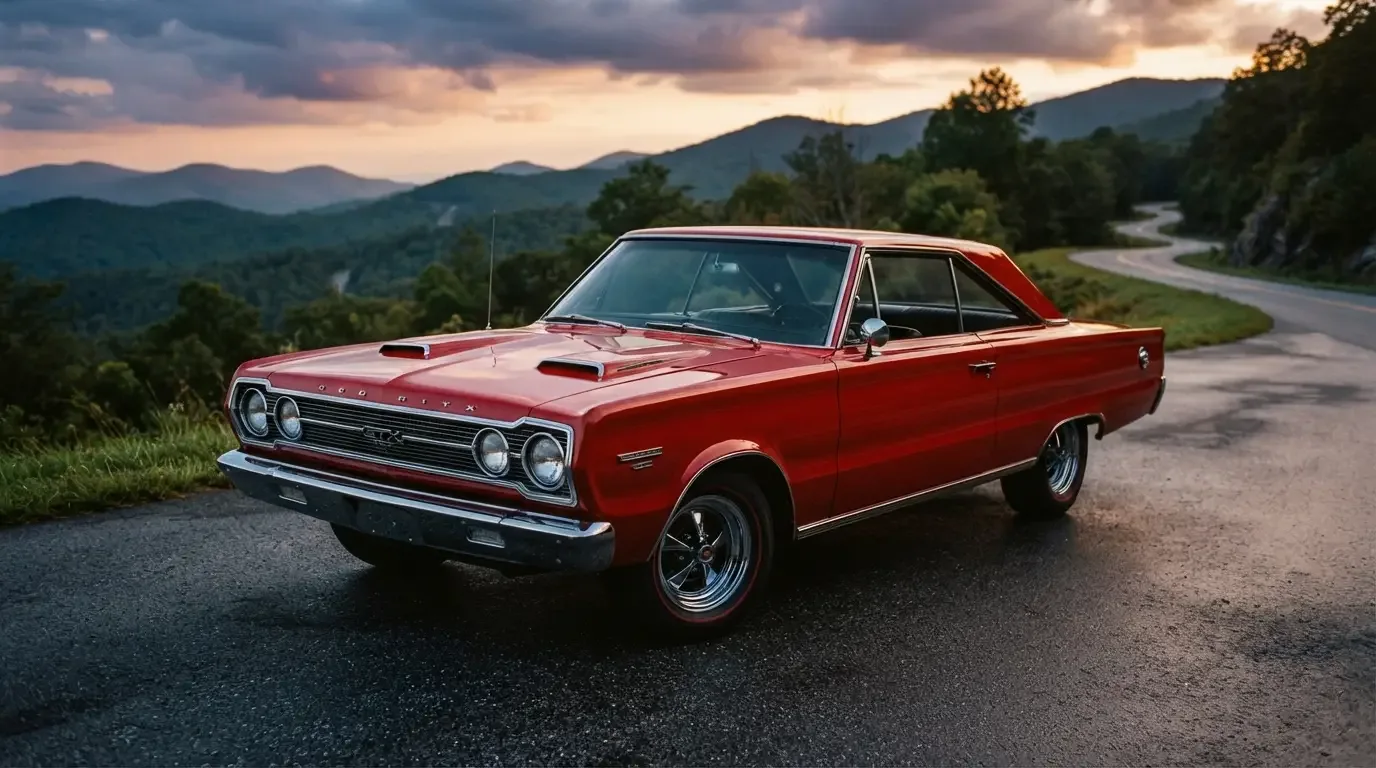
The Belvedere platform it was built from
Plymouth's B-body Belvedere had been through a full restyle for 1966, and the 1967 GTX used that same platform as its foundation rather than introducing a separate body. What distinguished the GTX within the Belvedere family was the standard equipment list Plymouth committed to from the outset: the 440 cubic inch Super Commando V8 rated at 375 horsepower came as the base engine, not an option, and a heavy-duty suspension package, dual exhaust, and a specific set of exterior trim pieces, including simulated hood scoops and twin body-length stripes, were built into the specification rather than added later by dealers.
This matters for anyone doing period-correct restoration work, because a genuine 1967 GTX should show these features as factory-installed, not as later additions. Cars that turn up with the 440 but lack the correct suspension components, or that carry stripe treatments inconsistent with documented factory patterns, warrant closer scrutiny before accepting their trim level at face value.
Engine options and what the build records actually show
| Engine | Displacement | Rated output |
|---|---|---|
| 440 Super Commando V8 (standard) | 440 cubic inches | 375 horsepower |
| 426 Hemi V8 (optional) | 426 cubic inches | 425 horsepower |
The 426 Hemi option, while listed in period literature, was ordered rarely enough in the 1967 GTX that documented, verifiable examples are treated as significant discoveries within the collector community whenever one surfaces. Any car represented as a genuine 1967 Hemi GTX warrants full VIN decoding and, where possible, corroboration against Chrysler's surviving production records before its status is accepted.
Body styles and production context
Plymouth offered the 1967 GTX in two body configurations, a two-door hardtop and a convertible, both built on the Belvedere's B-body architecture. Total first-year production sat at roughly 12,690 units combined, with references citing figures in the neighborhood of 12,010 hardtops and 680 convertibles, a modest figure that places genuine, documented examples well within the range collectors consider legitimately scarce, though not to the extreme degree of later limited-production Mopar models.
Convertibles were built in meaningfully smaller numbers than hardtops, which is consistent with the broader pattern across nearly every mid-size muscle car of the period. A documented 1967 GTX convertible, particularly one ordered with the Hemi, represents one of the more significant finds within this specific model year's surviving population.
"The 1967 car is often treated as a footnote to the more famous Road Runner that followed a year later, but the archival record shows Plymouth building the GTX with real intention from its very first season."
- Sarah Whitfield
Why the debut year gets overlooked
The Road Runner's 1968 introduction, with its lower price point and cartoon-driven marketing, captured far more popular attention than the GTX ever did, and that popular focus has shaped how casual histories treat the GTX's own debut. But the 1967 model established the formula that carried the nameplate through the rest of its run: standard big-block performance, upgraded trim relative to its Belvedere siblings, and a market position aimed at buyers who wanted the driving experience without stripped-down economy styling.
Restoration research on 1967 GTX examples benefits from cross-referencing factory service literature against the specific VIN and fender tag codes present on the car in question, since running changes during the model year affected some trim and mechanical details. Treating any single specification as universal across the full production run risks misdating individual features.
Researching a specific car
Anyone evaluating an individual 1967 GTX for purchase or documentation should start with the VIN decode, then move to the fender tag for trim and paint codes, and finally seek any surviving broadcast sheet or dealer invoice. This sequence, working from the most reliable factory-stamped source outward to looser paper documentation, is the standard approach concours judges and marque researchers use, and it applies just as directly to a 1967 GTX as to any other significant Chrysler product of the era.
For readers wanting the full model history across every year the GTX was produced, our complete history traces the nameplate's entire run and places this debut year in its proper context. If you're researching the market for a car of your own, current find a classic Runner listings are worth reviewing alongside whatever documentation a seller can provide.
What the 1967 GTX represents in the larger record
Treated on its own terms rather than as a prelude to the Road Runner, the 1967 GTX stands as a well-documented, deliberately positioned entry in Plymouth's B-body lineup, one that established a standard-big-block, upgraded-trim formula the company would refine for several more seasons. For researchers and collectors alike, it deserves the same careful attention given to any other significant first-year muscle car of its period.
Trim codes and the paper trail specific to this model year
Fender tags on 1967 Chrysler products carry a code sequence identifying body style, paint, trim, and, where applicable, engine and transmission combinations, though the exact fields present varied slightly by plant. Researchers working with a specific 1967 GTX should decode every field on the tag rather than relying on a single code, since transcription errors and later part swaps can leave one field inconsistent with the rest of the car even on a genuine, unaltered example. Cross-referencing against any surviving factory invoice or dealer order form, when one exists, remains the most reliable way to resolve an apparent discrepancy.
Broadcast sheets, the build-line paperwork that traveled with a car through final assembly, survive for only a fraction of 1967 production, having typically been discarded or lost decades ago rather than preserved as collector documents at the time. A surviving broadcast sheet on a 1967 GTX is treated as a significant find in its own right by concours judges and marque historians, independent of whatever other documentation the car carries.
Interior and color choices that defined the year
Plymouth's color and trim offerings for the 1967 model year included several bright exterior finishes alongside more conservative options, and interior configurations ranged from a standard bench seat to available bucket seats with a center console, depending on how the original buyer specified the order. These choices affect both the accuracy of a restoration and, increasingly, the car's value at sale, since buyers researching a specific example now expect exterior color, interior trim, and mechanical specification to align consistently with what the fender tag and any surviving paperwork indicate. A mismatch between color codes and what a car currently wears is not automatically disqualifying, many cars were repainted decades ago for reasons having nothing to do with fraud, but it is a detail worth understanding and disclosing rather than glossing over.
Sources and notes
- Plymouth GTX - Wikipedia
- Automobile Catalog - 1967 Plymouth GTX Convertible Super Commando 440 specs
- autoevolution - 1967 Plymouth GTX Hemi rarity and production figures
- Curbside Classic - Vintage Car Life review of the 1967 Plymouth GTX
- Hagerty Valuation Tools - 1967 Plymouth GTX
- HowStuffWorks - 1967 Plymouth Belvedere GTX profile
Related Reading
#Plymouth Road Runner
#440 Super Commando
#1967 plymouth gtx
#Plymouth GTX history
#Belvedere GTX
#Mopar research

About the author
Sarah Whitfield
Third-generation classic car collector specializing in pre-war American and European coachbuilt automobiles. Researcher and concours enthusiast.
Related Listings - Plymouth Road Runner

More in Car Features


Comments
Be the first to comment on this article.