
375 horsepower. That was the number Plymouth put on the GTX 440 Super Commando in 1967, standard equipment, no options box to check. Most competitors made you pay extra to get anywhere near that kind of output. Plymouth just built it in and called the car done. That single decision is why the 440 Super Commando is the engine that actually defines what the GTX was for.
Car Features
7 min read
The 440 Super Commando: The GTX Standard
The 440 Super Commando gave the Plymouth GTX its punch. A look at the big-block that defined Plymouth gentleman muscle.
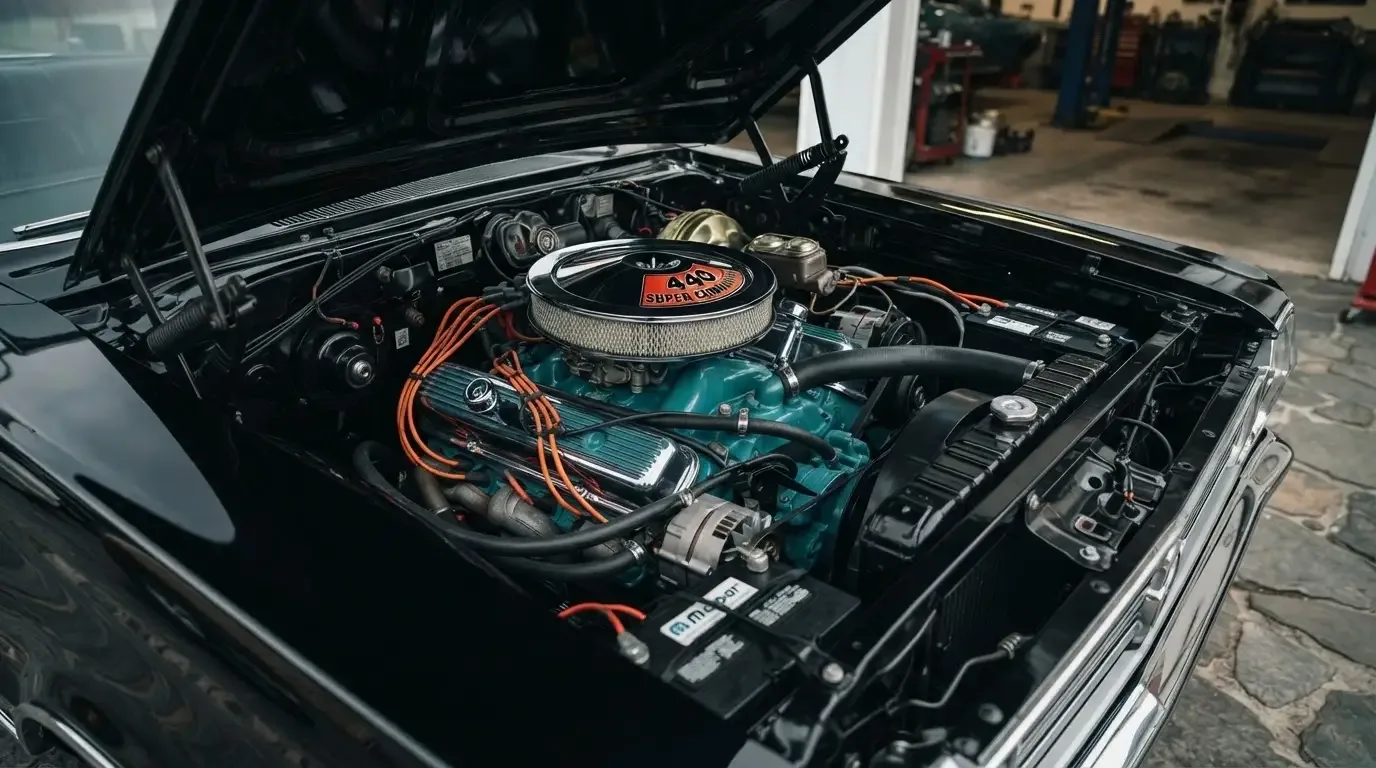
The number that mattered: 375 horsepower, standard
A 440 cubic inch V8 rated at 375 horsepower and 480 pound-feet of torque, peaking around 3,200 rpm, came as the base engine in every GTX built through most of the model's run, with those figures holding steady from the car's 1967 debut through 1969. Other manufacturers treated big-block power as an upsell. Plymouth treated it as the starting point. That's the entire story of the GTX in one spec line, and it's why the 440 Super Commando earned the reputation it still has.
What the numbers actually get you
| Spec | Figure |
|---|---|
| Displacement | 440 cubic inches |
| Standard horsepower | 375 hp |
| Configuration | Wedge-head V8, two-barrel or four-barrel carburetion depending on year and package |
| Availability | Standard engine, GTX, most model years |
Later in the model's run, for 1970 and 1971 only, Plymouth offered a 440 Six Barrel variant with three two-barrel carburetors that pushed rated output to 390 horsepower at 4,700 rpm. That option closed most of the gap to the optional 426 Hemi at a fraction of the cost, which is exactly why serious buyers at the time treated the Six Barrel as the smart choice rather than the compromise choice, even though it remained a rare order: only 678 of the 7,141 GTXs built in 1970 carried it.
Standard versus optional: the comparison that actually matters
The 426 Hemi was available as an option on the GTX, and it outran the 440 in a straight numbers comparison, 425 horsepower versus 375. But the Hemi cost significantly more, needed more maintenance to run right on the street, and was ordered by a small fraction of GTX buyers as a result. The 440 was the engine that actually put the car's reputation on the map because it was the engine most GTX buyers actually drove. Reputation gets built by what people own, not by what's technically available in the brochure.
"Everybody wants to talk about the Hemi option. The 440 is the engine that was actually in most of these cars, and the numbers say it did the job."
- Dan Reeves
Where the 440 sat against the rest of the muscle car field
375 horsepower standard put the GTX ahead of most direct competitors' base big-block offerings in its class during the mid-to-late 1960s. A buyer cross-shopping a GTX against comparable intermediates from other manufacturers was, in most cases, comparing a standard 375 horsepower engine against something the competition offered only as an upcharge option. That gap is the actual reason the GTX carried the reputation it did among period buyers who cared about numbers on a spec sheet rather than badges.
What this means for a buyer today
A documented, numbers-matching 440 Super Commando GTX remains the most attainable entry point into genuine big-block Mopar performance from this era. It is not the rarest engine option, and it is not the fastest option Plymouth offered, but it is the configuration that defined the car, and that matters to collectors who value what a model actually was over what it could theoretically have been ordered with. Parts availability, engine rebuild knowledge, and a deeper pool of comparable sales all make the 440 car easier to research, verify, and value with confidence than a rarer Hemi example.
For the full background on how the GTX came together as a model, read the background covers the car's development and positioning within Plymouth's lineup. If the Hemi option specifically interests you, worth a look too breaks down that rarer configuration in detail.
Bottom line on the numbers
375 horsepower standard, a displacement figure that competitors charged extra for, and an engine that most surviving GTX examples actually carry. Those three facts explain why the 440 Super Commando still anchors this car's identity more than fifty years later. If you want to see what's actually on the market carrying this engine, you can shop classic Runner listings and compare documented examples directly.
Why the 440 held up better than most engines its age
Wedge-head big blocks like the 440 have a reputation among people who actually turn wrenches on them for being straightforward to keep running compared to the more exotic hemispherical-head Hemi. Parts availability today reflects that same gap. Rebuild kits, gaskets, and reproduction internals for the 440 are widely stocked and reasonably priced, because Chrysler put this engine in a huge range of vehicles across multiple decades, not just muscle cars. That production volume across the broader Chrysler lineup, full-size sedans, trucks, and more, means a 440 GTX owner today is never far from the parts they need, which is a number worth weighing right alongside horsepower when you're deciding what to actually own and drive.
Compare that to Hemi ownership, where a much smaller production run across fewer models means specialty parts, specialty machine shops, and a smaller pool of mechanics who've actually rebuilt one correctly. None of that makes the Hemi a bad choice. It makes it a different kind of ownership commitment, and the numbers on parts availability back that up as clearly as the horsepower figures back up the performance comparison.
Real-world numbers versus brochure numbers
Factory horsepower ratings from this era were measured under SAE gross conditions, engine on a stand with no accessories, exhaust restriction, or drivetrain losses factored in, and don't translate directly to how a modern dyno would rate the same engine installed in a car. Enthusiasts and engine builders generally treat those gross-rated period figures as meaningfully higher than an equivalent net rating would show, though the exact percentage varies by engine and source, so a period 375 hp gross rating should not be read as directly comparable to a modern net horsepower figure. What stayed consistent across every account from period road tests and modern owners alike is that the 440 delivered strong, usable torque across a wide range, which mattered more for how the GTX actually felt to drive every day than a peak horsepower number ever did on its own.
Quarter-mile times for a stock 440 GTX in period road tests generally landed in the mid-14-second range, around 14.6 seconds for a 1969 automatic-equipped car by one commonly cited figure, competitive with, and in some cases quicker than, rivals that required buyers to pay extra for comparable output. That real-world number, not just the horsepower rating on paper, is what built the engine's reputation among buyers cross-shopping the GTX against everything else on the lot.
What to check before you buy a 440 GTX
These checks take an afternoon and cost far less than discovering after the fact that a car's engine was swapped decades ago by a previous owner chasing more power, or replaced after a failure with whatever big block was available at the time. The 440 Super Commando's reputation is built on documented, verified examples. Protect that value by verifying yours before you commit to a purchase price.
Sources and notes
Related Reading

About the author
Dan Reeves
Performance engine builder from North Carolina's motorsports corridor, focused on swaps, forced induction and making real, repeatable power.
Related Listings - Plymouth Road Runner

Comments
Be the first to comment on this article.