
Chrysler's production records for the 1968 GTX document a car built on an all-new B-body platform, one shared across the corporation's mid-size performance lineup that year, and the factory paperwork from this specific model year corrects a few misconceptions that have crept into casual histories over the decades. The 1968 Plymouth GTX deserves a closer look at what the primary sources actually show, rather than what later marketing retrospectives have simplified it into.
Car Features
6 min read
The 1968 GTX
Chrysler's own production records on the 1968 Plymouth GTX tell a different story than the shorthand version that says the Road Runner immediately pushed it aside.
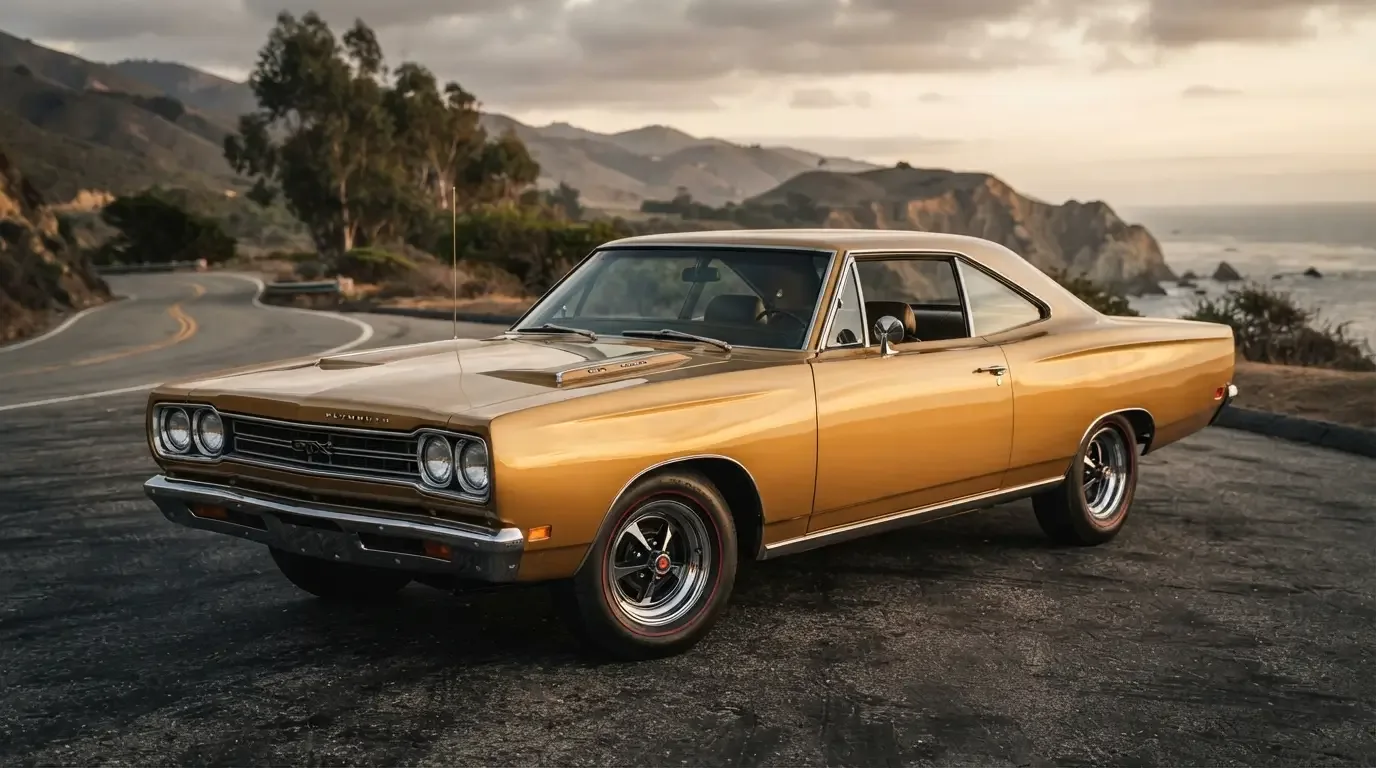
A new body, not just a new model year
Plymouth's B-body received a full restyle for 1968, and the GTX carried that new sheet metal alongside its Belvedere and Satellite siblings, with distinct grille, taillight, and trim treatment separating the GTX visually from lesser trims. Factory literature from this year emphasizes the model's continued positioning above the newly introduced Road Runner, which arrived that same model year as a deliberately lower-cost alternative built on the same platform. Chrysler's own internal materials from the period are explicit that the two models were never meant to compete for the same buyer, a point some later accounts have blurred by treating the Road Runner's arrival as a replacement for the GTX rather than a companion model aimed at a different price point entirely.
Correcting the record on 1968 GTX production
Surviving Chrysler production data places 1968 GTX output at 18,272 units combined, with 17,246 hardtops and 1,026 convertibles making up that total. This represents a meaningful increase over the 1967 debut year's more modest numbers, reflecting the model's growing acceptance in the marketplace once buyers had a full year of exposure to the nameplate. Some enthusiast accounts have understated this growth, likely because the Road Runner's own explosive first-year sales figures overshadowed the GTX's more modest but still real gains in period coverage and in retrospective histories written afterward.
Engine documentation and running changes
| Engine | Displacement | Factory rating |
|---|---|---|
| 440 Super Commando V8 (standard) | 440 cubic inches | 375 hp |
| 426 Hemi V8 (optional) | 426 cubic inches | 425 hp |
Factory records indicate the standard engine and optional Hemi carried forward largely unchanged in rated output from 1967, though running production changes during the model year affected some ancillary components, and researchers working with a specific 1968 car should verify individual specification against that car's own build documentation rather than assuming uniformity across the full model year. This is standard practice for any serious archival research into Chrysler's mid-size performance cars from this period, where mid-year running changes were common and rarely announced publicly at the time.
"The primary sources on the 1968 GTX tell a clear story once you set aside what later retrospectives assumed. This was a car growing into a stronger sales position in its own right, not a model being pushed aside by its cheaper sibling."
- Tom Ramirez
The Road Runner's arrival and what it actually meant for the GTX
A persistent misconception holds that the Road Runner's 1968 debut immediately cannibalized GTX sales. Chrysler's own positioning documents from the period frame the two models as serving distinctly different buyers: the Road Runner marketed on low price and stripped-down performance value, the GTX continuing to emphasize its more complete standard equipment list and upscale trim. Production figures from the following several years show both nameplates coexisting in Plymouth's lineup rather than one steadily displacing the other, a pattern consistent with the factory's stated intent rather than with the simplified narrative that treats the GTX as a doomed model from the moment the Road Runner appeared.
Why archival accuracy matters for this specific model year
Researchers and owners working with a 1968 GTX benefit from treating factory records as the primary source and popular retrospective accounts as secondary, cross-checked material. The gap between what enthusiast literature has repeated for decades and what Chrysler's own period documentation actually shows is not enormous, but it is real, particularly around production totals and the competitive relationship between the GTX and Road Runner in their first year sharing a lineup. Getting these details right matters for accurate restoration work and for honest valuation of a specific car's documented history.
For the fuller story of the GTX nameplate across its complete production run, where this started traces the model from its 1967 debut forward. Readers researching the market for a documented 1968 example can review current classic Runner for sale listings alongside the specification details covered here.
Trim and equipment changes documented for 1968
Factory option sheets from 1968 show the GTX carrying forward its established formula of standard big-block power paired with upgraded trim, while adding a handful of new equipment choices reflecting the redesigned interior shared across the restyled B-body lineup. Documented changes include revised instrument panel styling and updated upholstery patterns specific to the new body, details that researchers restoring a 1968 car should verify against period parts catalogs rather than assuming continuity with 1967 specifications, since the platform change touched more components than exterior sheet metal alone.
Exterior trim distinguishing the GTX from the concurrently introduced Road Runner included badging, stripe treatments, and grille details specific to each model, deliberate choices by Plymouth's design and marketing teams to keep the visual identity of the two cars distinct despite their shared underlying architecture. Surviving factory photography and dealer literature from the period document these distinctions clearly, offering a reliable reference for anyone verifying whether a specific car's current trim matches its documented original specification.
How dealer records support the production story
Regional dealer archives that have survived, though incomplete as a nationwide record, generally corroborate the broader Chrysler production data on 1968 GTX volume, showing steady order activity throughout the model year rather than a pattern of declining interest that a cannibalization narrative would predict. Where dealer records exist alongside a specific car's fender tag and VIN, cross-referencing all three sources gives researchers the strongest possible confidence in a car's documented history, and discrepancies between them are worth investigating rather than dismissing.
Sources and notes
- Plymouth GTX - Wikipedia
- igot.net - 1968 Plymouth GTX facts and production figures
- Silodrome - 1968 Plymouth Hemi GTX barn find
- autoevolution - rare 1968 Plymouth GTX convertible with broadcast sheet
- Fusion Luxury Motors - 1968 Plymouth GTX Hemi
- Automobile Catalog - Plymouth GTX Super Commando 440 specs
What the factory record ultimately establishes
The 1968 GTX stands, on the strength of Chrysler's own surviving documentation, as a model that grew its market position in its second year even as the Road Runner arrived alongside it on the same restyled platform. Treating the two nameplates as competitors racing toward the same buyer misreads the factory's own stated positioning, and treating the GTX's 1968 sales growth as a footnote misreads the production numbers themselves. The primary sources tell a more accurate, and in some ways more interesting, story than the shorthand version that has circulated for years, one that credits the model for standing on its own merits rather than treating it as a placeholder waiting to be replaced.
Related Reading
#Plymouth Road Runner
#Chrysler archives
#Plymouth GTX history
#1968 plymouth gtx
#Mopar production records
#B-body Plymouth

About the author
Tom Ramirez
Corvette researcher and historian based in Bowling Green, Kentucky. Two decades documenting Corvette production history from original factory records.
Related Listings - Plymouth Road Runner

Comments
Be the first to comment on this article.