
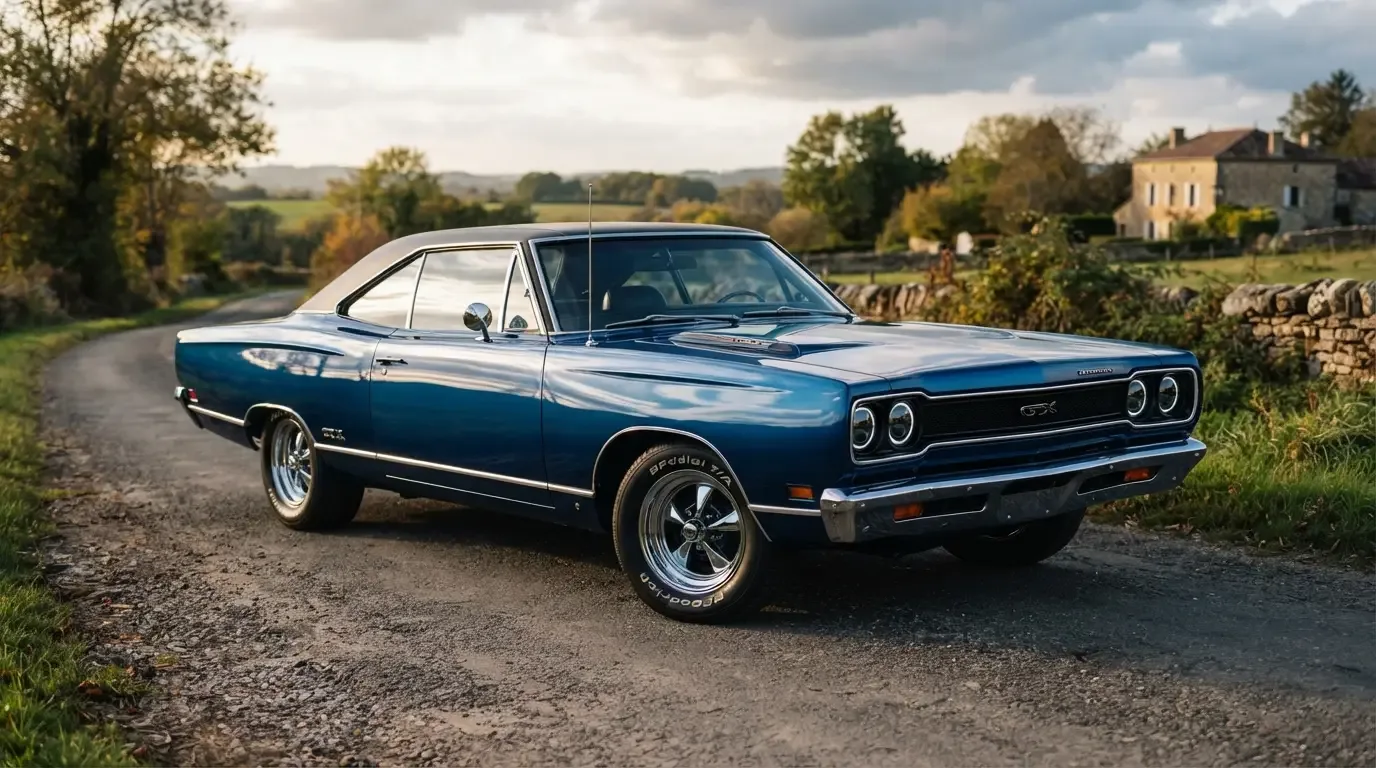
The 1969 Plymouth GTX sat one rung above the Road Runner on Plymouth's muscle car ladder, and by its third model year the car had settled into a personality all its own. Where the Road Runner sold on cartoon horsepower and a low sticker price, the 1969 GTX offered the same B-body bones dressed in bucket seats, extra brightwork, and a standard 440 that made the "gentleman's muscle car" label stick. It is a car that gets overshadowed by its cheaper sibling today, and that is exactly why it rewards a closer look.
Car Features
7 min read
The 1969 GTX
The 1969 Plymouth GTX paired a standard 440 with genuine luxury trim, making it the muscle car for buyers who wanted power without giving up comfort.
A senior car in a junior car's market
By 1969 the muscle car field had gotten crowded and price-conscious. Plymouth's own Road Runner, introduced in 1968, undercut the GTX by hundreds of dollars and outsold it many times over. The GTX kept its position as the better-trimmed, better-equipped option: a standard 440 cubic inch Super Commando V8 rated at 375 horsepower, a heavy-duty suspension, dual exhausts, and interior appointments the Road Runner simply did not offer as standard. Plymouth's own marketing leaned into that gap, pitching the GTX as the car for buyers who wanted muscle car performance without giving up carpeting and a padded dash.
The formula worked for a specific kind of buyer, but it also meant the GTX was chasing a shrinking audience. Insurance surcharges on big-inch cars were climbing, and younger buyers with less money to spend were gravitating toward the stripped-down Road Runner instead. The 1969 GTX would prove to be the high-water mark before that shift started eating into GTX volume for good.
The 440-6 arrives
The biggest news for 1969 was optional, not standard: the 440 Six Barrel, a trio of two-barrel carburetors bolted to a lightweight fiberglass hood with a functional scoop. Plymouth built the Six Barrel package initially for the Road Runner as a low-cost alternative to the 426 Hemi, and the GTX could be ordered with the same induction setup. Rated output sat at 390 horsepower, a jump that put the GTX within shouting distance of Hemi territory without the Hemi's price tag or its finicky street manners.
Buyers who wanted the outright best still had the 426 Hemi on the order sheet, but Hemi GTX production for 1969 was a trickle compared to the 440-powered cars. Most GTX buyers left the Hemi box unchecked and took the standard 440 or stepped up to the Six Barrel, which is why surviving Hemi GTXs from this year carry such outsized value and attention at auction today.
Styling changes for the third year
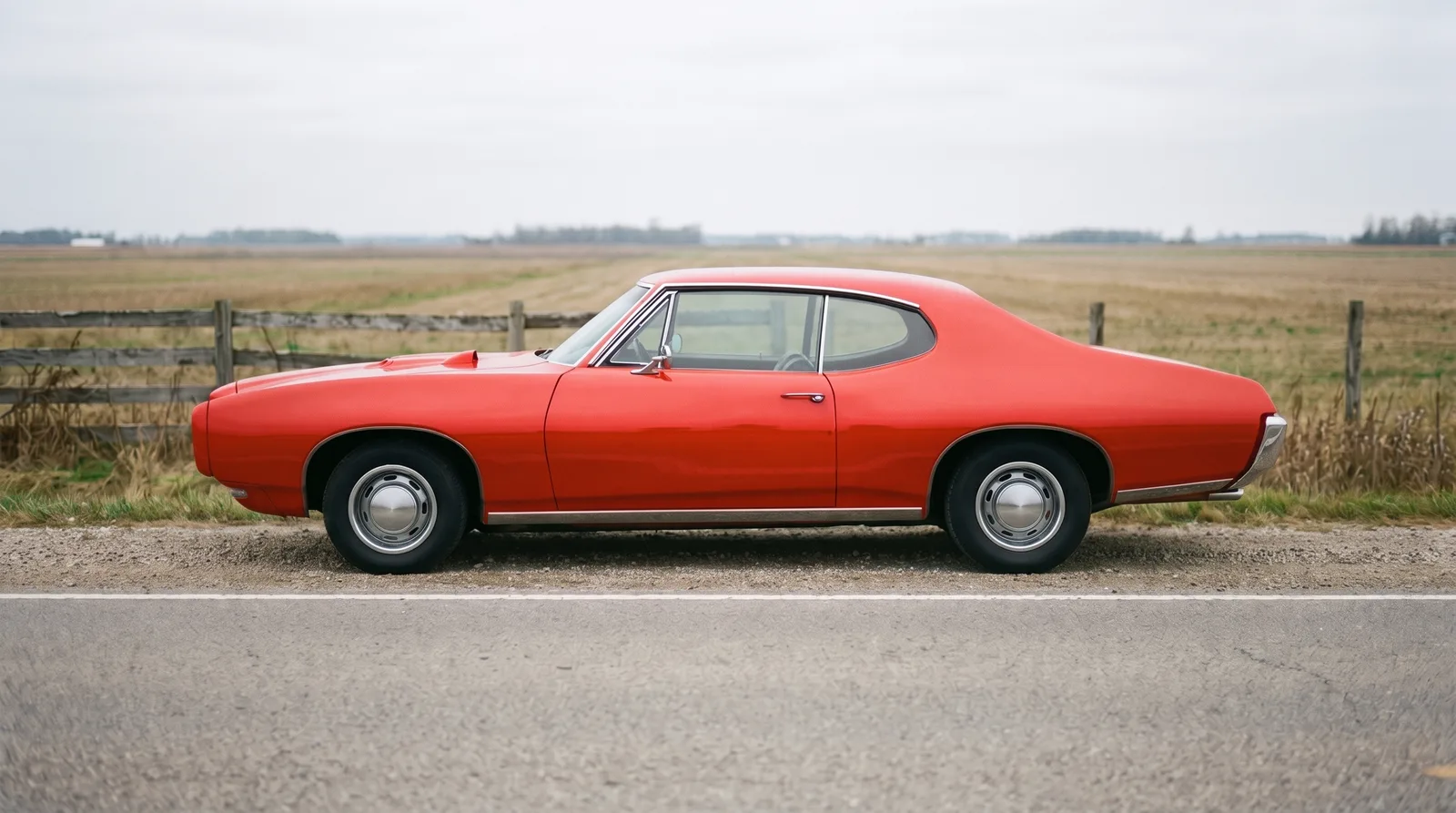
Visually, the 1969 GTX carried over the second-generation B-body shape introduced in 1968 with detail updates: a revised grille, new taillight treatment, and GTX-specific badging that separated it from the Road Runner and the base Satellite it was built on. Bucket seats with a center console were available, along with a vinyl roof option that leaned into the car's more upscale positioning. Wheel and stripe choices multiplied that year too, giving GTX buyers more ways to personalize a car that Plymouth still wanted to look distinct from the Road Runner parked next to it on the showroom floor.
Inside, the GTX kept its edge over the Road Runner with more standard sound deadening, better door panels, and a dash layout that felt closer to a Sport Satellite than a stripped-out street brawler. It was a car meant to be lived with daily, not just raced on weekends, even if plenty of owners did both.
Where the 1969 GTX sits in the bigger story
Understanding the 1969 car means understanding what came before and after it. For the full story of how the GTX nameplate started in 1967 and evolved through its final year in 1971, the broader retrospective connects the dots between each model year's changes and the market forces pushing Plymouth toward folding the GTX into the Road Runner lineup entirely.
The 1969 model year represents the GTX at its most confident: strong factory support, a genuinely quick standard engine, and an image that had not yet been diluted by declining sales. Values on well-documented 1969 GTX cars, particularly numbers-matching 440 cars with the Six Barrel option, have held up better than many of their contemporaries precisely because the model year sits at that peak.
"The 1969 GTX is the car people forget to ask about because they're too busy chasing Road Runners. That's a mistake. It's the same platform with a better interior and, with the Six Barrel, nearly the same punch."
- Sarah Whitfield
Buying a 1969 GTX today
Documentation matters enormously with this car. Because the GTX shared so much sheet metal and mechanical hardware with the Road Runner and Satellite, verifying a genuine GTX means checking the fender tag and broadcast sheet rather than trusting a repainted stripe kit or a set of GTX badges bolted on later. Rust in the trunk floor, lower quarters, and torsion bar crossmember is common on cars that spent decades outside, and a car missing its original build sheet is worth considerably less to a serious buyer.
Shoppers who want to see what is currently available can browse classic Runner listings to get a sense of current asking prices and the range of condition and originality on the market. Prices vary enormously based on drivetrain, options, and documentation, so patience pays off more than urgency does.
A car worth reconsidering
The 1969 GTX rarely gets top billing next to the Road Runner or the Hemi cars that grab headlines, but it represents Plymouth's muscle car lineup at a genuinely interesting inflection point. It had the power, the options, and the trim level to compete with anything else on the market that year, and it did so while still wearing a badge that told everyone exactly what it was building toward before the GTX name quietly stepped aside a few years later.
Period road tests generally clocked a 440-powered GTX through the quarter mile in the mid-thirteen to low-fourteen second range, numbers that held up well against rival intermediates from Chevrolet, Ford, and Oldsmobile. What set the GTX apart in those same tests was ride quality. Magazine writers of the day noted that the GTX rode noticeably better than the stripped Road Runner, a direct result of Plymouth tuning the suspension for comfort as much as for straight-line grip. That balance is part of what makes the 1969 car appealing to collectors who want to actually drive their muscle car rather than trailer it between shows.
Production figures for the 1969 GTX landed well behind the Road Runner's numbers that same year, a gap that only widened as the decade turned. Fewer 1969 GTX cars survive in unmodified, numbers-matching condition than their build totals alone would suggest, since many were later converted to Road Runner clones or raced hard and retired early. That scarcity is a quiet driver of the model's current collector appeal, even for buyers who never mention it out loud when they are negotiating a price.
The 1969 model year also marked the last time the GTX would enjoy this level of factory attention before the lineup started contracting. Option availability, color choices, and interior trims all peaked around this point, giving buyers today the widest possible window into how a well-equipped, mid-generation GTX was actually built and sold.
Sources and notes
Related Reading

About the author
Sarah Whitfield
Third-generation classic car collector specializing in pre-war American and European coachbuilt automobiles. Researcher and concours enthusiast.
Related Listings - Plymouth Road Runner
More in Car Features
Comments
Be the first to comment on this article.