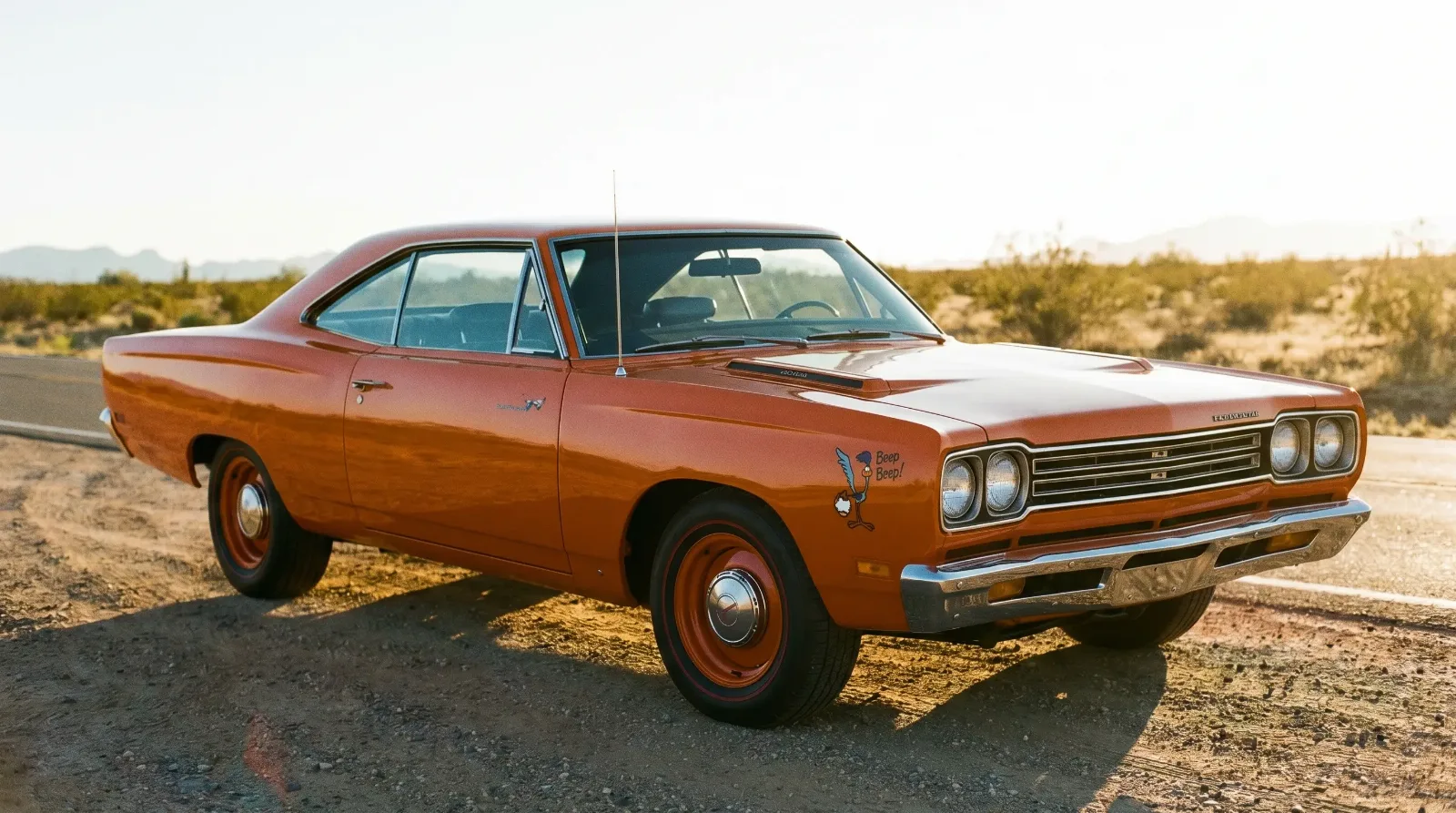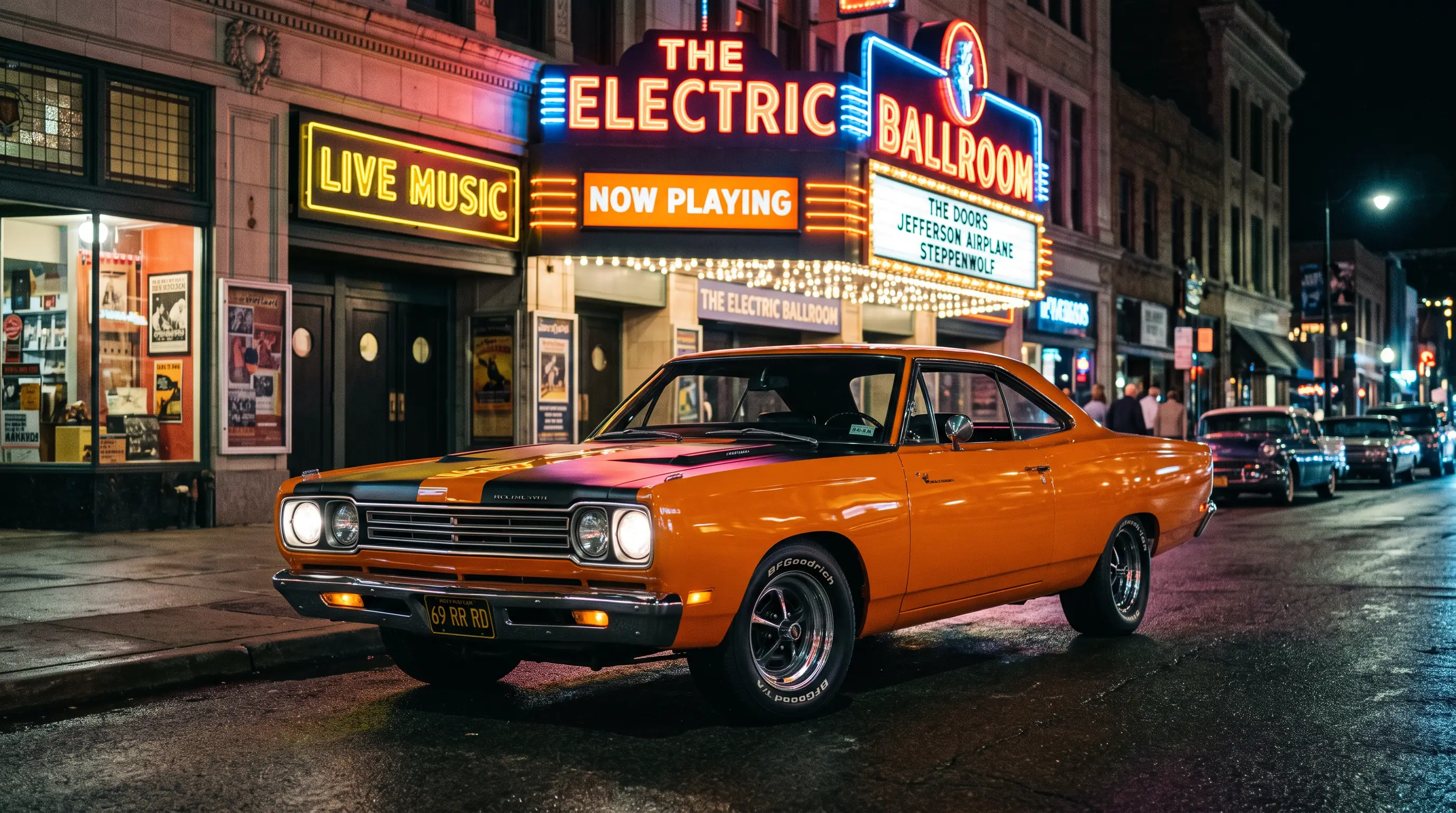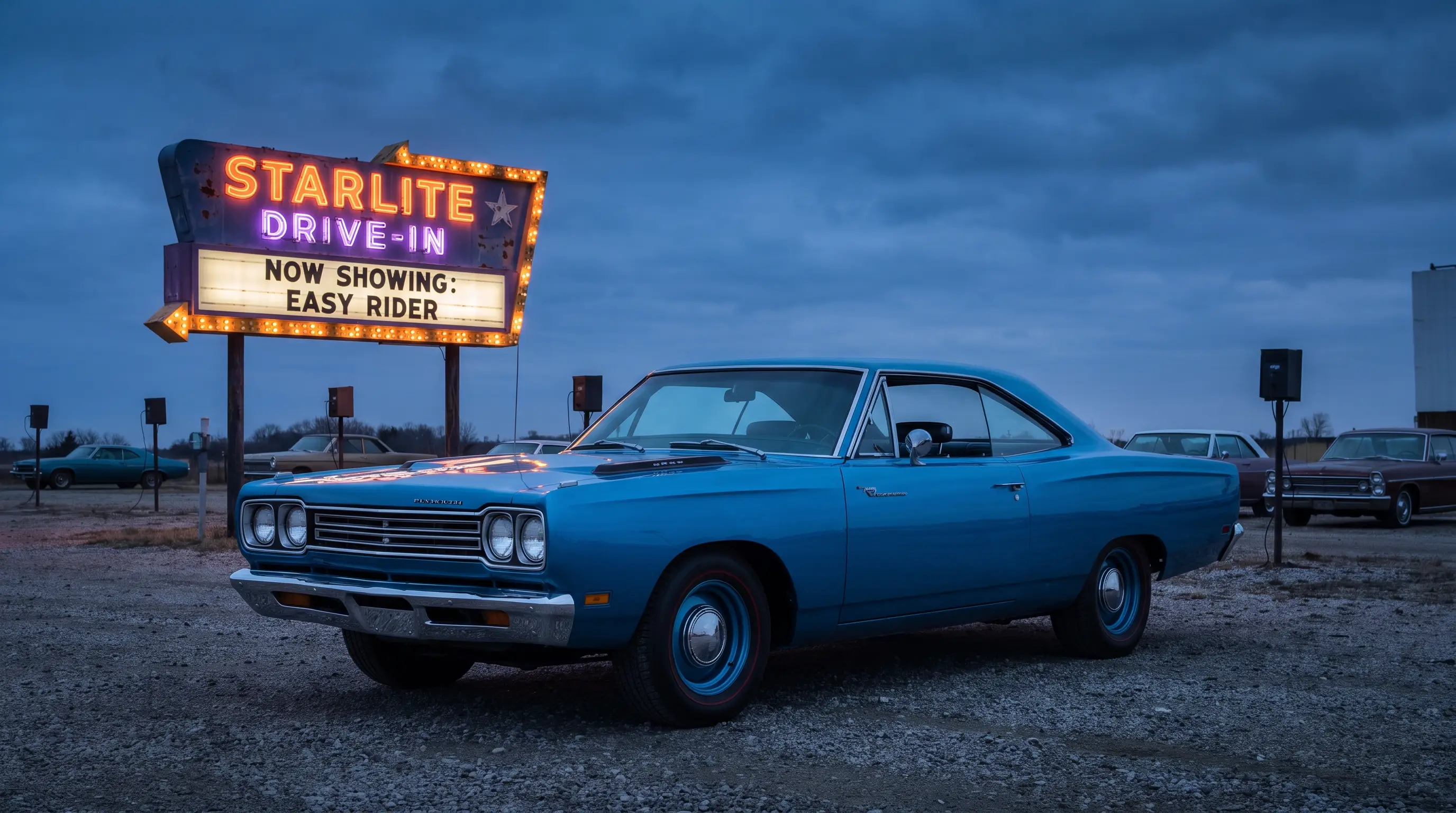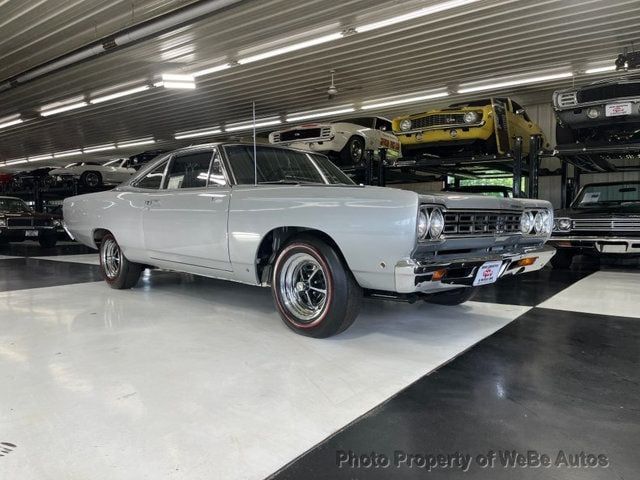
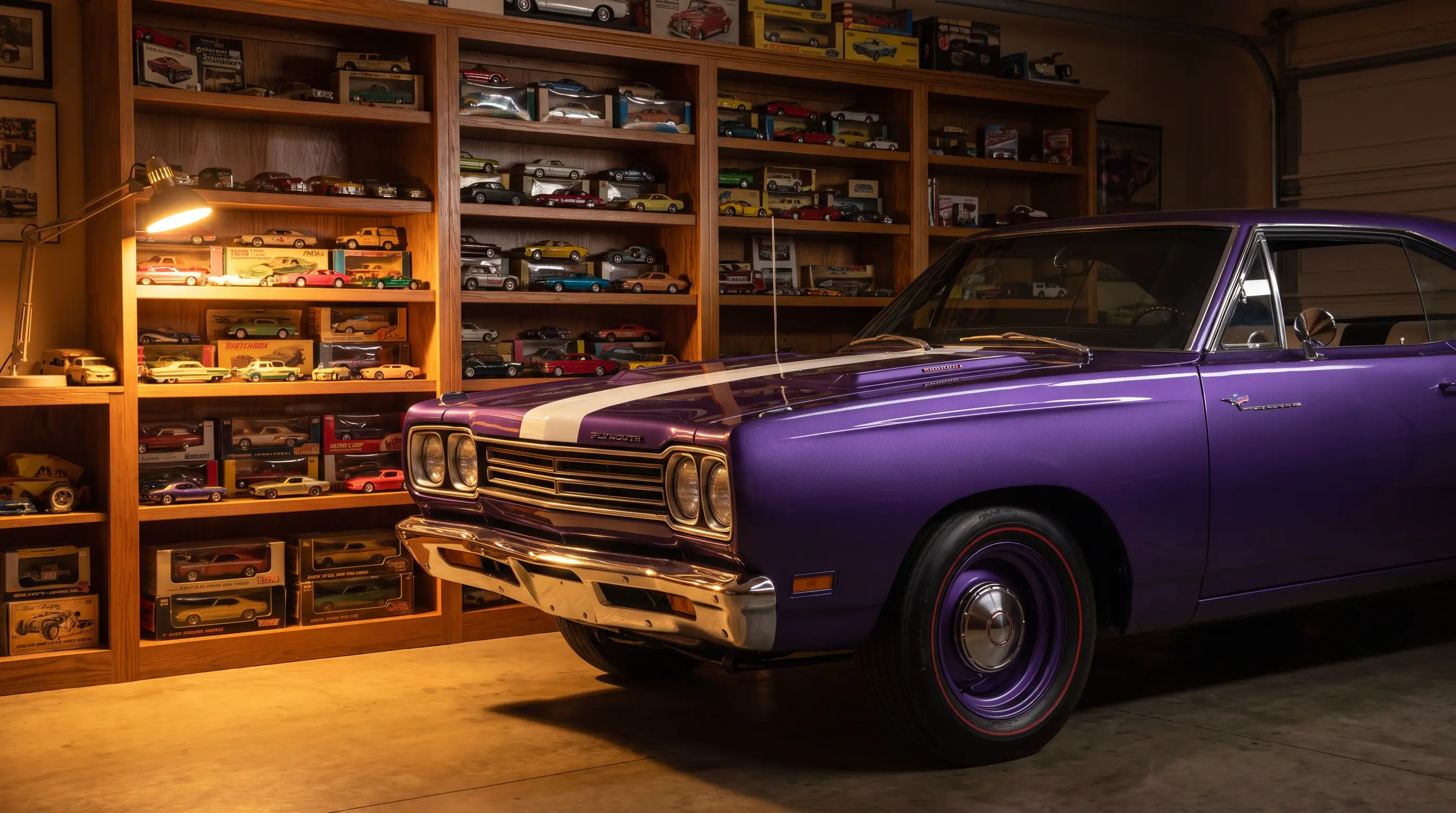
Somewhere in a shoebox in a garage, mixed in with marbles and rubber bands, there is probably a die-cast Plymouth Road Runner that some kid in 1969 or 1970 pushed across a kitchen floor a thousand times before losing interest and moving on. Mattel's Hot Wheels line launched in 1968, the same year Plymouth's cartoon-branded muscle car hit dealer lots, and both were chasing the same young audience with the same basic pitch: speed, attitude, and a price low enough that owning one did not require asking permission twice. The Road Runner itself took longer to show up as an actual Hot Wheels casting, though. Mattel did not release a dedicated Road Runner casting, a 1970 model designed by Phil Riehlman, until 1998, decades after kids were already building the car in plastic model-kit form.
A toy built for a toy-shaped car
The Road Runner was, in a strange way, already halfway to being a toy before Mattel ever touched it. Plymouth had licensed an actual cartoon character to sell the real car, complete with a horn that played a sound effect straight out of Saturday morning television. Shrinking that same car down to three inches of die-cast metal barely required a leap of imagination. Where other muscle cars needed careful marketing to explain their appeal to a ten-year-old, the Road Runner came pre-loaded with a joke every kid already knew from the cartoon, which made it a natural fit for a toy line built entirely around speed and personality rather than realism.
Early castings and what made them stick
Toy and model companies through the late 1960s and into the 1970s produced multiple versions of the Road Runner in miniature, ranging from simple friction-drive models sold in dime stores to AMT and MPC plastic model kits aimed at serious young builders. The best of these captured the car's proportions well enough that adult collectors decades later still hunt down specific releases to complete a set. Paint schemes tended to lean into the same bright, cartoonish colors Plymouth itself offered on the real car, high-visibility yellows and greens that read clearly from across a room, which made the toy versions pop on a store shelf the same way the real ones popped in a dealership lot.
From playroom to display case
What separates the Road Runner's toy history from most other muscle cars is how directly it carries into adult collecting today. A lot of former kids who pushed these toys across kitchen floors in the early 1970s grew up to buy the real thing, or to start collecting the vintage die-cast versions with the same seriousness other people bring to coin collecting. Toy shows and swap meets regularly turn up Road Runner castings in various conditions, from beat-up survivors with the paint worn through to mint-in-package examples that command real money among specialist collectors. That crossover between toy nostalgia and full-size car ownership is not unique to the Road Runner, but the cartoon connection makes the emotional pull unusually strong. Readers curious about how that cartoon branding got attached to the real car in the first place can read the background on the licensing deal that started the whole thing.
"I've met grown men who can tell you the exact year a specific Road Runner casting changed its wheel style, but couldn't tell you what they had for breakfast. That's what a good toy does. It plants something that outlasts everything else from childhood."
- Patrick Walsh
The secondary market today
Search any online auction site for a Road Runner Hot Wheels casting and the range of prices tells its own story. A common, played-with example from a bargain bin might sell for a few dollars, while a rare first-run casting still sealed in its original blister pack can command hundreds from a serious collector chasing a complete early set. That spread mirrors the full-size car market almost exactly, where a driver-quality Road Runner sits at one price point and a documented, numbers-matching Hemi car sits at an entirely different one. Collectors who work both markets often say the die-cast side moves faster and rewards patience less, since a specific casting variation can simply stop turning up for years at a time, while a real car, however rare, eventually surfaces somewhere with enough looking.
Price guides for vintage die-cast toys treat the Road Runner as a reliable category rather than a speculative one, the kind of item that holds steady value because demand comes from genuine nostalgia rather than short-term trend chasing. That stability appeals to a certain kind of collector who would rather build a complete, well-documented set over a decade than chase whatever casting happens to be trending on social media that month. It is a slower hobby, closer in temperament to the patient work of restoring a real car than to fast-flip toy speculation, and it tends to attract the same methodical personality type on both sides of the collecting divide.
Why the bird kept selling as a toy
Toy companies do not keep a car in rotation for decades out of sentiment. They keep producing a casting because it sells, and the Road Runner has stayed in various toy lineups on and off since the late 1960s because the combination of a recognizable cartoon connection and genuinely appealing muscle car proportions never really goes out of style. Modern die-cast lines aimed at adult collectors still release Road Runner castings with an accuracy the original 1968 tooling could not have managed, catering to buyers who want a detailed shelf piece rather than something meant to survive a toy box. That modern audience overlaps heavily with people who also own or want to own the real thing.
Two collecting hobbies, one shared obsession
The overlap between die-cast collecting and full-size car ownership says something honest about how the Road Runner built its fan base. The car never depended on wealth or exclusivity to earn loyalty. It depended on being fun, recognizable, and available at a price point that let a working-class buyer or a kid with allowance money both participate in the same fandom, just at different scales. That inclusiveness is baked into the model's history from the cartoon license onward, and it is why the toy version and the real version still feed into each other today, with grown collectors chasing both a mint die-cast casting and a real driver-quality car with the same enthusiasm. For anyone whose interest has grown past the toy box, it is worth taking the time to find a classic Runner and see how closely the real thing still matches the memory.