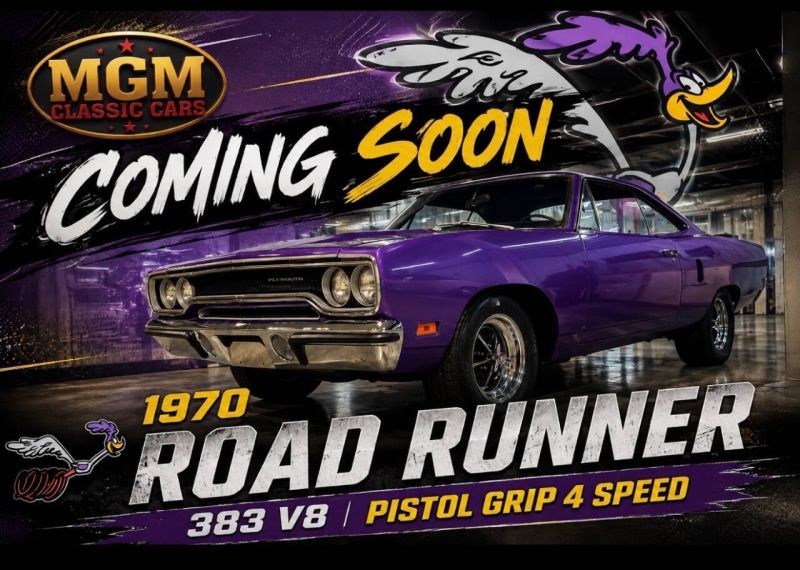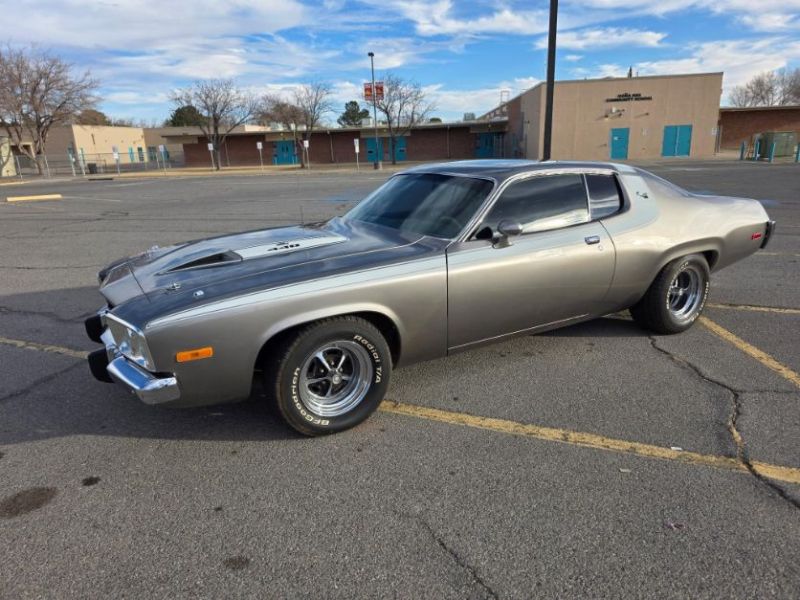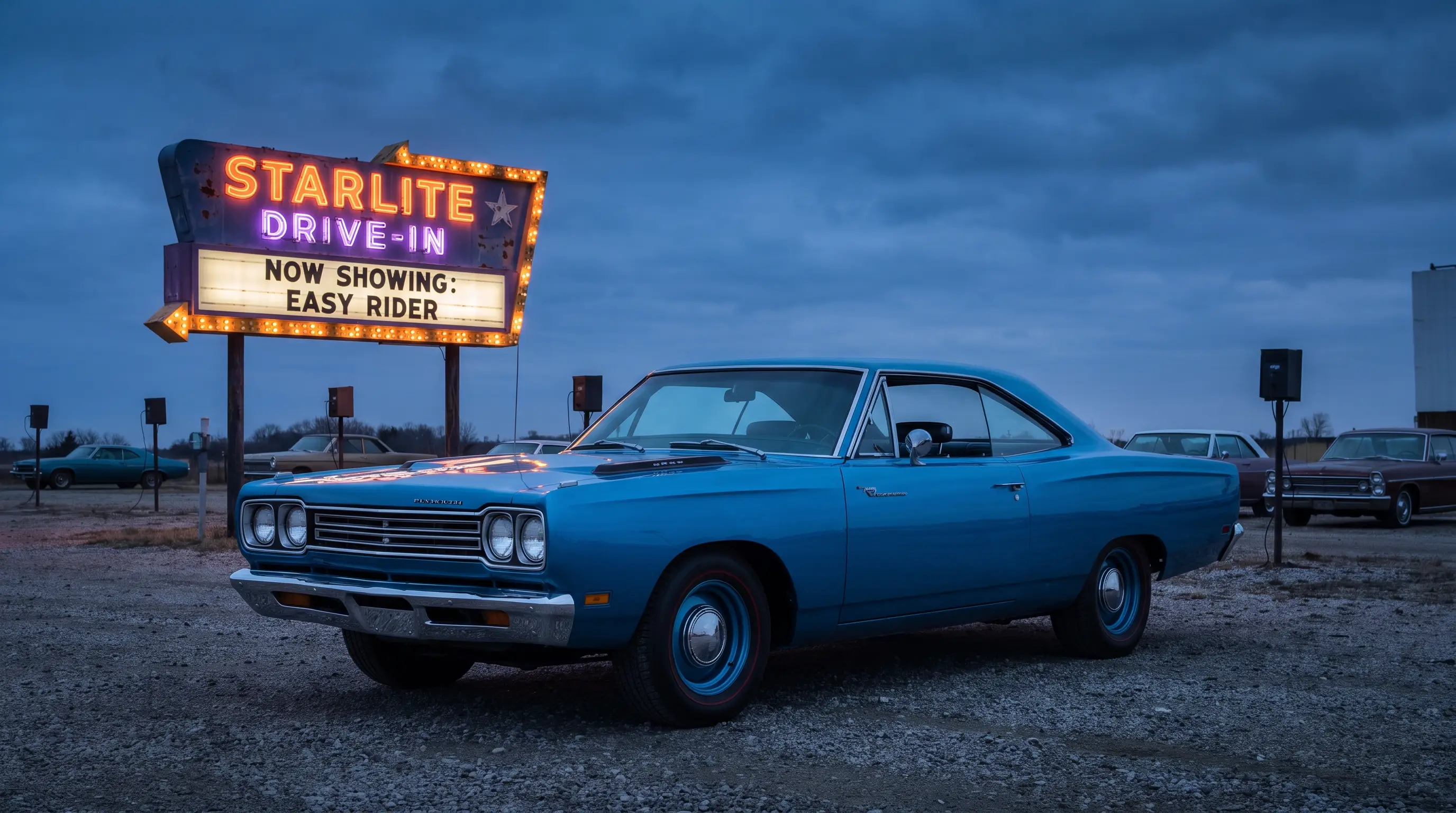
A common misconception about the Plymouth Road Runner is that the name was simply borrowed, a marketing department getting a little too comfortable using a famous cartoon bird without paying much attention to the paperwork. The actual record tells a more deliberate story. Plymouth negotiated a formal licensing agreement with Warner Bros.-Seven Arts to use both the Road Runner character and the character's signature sound effect, and that agreement shaped the car's identity from the badge on the fender down to the horn under the hood. Understanding that paperwork trail matters, because the Road Runner name legacy is built on a genuinely unusual decision for Detroit in 1967, licensing an outside intellectual property to sell a car, and that decision echoed through the model's entire production run.
Correcting a common misconception
Plenty of casual histories describe the Road Runner name as though it were a loose, informal reference, the kind of nickname that stuck without anyone at Chrysler filing paperwork over it. That is not accurate. Plymouth's product planners specifically wanted the licensed character and the associated horn sound, and getting both required a genuine commercial agreement with Warner Bros.-Seven Arts, reportedly costing $50,000 for the name and likeness, with a further $10,000 spent developing the "beep-beep" horn to match the cartoon's sound, plus a small per-car royalty on top. That figure sounds small by modern licensing standards, but in 1967 it represented a real gamble for a car that had not yet proven it could sell. The willingness to pay for the license, rather than simply borrowing the concept informally, tells you how seriously Plymouth's marketing team took the branding from the very beginning.
The paperwork behind the bird
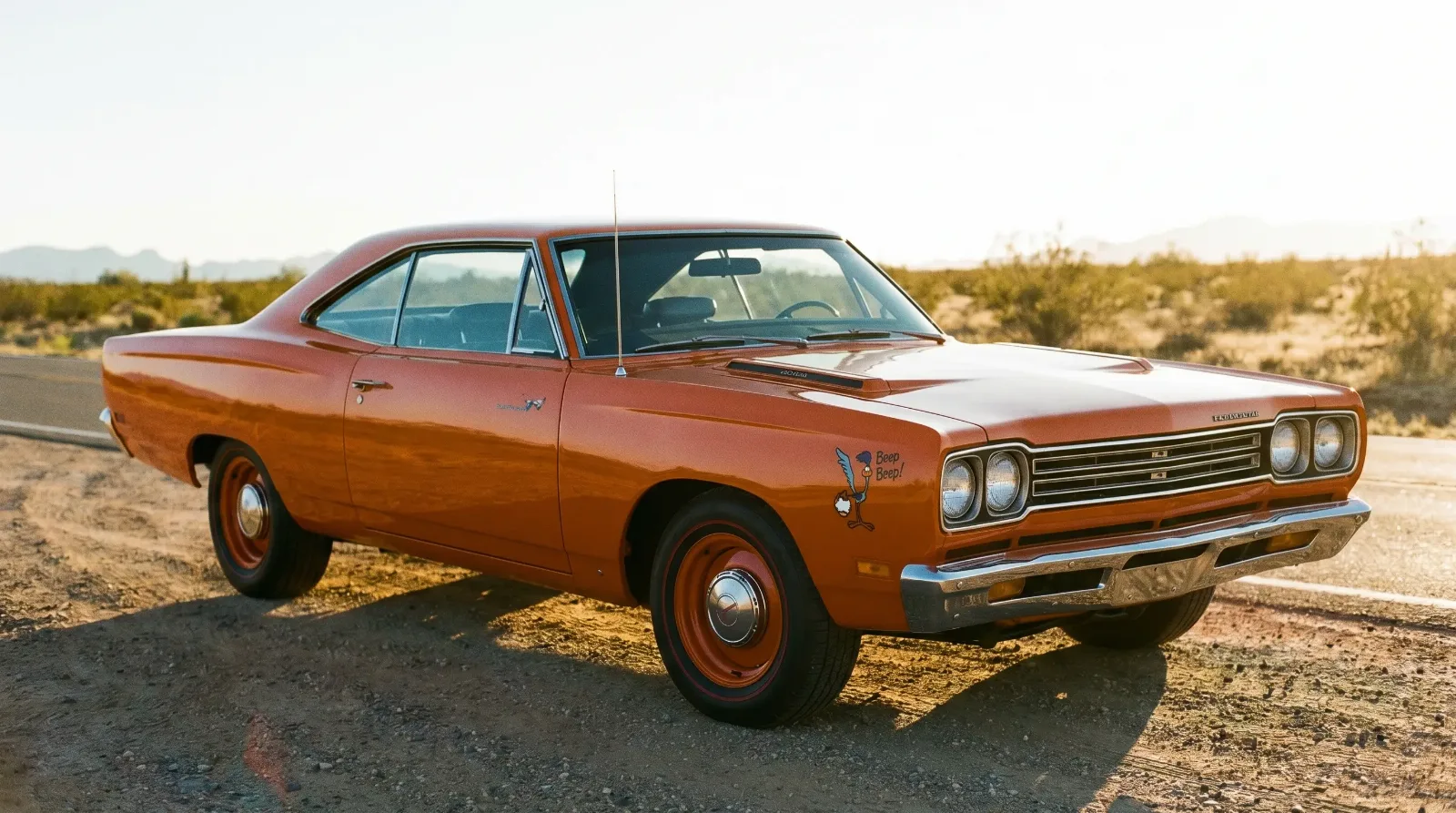
The licensing deal covered more than just the name. It included rights to the character's likeness for the fender decal, and separately, Chrysler engineers worked with Warner Bros. to develop a horn that reproduced the cartoon's signature sound as closely as period technology allowed. That horn was not a novelty add-on bolted on after the fact. It was part of the original product plan, a deliberate extension of the licensing agreement into the actual driving experience of the car. Few other automotive licensing deals of the era went that far, and the attention to detail is part of why the Road Runner name still carries specific, recognizable weight decades later rather than reading as a generic period nickname.
| Model year | Notable naming or badge detail |
|---|---|
| 1968 | Debut year, licensed Warner Bros. name and horn introduced on Belvedere-based coupe |
| 1969 | Convertible body style added, badge and decal placement carried over |
| 1971 | Redesigned body on new platform, Road Runner name and bird graphic retained |
| 1975 | Name shifted onto the smaller Fury-based platform as the muscle car era wound down |
| 1980 | Final model year for the Road Runner nameplate before it was retired |
Model years and how the name evolved
The Road Runner name survived several significant platform changes across its production run, which is itself worth correcting a misconception about. Many enthusiasts assume the nameplate applied to a single consistent body style throughout its life, when in fact Plymouth carried the name across at least three distinct platform generations between 1968 and 1980, shrinking along with the rest of the American intermediate and eventually compact market as fuel economy concerns reshaped Detroit's product planning. The badge and the bird graphic remained recognizable even as the underlying car changed dramatically, which speaks to how much brand equity Plymouth had built into the name itself rather than into any single generation's sheet metal. For readers who want the fuller marketing and cultural context behind those decisions, the whole picture lays out how the licensing arrangement shaped the car's identity across its full production span.
"People assume a licensed cartoon name was a gimmick that would age out quickly. The paperwork says otherwise. Chrysler treated that license as a long-term asset, not a one-year stunt, and the production numbers back that decision up."
- Tom Ramirez
Reading the trim tags correctly
Part of the confusion around the Road Runner name comes from how casually restorers and sellers sometimes treat trim identification decades after the fact. A genuine factory Road Runner carries specific broadcast sheet and fender tag codes that confirm the original order, and those codes are the actual documentation that separates a real example from a car dressed up after the fact with reproduction decals. Factory historians treat these codes with the same seriousness a coin collector treats a mint mark, because the name and badge alone are not proof of anything. Chrysler's own build sheets, when they survive with a car, are the closest thing to a birth certificate the hobby has, and cross-referencing those codes against the VIN is standard practice before anyone should take a seller's claim about a car's original trim at face value.
This matters more for the Road Runner than for badges without a licensing story attached, because the cartoon graphic and the name were specifically valuable even when new, which means later owners had more incentive than usual to add both to cars that never carried them from the factory. A gentle correction worth making here: a Road Runner decal on a Belvedere or Satellite does not automatically mean the car started life as a genuine Road Runner. Verifying that claim requires the same documentation trail that traces back to the original 1967 licensing agreement, fender tags, broadcast sheets, and, where available, original invoices that confirm the option was ordered and paid for at the dealership.
The name outlives the car
Even after Plymouth retired the Road Runner nameplate in 1980, the name itself kept working commercially and culturally in ways few discontinued muscle car badges managed. Reproduction parts companies, collector clubs, and enthusiast publications kept the bird graphic and the name in active circulation, and Chrysler itself has revisited the name in various forms since, a reflection of how much residual value the original licensing decision created. Few automotive names from the era carry as clean a paper trail from initial license agreement through decades of continued recognition, and that documentation is part of what makes the Road Runner name legacy a genuinely well-preserved piece of Detroit history rather than a fuzzy oral tradition passed down through car shows.
Setting the record straight
The broader lesson in correcting the informal-nickname myth is that the Road Runner's success was not an accident of casual branding. It was the result of a specific, funded, negotiated decision to attach a car to an already-beloved character, backed by engineering work to make the connection feel authentic rather than superficial. That deliberate approach explains why the name still means something specific to collectors and casual fans alike, rather than reading as one more forgotten muscle car badge from a crowded era. Anyone who wants to see how that carefully built legacy holds up in person can shop classic Runner listings and judge for themselves whether the paperwork behind the name matches the car in front of them.