Nobody at Plymouth sat down in 1969 and designed a Superbird street car. They designed a NASCAR aero package and bolted a street legal shell around it because the rules said they had to build enough of them to sell to the public. That backwards process is why the Superbird street car is such an odd thing to actually own and drive, and why the compromises baked into it are worth talking about honestly instead of pretending the wing and nose cone came free.
I have wrenched on more than one of these over the years, and the first thing that hits you isn't the horsepower. It's how much of the car exists purely because of aerodynamics at 190 miles an hour on a banked oval, and how little of it was ever thought through for a guy parking at the grocery store.
That nose cone is nineteen inches of nothing but wind cheating
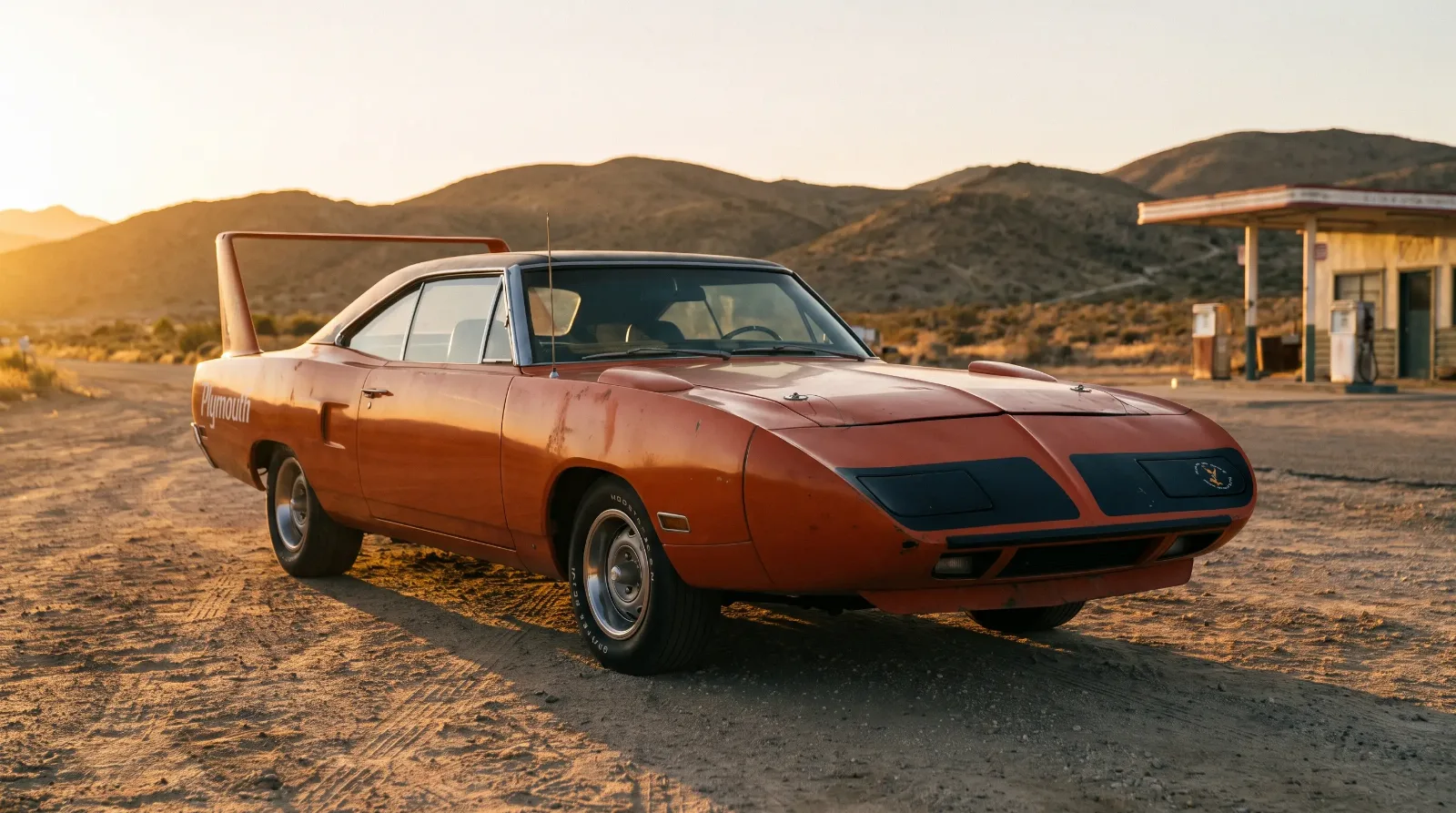
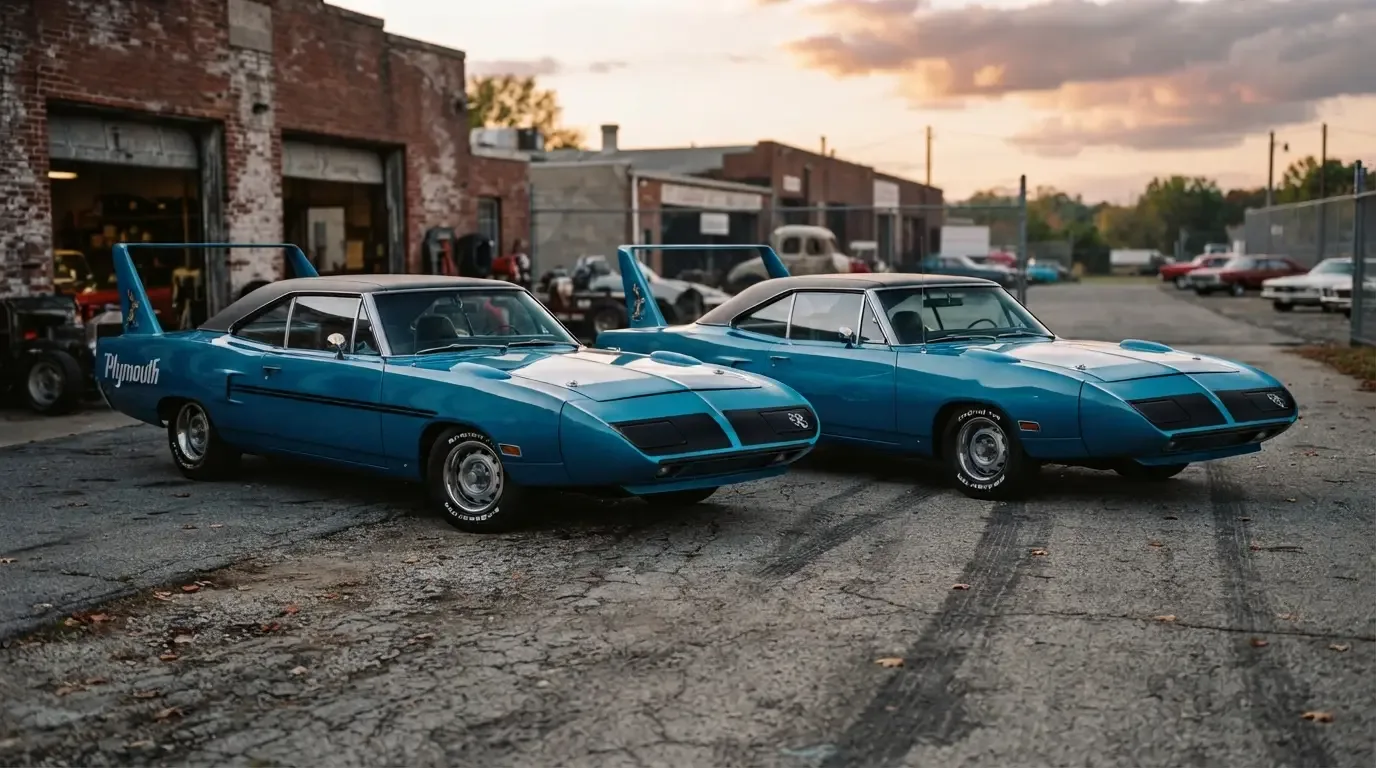
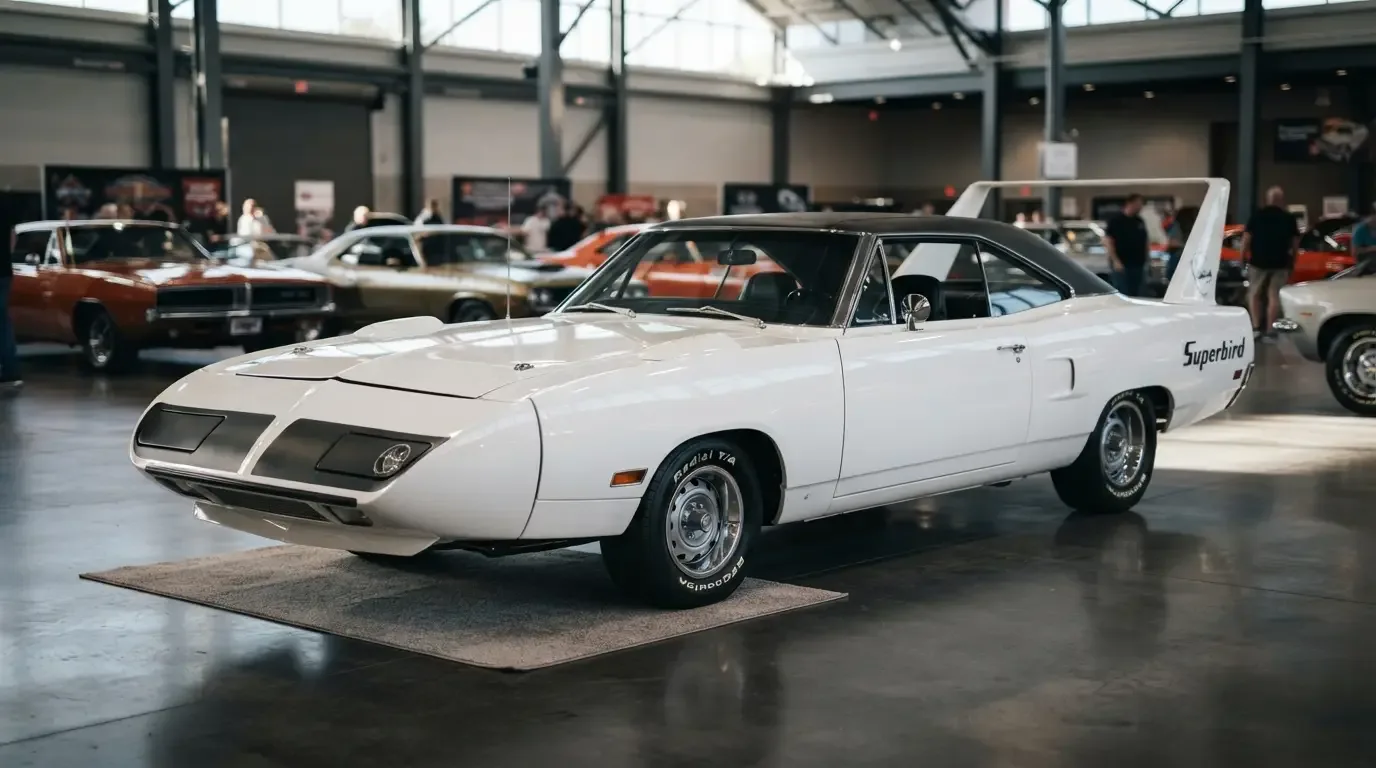
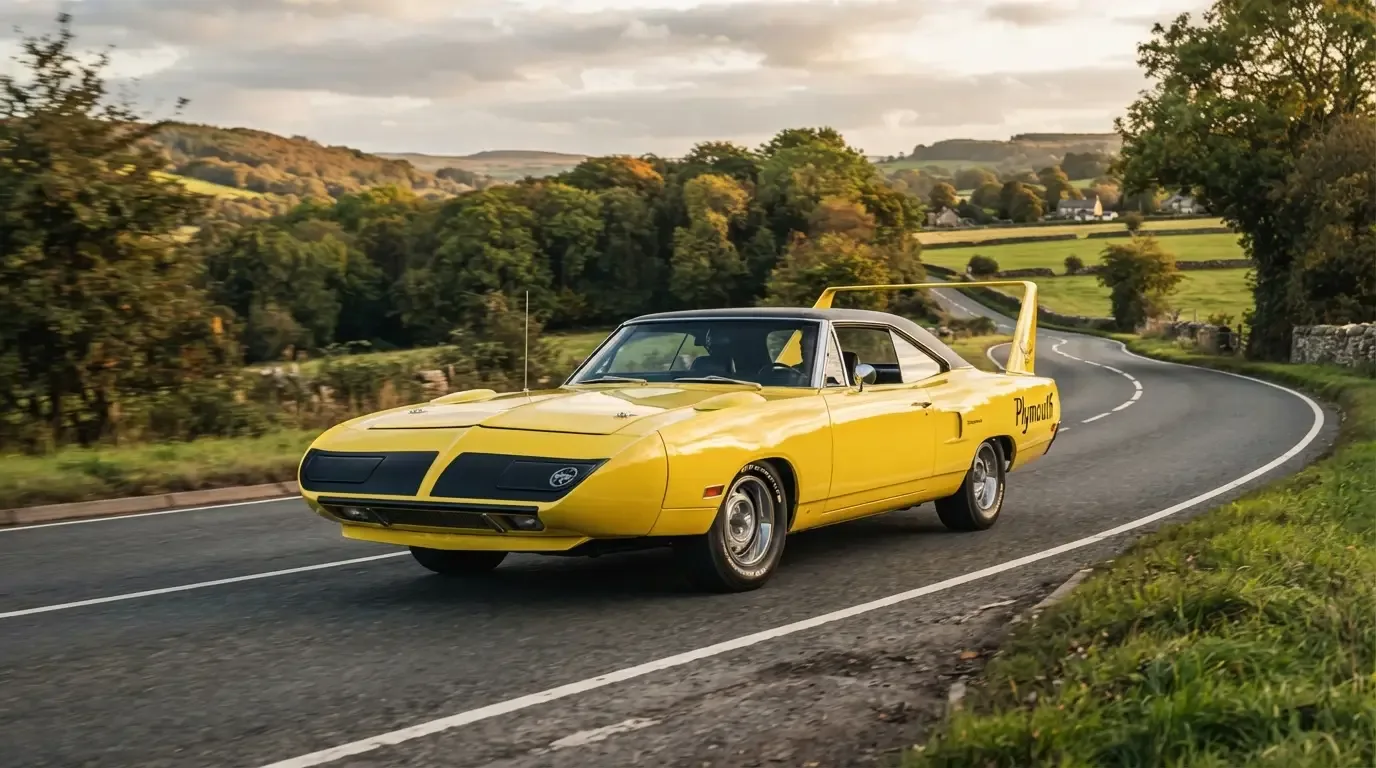
The fiberglass nose cone stretches the front of the car out about nineteen inches past where a stock Road Runner bumper sits. On the track that length smooths airflow and cuts drag. On the street it means you cannot judge where the front of your car ends by feel anymore, and parking curbs, driveway aprons, and gas station bumps all become a guessing game. Owners learn fast to leave extra room or they crack fiberglass they cannot buy cheap.
The hidden headlight setup that lives inside that nose cone is vacuum operated, and vacuum systems on a 50-plus year old car leak. When the vacuum drops, those headlight doors either won't open or won't fully retract, which on a NASCAR track never mattered because the doors stayed shut at speed anyway. On the street, at night, that is a real problem, not a cosmetic one.
The wing is not decoration, and that is exactly the trouble
That towering rear wing sits high enough to clear the trunk lid in the up position and it is mounted on real structural struts bolted through reinforced sheet metal, not tacked on. It does actual aerodynamic work holding the rear of the car down at speed. At street speeds it does essentially nothing useful and it does hurt you in two practical ways: visibility straight back through the rear window gets worse, and trunk space shrinks because of the reinforcement structure running through it.
Weight, balance, and what it actually feels like to drive
Add the nose cone, the wing, and the extra bracing, and you have a car that carries more weight further from the centerline than a standard Road Runner. That changes the way it turns in, and not for the better at low speed. These cars were never meant to be nimble around town. They were meant to go dead straight at triple-digit speeds without lifting off the pavement, and Chrysler's engineers solved that problem completely. Around a parking lot at 15 miles an hour, none of that aero benefit exists, you're just hauling extra sheet metal and feeling a nose you can't see the end of.
Steering feel is heavier than a standard Road Runner too, mostly because of the added front weight, and the car needs a bigger turning radius to work with comfortably in tight spaces. None of this is a defect. It's what happens when a race car requirement gets street-registered because the rulebook demanded a production run.
"You don't drive a Superbird to the hardware store because it's convenient. You drive it because you want to feel what 190 miles an hour engineering does at 30."
- Mike Sullivan
Living with one day to day
Practical ownership means accepting a few realities. Parking is a two-handed job because of that nose length. Fiberglass repairs on the nose cone and horn scoops are not a quick trip to the parts store, reproduction pieces exist but fitting them correctly takes real time. The vacuum-operated headlight doors need regular attention or they start sticking, and a sticking headlight door on a car this rare is not something you want to force by hand.
None of this makes the car less special. It makes it an honest machine that never pretended to be anything other than what it is: a NASCAR aero package that had to become street legal to exist at all. If you want the background on how that requirement came about in the first place, where this started covers the whole homologation story that forced Plymouth's hand.
Why the compromises are the point
Every one of these quirks exists for the same reason: Chrysler needed roughly 1,900 street cars built so Richard Petty and the rest of Plymouth's NASCAR effort could run the aero package on Sundays. The street car was the byproduct, not the goal, and once you drive one with that in mind, the awkward nose, the heavy steering, and the shrunk trunk stop feeling like flaws. They feel like proof the car did exactly what it was built to do. If you're looking to put one of these compromises in your own garage, you can shop classic Runner listings and see what's currently available.
I've worked on plenty of muscle cars that were comfortable, quiet, and easy to live with. The Superbird street car isn't trying to be any of those things, and once you stop expecting it to be, the whole car makes a lot more sense.
Cooling, wiring, and the small stuff nobody warns you about
The 440 and Hemi engines available in the Superbird run hot in stop-and-go traffic, more so than they ever would on a banked track holding a steady speed for laps at a time. Radiators and fan clutches that were adequate for NASCAR conditions can struggle in a parking lot idle on a summer afternoon, and I tell every owner to keep an eye on temperature the same way you'd watch it in any big-block car of this vintage, maybe more closely given how much extra mass is hanging off the front clip.
Wiring for the hidden headlight system runs through the nose cone and back into the stock harness, and over five decades that wiring has usually seen at least one repair, official or improvised. When you're evaluating one of these cars, trace that harness by hand if you can. A previous owner's quick fix from thirty years ago is not something you want to discover for the first time on a dark road.
What a real Superbird actually costs to maintain
Fiberglass parts for the nose cone, scoops, and trim pieces are reproduced today, but fitment on a car this specific is never a bolt-and-go job. Panel gaps have to be worked by hand, and paint matching across fiberglass and steel takes a shop that has done this specific car before, not just any body shop comfortable with muscle cars in general. Budget real money and real time if you ever need bodywork done right, and don't let anyone tell you it's a weekend job.
None of that should scare a serious buyer away. It should just set expectations correctly. This is a car that demands more attentive ownership than a standard Road Runner, in exchange for driving something that exists purely because Chrysler needed to go racing and the rulebook made them build it street legal first.
Sources and notes
- Plymouth Superbird - Wikipedia
- Supercars.net - 1970 Plymouth Road Runner Superbird 440
- Muscle Car Club - Plymouth Superbird history and production totals
- Sports Car Market - 1970 Plymouth Superbird profile
- AAR Quality Fiberglass - Superbird wing reproduction parts
- Audrain Automobile Museum - 1970 Plymouth Superbird