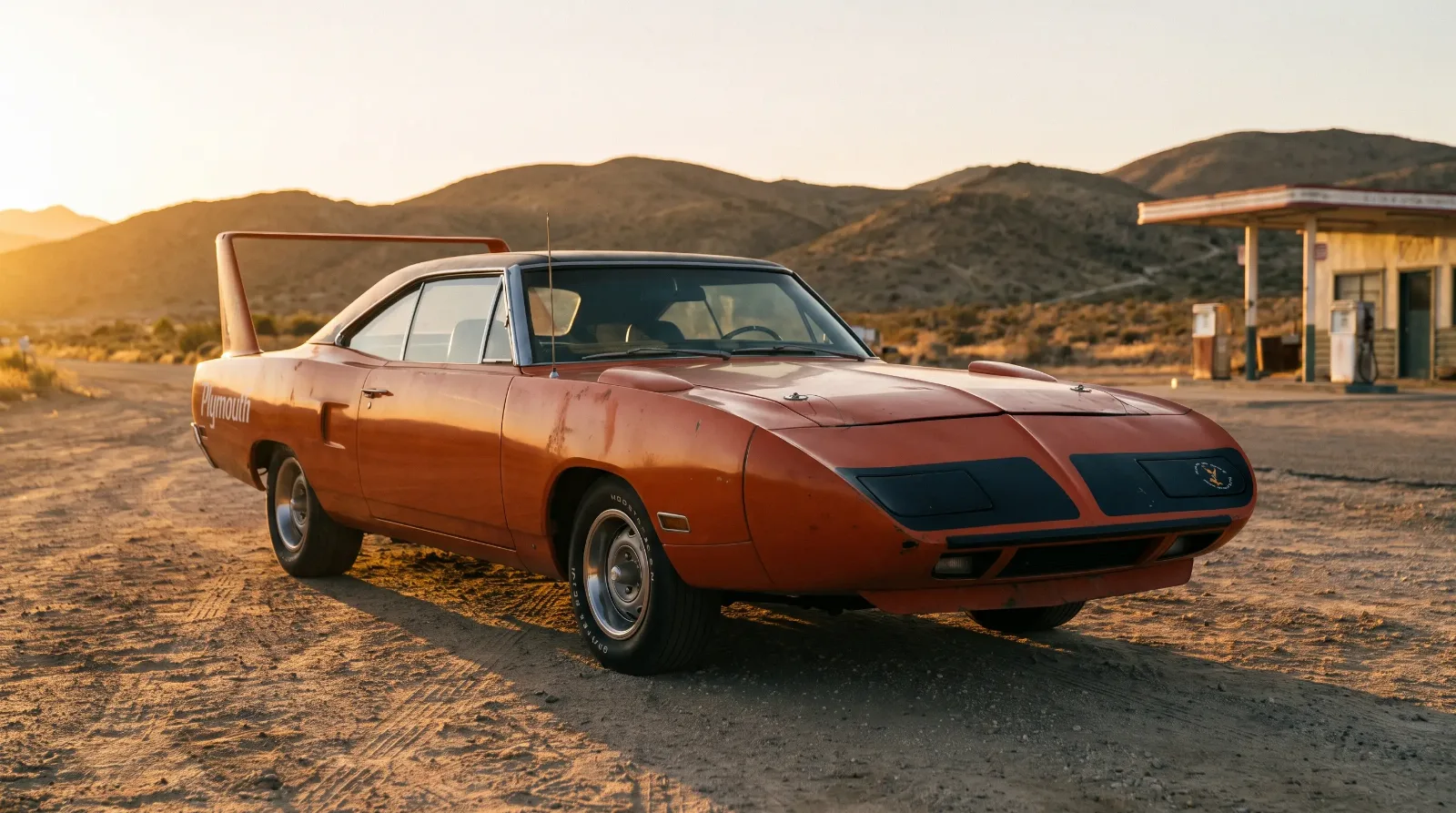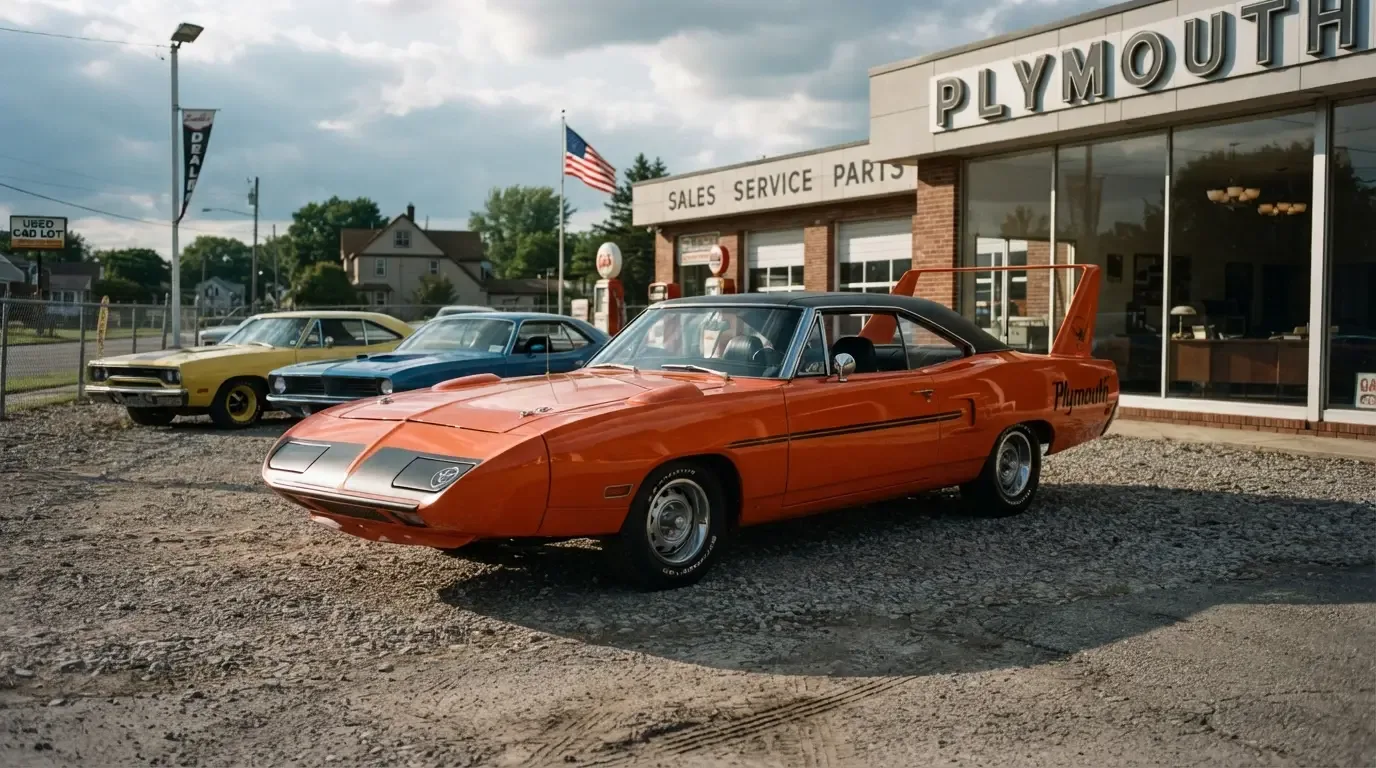
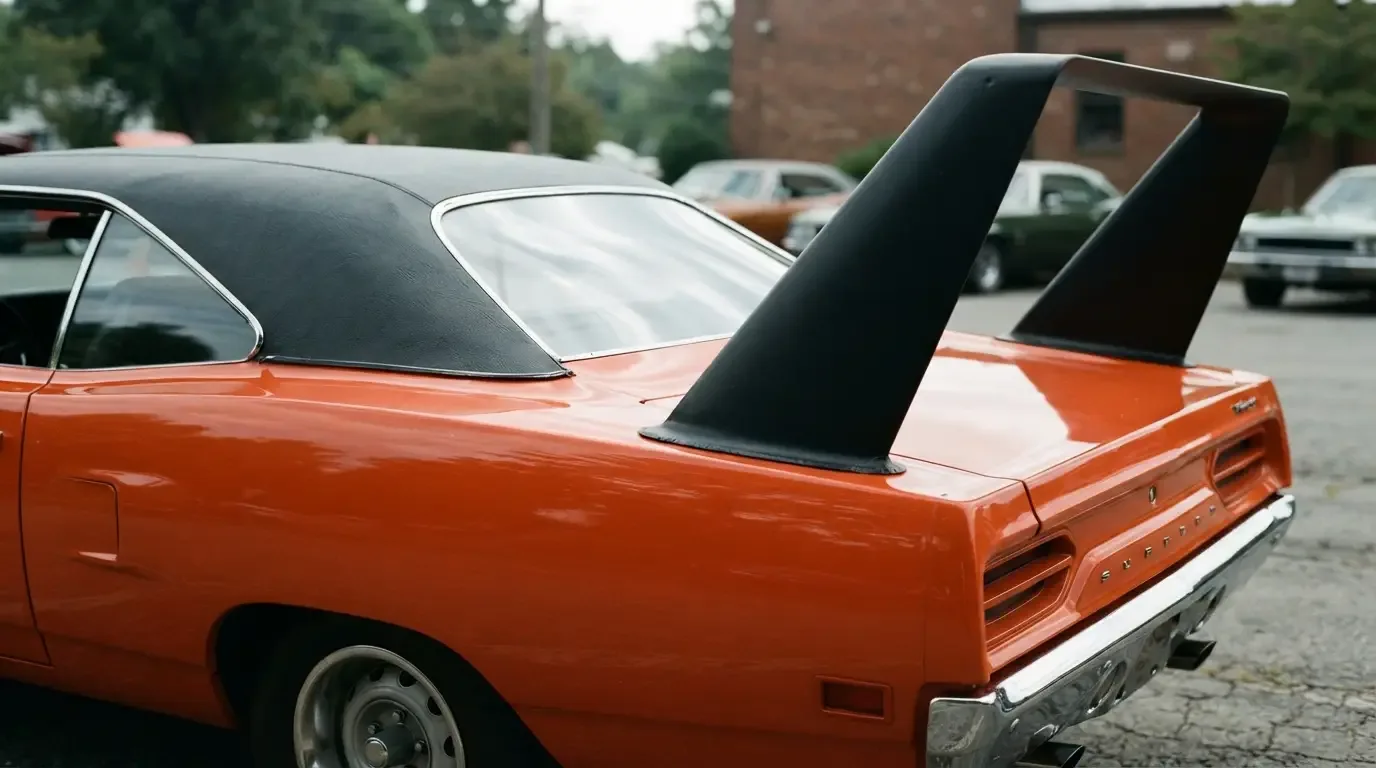
I have had my hands on more than a few Superbird roofs over the years, and the vinyl on top is not there because Plymouth thought it looked sharp. The superbird vinyl roof exists to cover a body seam Chrysler never intended to be seen, and that fact says more about how this car got built than any amount of chrome trim would.
A borrowed nose meant a mismatched roof
The Superbird's aerodynamic nose cone and flush rear glass were grafted onto a Road Runner body that was never designed to accept them. Plymouth's engineers took the standard B-body roof, which was shared across the Road Runner and Belvedere lines, and welded on the new rear window opening needed for the flush glass that made the wing car's rear aerodynamics work. That welding left a visible seam running across the roof where the original stamping met the modified section, a seam that would have looked like an obvious factory repair if left bare under paint.
Covering that seam with a vinyl roof was the practical fix. Instead of trying to perfectly blend and finish a weld line across a highly visible panel on every single Superbird built, Chrysler made the vinyl top mandatory equipment on every production car, a black boar-grain vinyl regardless of exterior paint color, using the material's texture and seams to hide the factory's own construction shortcut. It was not a styling flourish first. It was a manufacturing solution that happened to also match the performance-luxury look Chrysler was going for elsewhere in the lineup that year.
What the seam actually tells you
If you strip the vinyl off a genuine Superbird roof, and I have done this more than once on cars coming in for real restoration work, you find the weld seam right where the rear glass opening was modified. That seam is one of the more reliable tells for verifying a car's roof stamping is correct for the model, because reproduction or incorrectly sourced roof panels do not always carry it in the right location or with the right factory finish underneath.
This matters more than people think when they are shopping a car described as a genuine Superbird. A roof panel swapped in from a standard Road Runner during a later repair will not have that seam in the same place, if it has one at all, and that is the kind of detail that separates a period-correct restoration from a poseur build wearing the right decals and the wrong sheet metal underneath.
"Anybody can slap a wing and a nose cone on a Road Runner and call it a tribute car. Pull the vinyl back on a real one and you are looking at the actual manufacturing compromise Chrysler had to make to build this thing fast enough to hit a NASCAR deadline. That seam does not lie."
- Jim Vasquez
How other homologation cars hid their own compromises
The Superbird was not alone in needing a cosmetic fix for a structural shortcut. Dodge's Charger Daytona, built the year before to satisfy the same NASCAR aerodynamic rule, dealt with its own fitment issues where the nose cone met the front fenders, and other manufacturers chasing aero advantages in the same era made their own quiet compromises under paint and trim that never showed up in the sales brochure. Homologation cars, by their nature, get built fast against a racing deadline rather than a normal product development timeline, and fast builds leave traces if you know where to look for them.
What sets the Superbird's roof seam apart is how directly it ties to a specific, identifiable manufacturing step rather than a general fit-and-finish issue. You can point to exactly which panel was modified, exactly why, and exactly what the vinyl was covering. That level of documented cause and effect is unusual, and it is part of why serious Mopar people treat the roof as a genuine authentication point rather than just another cosmetic detail.
Living with vinyl for fifty-plus years
Original vinyl roofs on cars this old have almost universally failed by now, cracked from decades of sun exposure and moisture working underneath the material at the seams. That is a normal condition issue on any surviving Superbird and not, by itself, a red flag about the car's authenticity. What matters to a serious buyer is whether the roof panel underneath carries the correct seam and stamping, not whether the vinyl covering it happens to be original material. Vinyl gets replaced. The steel underneath either tells the true story or it does not.
Color matching is actually where a lot of buyers get tripped up. Unlike some other Chrysler models of the era that offered a menu of vinyl roof colors keyed to paint codes, every production Superbird left the factory with the same black vinyl top regardless of body color. A car showing up with a body-color-matched or non-black vinyl roof is wearing something other than what left the factory, and that alone is worth asking hard questions about before you get attached to a listing.
What a shop sees that a photo never shows
Photographs sell cars, and a well-detailed vinyl top photographs beautifully under show lighting. What a photo cannot show you is what happens when a panel gets tapped along the seam line, or when the vinyl is lifted at an edge during an inspection. A shop that has worked on genuine cars knows the difference between a factory seam under aged vinyl and a repaint job trying to disguise later bodywork with fresh material and a good detail job. That difference does not show up on a phone screen from three states away, which is exactly why in-person inspection by someone who has handled these roofs before is worth the trouble for a car at this price point.
I have turned away work on cars where the roof told a story the seller either did not know or was not telling. That is not an accusation against every seller out there. Plenty of owners inherited cars with prior repairs done honestly and disclosed. But the roof does not care about anyone's intentions. It just carries the evidence either way, and a buyer who skips that inspection is trusting a story instead of steel.
What this means for a real build
None of this is a criticism of the car. Every homologation special from this era involved compromises made under a deadline, and hiding a seam under vinyl is a mild one compared to some of the shortcuts other manufacturers took chasing the same NASCAR rules. What it does mean is that the roof on a Superbird is not just trim. It is physical evidence of how the car was actually assembled, and it is worth understanding before you pay a premium for one. For the fuller background on why the nose cone and rear glass needed to change in the first place, the full story covers the aerodynamic reasoning that started this whole chain of manufacturing decisions.
If you are in the market and want to see what real cars, roofs included, are actually asking right now, classic Runner for sale listings are a better starting point than trusting a photo of shiny vinyl from across a show field.