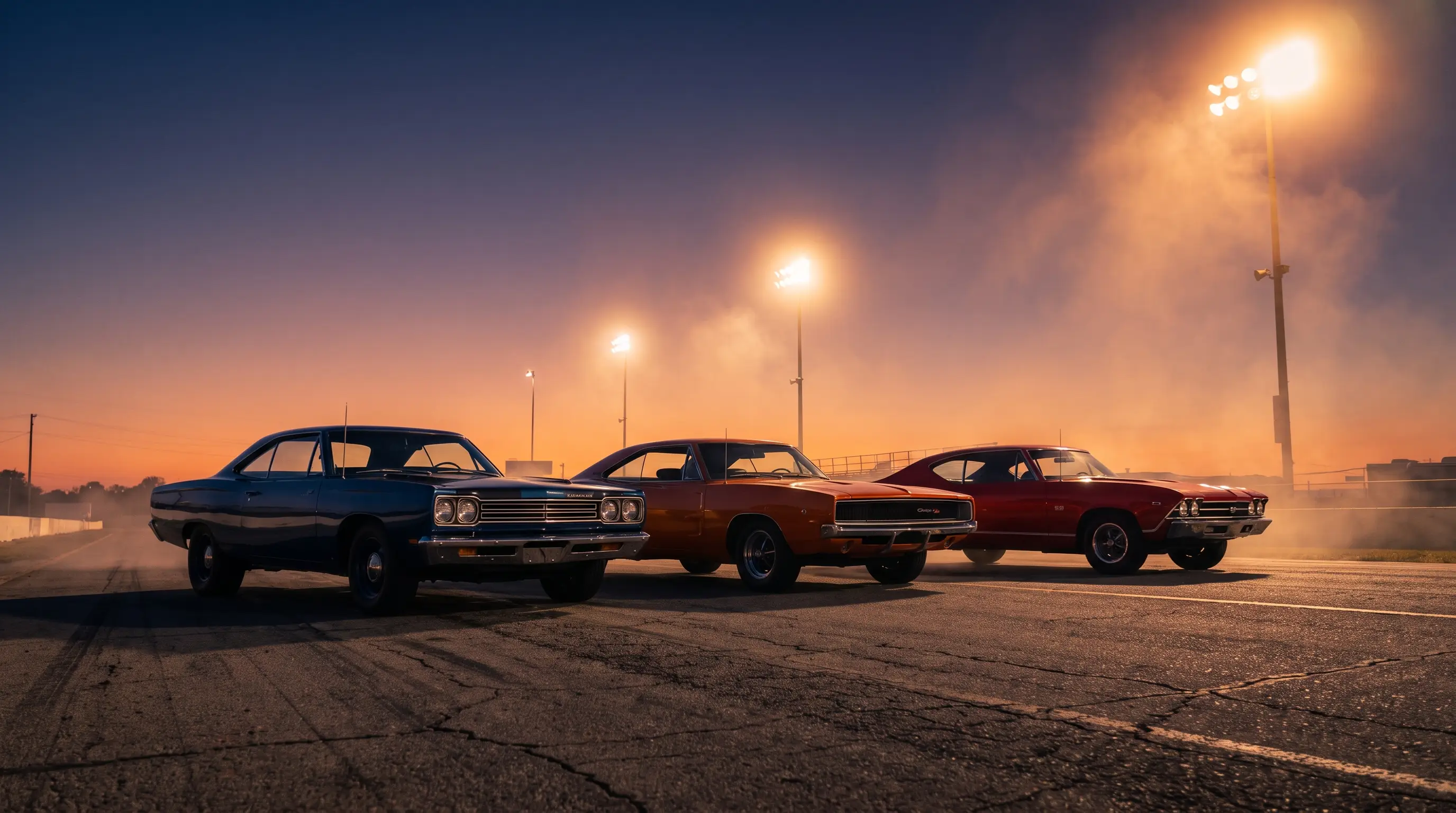
Kenny Loeffler was twenty-three years old and standing in a Woolworth's parking lot outside Toledo in the fall of 1968 when the argument started again. It was the same argument every Friday night that year, three cars nose to tail under the sodium lights: a Hemi Orange Road Runner, a Charger R/T in B5 blue, and a Chevelle SS396 that somebody's older brother had inherited. Nobody agreed on which one actually won. Everybody agreed on why they were there. The Road Runner vs Charger debate was never really about a stoplight. It was about what a muscle car was supposed to be, and in 1968 Detroit had three very different answers sitting in the same lot.
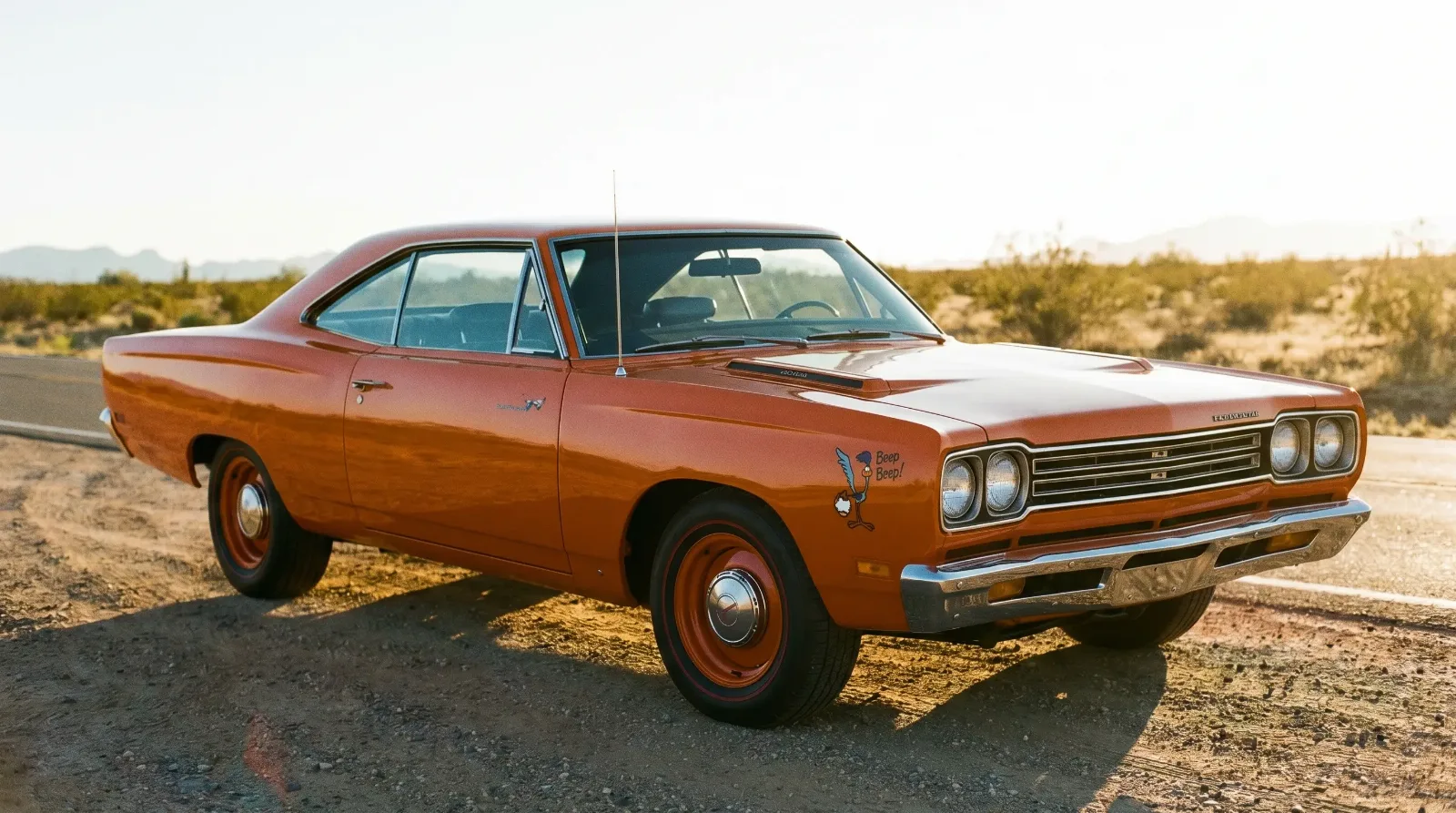
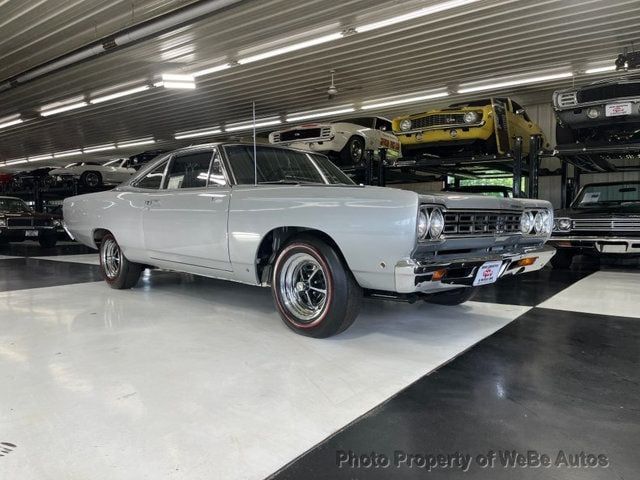
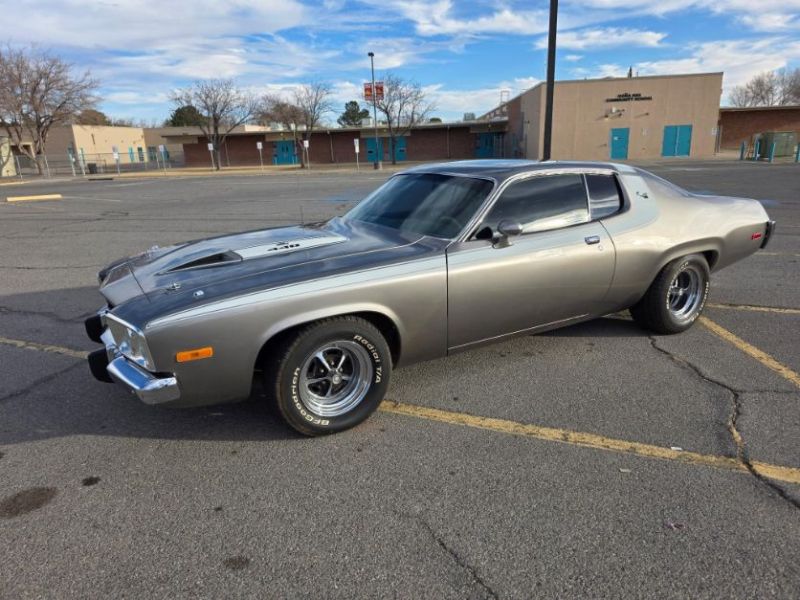
Plymouth built the Road Runner to settle an argument that had been brewing since 1964, when the GTO proved you could sell speed to a twenty-two-year-old with a factory job and no patience for chrome. By 1968 the muscle car market had drifted upmarket. Options lists ballooned, prices climbed, and the cars that started the whole thing had gotten heavy with luxury nobody under thirty asked for. Plymouth's answer was almost insulting in its simplicity: strip a Belvedere, drop in a 383 as standard equipment, option a 426 Hemi if you dared, and sell the whole package for barely over three thousand dollars. They even paid Warner Bros. licensing money for the name and the horn that went "beep beep," a decision that sounds like a marketing department's fever dream and turned out to be one of the shrewdest moves in the whole muscle car era. That story, the one about a cartoon bird ending up on a Detroit assembly line, is its own tangent, and it is worth chasing down separately if you want the full road runner beep beep history.
The Charger played a different game entirely
Dodge never really wanted to build a stripped-down street fighter. The Charger existed to be a statement, a fastback coupe with hidden headlights and a full-width taillight that looked like nothing else on the road. Where the Road Runner leaned into cartoon simplicity, the 1968 Charger leaned into theater. It had a cockpit-style interior with four bucket seats and a console running the length of the car, the kind of thing you'd option on a personal luxury coupe, wrapped around a chassis that could carry the same 440 Magnum and 426 Hemi engines the Road Runner offered. Dodge was selling image first and muscle second, at least until the R/T package made the performance case explicit. The two cars shared a corporate parent and, underneath the sheet metal, a great deal of hardware. Same B-body platform. Overlapping engine options. Even some of the same suppliers stamping out brake components down the line. But nobody cross-shopped a Charger against a Road Runner the way you'd cross-shop two trims of the same car, because Plymouth and Dodge had spent real money making sure the buyers felt different from each other. A Road Runner buyer wanted the cheapest ticket to serious acceleration and didn't care what the interior looked like. A Charger buyer wanted to be seen arriving somewhere. Both of them wanted to win the stoplight, which is where Chevrolet complicated everything.
Chevelle brought GM's version of the same fight
The Chevelle SS396 wasn't chasing the Road Runner's stripped-down formula or the Charger's styling ambitions. It was chasing GM's own reputation, built on a decade of engineering that treated horsepower as a solvable problem rather than a marketing angle. The 396 cubic inch big block came in multiple states of tune, and by 1969 buyers could order the COPO 427 through a loophole that dealer Fred Gibb and a handful of others exploited to build some of the fiercest street Chevelles ever assembled, cars that officially didn't exist on any factory order sheet. Chevrolet's advantage was never a single headline number. It was depth, dealer network, and a badge that carried weight with buyers who might never set foot in a Plymouth or Dodge showroom out of pure brand loyalty.
Put the three side by side on paper in 1968 and the specifications blur together more than the reputations suggest.
| Model | Base engine | Top factory engine | Approx. base price |
|---|---|---|---|
| Plymouth Road Runner | 383 cu in V8, 335 hp | 426 Hemi, 425 hp | ~$2,896 |
| Dodge Charger R/T | 440 Magnum, 375 hp | 426 Hemi, 425 hp | ~$3,506 |
| Chevrolet Chevelle SS396 | 396 cu in V8, 325 hp | 396 cu in V8, 375 hp | ~$2,825 |
Numbers like these were always softer than they looked in period advertising, deliberately underrated by all three manufacturers to keep insurance companies and sanctioning bodies from clamping down harder than they already were. What separated the cars in the real world was weight distribution, gearing, and how committed a given buyer was willing to be to a stripped interior in exchange for a quicker quarter mile.
"You didn't buy a Road Runner because you'd done the math. You bought it because the math had already been done for you, and it came out cheaper than anything else that could embarrass a Corvette on a Friday night."
- Patrick Walsh
Why the hierarchy never actually settled
Ask a Mopar guy and the Road Runner wins on value and the Hemi option settles any remaining doubt. Ask a Dodge loyalist and the Charger's chassis balance and styling made it the more complete car, R/T package or not. Ask someone who grew up around a Chevelle and you'll get a lecture about GM engineering depth that assumes the argument was over before it started. The truth is that all three built exactly the car their marketing department wanted, aimed at slightly different customers, and the muscle car era was large enough to reward all three approaches simultaneously. Plymouth sold over 44,000 Road Runners in that first model year alone, a number that stunned even Plymouth's own sales forecasters and proved the stripped-down formula had found a real audience rather than a niche one.
The licensing deal that put a Warner Bros. cartoon bird on a Plymouth fender is one thread worth pulling if you want a related story about how Detroit marketing departments borrowed pop culture wholesale in the late sixties. It explains a lot about why the Road Runner name stuck in a way that a more conventional trim designation never would have.
What the hierarchy means for buyers today
None of this settled anything in 1968 and it hasn't settled anything since. Values for all three have moved in fits and starts depending on documentation, engine originality, and whichever decade's collector generation is currently buying. A numbers-matching Hemi car of any of the three badges commands serious money now, while base 383 and 396 cars remain the more attainable entry point into the same argument that played out in that Toledo parking lot. If you're curious what the market actually looks like right now rather than what it looked like in 1968 brochures, there are Runners for sale now across a wide range of condition and originality, which is usually the fastest way to understand where a car really sits in the hierarchy.
Loeffler, for what it's worth, never did settle his own argument. He bought a Road Runner in 1969, sold it in 1974 for reasons he still won't fully explain, and spent the next four decades telling anyone who'd listen that the Chevelle was quicker but the Road Runner was righter. That's about as close to a verdict as this hierarchy ever produces. Everybody has one. Nobody's is final.
For the full picture of the Road Runner B-body stablemate, see the classic Dodge Charger story.
Sources and notes
- Plymouth Road Runner - Wikipedia
- 1968 Plymouth Road Runner Hemi Coupe Specs - Automobile Catalog
- 1968 Dodge Charger R/T 440 Magnum Specs - Automobile Catalog
- 1968 Plymouth Road Runner: A Profile of a Muscle Car - HowStuffWorks
- Budget Muscle: The Plymouth Road Runner Started a Trend - Hagerty Media
- 1968 Chevrolet Chevelle SS396 - Supercars.net