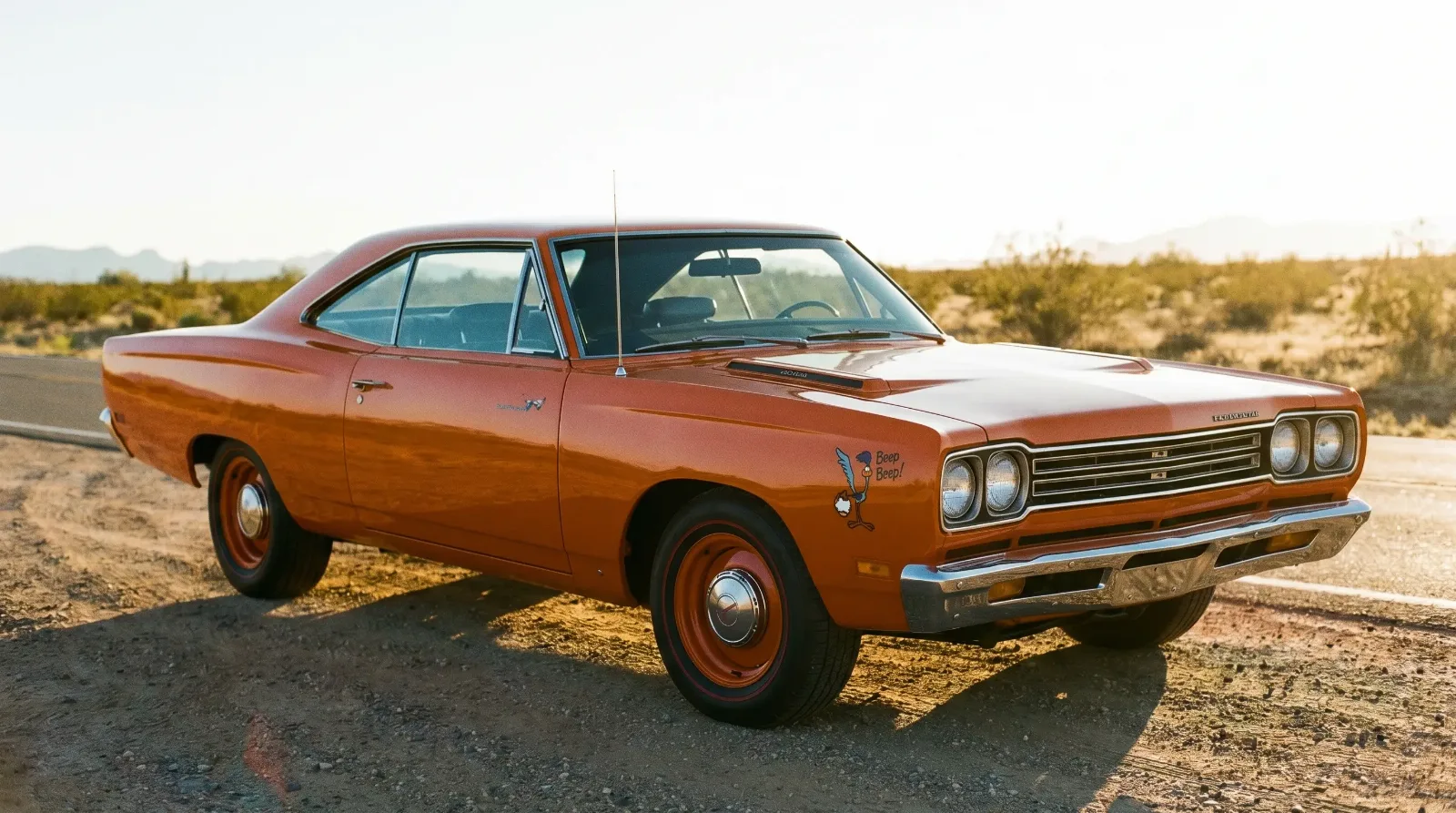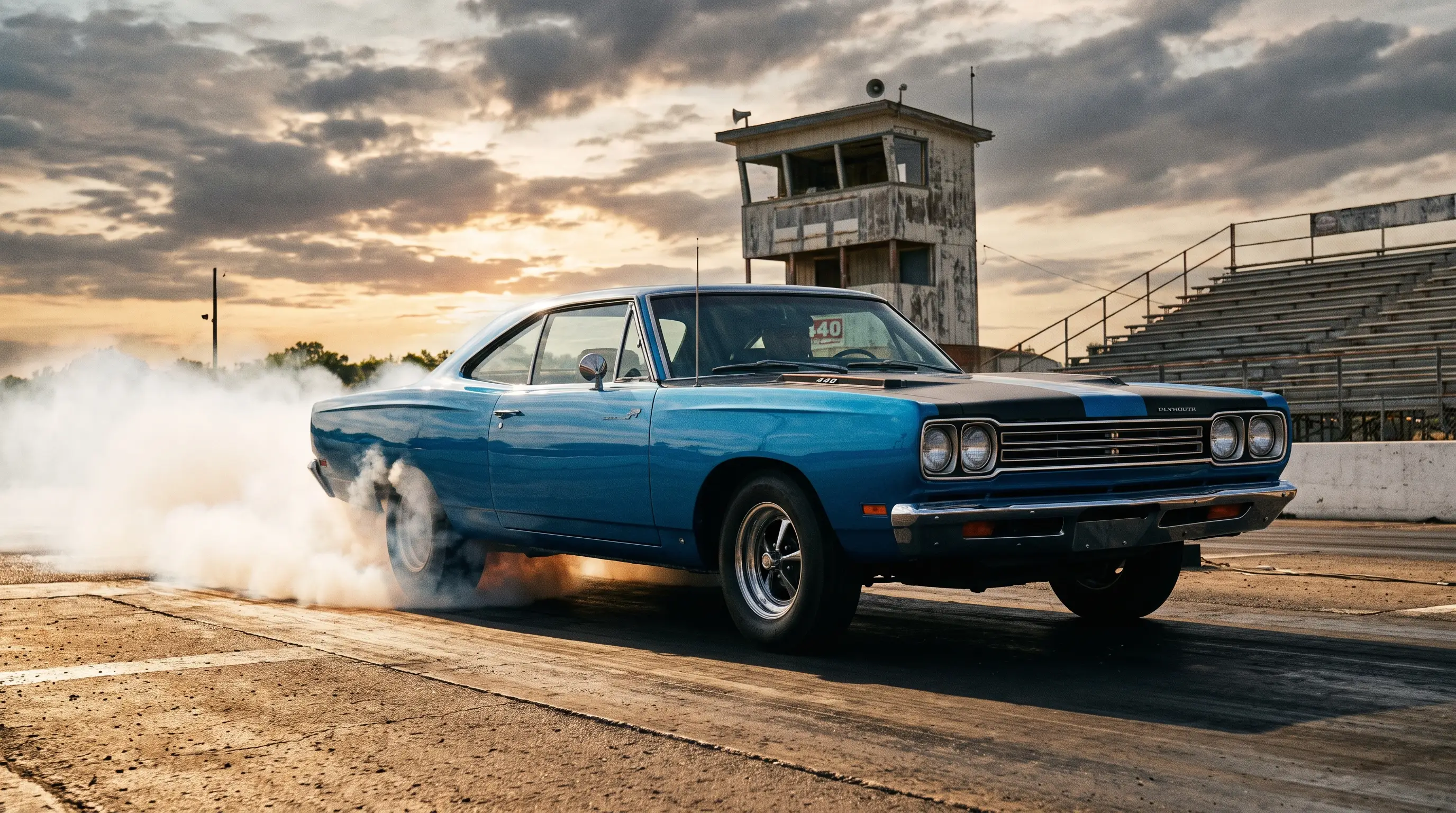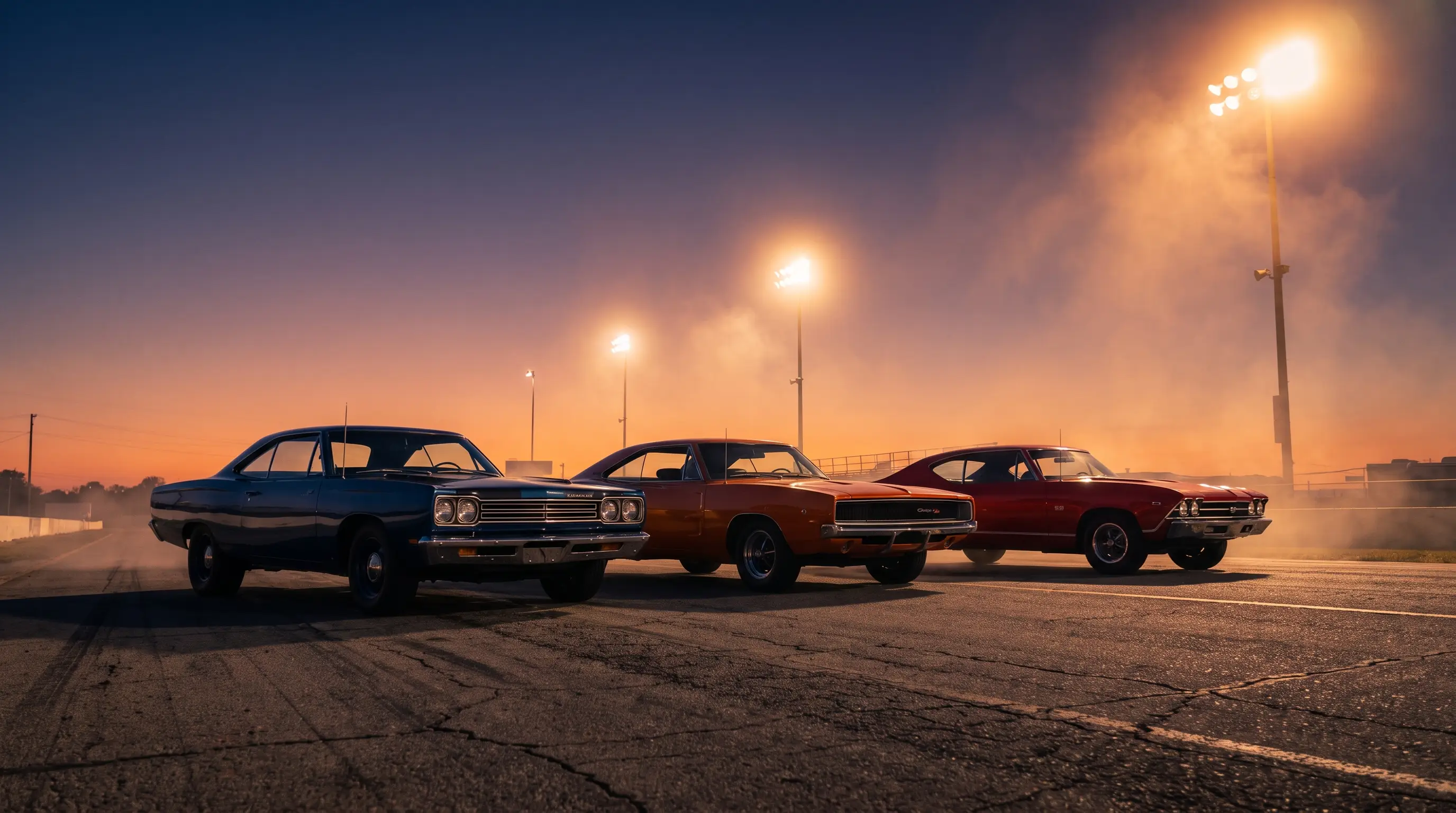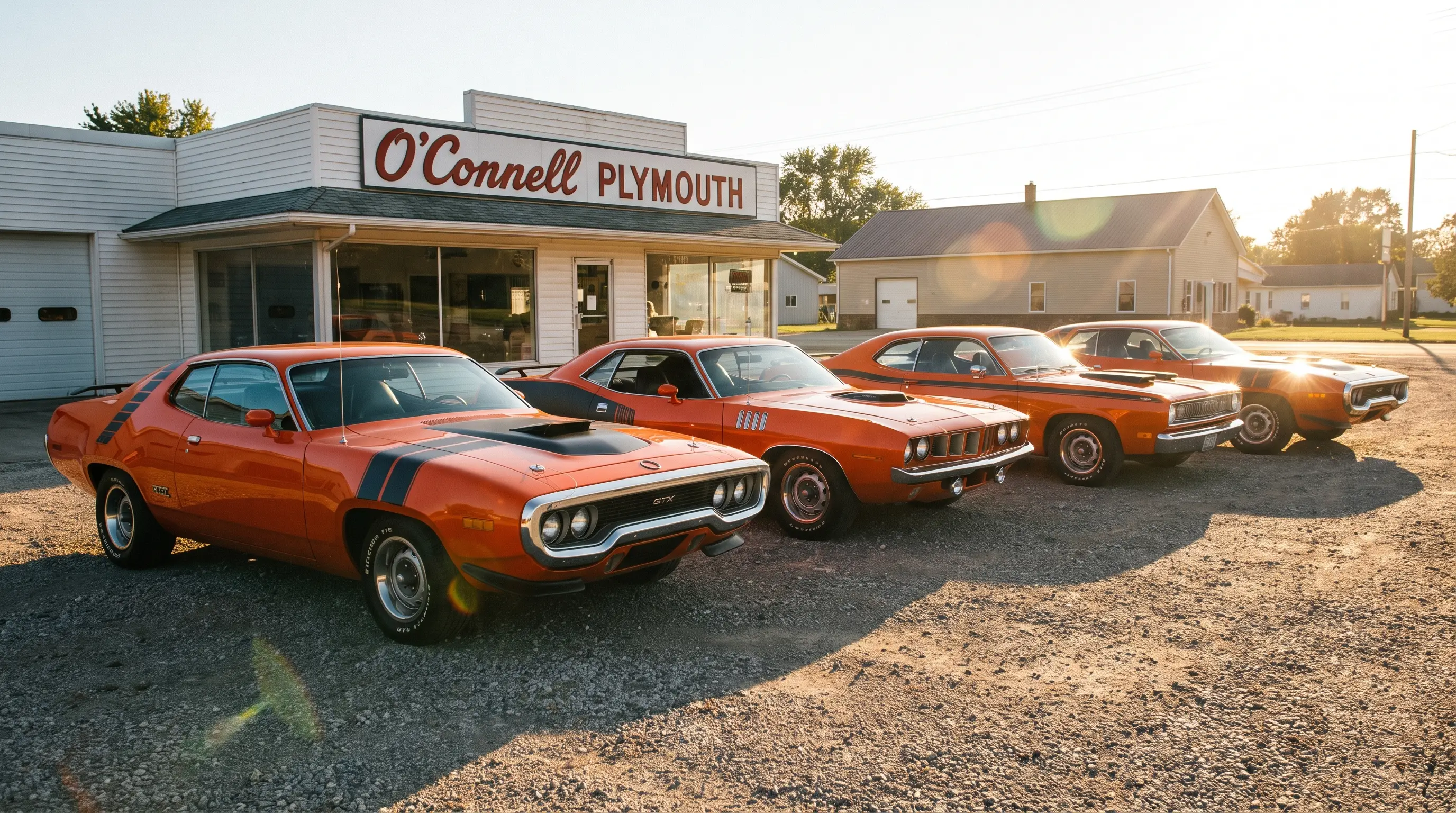
Picture a small-town Plymouth dealer lot in 1970, closed off from regular traffic for one Saturday, with a lineup of loud, freshly painted performance cars parked nose to tail like a traveling circus that swapped elephants for Hemis. That was the Plymouth Rapid Transit System in action, a factory-organized promotional caravan built to put the brand's full muscle car lineup, Road Runner included, directly in front of small-town buyers who would never otherwise see one outside a magazine ad. It was not subtle, and it was not meant to be. Plymouth wanted noise, crowds, and a reason for local newspapers to run a photo, and the Rapid Transit System delivered all three with the efficiency of a well-run traveling show.
A caravan, not a catalog
Most car companies in the late 1960s were content to sell performance through magazine ads and dealer brochures. Plymouth decided that was not aggressive enough. The Rapid Transit System put actual cars, painted in the brand's boldest colors and branded together as a matched fleet, on the road to visit dealerships and events across the country. Buyers who might never travel to a big city auto show got to see a Road Runner parked next to a GTX and a Barracuda, all wearing the same coordinated graphics package, and that visual unity did more to sell the idea of Plymouth as a serious performance brand than any single print ad could manage on its own.
Why a stripped-down company bothered with a road show
It might seem strange that Plymouth, a brand built around no-frills value, spent real money on a traveling promotional fleet. The logic tracks once you consider the buyer. Someone shopping for a Road Runner specifically wanted performance without paying for image, and a factory-organized show of matched, aggressively painted cars was a cheap way to build that image collectively rather than car by car. One dealership advertising one bright orange Road Runner looks like an isolated choice. A coordinated fleet touring dozens of towns in matching paint and graphics looks like a movement, and that distinction mattered enormously to a marketing department trying to convince buyers that performance was Plymouth's whole identity, not just one product line among many.
What the road show actually looked like on the ground
The core traveling fleet was small, a handful of heavily customized show cars, including a 1970 Road Runner, a Duster, and one or two Barracudas, built by custom car builder Chuck Miller with paintwork designed by artist Harry Bradley, and that compact caravan toured auto shows and major Plymouth dealers across the country through 1970 and 1971. That pairing made sense. A crowd already gathered for a Saturday drag race was exactly the audience Plymouth wanted in front of its Road Runner and its stablemates, people who cared about performance and were primed to be impressed by a matched fleet of freshly painted muscle cars rolling in together. Local dealers benefited too, getting foot traffic on their lot that a single showroom promotion could never generate on its own.
"You didn't need a brochure to understand what Plymouth was selling when that caravan rolled into town. You just needed eyes. A dozen loud, matched cars parked in a row said more than any ad copy a marketing department could write."
- Mike Sullivan
The lasting mark of a short-lived program
The Rapid Transit System did not run forever. Promotional caravans are expensive, logistically complicated, and eventually give way to whatever the next marketing idea happens to be, and Plymouth's program faded as the muscle car era itself wound down through the early 1970s. What it left behind, though, is a specific chunk of brand identity that collectors and historians still reference today. Cars painted in Rapid Transit System colors or carrying period graphics tied to the program carry a documented piece of that promotional history, and that connection adds a layer of story to a car beyond just its engine and options. For readers who want the fuller context of how Plymouth built its performance reputation across this entire era, our complete history covers the marketing decisions, licensing deals, and branding choices that shaped the Road Runner specifically within that larger effort.
Matching paint, matching message
The color coordination behind the Rapid Transit System caravan was not an afterthought. Plymouth's high-visibility paint names from the era, the kind of loud citrus and lime shades the brand leaned into hard during those years, worked especially well as a matched set. A single bright orange Road Runner on a dealer lot reads as one buyer's bold choice. A whole caravan wearing variations of that same aggressive palette reads as a coordinated statement, and that was exactly the point. Plymouth wanted the paint itself to function as a kind of uniform, instantly recognizable even from a distance, so that a car spotted three towns over still read clearly as part of the same traveling program. That branding discipline extended down to the smallest details on some tour vehicles, from matching pinstripe work to consistent decal placement, treated with the same care a race team would give a sponsored car rather than a simple dealer promotion.
None of this was cheap to maintain. Keeping a fleet of show cars road-ready, repainted between stops when needed, and presentable enough to draw a crowd required real budget and real logistics, handled by people whose job was essentially running a small traveling operation for Plymouth's marketing department. That behind-the-scenes effort rarely gets mentioned in the nostalgia around the program, but it is worth remembering that a caravan rolling smoothly into a small town on a Saturday morning represented a fair amount of unglamorous planning and mechanical upkeep in the days and weeks before it ever arrived.
Why it still matters to buyers today
A working mechanic does not usually care much about marketing history, but the Rapid Transit System is worth understanding anyway because it explains a piece of period-correct documentation some buyers actively look for. A car with a verified connection to a promotional tour, however minor, tends to carry extra interest among collectors who value provenance beyond the basic build sheet. That said, most Road Runners on the market today were never part of any promotional fleet, and that is perfectly fine. The car did not need a traveling road show to prove itself at the strip or on the street. The Rapid Transit System sold the image. The engine under the hood did the rest of the work on its own merits. Buyers who want to see that combination in person can browse classic Runner listings and judge the substance for themselves, no caravan required and no matching paint job needed to prove the point.
Sources and notes
- The Rapid Transit System Caravan: Part 1 - DodgeGarage
- Plymouth's RTS: The Most Innovative Muscle Car Promotion of the Era - DrivingLine
- The Story Behind The 1 Of 1 Rapid Transit System 1970 Plymouth Cuda - HotCars
- Legendary Plymouth Rapid Transit System muscle car unearthed after 47 years - Fox News
- Plymouth Road Runner - Wikipedia