
Picture a Plymouth executive walking into a meeting with Warner Bros in 1967, trying to explain that his company wants to put a cartoon roadrunner on the fender of a mid-size coupe and needs the studio's blessing to do it. That meeting actually happened, more or less, and the road runner warner bros license that came out of it became one of the more unusual deals in Detroit history. A car company paying a cartoon studio to borrow a character's name and sound effects had not really been done at this scale before.
Car Features
6 min read
Licensing Looney Tunes: The Warner Bros Deal
Plymouth's road runner warner bros license turned a cartoon chase into a car's entire identity, and the bet paid off far beyond what the marketing team expected.
How the negotiation came together
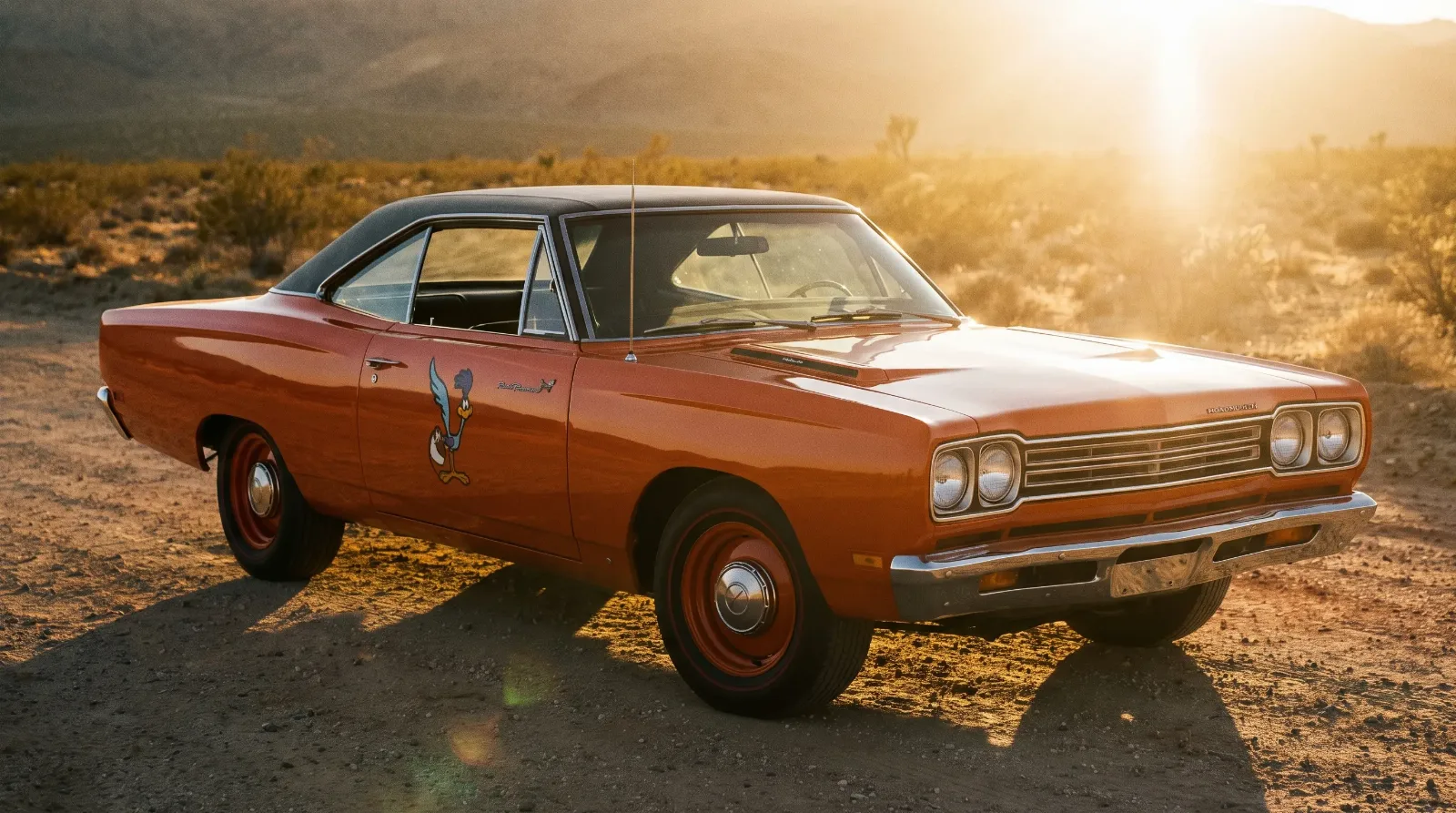
Plymouth's marketing team had noticed something simple. The Road Runner cartoon, with its endless chase between the bird and Wile E. Coyote, was already deeply lodged in American pop culture by the mid-1960s. Kids grew up watching it. Those kids were now old enough to buy cars. Rather than invent a new mascot or theme from scratch, Plymouth went straight to the source and negotiated directly with Warner Bros for the rights to the name, the likeness, and eventually the sound.
The reported figure for the license was $50,000, which sounds modest today but was a real commitment for a car aimed at the budget end of the muscle car market. Plymouth was spending licensing money on a car that otherwise had almost no money spent on interior trim or luxury features. That tells you how much value the marketing team placed on the cartoon connection versus a leather seat or a chrome trim package.
What the deal actually covered
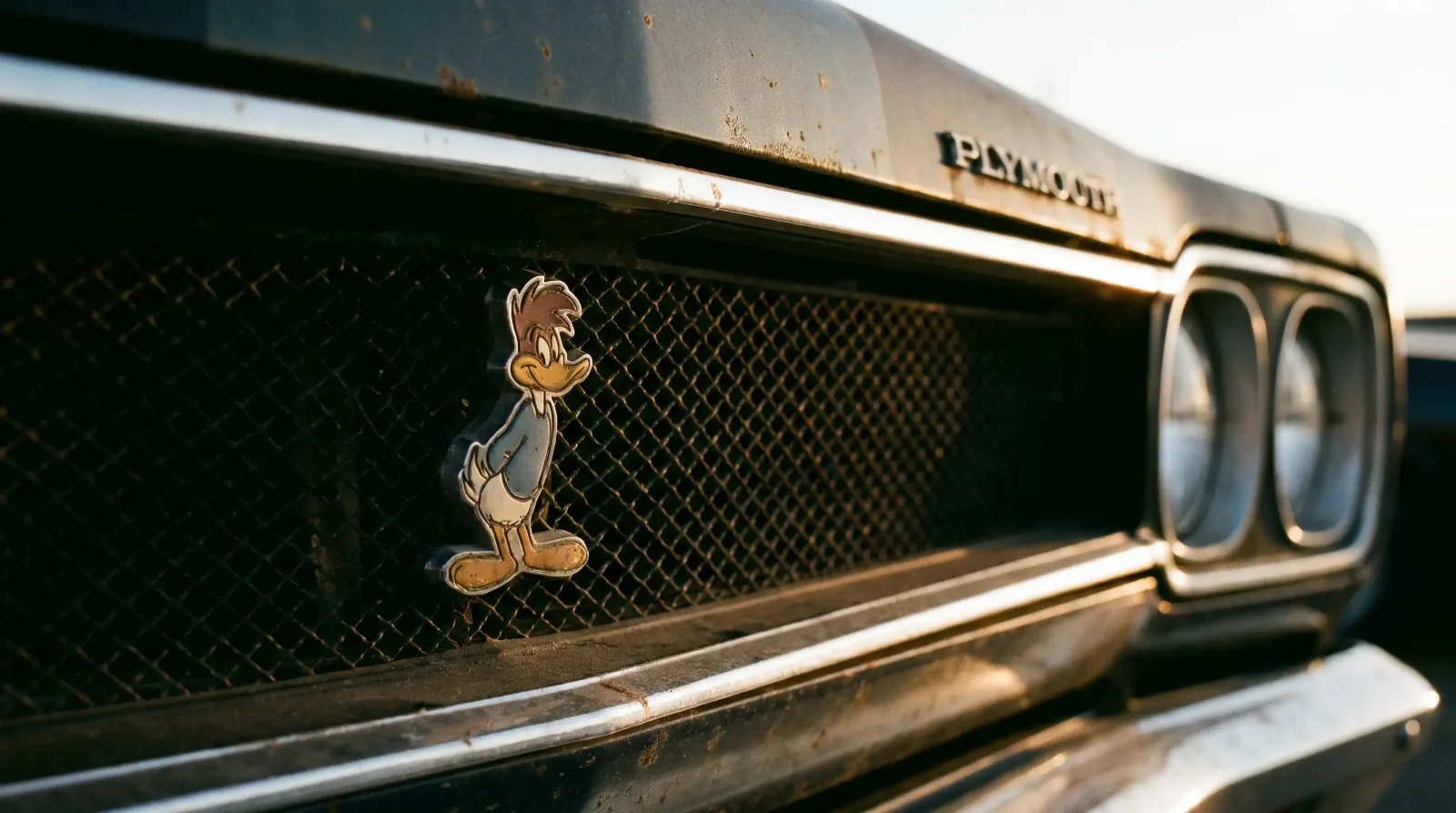
The agreement gave Plymouth the right to use the Road Runner name, a cartoon decal of the character for the fender, and eventually clearance to develop a horn that mimicked the character's signature "beep beep" sound effect. That last piece required its own separate engineering effort once the licensing terms were settled, since getting Warner Bros comfortable with how the sound would be reproduced took additional back and forth beyond the initial rights agreement.
It is worth noting this was not a one-time flat payment covering everything forever. Licensing deals like this typically included ongoing terms tied to production numbers, and Plymouth's Road Runner sales blew well past its own initial projections, which likely made the license one of the better returns on marketing spend in the company's history that decade.
Why a car company bothered with a cartoon at all
Skeptics inside the industry at the time reportedly questioned whether tying a serious performance car to a cartoon character would undercut the car's credibility with buyers who cared about horsepower and handling. That skepticism did not survive contact with the sales figures. The Road Runner outsold Plymouth's own conservative projections by a wide margin in its first year, and the cartoon connection turned out to be an asset rather than a liability, because it gave the car an identity that no competitor could simply copy without their own separate licensing deal.
Pontiac, Chevrolet, and Ford all eventually built their own budget-focused muscle cars once the Road Runner's success became obvious, but none of them had a nationally beloved cartoon character to put on the fender. That gap is part of why the Road Runner held a distinct identity in a crowded muscle car market for years afterward.
"Every other muscle car in 1968 was selling on horsepower and styling. The Road Runner was selling on a feeling people already had from watching cartoons as kids, and that is a much harder thing for a competitor to copy overnight."
- Patrick Walsh
The risk Plymouth was actually taking
It is worth remembering that this deal was not a sure thing when Plymouth signed it. Tying a car's entire identity to a licensed character meant betting on that character's continued cultural relevance for the life of the model, a risk that other manufacturers largely avoided by sticking with names they owned outright, like Chevelle or Torino or GTO itself. If the cartoon had faded from popularity, or if Warner Bros had decided not to renew favorable terms, Plymouth would have owned a car with a name it could no longer legally use the way it had built the whole marketing campaign around.
That risk paid off, but it is a genuinely unusual bet for a Detroit product planning team to have made in the mid-1960s, when most manufacturers were still building brand identity around in-house naming rather than outside licensing. The Road Runner's success arguably opened the door for more manufacturers to consider licensed branding later on, even if none of them matched the specific cultural fit Plymouth found with a cartoon character that was already a household name among the exact buyers the car targeted.
What happened once the deal proved itself
Once the licensing arrangement paid off, Plymouth leaned further into the cartoon branding across advertising, dealer materials, and even some dealership promotional items that carried the character's image. The Road Runner name became bigger than a single model year's marketing campaign, evolving into an identity that carried the car through multiple redesigns into the 1970s, long after the cartoon's own theatrical run had wound down.
More on the 1968 plymouth road runner covers how this licensing deal fit into the larger launch strategy for that first model year, and where this started traces the full arc of the nameplate if you want the complete picture from before the cartoon deal through the car's later years.
Why this still matters to collectors
The licensing story is not just trivia. It shapes how originality gets evaluated on these cars today. Correct decals, a properly tuned horn, and period-accurate badging all trace back to that original agreement with Warner Bros, and collectors who care about matching-numbers authenticity pay close attention to whether these licensed details are correct or reproduction. A car missing its correct Road Runner decals or running an incorrect horn setup is missing a piece of what made the model unique in the first place.
If you're in the market, classic Runners on the market right now range widely in how well they preserve these original licensed details, and that variance is worth factoring into any serious buying decision.
A deal that outlasted its own gimmick reputation
What started as a car company borrowing a cartoon's name to sell a stripped-down coupe turned into one of the more enduring brand identities in muscle car history. Fifty years on, nobody calls the Road Runner name a gimmick anymore. They call it iconic, and that shift in reputation is the clearest evidence that the original licensing bet paid off exactly as Plymouth hoped it would.
Sources and notes
Related Reading
Have a
Plymouth Road Runner
for Sale?
Reach thousands of serious classic car collectors across the US.
Sell It Here →
Are You a Classic Car Dealer?
List your full inventory and connect with targeted classic car buyers.
Join as a Dealer →
#muscle car marketing
#Plymouth Road Runner
#mopar history
#1968 Road Runner
#road runner warner bros license
#Looney Tunes

About the author
Patrick Walsh
Automotive journalist covering classic car shows, events, and the enthusiast community across North America.
Related Listings - Plymouth Road Runner




Comments
Be the first to comment on this article.