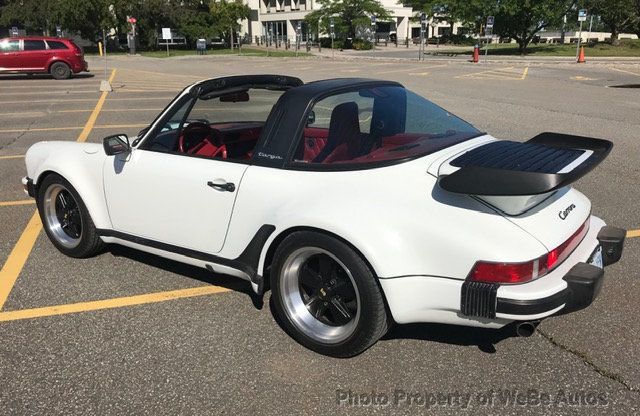
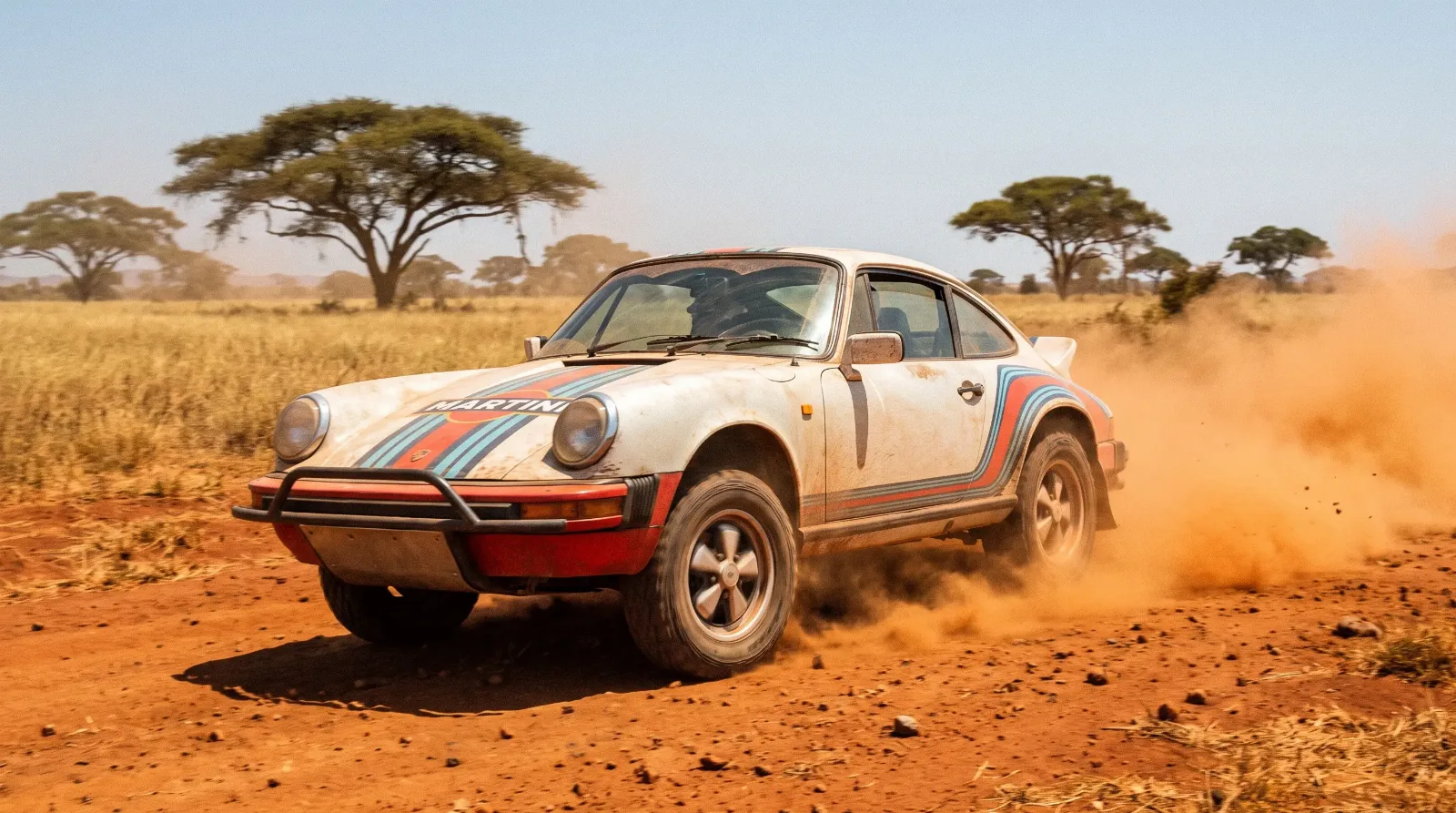
Ask anyone in the vintage Porsche world about a Safari 911 and you'll get a story before you get a spec sheet. That's how it works with these cars. The 911 was never built to eat gravel for breakfast, and yet here we are, decades later, watching lifted, brush-guarded, knobby-tired 911s roll into car shows and rally starting lines like they own the place. We do this because the East African Safari Rally proved something in the 1970s that a lot of purists still won't say out loud: a 911 with the right setup can survive terrain that would swallow a jeep whole.
The Safari 911 movement isn't about disrespecting the car. It's about honoring a chapter of its history that got buried under decades of concours polish and low-and-slow restomod culture. We're talking about raised ride height, long-travel suspension, skid plates, and a stance that says this thing has somewhere to be and a bad road to get there.
Where the idea actually came from
Porsche itself planted this flag. Works-supported 911s ran the East African Safari Rally starting in the late 1970s, and the factory-backed Martini 911 SC campaign in 1978, with Björn Waldegård and teammate Vic Preston Jr. among the drivers, remains the reference point everyone in this scene points back to. These weren't show cars. They had reinforced floor pans, auxiliary lighting bolted across the nose, and suspension travel that looked absurd next to a standard road car sitting an inch off the pavement.
The rally cars proved the platform could take a beating that nobody expected a rear-engined sports car to survive. Loose gravel, washed-out roads, sudden elevation changes, none of it stopped a properly built 911 from finishing near the front. That's the DNA the modern builders are chasing, not a costume, but a genuine mechanical lineage.
What actually changes on a Safari build
A real Safari conversion touches more than the ride height. Builders typically start with a torsion bar or coilover setup that adds meaningful lift over stock, the exact figure varies by builder and by how the car will be used, paired with longer-travel shocks so the extra height isn't just cosmetic. Skid plates protect the oil cooler and steering components underneath. Brush guards and light bars go up front, partly for looks and partly because deer, rocks, and washboard roads are real threats out there.
Tires matter as much as anything else. These builds run knobby, all-terrain rubber on steel wheels, sized to clear the extra suspension travel without rubbing. The wider fender flares you see on a lot of these cars aren't purely stylistic either. They're there to cover the additional wheel travel and the slightly wider track that comes with off-road-oriented suspension geometry.
We should talk about who's actually building these things, because how rebels reinvented the Porsche applies just as much here as it does to the outlaw scene. The Safari crowd and the outlaw crowd overlap more than either side likes to admit. Both groups start from the same premise: the factory spec sheet is a starting point, not a commandment.
The community behind the builds
What keeps us coming back to this corner of the hobby is the people. Small shops on both coasts have built reputations one Safari conversion at a time, trading notes on suspension geometry and skid plate fabrication the way old-timers used to trade carburetor jetting secrets. Nobody in this space is precious about sharing what works. You ask a question at a rally staging area and you'll get a real answer, usually with someone pointing at their own undercarriage to show you exactly what they did.
That openness is part of why the movement grew the way it did. A guy builds one car, posts it, three more people want the same setup, and within a couple of seasons there's a recognizable look and a shared vocabulary. Steel wheels, exposed roll cages peeking through open windows, roof racks holding a spare tire and a jerry can. It reads as rugged because it is rugged, not because someone decided rugged was trending.
"We didn't invent anything new here. We just went back and looked at what the factory did when nobody was watching the clock for a concours judge, and we built from there."
— Hector Morales
Buying or building one yourself
If you're thinking about going this route, start with a car that isn't precious. A numbers-matching, low-mile 911 is the wrong donor for a Safari build, full stop. Look instead for a driver-quality car with a sound floor pan and no significant rust, since you'll be adding stress to the chassis that the factory never engineered for.
| Build element | Typical approach | Why it matters |
|---|---|---|
| Suspension | Longer-travel struts, adjustable coilovers | Absorbs impacts without bottoming out |
| Wheels/tires | Steel wheels, all-terrain or knobby tires | Grip and durability on loose surfaces |
| Body protection | Skid plates, brush guards, light bars | Shields drivetrain and lighting from debris |
| Fender work | Flares to cover added travel and track width | Prevents tire rub, adds the signature stance |
Once you've got the right donor, the build order matters. Suspension and chassis reinforcement come first, then protection hardware, then the cosmetic touches like light bars and roof racks that everyone notices but that honestly matter least to how the car performs. We've watched people get this backward, chasing the look before the function is sorted, and it never ends well once the car actually meets a dirt road.
Where the movement goes from here
Safari 911s aren't a fad that's going to fade next season. If anything, the appetite for cars that get used the way they were designed to be used, hard, occasionally muddy, built for a purpose beyond a trailer queue, keeps growing. Younger collectors especially seem drawn to a car they can actually drive on a rough road without flinching every time gravel pings the rocker panels.
This corner of the Porsche world rewards patience and honesty about what a build is for. A Safari 911 isn't trying to be a concours car and it isn't trying to be an outlaw street car either. It's its own thing, built on a real rally heritage, kept alive by a community that would rather show you their welds than their trophies. If you want to keep reading the series, the next chapter looks at a very different kind of Porsche reinvention, one built around making a new car look decades older instead of tougher.
Sources and notes
- Porsche Newsroom: Beyond Good and Evil, Porsche and the East African Safari Rally
- Porsche Newsroom: 5,000 Kilometres, 37 Minutes
- Stuttcars: Porsche 911 SC Safari (1978)
- Petrolicious: How One Man Tracked Down Two East African Safari Rally Porsches
- Rennlist: The Amazing Story of the Safari 911
- Porsche: 8 Legendary Off-Road and 4x4 Porsches