
Walk onto a Chevrolet or Ford dealer lot anytime between the mid-1960s and the late-1970s and the el camino vs ranchero sales battle was playing out in the fine print of every brochure and every salesman's pitch, not just in the engine bays. A farmer walking in wanting a work vehicle and a young buyer walking in wanting something that looked sharp parked outside a drive-in were, improbably, being sold the exact same body style by two different dealerships across town, and each brand's showroom strategy reveals how differently Chevrolet and Ford thought about who actually bought a car-truck.
Car Features
7 min read
Selling the Cartruck: El Camino Versus Ranchero at the Showroom
Chevrolet sold the El Camino as a Chevelle cross-shop while Ford pitched the Ranchero as its own lifestyle choice, and that showroom difference explains why one nameplate consistently outsold the other.
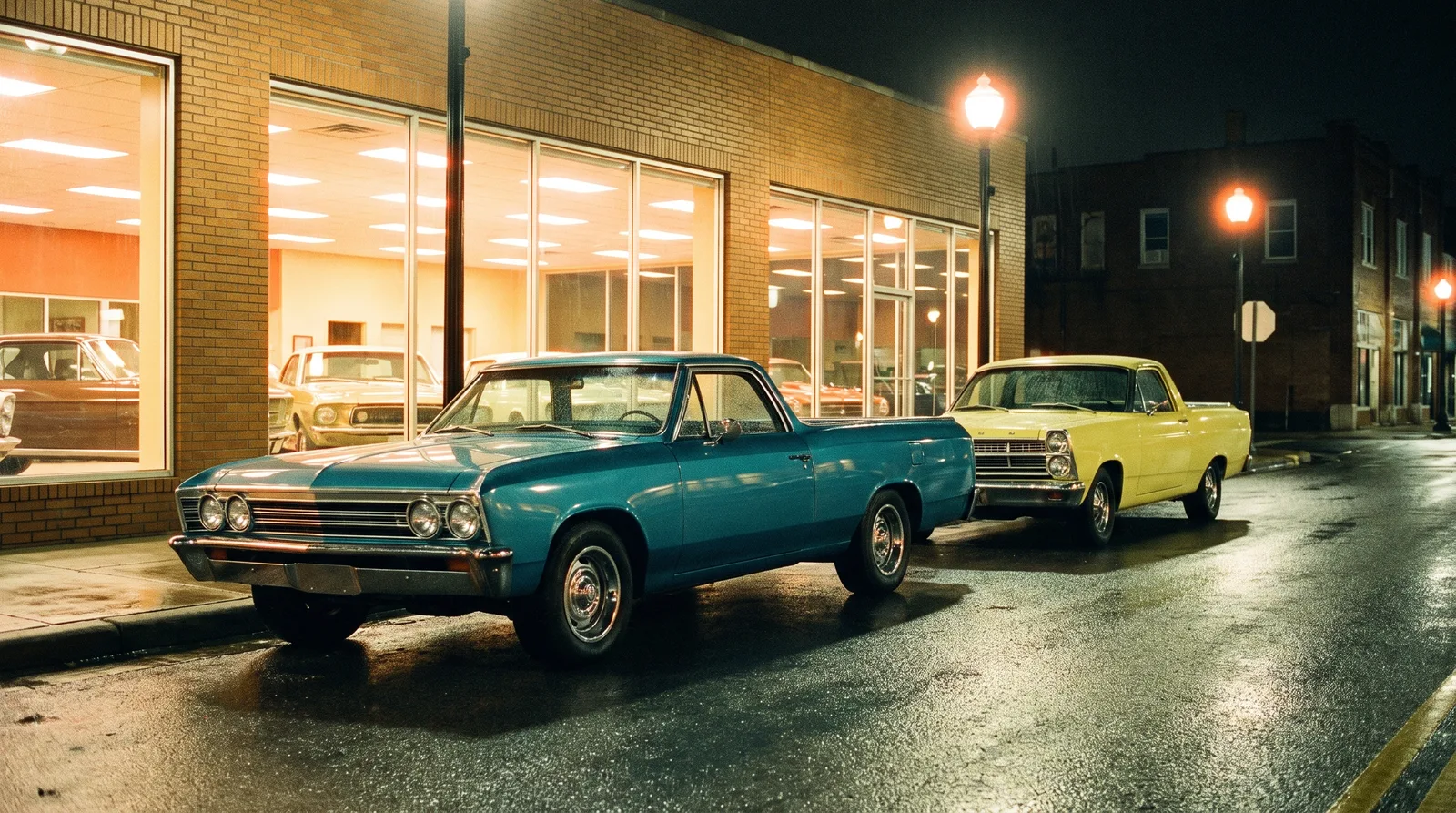
Chevrolet's pitch: this is still a Chevelle
Chevrolet's pitch leaned on familiarity. The salesman selling you an El Camino was very often the same salesman who had just walked a customer through a Chevelle Malibu, and the pitch reflected that overlap directly. You are getting Chevelle comfort, Chevelle engine options, Chevelle style, the argument went, with a bed instead of a trunk for whatever hauling you need to do. That message worked because it did not ask the buyer to reconsider anything about what a Chevrolet product should feel like. It just added utility to a formula people already understood and, in many cases, already owned in sedan or coupe form.
Ford's pitch: choose a lifestyle, not just a car
Ford took a noticeably different tack on the showroom floor. The Ranchero, despite sharing its bones with the Fairlane and later the Torino and LTD II, was frequently positioned in Ford's own marketing as its own distinct choice, one that asked the buyer to picture a lifestyle rather than simply extend an existing car purchase. Ford's brochures leaned into outdoor recreation, camping gear, boats, and motorcycles loaded into the bed, images that suggested the Ranchero buyer was choosing an active life rather than just adding cargo space to a Fairlane they already wanted. It is a subtle difference from Chevrolet's approach, but it shows up consistently across two decades of period advertising from both companies.
| Sales approach | Chevrolet El Camino | Ford Ranchero |
|---|---|---|
| Primary pitch | Chevelle cross-shop, added utility | Distinct lifestyle vehicle |
| Dealer routing | Passenger car department | Often marketed as its own line |
| Advertising imagery | Shared with Chevelle campaigns | Outdoor recreation, active lifestyle |
| Buyer profile emphasized | Existing Chevy loyalists | Active, image-conscious buyers |
Why the sales figures consistently tilted one way
The actual sales figures across the rivalry consistently favored the El Camino, and the reason is not mysterious once you understand each company's dealer network at the time. Chevrolet simply had more dealerships and more Chevelle buyers walking through the door in a given year than Ford had Fairlane or Torino buyers walking into Ranchero-carrying stores, and every additional person exposed to the direct cross-shop pitch was another potential sale Ford's more standalone marketing approach did not automatically generate. Ford's Ranchero found a genuinely loyal following, but it was chasing a smaller and more self-selecting audience than Chevrolet's volume-driven strategy ever needed.
None of this means the Ranchero was a lesser product on the showroom floor, and period reviews from automotive journalists at the time generally treated both trucks as comparable in build quality and driving character. What differed was the story each dealership told about who should be buying one. A young couple looking at a used Ranchero at a Ford lot in 1971 might hear about weekend camping trips and outdoor gear. Someone at a Chevrolet dealer looking at the same era El Camino might hear about how it drove just like the Chevelle Malibu their neighbor already owned. Both stories sold trucks. They simply appealed to slightly different instincts in the buyer standing on the lot.
"Chevrolet sold the El Camino to people who already wanted a Chevelle. Ford sold the Ranchero to people who wanted to feel like they were choosing something different. Both pitches worked. One just had a bigger room to work in."
- Patrick Walsh
Financing, trade-ins, and where each dealer had the advantage
Financing terms and trade-in structures at the dealership level also played a quiet role in this rivalry that rarely shows up in retrospective comparisons. Chevrolet's larger dealer network meant more competitive financing packages were generally available on an El Camino purchase simply because more dealerships were competing for the same customer within a given metro area, a dynamic Ford's comparatively thinner Ranchero-carrying dealer footprint could not always match. Trade-in values told a similar story. A buyer trading in a Chevelle toward a new El Camino was working within a familiar valuation framework the dealer already understood intimately, while a Ranchero trade-in sometimes required a Ford dealer to value a vehicle that straddled truck and car categories in a way their standard appraisal guides were not always built to handle cleanly.
Print advertising placement adds one more layer to this picture. Chevrolet frequently ran El Camino ads in the same publications and sometimes the same issues as its Chevelle campaigns, reinforcing the cross-shop message through simple repetition and shared visual language. Ford's Ranchero advertising showed up more often in outdoor and lifestyle-oriented publications specifically chosen to reach the active, image-conscious buyer the brand was targeting, a more scattered but arguably more purposeful media strategy that prioritized reaching the right narrow audience over maximizing raw impressions. Both approaches reflect coherent, deliberate strategies rather than one company simply outspending the other, and that coherence is part of why both trucks maintained loyal followings even as the overall sales numbers consistently favored one side of the rivalry.
What word of mouth did to each strategy over time
Word of mouth compounded whichever pitch a buyer first heard. An owner who bought an El Camino because it drove like the family's existing Chevelle was likely to recommend the same reasoning to a neighbor shopping for a similar vehicle, reinforcing Chevrolet's cross-shop message across an entire social network of buyers over time. An owner who chose a Ranchero for its distinct lifestyle image tended to pass along that same framing, recommending the truck to friends who wanted to feel like they were making an individual choice rather than simply extending a family of cars they already owned. Both loops were self-reinforcing, and both help explain why each company's original sales strategy held remarkably steady across two full decades of competition.
The sales battle between these two trucks was never really about which one performed better in a given model year. It was about which company told a more convincing story to more people standing on more dealer lots, and Chevrolet's built-in advantage of a bigger, more loyal Chevelle audience proved decisive over the long run, even as Ford's Ranchero kept its own devoted following intact right up until the final 1979 model year. Readers curious about how this sales dynamic fits into the complete rivalry should look at el camino vs ranchero history for the full year-by-year account, and a related story takes a direct look at which nameplate ultimately came out ahead once production numbers and longevity are weighed together. For anyone whose interest in this showroom rivalry has turned toward actually owning a piece of it, it is worth taking a look at El Caminos for sale now to see what the winning side of this sales battle looks like on today's market.
Sources and notes
Related Reading

About the author
Patrick Walsh
Automotive journalist covering classic car shows, events, and the enthusiast community across North America.
Related Listings - Chevrolet El Camino
Comments
Be the first to comment on this article.