
Picture a rental counter in 1966. A man somewhere past his twenty-fifth birthday signs the contract, shows a Hertz Sports Car Club card, and the clerk slides across the keys to a black fastback with gold stripes and a 289 that idles like it has somewhere better to be. Repeat that transaction across the country for the better part of a year and you have the Shelby GT350H Hertz story. It is a story about a rental company that wanted something exciting on the lot, a small car builder that needed volume, and a legend that grew a good deal faster than the facts underneath it.
Car Features
7 min read
The Hertz Rent-a-Racer: GT350H
About 1,000 Shelby GT350s went to Hertz in 1966: black and gold, $17 a day, mostly automatics, and a racing legend bigger than the facts.
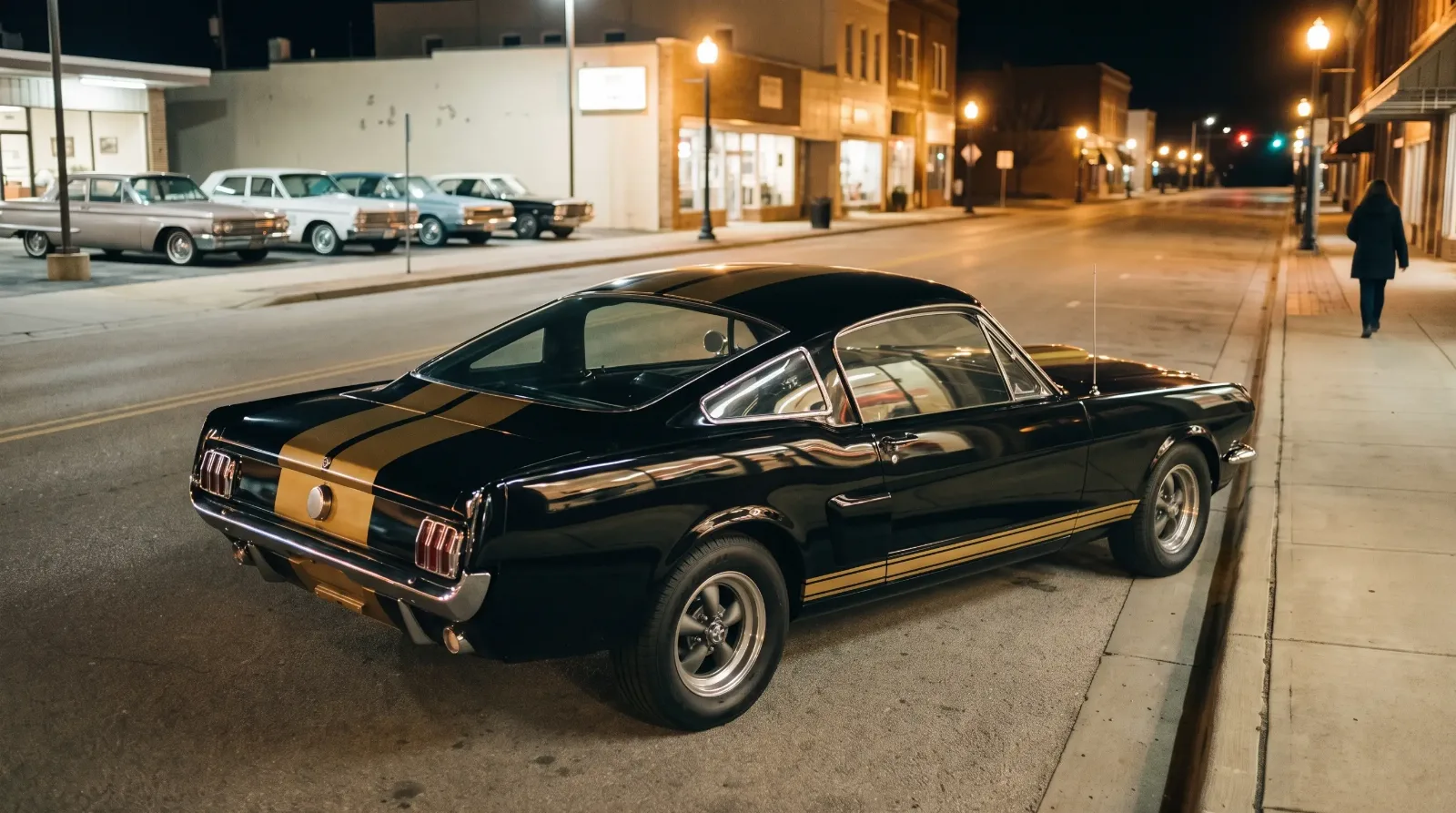
The Shelby family as a whole, from the first white homologation cars of 1965 to the last of the line in 1970, is in the full story. This piece stays at the rental counter, with the cars that anybody over 25 with the right club card could drive away for the weekend.
How the Shelby GT350H Hertz deal worked
The order started small. Hertz first asked for 100 cars, and by the time the paperwork settled the number had grown to about 1,000. The exact count depends on who is doing the counting: 999 in one long-standing enthusiast FAQ and an auction catalog, 1,001 in another reference, and 1,003 if you include the two prototypes. Call it a thousand and nobody at the club meeting will argue for long.
To put that in perspective, Shelby American built 2,378 cars of all types for the 1966 model year. Hertz alone took roughly four in ten of them. For a company that had built 562 cars the year before, one fleet customer suddenly mattered a great deal.
The money worked like this. Hertz paid $3,815 per car. Renters paid $17 a day plus 17 cents a mile, and they had to be at least 25 years old and members of the Hertz Sports Car Club. After roughly nine months in rental service, Shelby American bought the cars back at $2,589 each, less the cost of any repairs, and sold them on through Shelby dealers and at auction. So the life of a GT350H had two acts: a short, hard one with strangers, and a longer one with whoever bought it afterward.
Black and gold, mostly
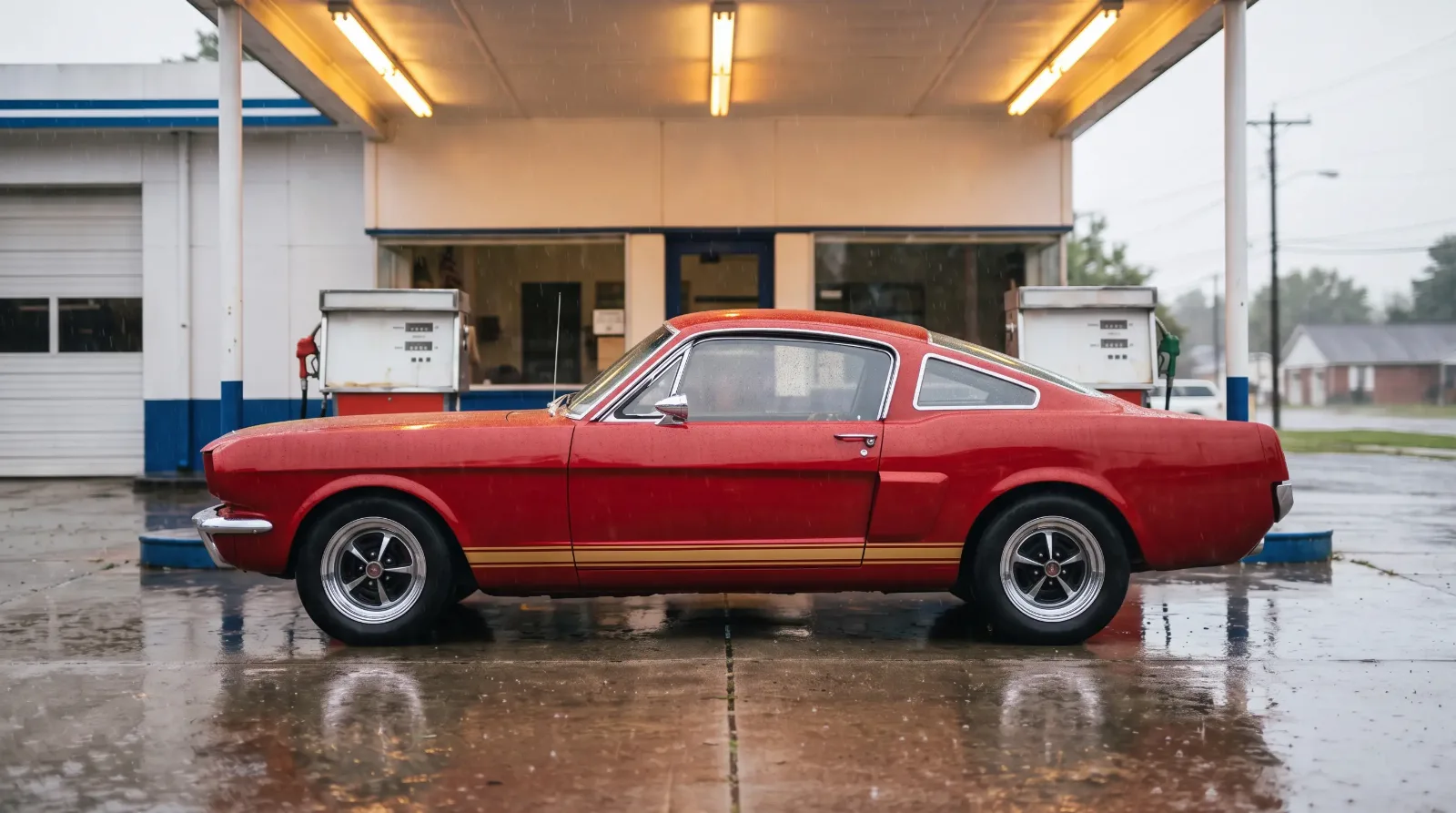
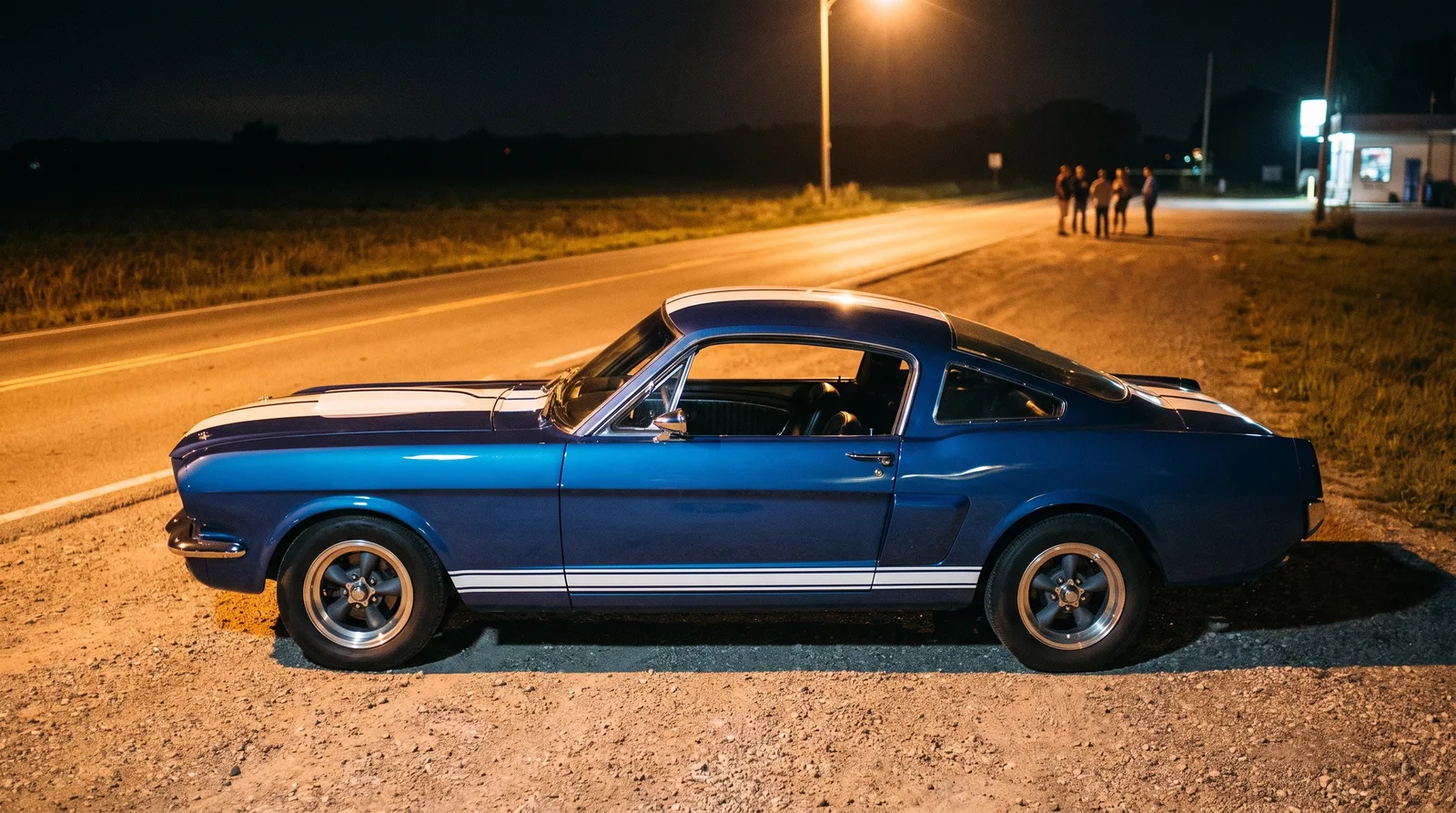
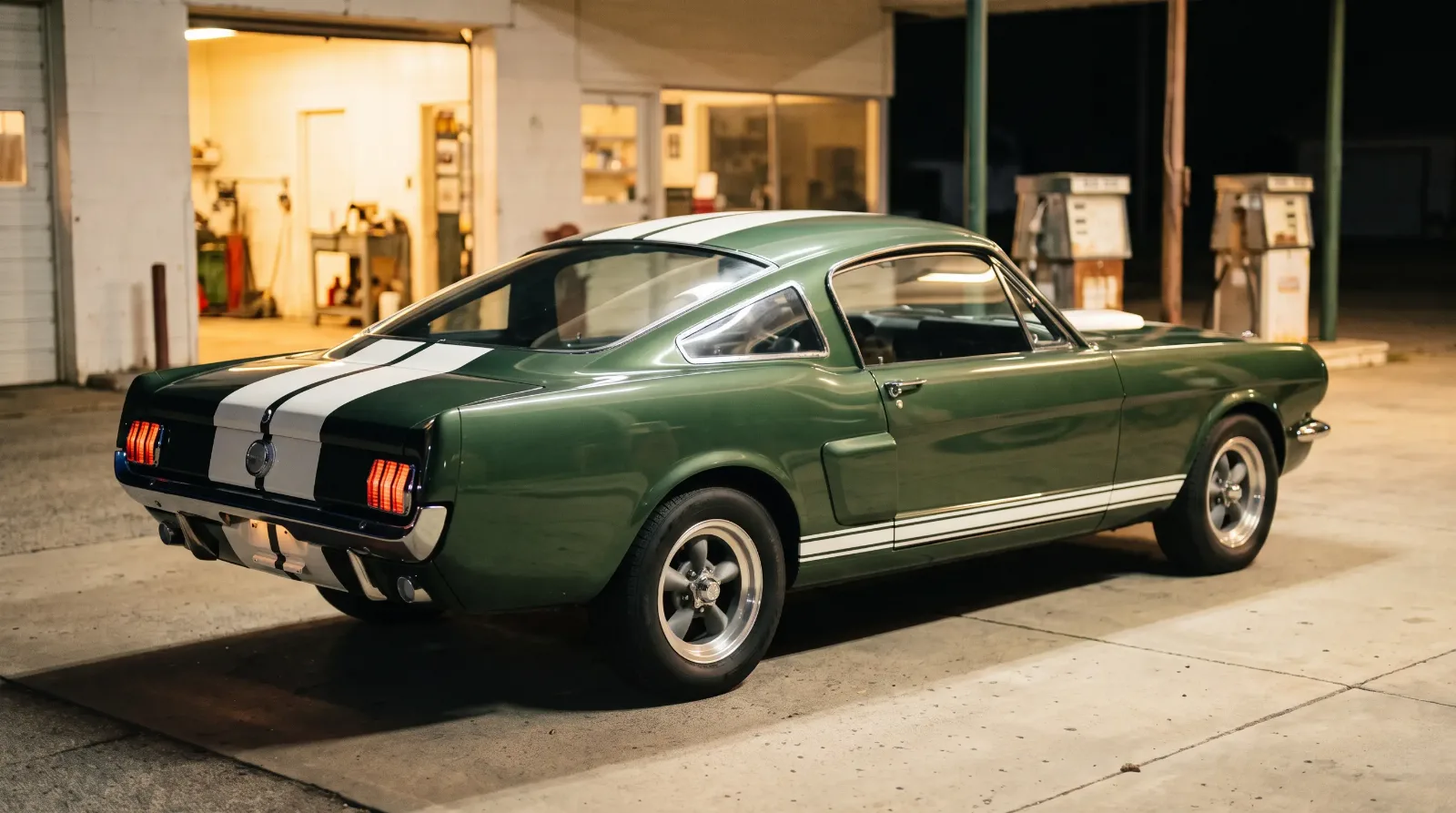
The look is what people remember. Somewhere around 750 or more of the 1966 cars were painted Raven Black with gold stripes, a combination that has become shorthand for the whole program. The rest came in four other colors, listed at 50 cars each: Wimbledon White, Candy Apple Red, Sapphire Blue and Ivy Green. A non-black Hertz car turns heads at a show for exactly that reason. It does not match the picture in everyone's head.
Under the hood the cars carried the same Shelby 289 as any other GT350 of the period: 306 hp at 6,000 rpm and 329 lb-ft at 4,200 rpm, with a 715-cfm Holley on a Cobra hi-rise intake and Tri-Y headers. Hertz did not get a detuned engine. What it got, for most of the fleet, was a different transmission. The first 85 cars went out with four-speeds, and those are the ones that earned the "Rent-a-Racer" name. Most of the cars that followed, around 800 of them, came with the C4 automatic, which made a lot more sense for a stranger picking up a car at a rental desk.
Shelby production in 1966 also covered a handful of very different cars, from the supercharged GT350s to the 1966 convertibles, but none of them came close to the Hertz order in sheer numbers. In a year when Shelby American was learning to build cars for ordinary buyers, Hertz was the most ordinary buyer of all.
| Item | 1966 GT350H (Hertz) |
|---|---|
| Fleet size | About 1,000 (999 to 1,003, depending on whether prototypes are counted) |
| Engine | Shelby 289, 306 hp @ 6,000 rpm, 329 lb-ft @ 4,200 rpm |
| Transmission | First 85 four-speed; most of the rest C4 automatic |
| Colors | About 750+ Raven Black with gold stripes; about 50 each Wimbledon White, Candy Apple Red, Sapphire Blue, Ivy Green |
| Price paid by Hertz | $3,815 per car |
| Rental rate | $17 per day plus 17 cents per mile |
| Renter requirements | Age 25 or older, Hertz Sports Car Club member |
| Buy-back by Shelby American | $2,589 less repairs, after about nine months of rental |
The brakes, and the people who drove them
Here is where a race-bred car met the general public, and the brakes are the clearest example. The GT350's competition brakes worked best when they were hot. On a cold morning, pulling out of an airport lot, they asked for more pedal effort than a typical renter expected from a 1966 car, and many of the Hertz cars ended up with different master cylinders or power-brake units fitted. Even then, according to Old Cars Weekly, they never quite stopped like an ordinary Mustang.
Think about what that says about the whole idea. A rental company was handing out cars that came with a warning label for the brake pedal. That is part of the charm, and it is also why the stories started.
Did renters really race them on weekends?
Every Hertz car has a weekend story attached to it. You have heard some version: rented on Friday, run at the local track on Saturday, returned on Monday with a tired engine and a straight face. It is a great story. It is also, according to Old Cars Weekly, largely legend. What the record does support is less cinematic. Other accounts of the Shelby program note that performance parts often went missing from the cars before they were resold, which says more about what happened in parking lots and garages than at drag strips.
I have heard these stories told at shows with total conviction, usually by someone who heard it from a friend of the man who did it. That is how this hobby keeps its legends alive, and I would not want to lose them. But a story that cannot be traced to a car, a track and a date should be told as a story, not as history.
"The Hertz cars do not need the racing legend. A thousand Shelbys handed to the public through a rental desk is a better story than any weekend at the strip, and it has the advantage of being true."
Patrick Walsh
After 1966: the later Hertz Shelbys
The 1966 cars are the famous ones, but they were not the last. For 1968, the year Shelby production moved to the A.O. Smith plant in Ionia, Michigan, Hertz took more cars. One enthusiast FAQ counts 224 GT350H cars and 2 GT500H cars. Old Cars Weekly describes the order differently, as about 230 1968 Shelbys that did not carry the "H" suffix. Both put the number in the same neighborhood. The same FAQ lists another 152 Hertz GT350s for 1969, the last Hertz order before the Shelby Mustang came to an end.
None of those later fleets carries the same weight in the hobby. The 1966 cars were first, they were the most numerous, and they had the black-and-gold look that defined the whole idea.
The Hertz program also tells you something about where the Mustang was by then. In two years it had gone from a new car on a showroom floor to something a rental company wanted on its lot as a reason to walk up to the counter. The bigger arc of how that happened, from the first cars through the end of the century, runs through the Mustang from 1964 to 2000.
When you find a GT350H at a show today, look past the stripes for a minute and think about its first nine months. Some stranger signed for it, drove it hard or gently, brought it back, and handed over the keys. Then it went on to the rest of its life. Very few collector cars started out as something anybody could rent.
Sources and notes
Related Reading
Have a
Ford Mustang
for Sale?
Reach thousands of serious classic car collectors across the US.
Sell It Here →
Selling a classic? Here's how: sell my classic car
Are You a Classic Car Dealer?
List your full inventory and connect with targeted classic car buyers.
Join as a Dealer →

About the author
Patrick Walsh
Automotive journalist covering classic car shows, events, and the enthusiast community across North America.
Related Listings - Ford Mustang




Comments
Be the first to comment on this article.