
Put a 1965 GT350 owner and a 1966 GT350 owner at the same table and the argument starts before the coffee does. The 1965 man says his car is the real one, loud and raw and built to race. The 1966 man says his car is the one Shelby could actually sell. Then somebody asks how many of each were built, and the table goes quiet, because the 1966 Shelby GT350 was built in roughly four times the numbers of its predecessor. It was softer, it was easier to live with, and it found far more homes. Whether it was cheaper is the one part of the old saying the paperwork does not yet settle.
Car Features
7 min read
The 1966 Shelby GT350: Softer, Tamer and a Bigger Seller
What changed on the 1966 Shelby GT350: same 306 hp, a quieter and more livable car, color and an automatic, and 2,378 built against 562.
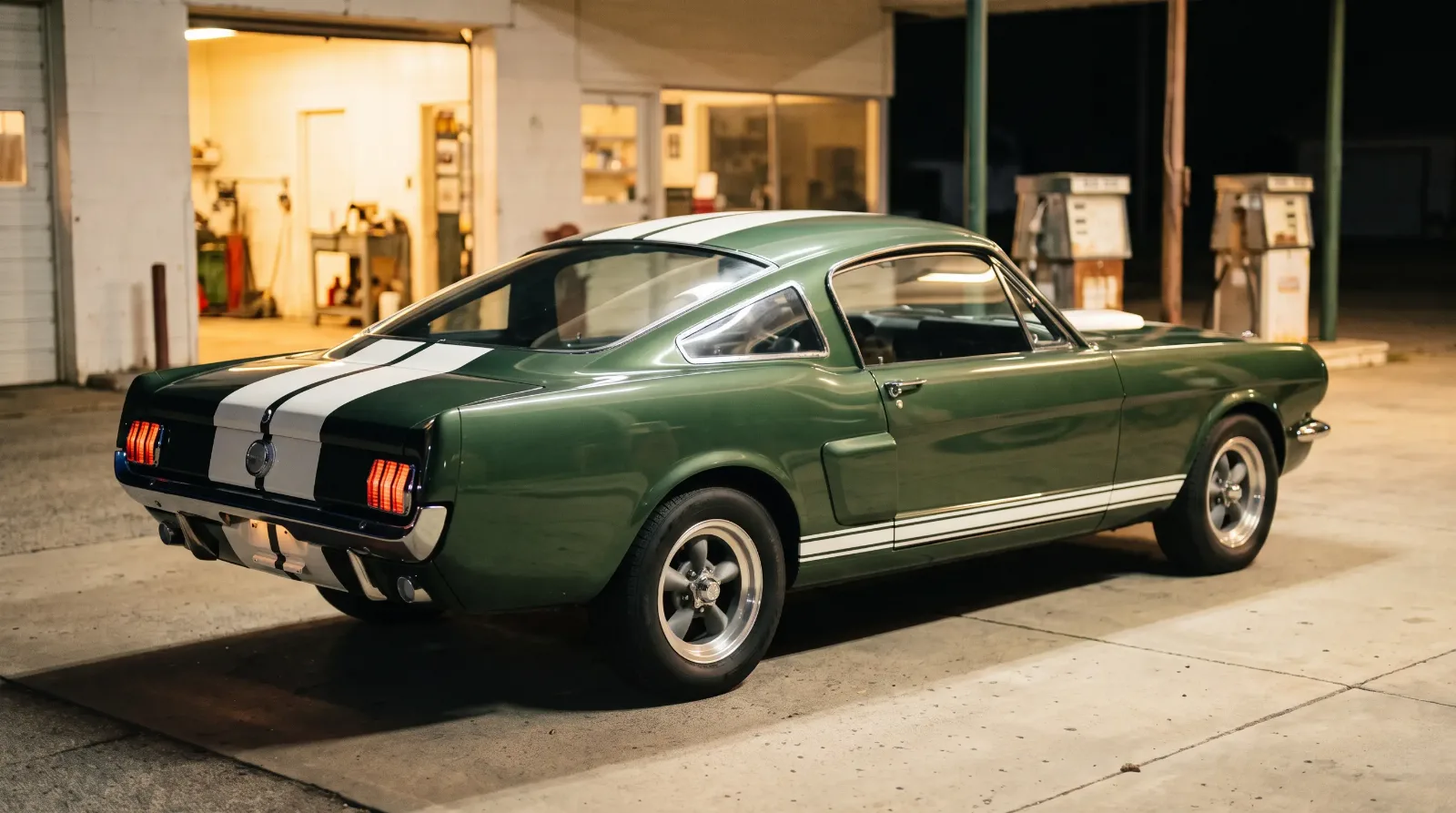
The full family tree, from the first white fastbacks to the last cars of 1970, is in our Shelby Mustang history. This piece stays with one model year and the question every club bench-racer eventually asks: what actually changed for 1966, and why does it matter?
Where the 1966 car started
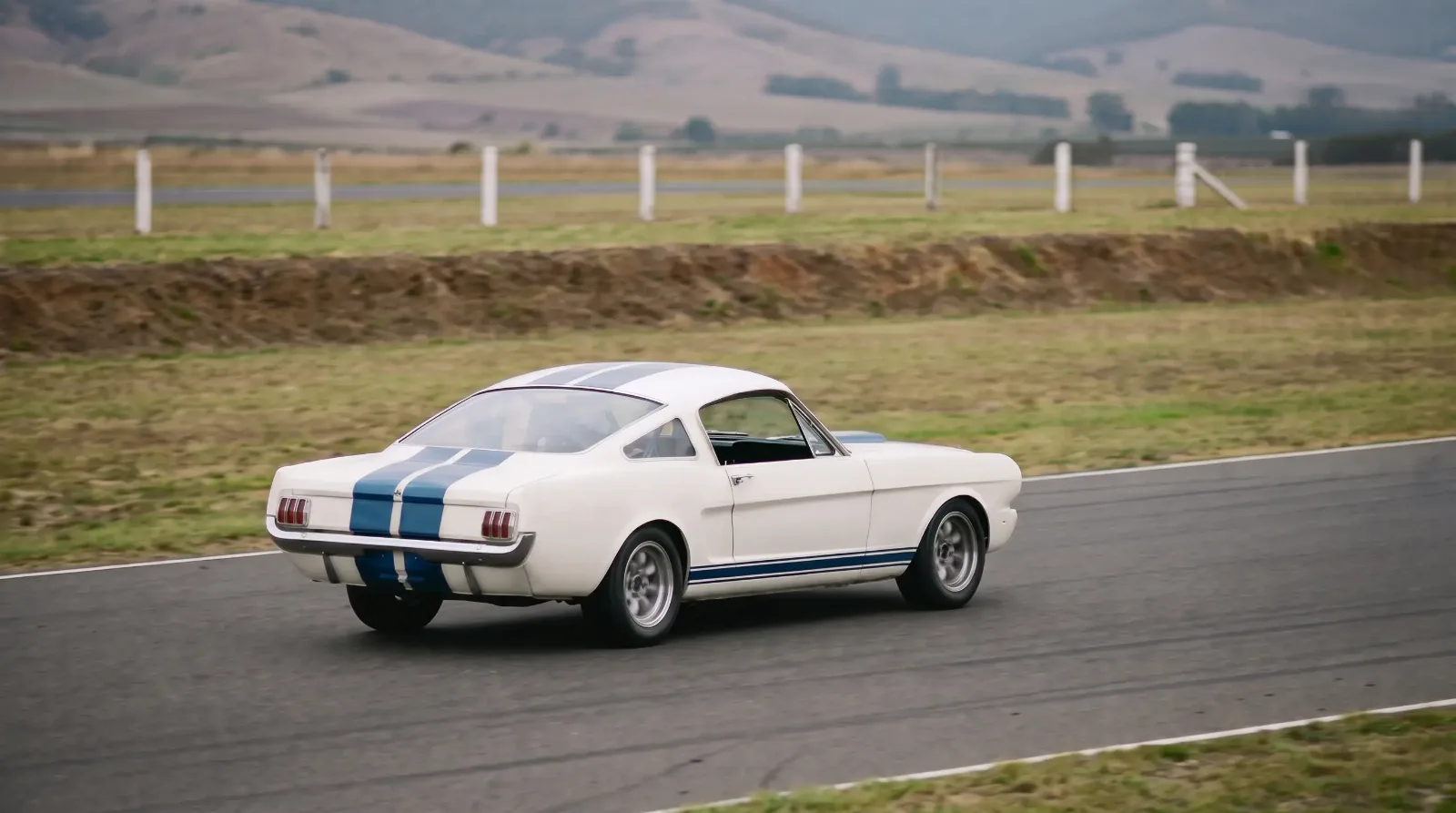
The 1965 GT350 was a homologation special. The SCCA required at least 100 street cars before the Mustang could race in B-Production, and Shelby American answered with a white fastback that made few concessions to anyone driving it to work. All 562 cars of the 1965 model year were Wimbledon White with Guardsman Blue rocker stripes. There was no rear seat. The street car listed at $4,547, and it behaved like a car built by racers, because it was. How that first car was sorted out on the track is a story of its own, and the background runs through Ken Miles.
Here is the detail that settles more first-year arguments than any other. The first 252 cars sold as 1966 GT350s began life as 1965 K-code fastbacks. So the line between the two years is not as clean as the badges suggest. A car with 1965 bones and a 1966 identity is not a fake or a clone. It is simply how a small company ran out one year's stock and started the next.
What got softer on the 1966 Shelby GT350
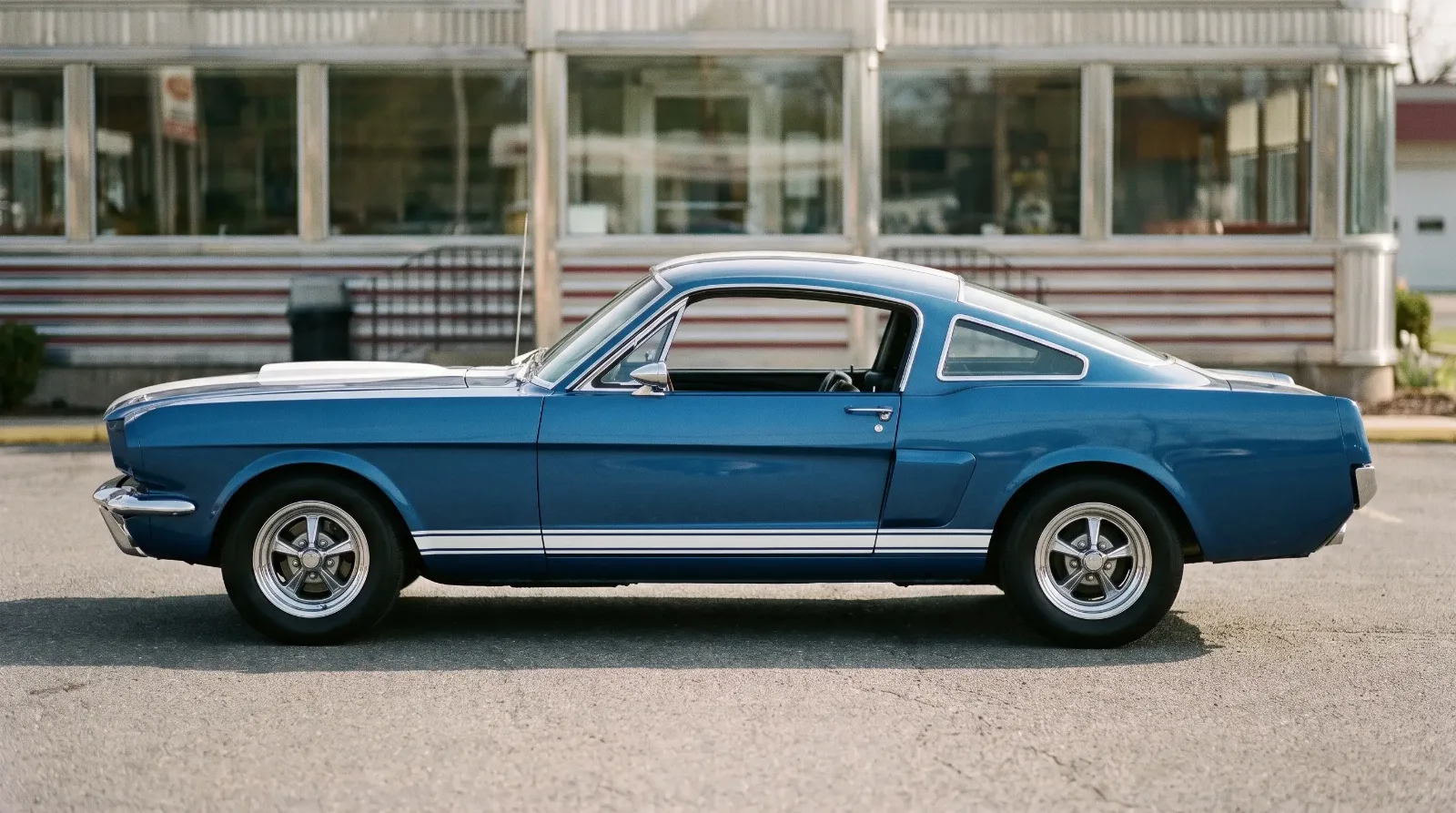
The engine did not change, and that is worth saying first because people assume it did. The 289 kept its 306 hp rating at 6,000 rpm and 329 lb-ft at 4,200 rpm, fed by a 715-cfm Holley on a Cobra hi-rise intake and breathing through Tri-Y headers. Whatever "softer" means for 1966, it does not mean less power on paper.
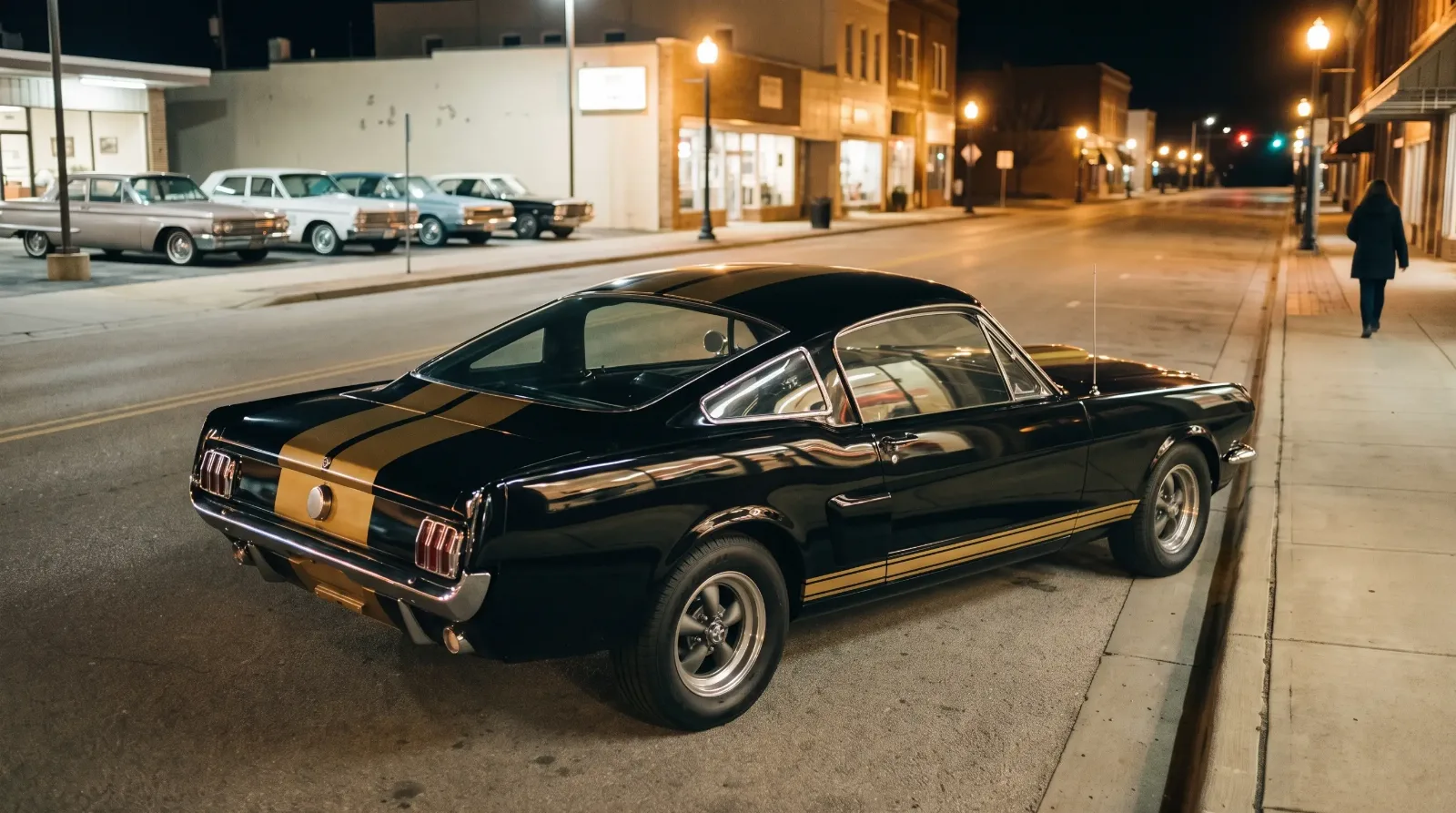
What changed was everything around it. The exhaust got quieter. The suspension moved closer to stock Mustang settings. An automatic transmission became available, which would have been unthinkable on the 1965 car. A rear seat came back as an option. One surviving dealer invoice, reproduced in an RM Sotheby's catalog, charges $40 for the fold-down rear seat. Paint went beyond white for the first time, with colors including Raven Black, Candy Apple Red, Sapphire Blue and Ivy Green alongside Wimbledon White.
Two changes went the other way, toward function. The 1966 car got Plexiglas rear quarter windows. And it wore functional scoops on its flanks that fed cooling air to the rear brakes. Softer, then, but not cosmetic.
| Item | 1965 GT350 | 1966 GT350 |
|---|---|---|
| Engine rating | 306 hp @ 6,000 rpm (gross) | 306 hp @ 6,000 rpm (unchanged) |
| Exhaust | Loud, race-minded | Quieter |
| Suspension | Shelby race-oriented setup | Closer to stock |
| Transmission | Borg-Warner T-10 four-speed | Four-speed, automatic optional |
| Rear seat | None | Available |
| Colors | Wimbledon White only | White plus several colors |
| Rear brake cooling scoops | Not fitted | Functional |
| Total model-year production | 562 | 2,378 (all types) |
As for whether softer meant slower, one period test points the other way. A long-running Shelby fan FAQ credits Car Life's July 1966 issue with 0 to 60 mph in 6.2 seconds and a quarter mile of 14.0 seconds at 92 mph. I have not seen the magazine itself, so treat those as quoted figures. If they hold up, the 1966 car gave away comfort-related edges, not straight-line speed.
Bigger seller: how many were built
This is where the documentation wins the argument outright. Shelby American built 562 cars for 1965. For 1966 the total was 2,378, all types counted. That is roughly four times as many in one year.
The breakdown takes some care, because published counts of the regular fastbacks sold to the public do not match. Auction catalogs and registry-based references give 1,356, 1,365, 1,368 and 1,372. The honest way to say it is about 1,370, and anyone who quotes a single number with total confidence should be asked where it came from.
The other big slice went to Hertz, about 1,000 cars, with sources putting it at 999, 1,001 or 1,003 depending on whether the two prototypes are counted. That order grew from an initial 100. The rental story is its own chapter, and the Hertz cars get their full due elsewhere. For this model year, the point is simple: one fleet customer took nearly twice as many cars as Shelby had built in its entire first year.
The rest of the 1966 total is small and famous. Only four convertibles were built, despite the hobby believing for years that there were six. About 11 cars got the factory Paxton supercharger, a $670 option. Those few cars draw a lot of attention at shows, but they are footnotes to the production story, not the story itself.
Was the softer car a lesser car?
My view on this is settled, and it favors the later car more than the bench-racers do. The 1965 car is the purer object. It is also a car most owners of the period would have tired of on a long drive. The 1966 version kept the same engine, added a seat, offered color and an automatic, and still carried real hardware for the brakes. That is not dilution. That is a small company learning what its customers would actually pay for.
Volume mattered too. A model year of 2,378 cars, fleet deal and all, put far more Shelbys on the road than a 562-car year ever could, and that is a big reason the 1966 car is the GT350 most people have actually seen in person.
"Every time somebody calls the '66 the watered-down Shelby, I ask him to read me the engine rating off both window stickers. Same 306 horses. The '66 just let you bring a friend and pick a color."
Wayne Coburn
Reading a 1966 GT350 today
The questions people ask about these cars at a show come back to the same few points: which of the carry-over cars began as 1965 fastbacks, whether a colored car's paint matches its records, and whether a rear seat or an automatic was ordered new or added later. The Shelby American Automobile Club, founded in 1975 by a handful of owners, built its registry from serial numbers and owner records gathered over decades, and it is the usual reference for answering those questions.
On the cheaper part of the old saying, I will be straight. The 1965 street car's $4,547 list price is well documented. The 1966 figure is murkier. Lower numbers get repeated, yet one RM Sotheby's catalog quotes the same $4,547 for a 1966 car, and that car's dealer invoice shows $3,547 for the car itself before wheels, radio, rear seat and freight. I have not seen a 1966 price sheet I would stand behind, so treat "cheaper" as unproven until someone produces one. For anyone who wants to compare the regular cars Ford built that same year, here are the 1966 Mustangs listed right now.
Sources and notes
Related Reading
Have a
Ford Mustang
for Sale?
Reach thousands of serious classic car collectors across the US.
Sell It Here →
Selling a classic? Here's how: the best sites to sell a classic car
Are You a Classic Car Dealer?
List your full inventory and connect with targeted classic car buyers.
Join as a Dealer →
#Ford Mustang
#Shelby GT350
#Carroll Shelby
#Shelby American
#saac registry
#1966 Shelby GT350
#Shelby production numbers

About the author
Wayne Coburn
Longtime Corvette owner, judge and club figure who knows the cars, the records and the people behind them.
Related Listings - Ford Mustang




Comments
Be the first to comment on this article.