
Every fourth-gen meet has the same conversation at least once. Two red 1996 SS coupes park side by side, the owners pop the doors, and somebody leans in to read the little plaque on the console. One plaque has a number on it. The other has a gap where the plaque used to be, and an owner with a long explanation. That plaque is the quickest introduction there is to the SLP Camaro, because for 1996 and 1997 the Camaro SS was not finished by Chevrolet at all. It was finished by an outside company based in New Jersey.
Car Features
7 min read
SLP Engineering and the Fourth-Gen Camaro
How SLP Engineering built the 1996 and 1997 Camaro SS, kept finishing the LS1 cars to 2002, and what paperwork proves a real SLP Camaro.
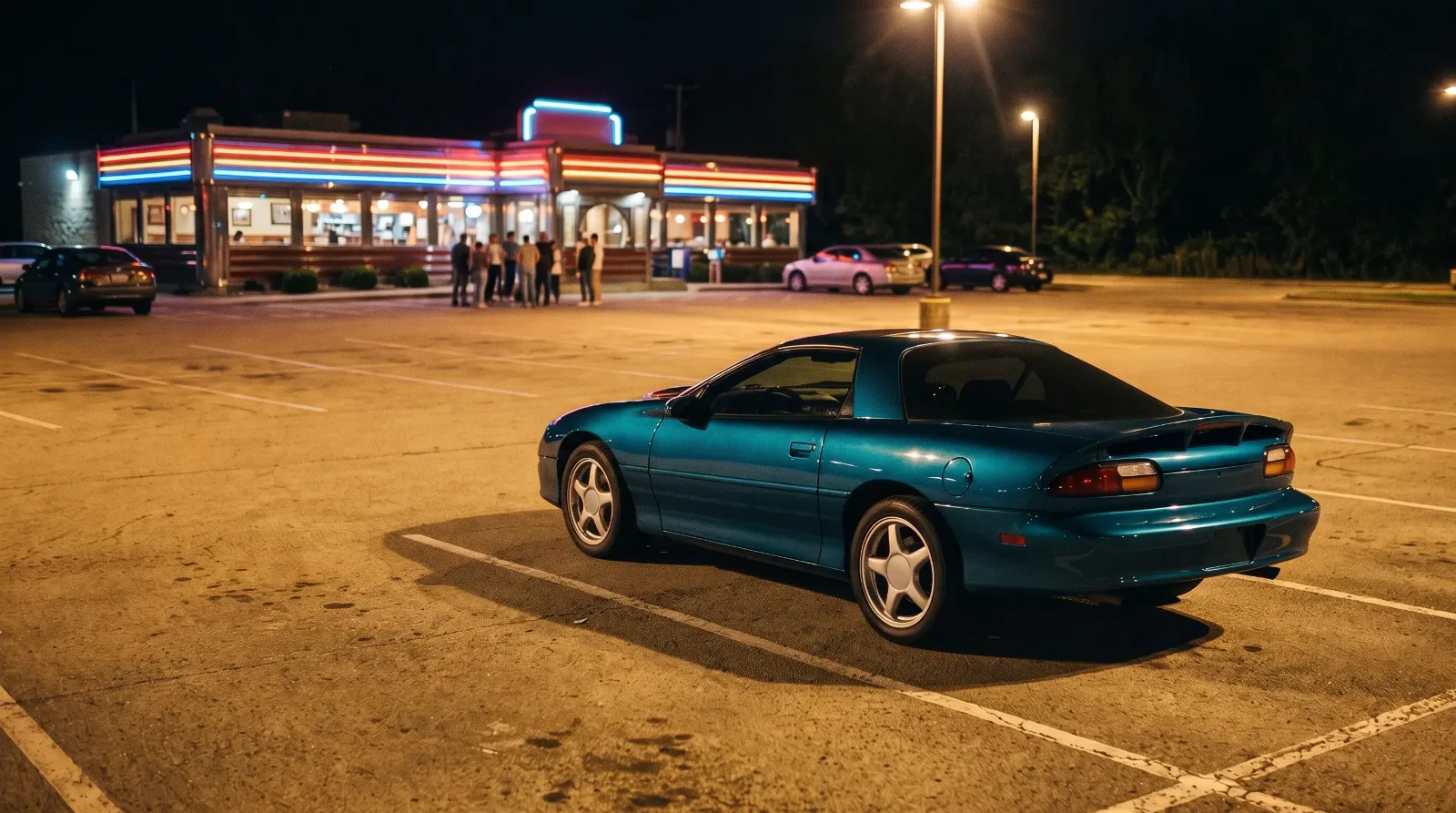
The bigger picture of the generation, from the 1993 launch to the end of production in 2002, is in our fourth-gen Camaro history. This piece is about the outside firm that put its hands on the fast ones, what it actually did, and how you sort the real cars from the stories.
Who SLP was before the SLP Camaro
SLP stands for Street Legal Performance, the trading name of SLP Engineering, based in Toms River, New Jersey. GM described it as an "aftermarket partner company," which is a careful way of saying it was not GM but GM trusted it with GM cars.
The family history goes back further, and the sources do not agree on the dates. Ed Hamburger started out in 1970 supplying performance parts for Chrysler race cars, then founded Hamburger's Oil Pans, which became a big supplier to NASCAR and NHRA teams. duPont Registry dates SLP itself to 1987 and credits it with the first 50-state emissions-legal performance package for the 1988 Camaro and Firebird; other accounts just say the mid-1980s. After the SLP parts business was sold in 2013, the company that remained was renamed Specialty Vehicle Engineering, and Ed's son David Hamburger now runs it. Treat the exact founding year as unsettled until a company document turns up.
What is better documented is SLP's first big GM job. For 1992 Pontiac and SLP offered the Formula Firehawk through Pontiac dealers. The street version was rated at 350 hp at 5,500 rpm and 390 lb-ft, and it cost about $39,995 delivered. That car put SLP on the F-body, and the Camaro followed.
1996 and 1997: SLP builds the Camaro SS
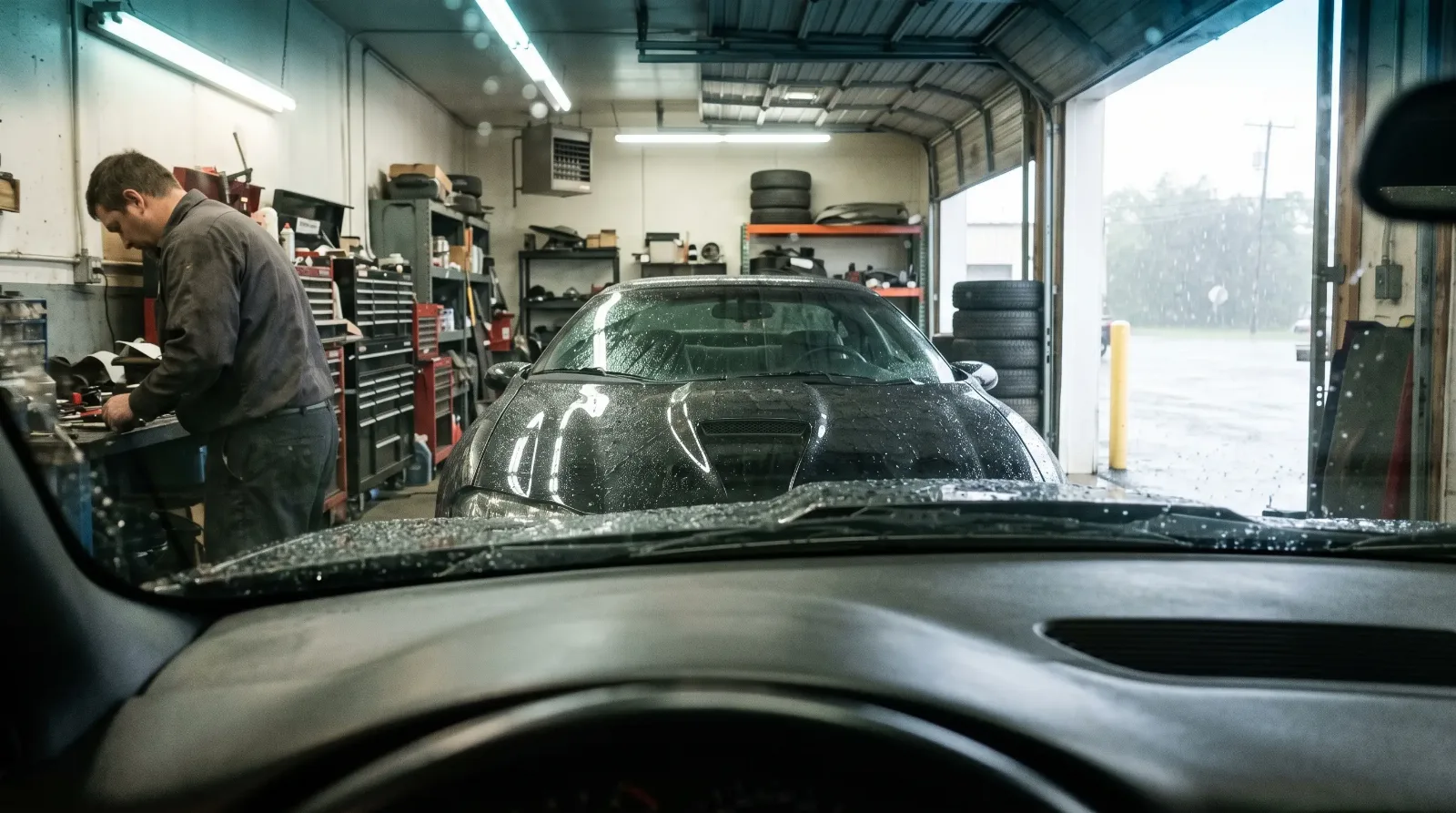
The SS badge had been off the Camaro since 1972. For 1996 it came back as a Z28 converted by SLP Engineering under contract to GM. The option cost $3,999. How many were built is disputed: Hagerty's valuation text gives 2,257, while numbered cars sold through Hagerty's marketplace are described as one of 2,410. Neither figure comes from SLP's own records, so this is one place where the paperwork in the club itself is the best evidence anyone has.
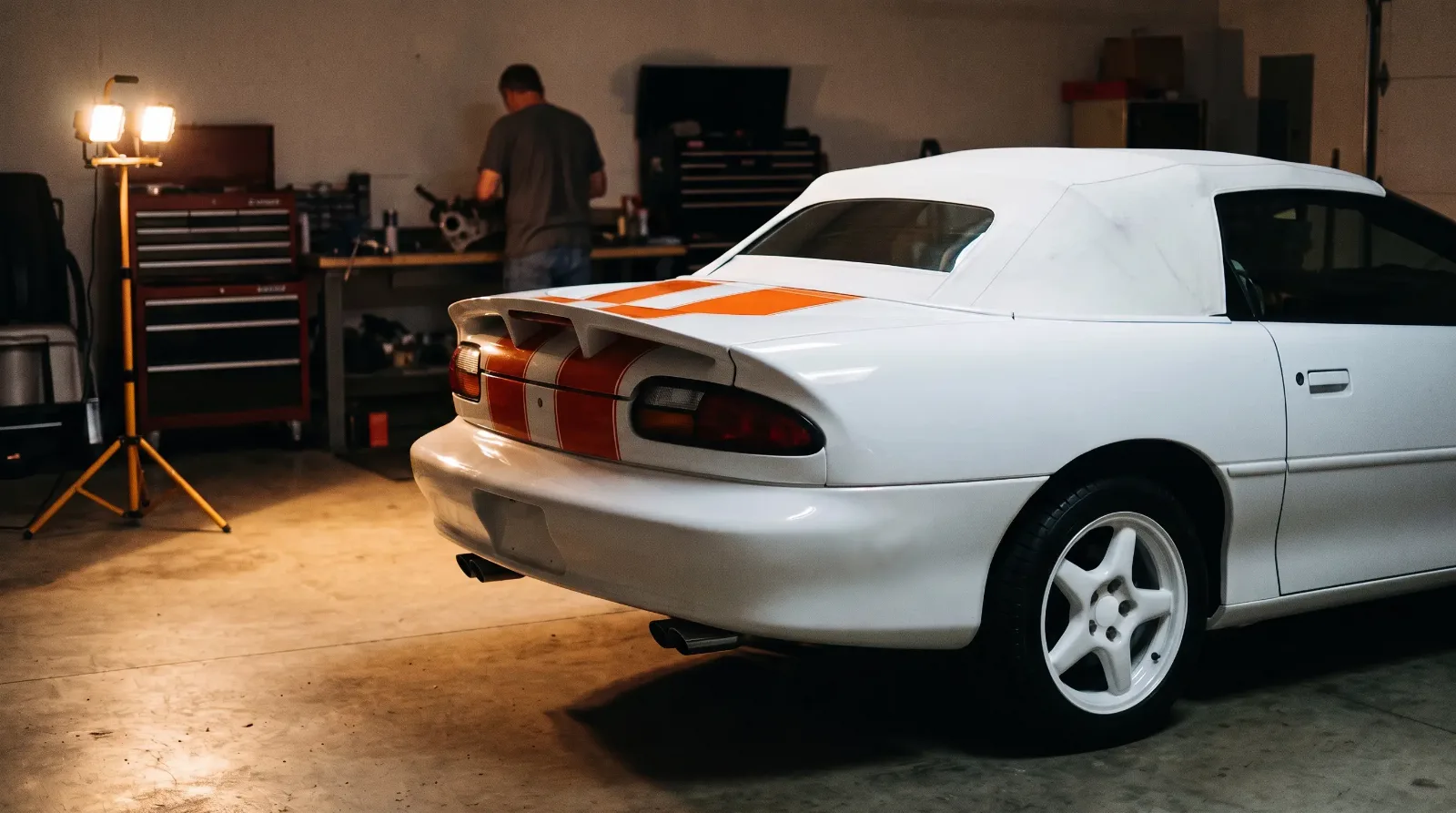
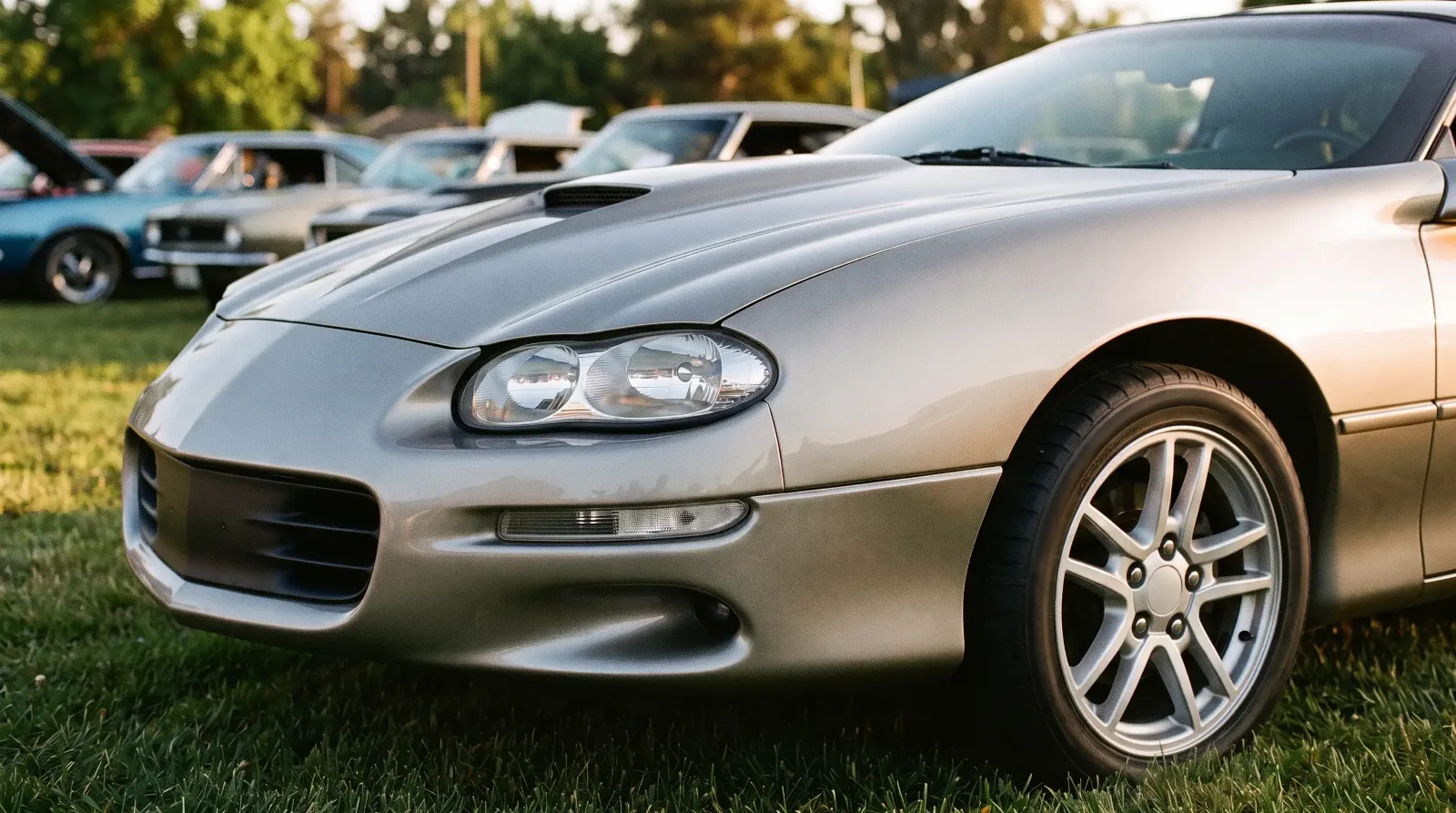
The conversion was real hardware, not a decal kit. SLP fitted a composite hood with a functional scoop and cold-air induction, a new decklid spoiler and 17x9 ZR-1 style five-spoke wheels. Underneath it added a larger front anti-roll bar and a revised rear track. The engine got synthetic oil, and the console got a plaque carrying the car's production number. Remember that plaque.
The result was a 305 hp LT1, 20 hp more than the 285 hp of the 1996 Z28 it started as, and 30 hp more than the 1995 Z28's 275 hp. The extra came from SLP's cold-air intake and a freer exhaust. 1996 SS cars came in White, Polo Green, Teal, Black and Red.
"I have seen a lot of 1996 SS cars at shows, and not every one of them was born that way. The hood and wheels are easy to buy. The plaque with a number on it, and the paperwork behind it, are not."
Wayne Coburn
For 1997 SLP did something rarer. It converted 108 SS cars with the LT4 from the 1996 Corvette, rated at 330 hp and 340 lb-ft: 100 for the US, 6 for Canada and 2 prototypes. The LT4 conversions belong to the same model year as the 30th Anniversary car, and the two stories overlap, so check which package a given car actually carries. The regular 1997 SS count is no cleaner: one Hagerty listing says 2,081 were built alongside the anniversary cars, and other totals for the package run higher.
1998 to 2002: the SS goes in-house, SLP keeps the parts
For 1998 the SS became a regular Chevrolet option, RPO WU8, with the 320 hp LS1, a forced-air hood, a special spoiler, 17 in wheels and tires, and special suspension. It cost $3,500. The 320 hp figure rose to 327 hp with the optional SLP exhaust.
"In-house" did not mean SLP left. The 1998 to 2002 SS cars were built at Ste-Thérèse, Quebec, and then shipped to SLP in nearby LaSalle for the hood, spoiler, wheels and suspension. In 2002 SLP also added stripes, the scoop and any other SLP content. SLP is credited with the parts development, manufacture and assembly of more than 50,000 SS and WS6 cars from 1996 to 2002, which counts the Pontiac side too.
| Model year | SS engine | SS rating | Z28 rating | SS built |
|---|---|---|---|---|
| 1996 | LT1 (SLP conversion) | 305 hp | 285 hp | 2,257 or 2,410 (disputed) |
| 1997 | LT1 (SLP conversion) | 305 hp | 285 hp | Disputed |
| 1997 (LT4 SS) | LT4 (SLP conversion) | 330 hp | 285 hp | 108 LT4 cars |
| 1998 | LS1 | 320 hp | 305 hp | 3,025 |
| 1999 | LS1 | 320 hp | 305 hp | 4,829 |
| 2000 | LS1 | 320 hp | 305 hp | 8,913 |
| 2001 | LS1 | 325 hp | 310 hp | 6,332 |
| 2002 | LS1 | 325 hp | 310 hp | 11,191 |
The 2001 and 2002 SS also had an SLP 345 hp option. With the stock intake and only the SLP exhaust, the figure was 335 hp.
The smaller SLP Camaros
The SS gets the attention, but SLP put its name on quieter cars too. For 2001 and 2002 SLP brought back the Rally Sport on the V6 car as package Y3B: stripes, RS badges and a Z28 exhaust, with the V6 rated at 205 hp. It cost $849 in 2001, when 398 were built, and 443 followed in 2002. That is one of the few fourth-gen V6 cars anyone at a meet will walk over to look at.
Then there are the specials that often get lumped in with SLP but were not SLP builds. GMMG Inc., a Georgia shop formed by Matt Berger and Dennis Barker of Berger Chevrolet in Grand Rapids, Michigan, built its own cars on top of Chevrolet's: the Berger Camaro SS of 2000 to 2002 (104 including prototypes), the Dale Earnhardt Intimidator SS (82 by the usual count; GMMG's own letter mentions 83 numbered cars plus 2 prototypes), and the 2002 ZL1 (69 built). The ZL1 Phase 3 cars, 37 by most counts, had a 427 rated at 600 hp and cost about $80,000 new. GMMG's registry describes the ZL1 cars as B4C coupes, not SS cars, so do not assume any of these began life as an SLP-finished SS. Establish the base car from the paperwork.
Checking the paperwork on an SLP Camaro
Here is where the club stories end and the documents start. A 1996 or 1997 SS should have its numbered console plaque. Missing plaques happen, but a missing plaque plus a fresh hood and a set of 17s is a Z28 with a parts catalog. Ask for the window sticker and anything with the SS option on it.
Be careful with option codes on the LT1 cars. One source says R7T is the 1996 SS package, another says it is the 1997 LT4 SS. Until a registry settles it, a seller who waves R7T at you as proof is waving a disputed code. On the 1998 to 2002 cars, WU8 is the SS code and it belongs on the paperwork.
Most SLP Camaros are honest cars with honest owners. The trouble is that a hood and a set of wheels can be bolted onto any Z28, and twenty-some years later they look the same in a parking lot. The plaque and the window sticker do not. That is the whole punchline: the car is the SLP part, and the paper is the proof.
Sources and notes
Related Reading
Have a
Chevrolet Camaro
for Sale?
Reach thousands of serious classic car collectors across the US.
Sell It Here →
Selling a classic? Here's how: compare the places to sell classic cars
Are You a Classic Car Dealer?
List your full inventory and connect with targeted classic car buyers.
Join as a Dealer →

About the author
Wayne Coburn
Longtime Corvette owner, judge and club figure who knows the cars, the records and the people behind them.
Related Listings - Chevrolet Camaro
Comments
Be the first to comment on this article.