
The 1996 Camaro SS put 305 horsepower under a Camaro hood with an SS badge on the nose, and the badge had been gone since 1972. That is 23 model years, 1973 through 1995, without a Super Sport. The car that brought it back was not built entirely by Chevrolet: it was a Z28 converted by SLP Engineering under a GM contract, sold as a $3,999 option, and built in numbers small enough that the sources still argue about the count. The result was the quickest Camaro of its day by a clear margin. The details are worth getting right, because a lot of the folklore around the 1996 Camaro SS is not.
Car Features
7 min read
The 1996 Camaro SS: The Super Sport Returns
The 1996 Camaro SS brought the name back after 1972: an SLP-converted Z28 with 305 hp, a $3,999 price tag and a production count still in dispute.
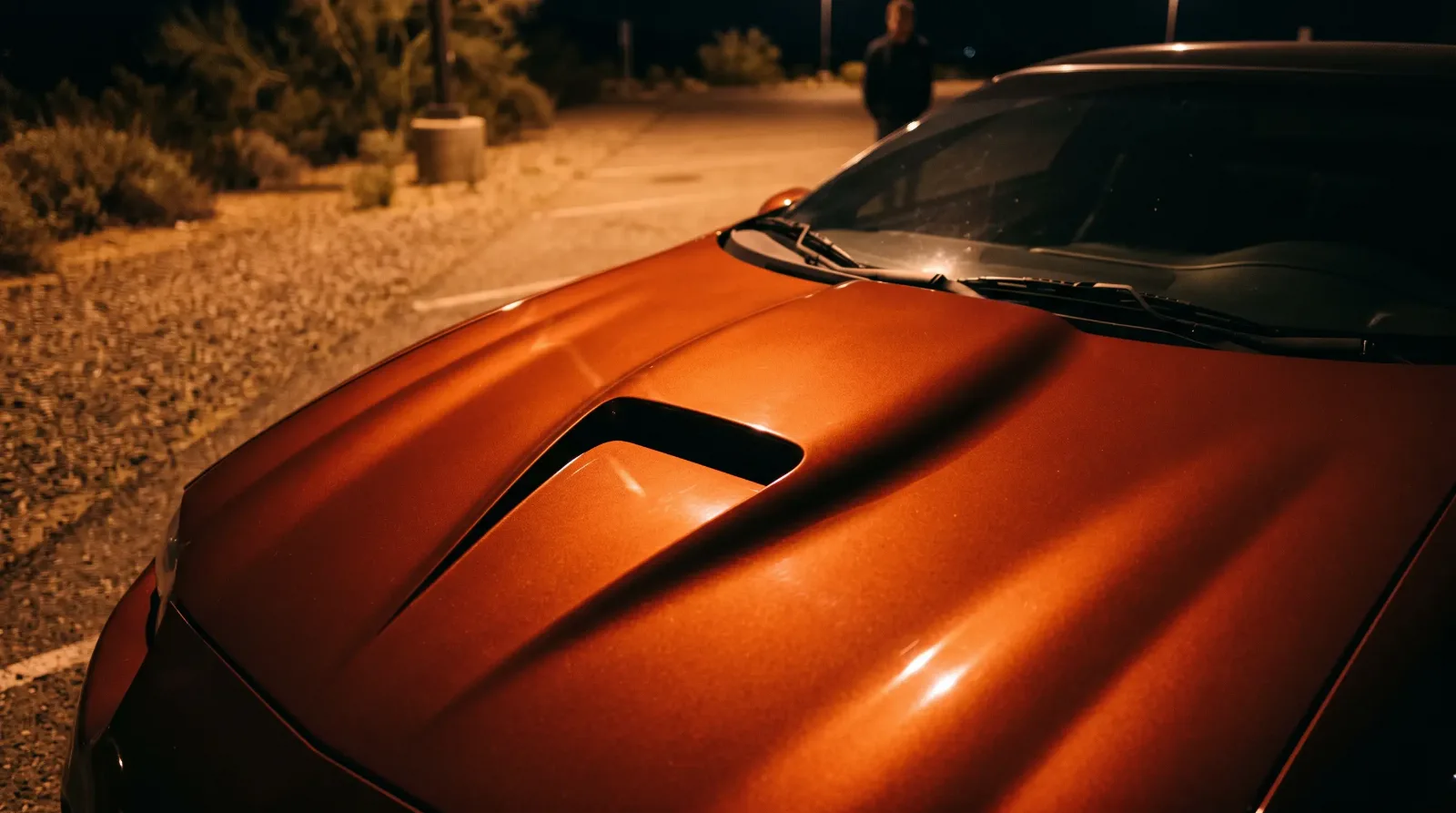
For where this car sits in the generation, the fourth-gen Camaro story covers 1993 to 2002 from end to end. This piece stays on one model year and one option.
Twenty-three model years without an SS
The 1972 model year was the last for the SS 350, the SS 396 and a factory big block in the Camaro. After that, the performance name was Z28, through the second generation, the whole third generation and into the fourth. SS became a word on old cars.
So the return in 1996 mattered as a signal. It was not a new engine. It was the same LT1 the Z28 already used, given better breathing by an outside company. That is the honest way to describe it, and it is not an insult. The Z28 in 1996 was rated 285 hp, up from 275 hp in 1993 to 1995 after the switch to OBD-II and dual catalytic converters. The SS was rated 305 hp. That is 20 hp more than the 1996 Z28 and 30 hp more than the 1995 car.
Twenty horsepower is not a revolution. It is about what you expect from freeing up the intake and exhaust on a healthy small block. Where the SS earned its premium was in the whole package, not in the dyno sheet alone.
What the $3,999 bought
The SS option added $3,999 to a Z28 coupe that started at $19,390 in 1996. For that money, the car got the following:
| Item | 1996 Z28 | 1996 SS |
|---|---|---|
| Engine | LT1 5.7 V8 | LT1 5.7 V8, cold-air induction |
| Rated output | 285 hp | 305 hp |
| Hood | Steel, standard Z28 | Composite, functional scoop |
| Wheels | Standard Z28 | 17x9 ZR-1-style five-spoke on coupes (16-inch on convertibles) |
| Chassis | Standard Z28 | Larger front anti-roll bar, revised rear track |
| Other | None | New decklid spoiler, synthetic oil, console plaque with production number |
| Price | $19,390 (coupe) | Plus $3,999 |
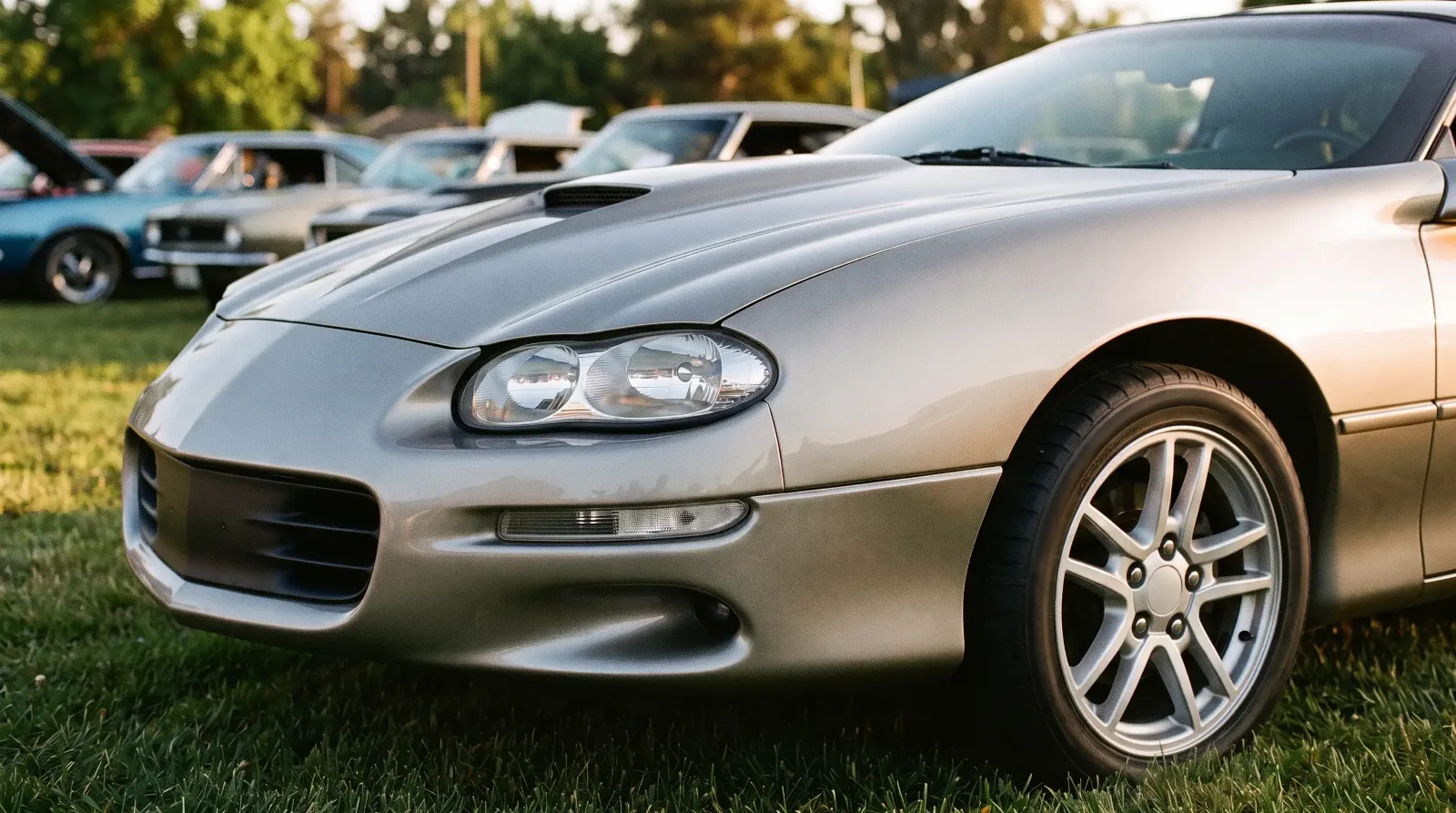
The hood scoop is functional, which in 1996 was not a given. It feeds the cold-air induction that accounts for most of the power gain. An optional SLP performance exhaust added about 5 hp. One Hagerty Marketplace listing puts a car so equipped at 310 hp and 325 lb-ft; a Firebird enthusiast FAQ gives 315 hp and 342 lb-ft. Quote 305 hp for the standard car and treat the exhaust figure as approximate until someone produces a period document.
The console plaque is the part a buyer should care about most, and we will come back to it. The five factory colors listed for the 1996 SS were White, Polo Green, Teal, Black and Red.
The 1996 Camaro SS against the stopwatch
This is where the car built its reputation. Car and Driver ran the SS against the Mustang Cobra and the Firebird Formula WS6 in a comparison dated December 1995, and named the Camaro the quickest, the fastest and the best handler of the three. That verdict is reported second-hand, through dealer and auction listings, so treat the wording with some care.
The headline figure tied to the car is a 0 to 60 mph time of 4.9 seconds, credited to Car and Driver and quoted in Hagerty Marketplace listings. The issue that printed it has not been found. If the number holds up, it is a very quick time for a car of the period. If you are writing a check based on it, ask to see the magazine.
"The SS was a Z28 with better lungs and better feet. Twenty horsepower on paper, and the rest of the gain came from the wheels, the bar and the tires. That is what a good option package looks like: nothing you can't explain."
Dan Reeves
What the comparison does confirm is the pecking order. In a year when Ford had the Cobra and Pontiac had the WS6, the cheapest way into the top of the class was a Chevrolet with an outside company's parts on it. That company's role across the whole run of the SLP cars is a separate story, and a bigger one.
How many were built: a number nobody agrees on
Here the numbers get soft. One Hagerty source says 2,257 cars. A Hagerty Marketplace listing for car number 899 says 2,410 were built for 1996. The gap might be United States cars versus the total, or conversions versus orders. Nobody has published the SLP records that would settle it.
It is also unclear whether the SS cars are counted inside the Z28 production totals. The record gives 14,906 Z28 coupes and 2,938 Z28 convertibles for 1996, without saying whether the SS conversions sit within those numbers. The convertible body had joined the fourth-gen range in 1994; the full story of that car is told separately.
The year itself did not help volume. An 18-day strike over outsourcing idled 81,500 GM workers in March 1996, and Camaro deliveries for the model year fell to 61,362, about half the year before. Where the 1996 conversions were physically done is also not firmly documented. Only a low-confidence report places the work in a factory next to the assembly line.
Buying a 1996 SS in 2026
The mechanical risks are the LT1's risks. Every LT1 Camaro, the 1996 to 1997 SS included, used the Opti-Spark distributor. It sits at the front of the engine, driven off the nose of the camshaft and tucked beneath the water pump. Moisture upsets its optical sensor and causes misfires, and a leaking water pump makes it worse. The pump has to come off to reach it, so the sensible move is to replace both at once.
Value rests on documentation. A Z28 with an SS hood and wheels is the obvious clone, and with a 1996 count that may be as low as 2,257, the incentive to build one is real. In 2018, Hagerty's Greg Ingold rated the 1996 to 2002 SS as having the best collectibility outlook of the standard fourth-gen cars, and called any SLP car significant and desirable. That opinion is eight years old now. The logic behind it has not changed: low numbers, a clear story and a measurable gain over the Z28.
The SS carried on for 1997 at the same $3,999, and for 1998 it became a regular production option, RPO WU8, with the LS1, though SLP still did the conversion work. The 1996 car is the one that reopened the door. For the long arc of the nameplate, the bigger picture is on the main history page. To see what the market is asking right now, browse the current Camaro SS cars for sale.
Sources and notes
- Hagerty Marketplace: 1996 Camaro SS number 899, package contents and Car and Driver quote
- Hagerty valuation tools: 1996 Chevrolet Camaro
- Hagerty: Is the fourth-gen Camaro collectible?
- Wikipedia: Chevrolet Camaro (fourth generation)
- Classic Industries: Camaro production numbers 1967 to 2002
- WS6.com F-body FAQ: SS and SLP packages
Related Reading
Have a
Chevrolet Camaro
for Sale?
Reach thousands of serious classic car collectors across the US.
Sell It Here →
Selling a classic? Here's how: compare the places to sell classic cars
Are You a Classic Car Dealer?
List your full inventory and connect with targeted classic car buyers.
Join as a Dealer →

About the author
Dan Reeves
Performance engine builder from North Carolina's motorsports corridor, focused on swaps, forced induction and making real, repeatable power.
Related Listings - Chevrolet Camaro
Comments
Be the first to comment on this article.