
Every conversation about the Chevelle eventually turns to the LS6 454, and that's fair. It's the number people chase. But the small block cars outsold the big block cars by a wide margin every single year of the A-body's run, and the factory paperwork on the 307 and 350 tells its own story, one that doesn't get told nearly as often.
Car Features
7 min read
Small-block Chevelles: the 307 and 350 story
The 307 and 350 outsold every big-block Chevelle. Here's how each V8 was built, what changed by year, and what to check before you buy one.
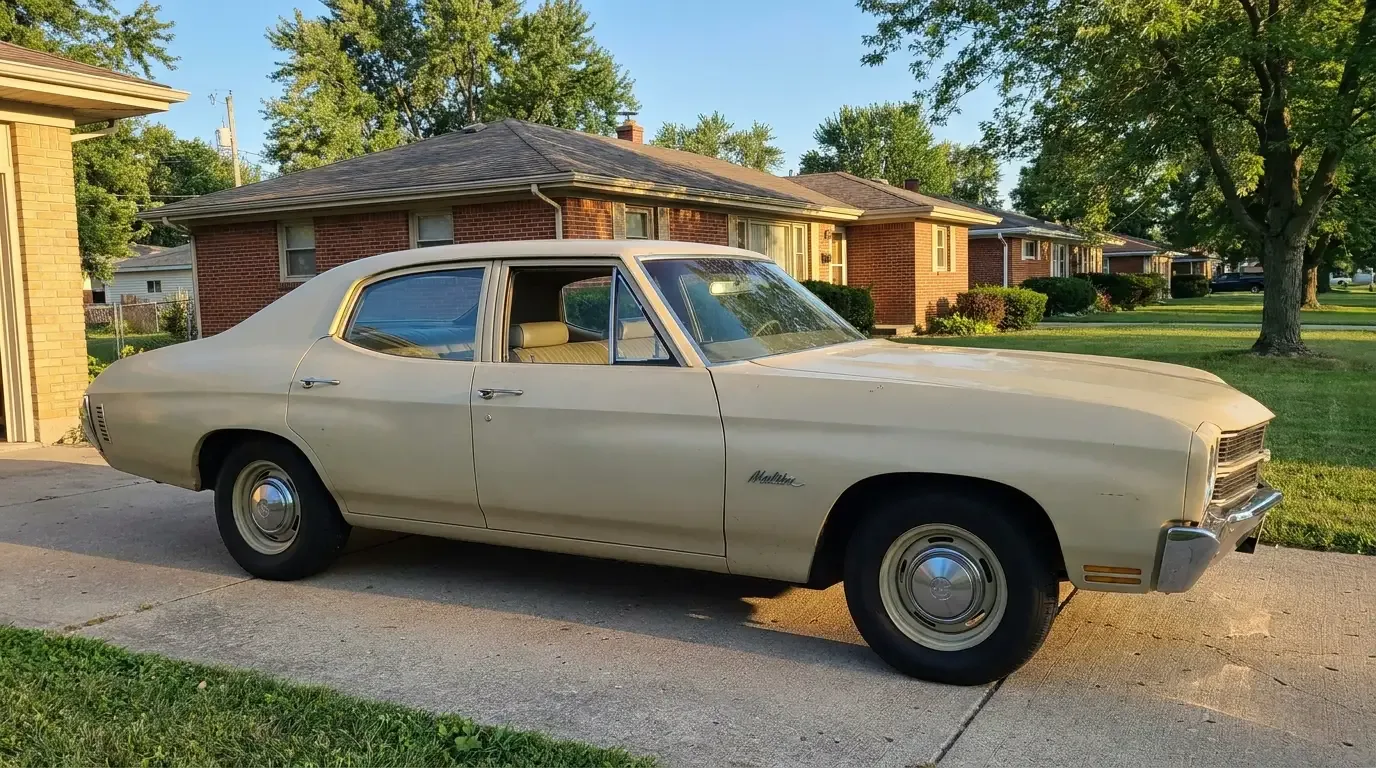
I've spent a lot of time with build sheets and RPO code lists, and the small-block Chevelle is where most owners actually lived. It's the car somebody's dad drove to work, not the one that ran the Woodward loop on a Friday night. That doesn't make it less interesting. It makes it a different kind of interesting.
The 307: a transitional engine, not a performance one
The 307 cubic-inch V8, RPO L14, showed up in the Chevelle lineup starting in the 1968 model year and stuck around into the early 1970s. It was built off the small-block architecture using a 3.875-inch bore, the same bore as the 327, paired with a 3.25-inch stroke borrowed from the 283. Chevrolet built it as a low-cost, two-barrel base engine, not a performance option, and it never pretended otherwise.
Output landed at 200 horsepower gross at 4,600 rpm in its early years, dropping as emissions requirements tightened through the early 1970s. It's easy to dismiss the 307 as the engine nobody wanted, but that misses the point. Most first buyers of a six-cylinder-or-small-V8 Chevelle weren't cross-shopping an SS396. They wanted a mid-size car that started reliably and didn't need premium fuel. The 307 did that job.
The 307 quietly went out of production after the 1973 model year, and GM shifted the entry-level V8 slot over to the 350 in two-barrel form, which is really where the small-block Chevelle story gets more interesting.
The 350: one displacement, several different personalities
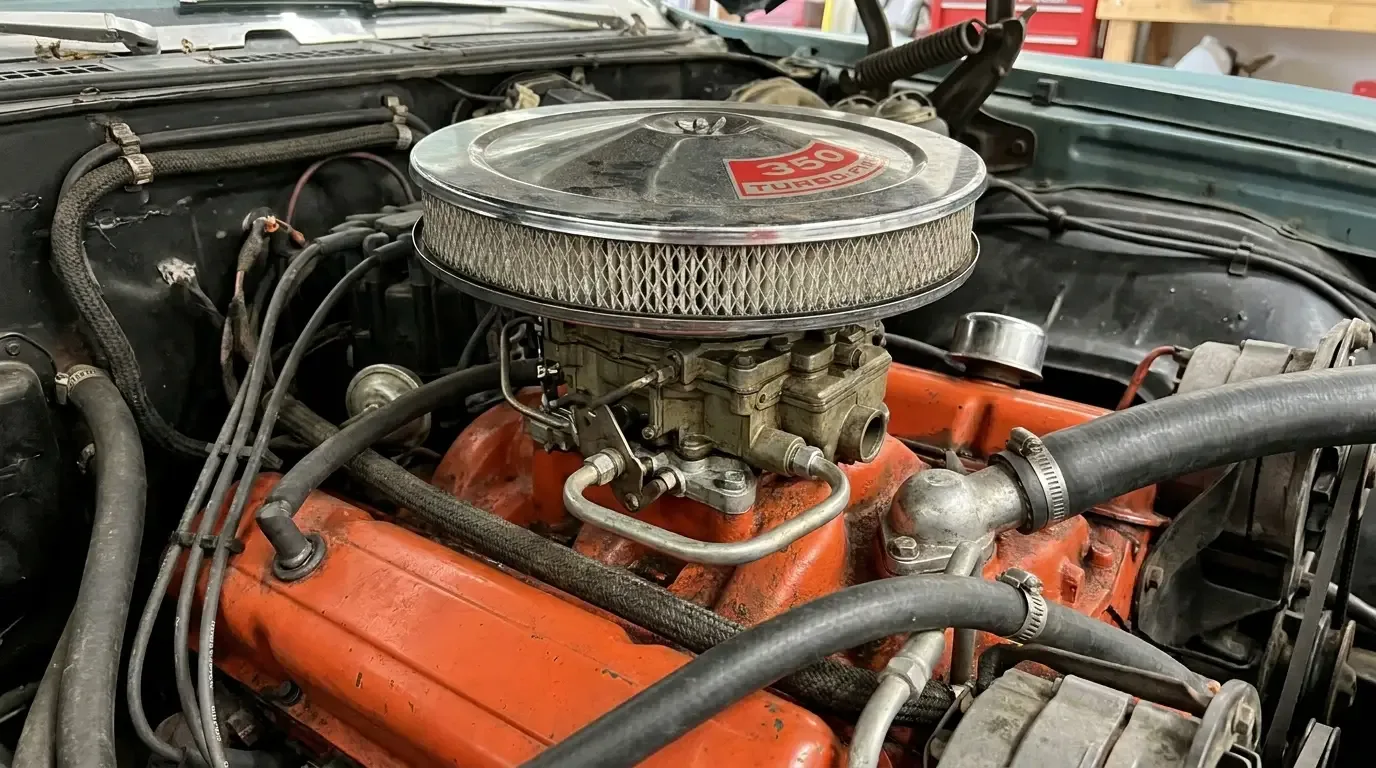
The 350 arrived in the Chevelle lineup for 1969 and, unlike the 307, it wore several different hats depending on carburetion and compression. The base two-barrel version, RPO L65, was tuned for fuel economy and low-end torque, making 250 horsepower gross at 4,800 rpm in its early configuration. The four-barrel version, RPO L48, ran higher compression and more aggressive cam timing, putting it at 300 horsepower gross at 4,800 rpm in its early years, before compression and emissions changes brought that number down through the early 1970s.
That gap between L65 and L48 matters more than it looks on paper. A four-barrel 350 Chevelle with a decent rear gear could embarrass some of the big-block cars in the quarter mile if the big-block driver wasn't paying attention, and more than a few small-block owners built a local reputation doing exactly that. It wasn't the LS6's power, but it was real power delivered in a lighter, cheaper package that didn't punish the insurance bill the way a 454 did.
| Engine | RPO code | Carburetion | Approx. gross HP | Years offered |
|---|---|---|---|---|
| 307 V8 | L14 | 2-barrel | 200 (gross) | 1968-1973 |
| 350 V8, base | L65 | 2-barrel | 250 (gross) | 1969-1972 |
| 350 V8, performance | L48 | 4-barrel | 300 (gross), 270 net by 1971 | 1969-1972 |
Emission regulations tightened those numbers year over year, and 1971's compression drop hit the L48 harder than the L65, since there was less room left to give up before the engine stopped feeling like a performance option at all. By the mid-1970s the gap between the 350's two states of tune had narrowed considerably, and the small-block Chevelle had settled into being a mainstream family car with a V8 under the hood rather than a budget performance play.
Why the 350 outlasted the big blocks entirely
Here's the part that surprises people who only know the big-block Chevelle story: the 454 was gone from the lineup well before the Chevelle nameplate itself ended, but the 350 kept running in GM mid-size and full-size cars for decades afterward. The small block's lower weight over the front axle, lower production cost, and easier emissions compliance made it the engine GM could keep building as regulations got stricter through the 1970s and into the 1980s.
That durability is exactly why parts availability for 307s and 350s remains so much better today than for the big-block engines. A 350 core, a set of heads, an intake, a carburetor, all of it is still easy to source because Chevrolet built that engine family in such enormous numbers across so many platforms. If you're restoring a small-block Chevelle today, or you're looking to browse small-block Chevelles for sale, that parts commonality is a real, practical advantage over chasing big-block-specific pieces.
What this means for a buyer today
A documented 307 or 350 Chevelle isn't going to command LS6 money, and it shouldn't. But it's also not a car to overlook if you actually want to drive it regularly. Parts are cheap. Insurance is manageable. And a well-sorted L48 350 with the right rear gear is a genuinely fun car to own, not a consolation prize.
What I'd tell someone shopping this segment: verify the engine matches the build sheet before you pay a premium for "numbers matching," because engine swaps between small-block Chevelles happened constantly over fifty years of ownership, and a replacement 350 dropped in during a 1985 rebuild isn't the same car the factory built in 1970. Pull the block casting number. Cross-reference it against the VIN-derivation date codes. It takes ten minutes and it tells you what you're actually buying.
Transmission choice tracked engine choice closely on these cars too. A 307 almost always came paired with a Powerglide or, later, a three-speed automatic, since the engine was never intended to be worked hard through a manual gearbox. The L48 350, on the other hand, showed up behind manual transmissions often enough that a four-speed small-block Chevelle isn't a rare find the way a four-speed 307 car would be. If you come across a stick-shift 307, treat it as an oddity worth a second look rather than assuming it's a mismatch, some did leave the factory that way, but document it before you pay extra for the combination.
What the 350's long run means for parts and swaps today
Because the 350 stayed in GM production for so long, well past the point the Chevelle nameplate itself disappeared, it became the default engine swap choice for owners of nearly every small-block Chevelle that needed a rebuild or an upgrade over the following decades. That's a mixed blessing for someone trying to buy a numbers-matching car today. It means good used cores and rebuild kits are everywhere and cheap. It also means an enormous number of small-block Chevelles on the market today are running a 350 that isn't the exact block the car left the factory with, even if it's the same displacement and even if nobody along the way meant to deceive anyone.
None of that makes those cars less usable or less fun. It just means the premium for documented originality on a small-block Chevelle comes down almost entirely to paperwork, casting numbers, and date codes rather than anything you can judge by ear or by looking at the engine bay. A 350 sounds like a 350 whether it's the original block or a 1978 replacement, and that's exactly why the documentation matters more here than it does on almost any other part of these cars.
"The paperwork doesn't lie, but it also doesn't volunteer information. You have to ask it the right questions. A casting number and a date code will tell you more about a small-block Chevelle's real history than any seller's story will."
Tom Ramirez
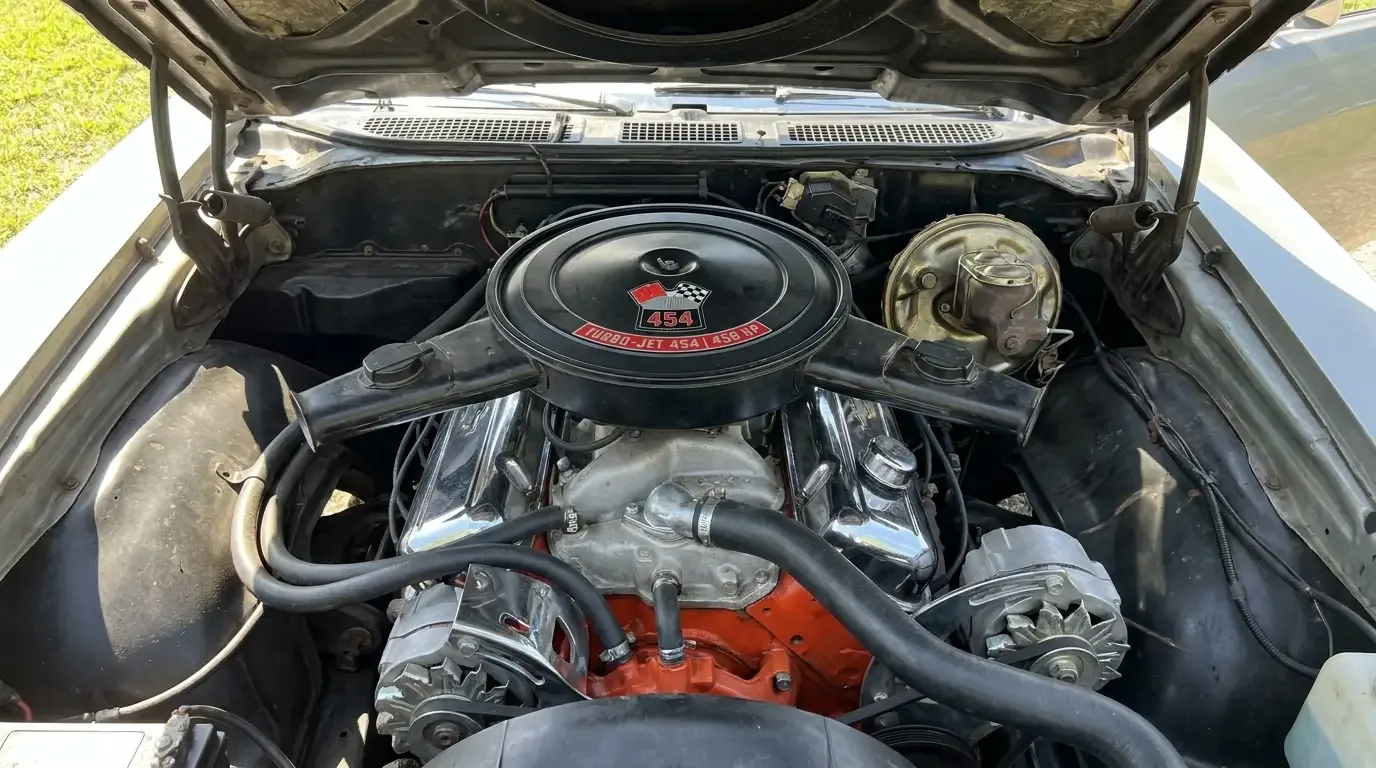
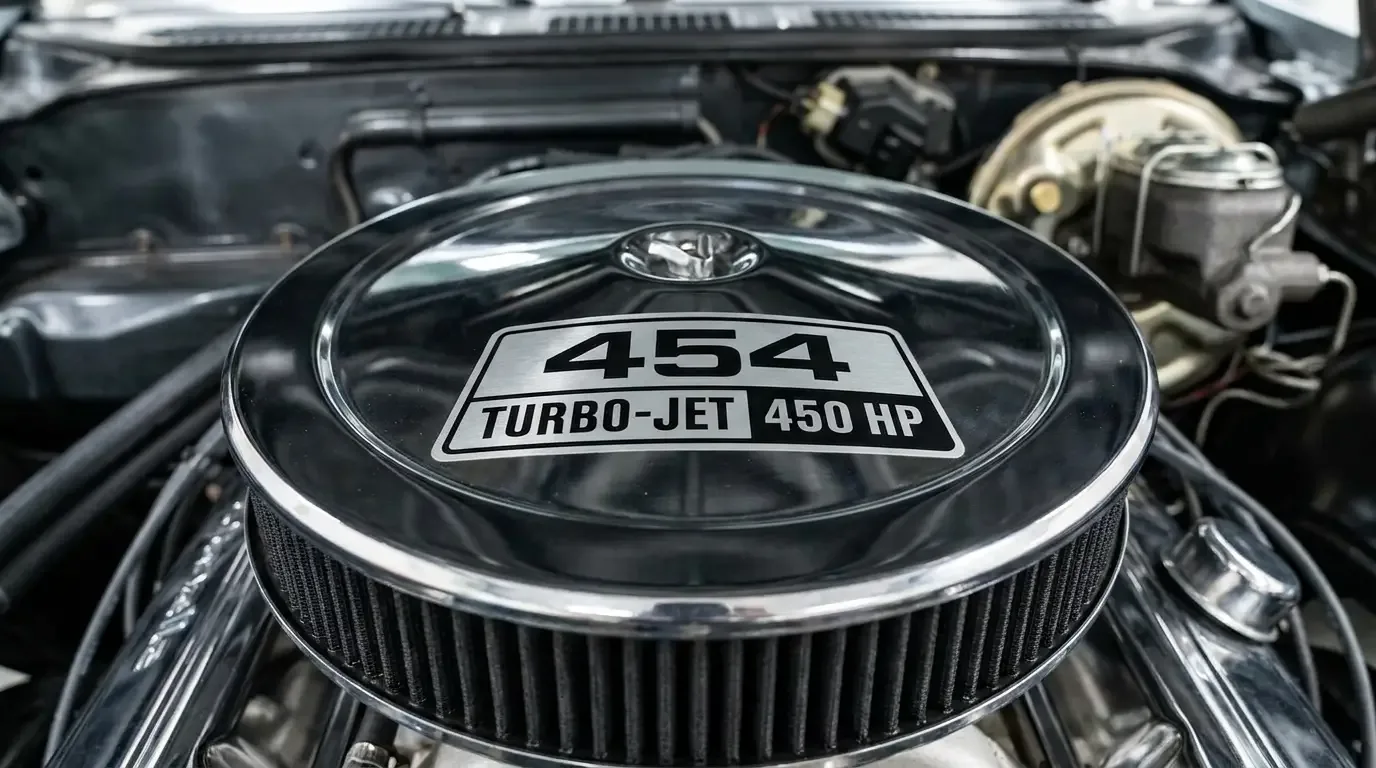
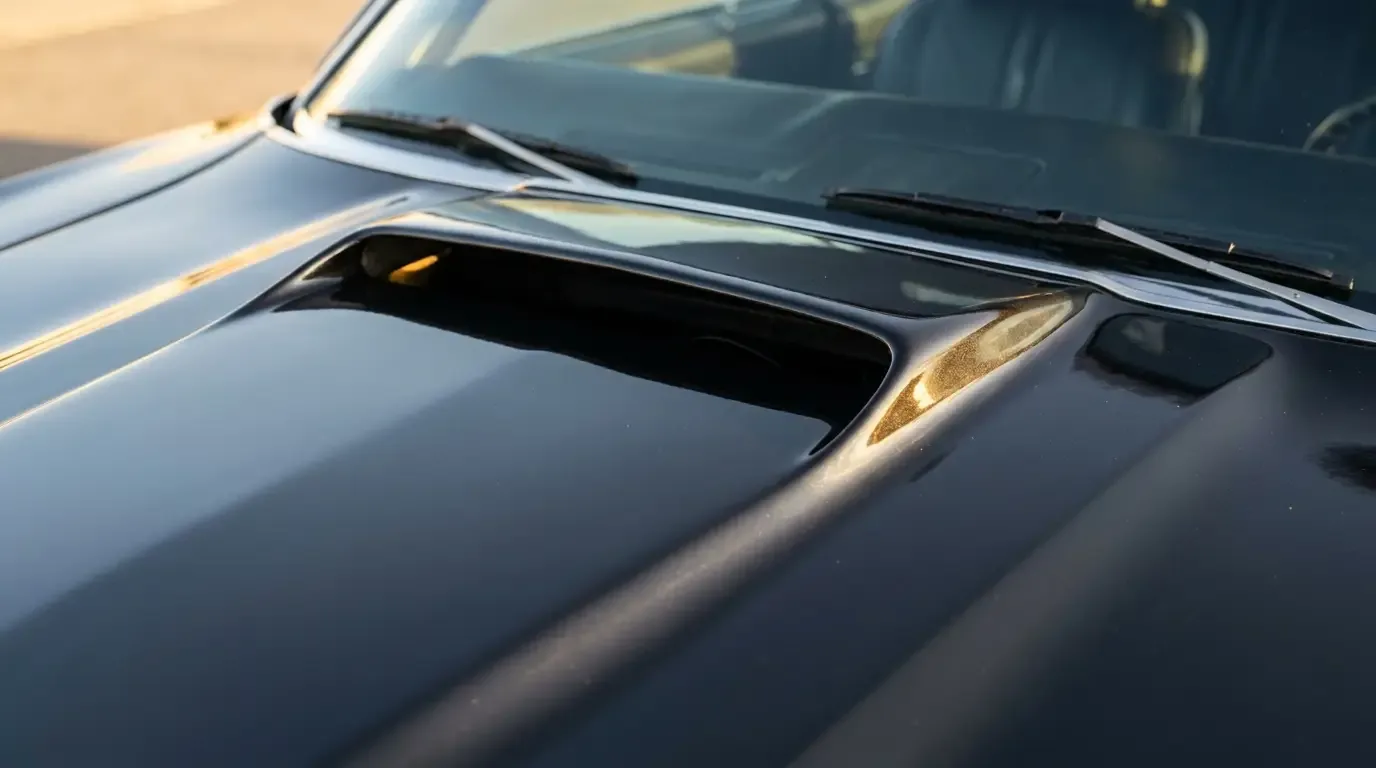
Next up in this series, we look at what's arguably the small-block's mechanical opposite number under a big-block hood: next: How Cowl Induction Actually Worked, the factory system built to feed a big block cold air when it needed it most.
Sources and notes
- 1970 Chevrolet Chevelle Malibu 307 V8 specs, automobile-catalog.com
- What is the Chevy 307 Engine?: Classic Muscle Parts
- 1970 Chevrolet Chevelle Fact Sheet: Over-Drive Magazine
- Chevelle Engine Options: 1971: Chevy Hardcore
- Chevrolet small-block engine: Wikipedia
- Chevrolet Chevelle 1964-1973 engine history: Engine Factory
Related Reading
Have a
Chevrolet Chevelle
for Sale?
Reach thousands of serious classic car collectors across the US.
Sell It Here →
Are You a Classic Car Dealer?
List your full inventory and connect with targeted classic car buyers.
Join as a Dealer →

About the author
Tom Ramirez
Corvette researcher and historian based in Bowling Green, Kentucky. Two decades documenting Corvette production history from original factory records.
Related Listings - Chevrolet Chevelle




Comments (1)
T
Tom Addison
4 weeks ago
The insurance section is worth a separate article. A lot of people reach claim time before realizing agreed value coverage is completely different from what they bought.