
Here is the number that surprises people every time: in 1900, more steam cars were registered in the United States than gasoline cars. Not a close second. Ahead. The Stanley Steamer and its rivals were not a sideshow to the real automobile industry. For a stretch of about a decade, they were a serious piece of it.
Car Features
6 min read
Steam-Powered Cars That Ruled Early Roads
Steam cars out-accelerated gasoline rivals and held a land speed record for a century. The numbers behind why steam power still lost the race.
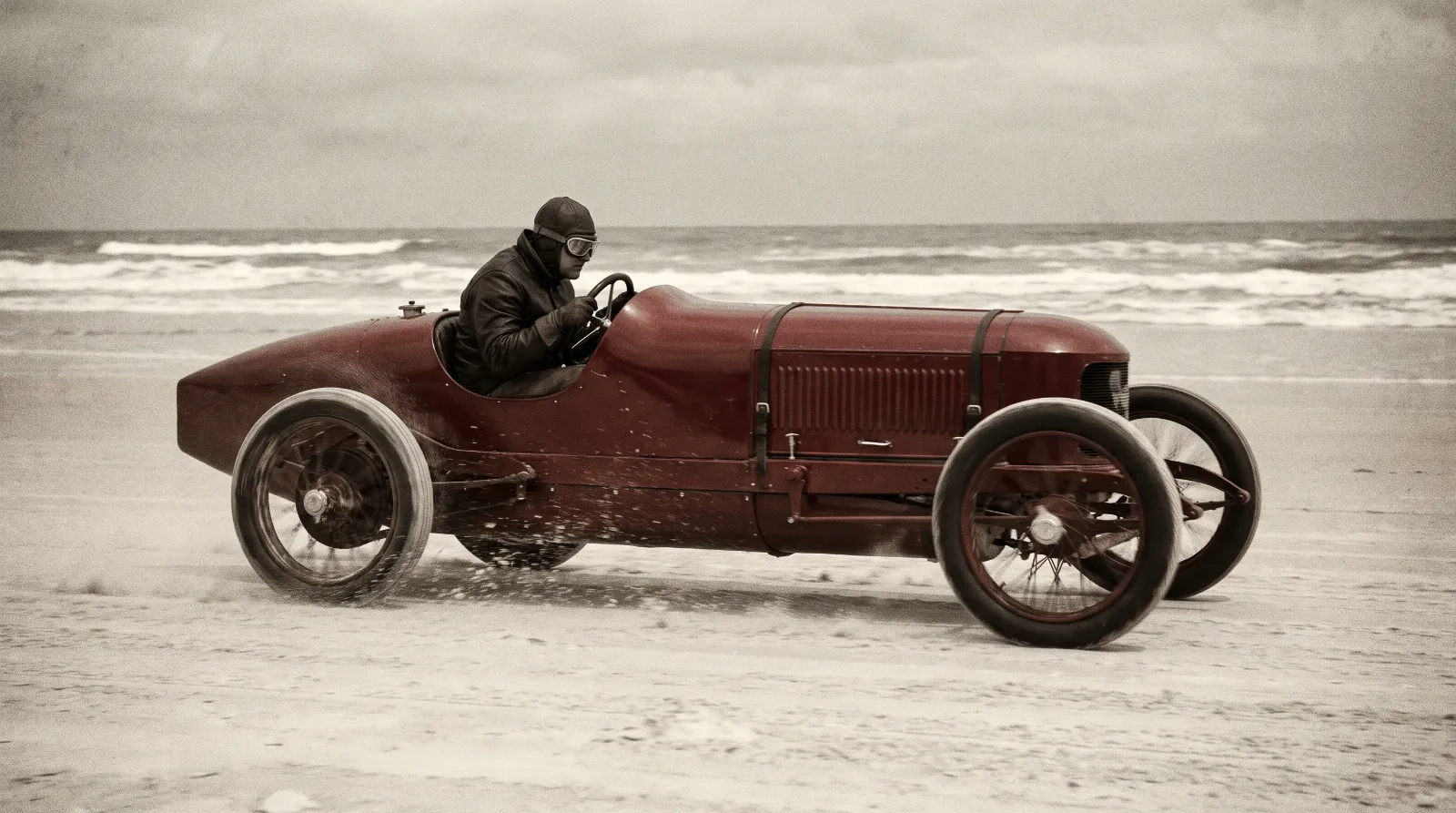
I deal in numbers, not nostalgia, so let us start with the ones that matter. Steam cars won on power and smoothness. They lost on convenience. That trade-off is the entire story, and it explains why steam power built a real market and then lost it fast once gasoline solved its own weak points.
The power steam actually delivered
A steam engine makes full torque from a dead stop, no clutch, no gear changes, nothing to stall. A Stanley Steamer could out-accelerate most gasoline cars of its day off the line, and in 1906 a Stanley Rocket set a land speed record of 127.66 mph at Ormond Beach, Florida, a number that stood as the record for a steam-powered vehicle for over a century. That is not a small footnote. That is a machine embarrassing everything else on the sand that day, gasoline included.
The ride was smoother too, because there was no explosive combustion shaking the frame, just a boiler quietly building pressure. Buyers who could afford the price of entry, and steam cars were not cheap, got a machine that pulled hard, ran quiet, and did not need to be hand-cranked into life at the risk of a broken wrist.
Where the numbers turn against steam
Now the part that killed it. A steam car needs water, and it burns through it fast, sometimes needing a refill every 30 to 40 miles depending on the model and how hard it was driven. Gasoline cars refuel in minutes at any general store that stocks it in a can. Steam cars need a water source, and not every water source is safe for a boiler that is trying to hold pressure.
Starting time is the other number that mattered. Early steamers could take 20 to 30 minutes to build enough boiler pressure to move, which meant an owner had to plan ahead before a trip, not just walk out and go. Later Stanley models with a pilot light system cut that down substantially, but the reputation for a slow start stuck, and reputation drives sales as much as spec sheets do.
The name confusion nobody clears up
People hear "Stanley Steamer" and assume it is one car built one way for decades. It is not. Stanley built multiple models over roughly 27 years of production, with real engineering changes along the way, including the shift to the condenser system that recycled exhaust steam back into water instead of venting it, which stretched the range between refills considerably. The early cars and the late cars are different machines wearing a shared name, the same way a 1965 and a 2005 version of the same badge are not really the same product.
White and Locomobile also built steam cars in this same window, and Locomobile in particular sold well before switching entirely to gasoline production after 1904, which tells you something about which way the market was already leaning even before the self-starter arrived.
What actually ended the steam car
The popular story says the electric starter killed steam cars by fixing gasoline's hardest problem, and that is partly right. Charles Kettering's electric self-starter arrived on the 1912 Cadillac and removed the hand-crank injury risk that had scared off a real slice of gasoline buyers, women especially. That closed gasoline's biggest disadvantage against steam and electric power alike.
But the deeper number is infrastructure. Gas stations spread faster than anywhere a steam car could reliably find clean water, and gasoline's energy density meant more range from less weight carried onboard. Steam power never solved that math. By the 1920s, steam car production had all but ended, with Stanley itself closing in 1924, even though the engineering behind a steam engine was, in some ways, more elegant than what replaced it.
"People call steam power a dead end. I call it a car that lost a close race, not a bad idea. The Stanley Rocket held a land speed record for over a hundred years. That is not primitive engineering. That is a technology that ran into a logistics problem it never cracked, and logistics beats elegance every time in this business."
Dan Reeves
| Feature | Steam cars (roughly 1897-1924) |
|---|---|
| Power delivery | Full torque from a stop, no gearbox needed |
| Starting time | 20-30 minutes early models, faster with pilot light |
| Range limiter | Water supply, refilled every 20-40 miles on early non-condensing models |
| Peak U.S. builders | Stanley, White, Locomobile |
| Top speed record | 127.66 mph, Stanley Rocket, 1906 |
| Production end | Stanley closed 1924 |
If you want the fuller picture of how steam fit into the early steam powered cars guide alongside gasoline and electric competitors, that is where the three-way fight gets laid out side by side.
Electric cars were the other serious rival in this same window, and they solved the starting problem steam and gasoline both struggled with, at the cost of range. The next installment covers what happened to that side of the market.
What survives today
Original steam cars are rare and specialized to own. Parts are scarce, boiler certification and safety inspection are not optional the way they can feel with a gasoline engine, and the pool of mechanics who understand a Stanley boiler system shrinks every year. What that means for value is simple: a documented, running example is worth real money to the right buyer, because there are so few left and even fewer people who can keep one running correctly. If you are looking at one, budget for expert inspection before you budget for the purchase itself.
Sources and notes
- New England Historical Society - Fred Marriott sets the steam speed record
- Wikipedia: Stanley Motor Carriage Company
- Stanley Motor Carriage - general technical information
- Wikipedia: Locomobile Company of America
- Smithsonian Magazine - why steam-powered cars seemed like a good idea
- Steam Car Network - Stanley steam car boiler specification
Related Reading
Have a
Classic Car
for Sale?
Reach thousands of serious classic car collectors across the US.
Sell It Here →
Are You a Classic Car Dealer?
List your full inventory and connect with targeted classic car buyers.
Join as a Dealer →

About the author
Dan Reeves
Performance engine builder from North Carolina's motorsports corridor, focused on swaps, forced induction and making real, repeatable power.
Comments (1)
G
Gary Tompkins
2 months ago
Two-door versions always carry a premium, but the wagons are starting to get serious collector attention. Keep that in mind if you're budget-conscious.