
Ask an American who invented the automobile and you will likely hear Henry Ford. Ask a German the same question and the answer is Karl Benz. Both answers are defensible, and both are incomplete, because the honest record shows the automobile was not invented by one man in one workshop. It was assembled, piece by piece, by a string of engineers who were often unaware of each other's work.
Car Features
6 min read
Who Really Invented the First Automobile?
Ford gets the credit in America and Benz gets it in Germany, but the patent record tells a more tangled story about who really built the first car.
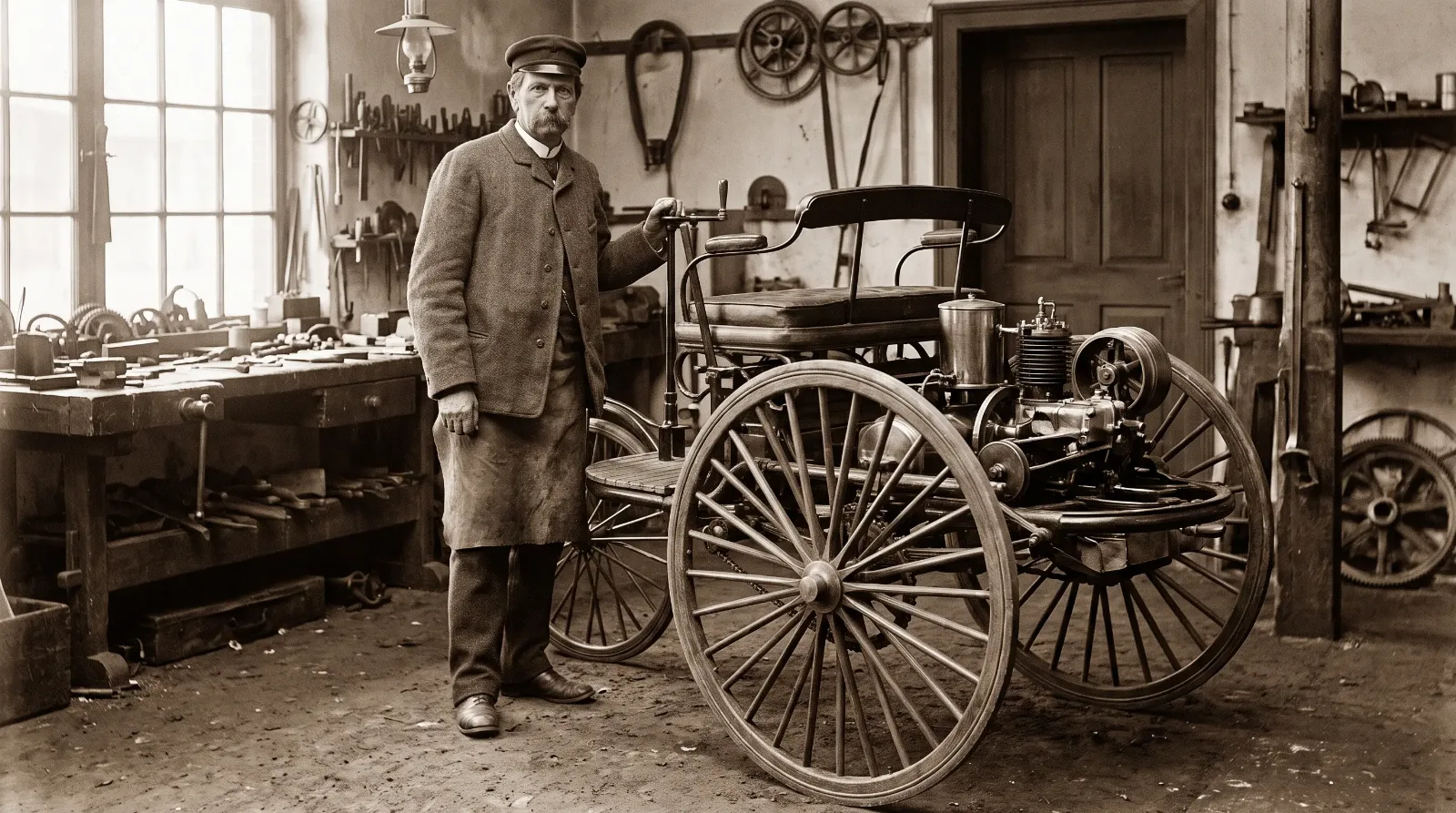
As a factory historian, I care less about who gets the folk-hero credit and more about what the paperwork says. The paperwork points to a specific date, a specific patent, and a specific three-wheeled machine that most casual car fans have never actually seen a photo of.
The patent that settles the argument
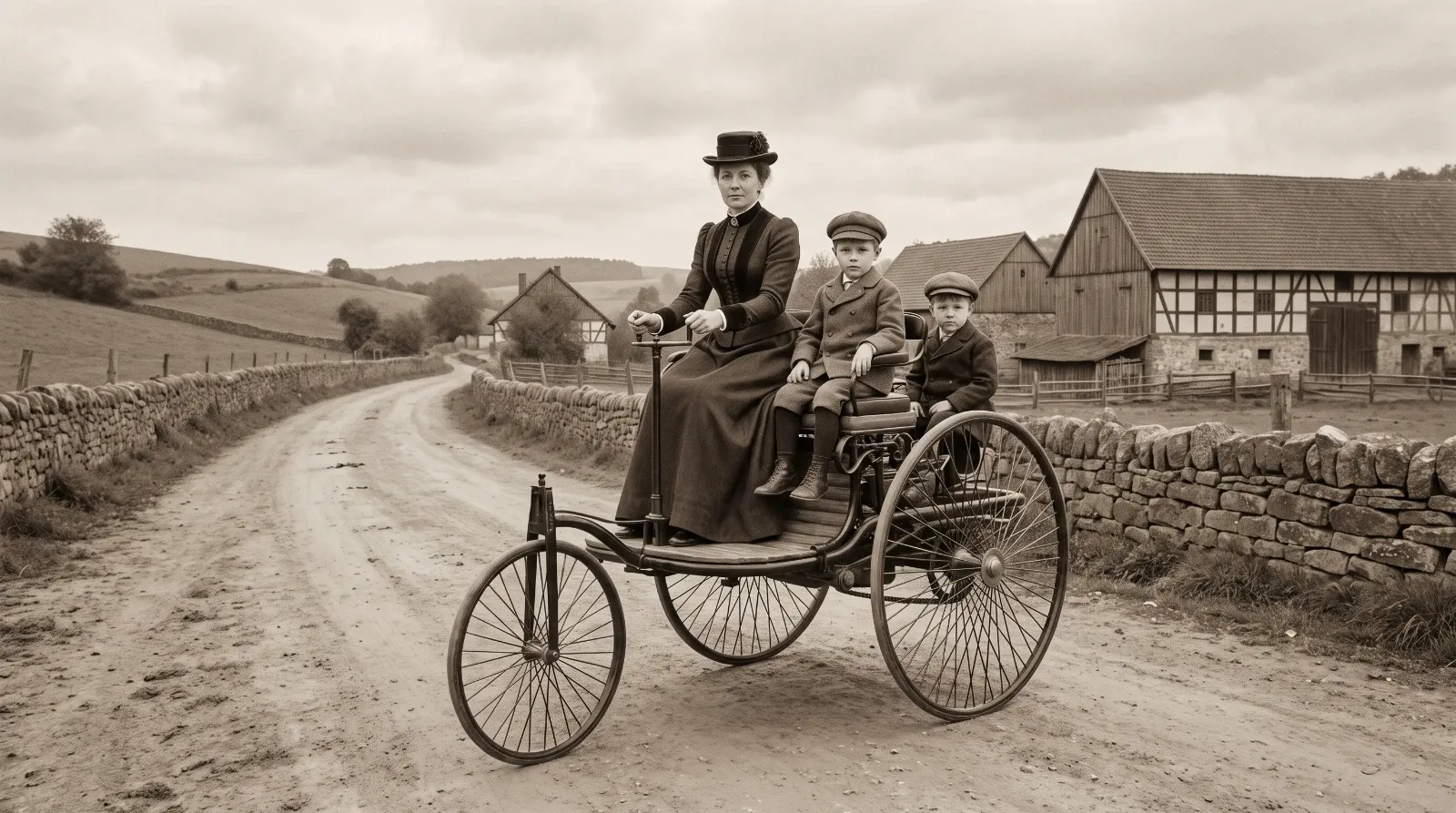
On January 29, 1886, Karl Benz filed a patent in Mannheim, Germany for a "vehicle powered by a gas engine." The machine was the Benz Patent-Motorwagen, a three-wheeled carriage with a single-cylinder four-stroke engine mounted at the rear. That patent, number 37435, is the closest thing the history of the automobile has to a birth certificate, because it describes a complete, self-contained vehicle designed from the ground up to be powered by an internal combustion engine, not a horse carriage with an engine bolted on as an afterthought.
That distinction matters more than people give it credit for. Other inventors before Benz had built engines, and some had even mounted engines onto existing wagons and carts. Benz's machine was different because the chassis and the engine were engineered together as one idea. That is why most serious automotive historians, and the industry itself, treat 1886 as the year the automobile was born.
The claimants that came before him
Benz did not work in a vacuum. Nicolaus Otto had built the first practical four-stroke internal combustion engine in 1876 and patented the cycle the following year, and without Otto's engine design there is no Benz car. Gottlieb Daimler, working separately and not far from Benz, was experimenting with his own engines around the same period and would go on to build a motorized bicycle and later four-wheeled vehicles. Daimler and Benz never worked together during their lifetimes, which is a detail that surprises people once they learn the two companies eventually merged, decades later, to form Mercedes-Benz.
Go back further and you find steam-powered road vehicles from the 1700s, including Nicolas-Joseph Cugnot's steam tractor, first demonstrated in Paris in 1769, intended to haul artillery. It moved under its own power, which by a loose definition makes it a self-propelled vehicle. But nobody seriously calls it the first automobile, because it was not practical, was not a passenger car in any real sense, and did not lead to a lineage of production vehicles the way Benz's design did.
Read more on who invented the first car and how that early German work fed directly into the machines that came to define the brass era on both sides of the Atlantic.
Where the American story fits in
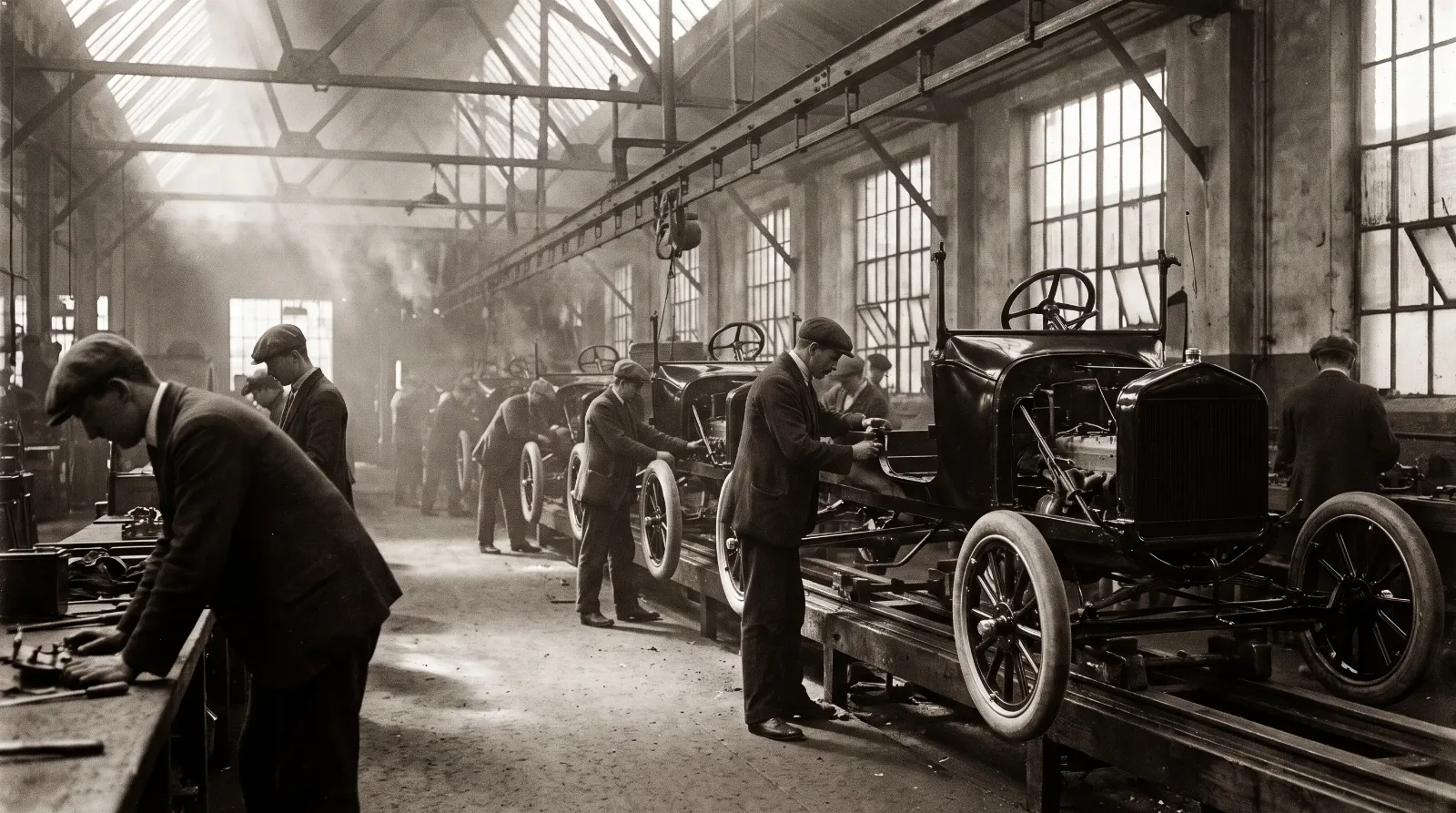
Henry Ford did not invent the automobile, and to his credit he never claimed to. What Ford invented, or more precisely refined and scaled better than anyone before him, was the moving assembly line, which took the automobile from a rich man's plaything to something a factory worker could save up and buy. The Model T launched in 1908, more than two decades after the Benz patent. Ford's real contribution was manufacturing, not the underlying idea of a gasoline car.
Other Americans have fair claims to pieces of the story too. The Duryea brothers, Charles and Frank, built and successfully road-tested a gasoline automobile in Springfield, Massachusetts in 1893, and their company is often credited as the first American automobile manufacturer to sell more than one car of the same design. That is a real distinction, separate from the question of who invented the automobile itself.
"People want a single hero because it makes a cleaner story. The factory record does not care about clean stories. It shows overlapping work, borrowed ideas, and a patent filing that happens to be the earliest complete one on file. That is Benz, not because he was smarter than everyone else, but because he filed the paperwork first and got the whole vehicle right."
Tom Ramirez
Why the answer keeps shifting
Part of the confusion comes from what question people are actually asking. "Who invented the automobile" and "who invented the modern car industry" are two different questions with two different answers. Benz answers the first one. Ford, and to a lesser degree the Duryea brothers and Ransom Olds with his early Curved Dash Oldsmobile, answer something closer to the second.
There is also a national pride element that never fully goes away. Every country with an early automotive industry, from France to Britain to the United States, has its own local pioneers who get elevated in the retelling. None of that is dishonest exactly, it is just incomplete, and the incompleteness compounds over a century of retelling until the popular version bears only a loose resemblance to the patent office record.
What actually matters for collectors
None of this trivia changes what a brass era car is worth or how it drives, but it does change how you talk about one at a show. Calling any early European three-wheeler "the first car ever built" without qualification is going to get you gently corrected by somebody who has read the patent file. Calling it "the first patented gasoline automobile" is defensible and accurate, and it is a distinction worth knowing if you are the kind of owner who enjoys the history as much as the machine.
If the tangle of steam, electric, and gasoline competition in these earliest years interests you, the next story picks up with the steam-powered machines that were, for a while, genuinely competitive with what Benz and Daimler were building.
For the broader arc of how these first machines led into the golden age of American motoring, our pre-war era guide covers the decades that followed, when the automobile stopped being a curiosity and became an industry.
Sources and notes
Related Reading
Have a
Classic Car
for Sale?
Reach thousands of serious classic car collectors across the US.
Sell It Here →
Are You a Classic Car Dealer?
List your full inventory and connect with targeted classic car buyers.
Join as a Dealer →

About the author
Tom Ramirez
Corvette researcher and historian based in Bowling Green, Kentucky. Two decades documenting Corvette production history from original factory records.
Comments
Be the first to comment on this article.