Most actors who love cars love them the way collectors do, from a comfortable distance, admiring a machine they occasionally get to drive fast for a camera. Steve McQueen was not that kind of actor. In March 1970, with his left foot in a cast from a motorcycle crash weeks earlier, he strapped himself into a Porsche 908/02 at the 12 Hours of Sebring and finished second overall, missing an outright win by a matter of seconds. The Steve McQueen Porsche story does not start with a movie prop. It starts with a man who genuinely wanted to be a racing driver and happened to also be the biggest star in America.
That authenticity is the reason his Porsches, and in particular one specific 911S, still command attention decades after his death in 1980. Plenty of celebrities have owned interesting cars. Very few have owned cars that collectors now treat as reference points for an entire genre of Porsche ownership.
The actor who actually raced
McQueen's Sebring result is not folklore dressed up for a magazine feature. It happened, and it happened with a badly injured driver behind the wheel of a factory-adjacent Porsche 908/02, sharing the car with Peter Revson against a field that included full professional works teams. The pairing lost the overall win to a Ferrari 512S driven by Mario Andretti, Nino Vaccarella, and Ignazio Giunti by just 22 seconds after twelve hours of racing, a margin so small that period reporting treated it as a near-miss rather than a defeat, and the result did more for McQueen's credibility in the racing world than any studio publicity department could have arranged.
That credibility mattered because it changed how McQueen approached his next Porsche project. He was not interested in playing a race car driver who looked convincing on screen. He wanted the film to feel like it had been made by people who actually understood endurance racing, and that meant putting real 911s and real 917s in front of cameras at an actual, unscripted running of the 24 Hours of Le Mans.
Le Mans and the cars on screen
The 1971 film Le Mans, which McQueen produced through his own company and starred in, used real Porsche 911s and 917s alongside period Ferraris, shot during and around the actual 1970 race. The production's insistence on authenticity, real cars, real speeds, minimal use of doubles for the driving sequences, nearly bankrupted the effort and strained relationships on set, but it produced something no soundstage racing film before or since has matched: footage that still reads as documentary rather than fiction to anyone who knows what a 917 actually sounds like flat out down the Mulsanne straight.
The 911s used in the production were largely support and camera cars rather than the headline machinery, since the 917 was the car chasing outright victory in the story. But it was during this period, immersed in Porsche's world at Le Mans, that McQueen's personal taste in road cars solidified around the 911 specifically, rather than the Ferraris and Jaguars that had filled his garage earlier in the decade.
The Slate Gray 911S he actually kept
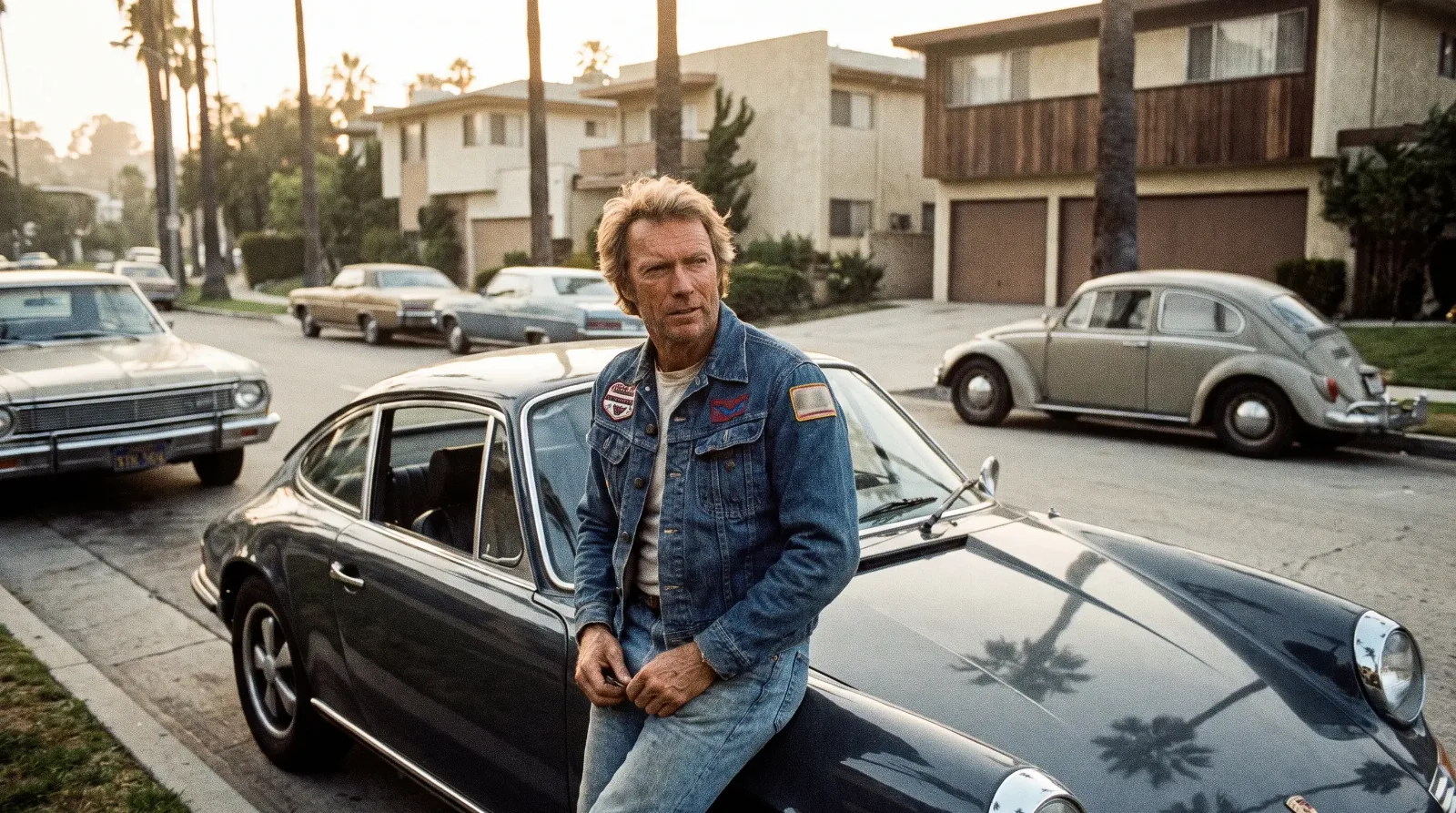
The car most closely associated with McQueen today is a 1970 Porsche 911S finished in Slate Gray, delivered new to him on the set of Le Mans through his own production company and used as a genuine driver afterward rather than a static garage piece. Unlike a lot of celebrity-owned cars that exist mainly for photographs, this 911S accumulated real miles under McQueen's ownership, reportedly his preferred car for driving around Los Angeles when he wanted something quicker and less conspicuous than his motorcycles.
He eventually sold the car, and it passed through several owners before resurfacing at auction decades later with documentation tying it directly back to McQueen's personal ownership. When it did sell publicly, the price reflected not just the condition of a well-kept early 911S but the weight of that provenance, a premium collectors now routinely pay for any classic car with a documented, credible celebrity chain of ownership. That particular 911S sold at RM Auctions in Monterey in 2011 for $1,375,000, an auction record for a 911 at the time.
Why his car became a blueprint
McQueen's Slate Gray 911S matters to the wider hobby because it did something rare: it made a specific, ordinary-spec 911S into a template that builders and buyers still reference. Restoration shops fielding requests for "McQueen spec" builds know exactly what that phrase means, down to the color, the trim level, and the understated presentation of a car that was fast and well-built without shouting about either quality.
"What I find genuinely moving about McQueen's 911 is how little it has to do with celebrity. He didn't buy the loudest, rarest variant Porsche made that year. He bought a well-specced 911S in a quiet color and drove it like a car, which is exactly why collectors still chase that same combination today. The story sells itself because the car underneath it was already right."
— Patrick Walsh
The market McQueen created
It is not an exaggeration to say McQueen's ownership history moved the entire early 911S market. Cars with credible documentation linking them to his personal use, or even to the Le Mans production, sell at a premium over otherwise identical examples, and the phenomenon has spawned an entire cottage industry of "McQueen tribute" builds finished in Slate Gray with period-correct trim, aimed at buyers who want the aesthetic without the celebrity price tag attached to an actual provenance car.
What makes the McQueen story endure inside Porsche circles, more than the Hollywood gloss, is that it holds up under the kind of scrutiny enthusiasts apply to everything else. He raced. He drove his own cars hard. He picked a genuinely good 911S rather than the flashiest option available to him. For anyone tracing how the model's identity was built piece by piece, the next story in this set picks up a different thread in that same history, but McQueen's chapter remains the one that turned a well-specced coupe into a cultural touchstone.
Sources and notes
- 1970 12 Hours of Sebring - Wikipedia
- The Hollywood-ready story of the 1970 12 Hours of Sebring - The Race
- 1970 Porsche 911S Steve McQueen Le Mans Movie Car - RM Sotheby's
- Steve McQueen's 1970 Porsche 911S Sells For $1.375 Million - Motor Authority
- The Legendary 1970 Sebring 12 Hour Race - The Selvedge Yard