
A man I met at a cruise night in Ohio told me about the summer of 1969, when he was seventeen and the only thing that mattered was the stretch of county road behind the drive-in. Two lanes, a clear sightline, and a agreed-on finish where somebody's cousin stood with a flashlight. He raced a friend's Road Runner there and lost by a fender. Fifty years later he still remembered the other guy's plate number. That is street racing in one story. It was never really about the money. It was about who could say they beat you, and who was standing there to hear it.
Car Features
6 min read
Street Racing Culture and the Law
Inside American street racing history: the unwritten code, the local legends, and how the law and the strip finally reeled it in.
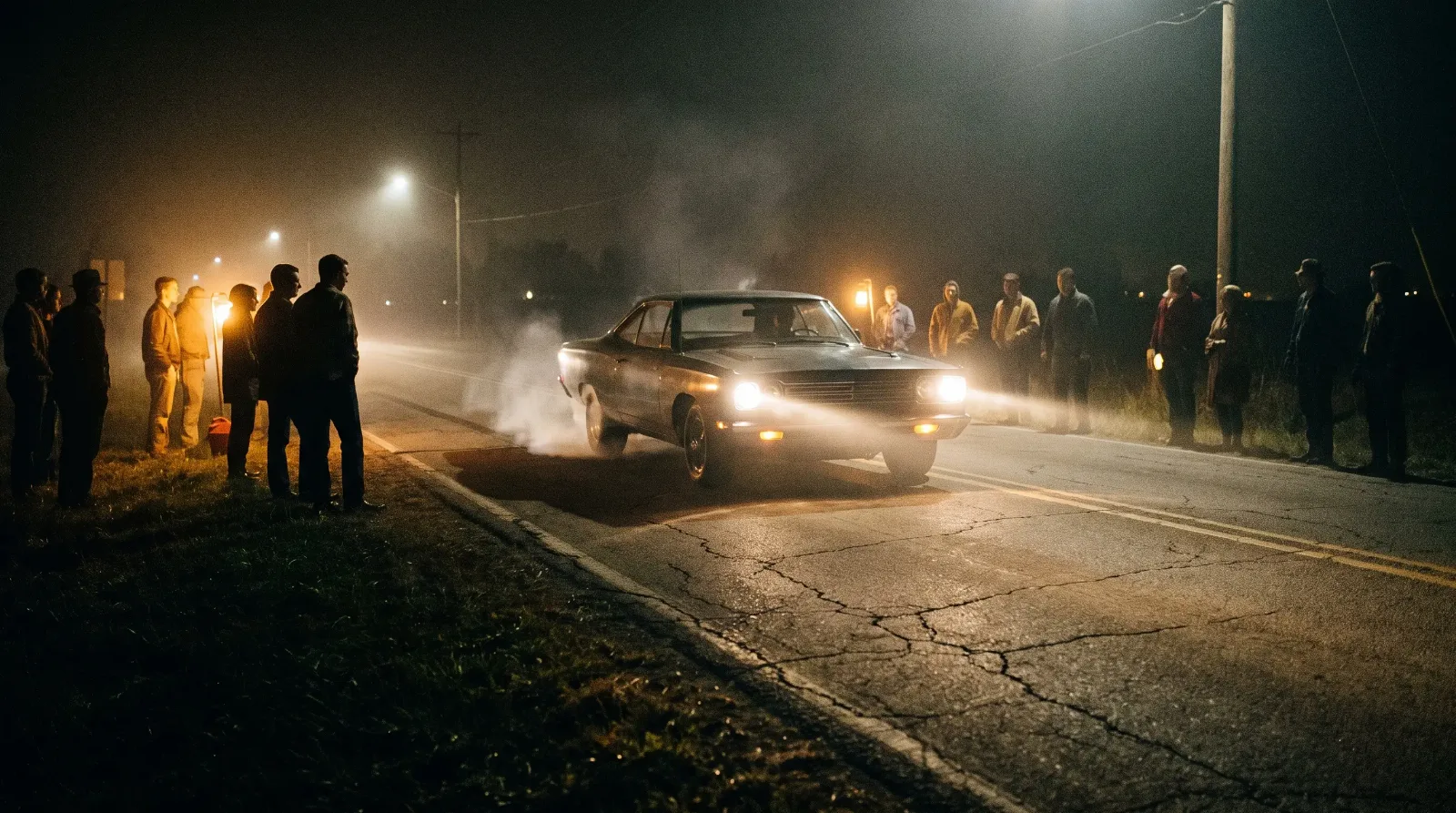
Street racing is the shadow half of American muscle. The factories built the cars, the strips gave them a legal home, and the street kept the whole thing honest in a way no sanctioning body ever could. To understand the era you have to understand the road, the law that chased it, and the strange truce the two settled into.
Why the street came first
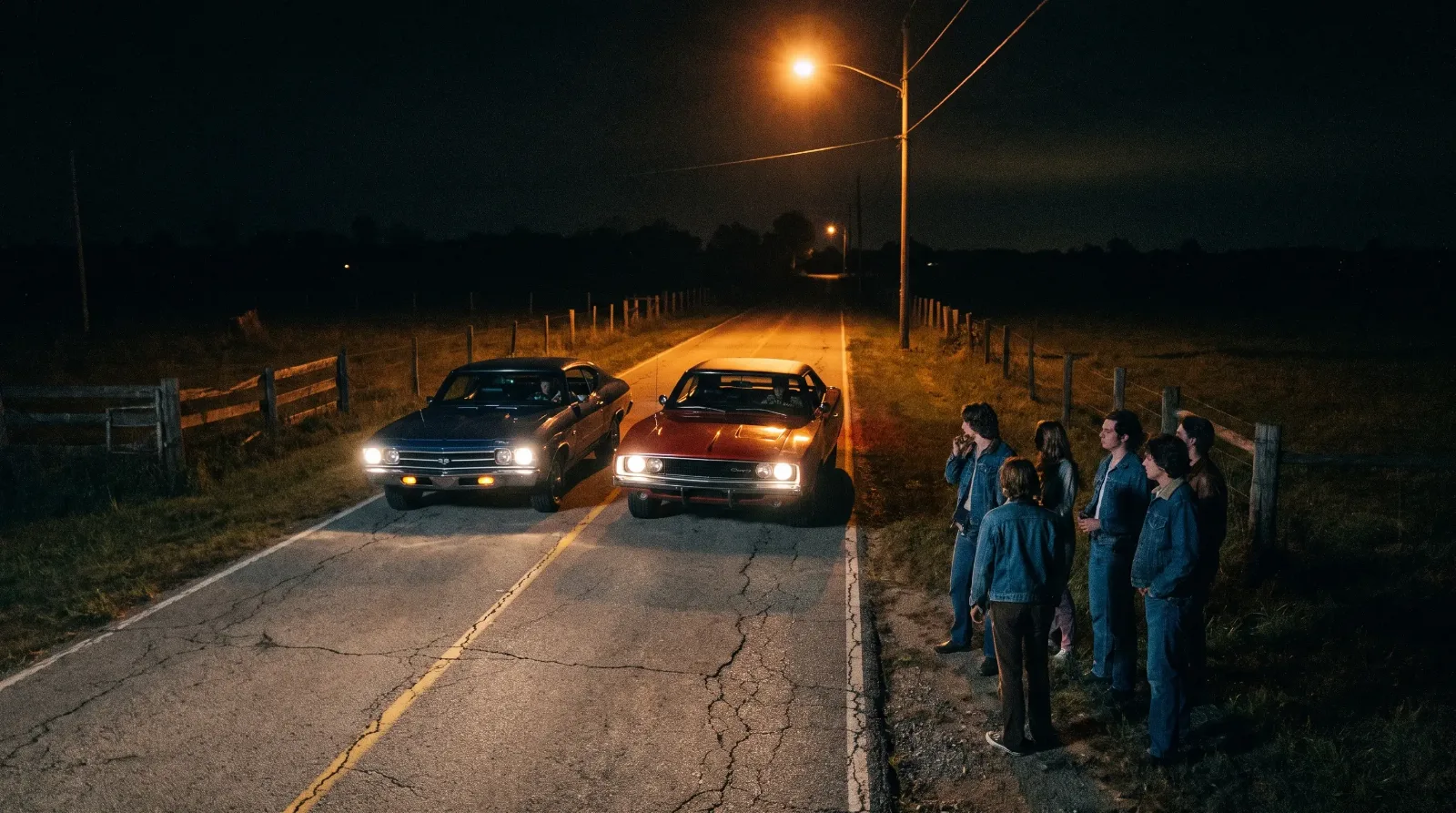
Organized drag racing grew up specifically to get kids off public roads, which tells you the roads came first. Before the strips were built and the timing lights worked, young men with fast cars found each other the only way they could, at stoplights and on the long empty runs outside town. The postwar boom put cheap horsepower into the hands of a generation with money, gasoline, and not much to lose.
By the mid-sixties the factories had turned that appetite into a product. A kid could walk into a dealership and order a car built to do one thing well. The street was the proving ground where reputations got made, and the guys who ran it knew every good spot within thirty miles. There was a whole geography of it, unmarked and understood only by the people who used it. If you want more on drag racing history, remember that the sanctioned version was always trying to catch what the street already had.
The unwritten rules of the road
Street racing had a code, and the people inside it took the code seriously. You raced heads-up, you settled it clean, and you did not run somebody who was clearly outmatched unless he asked for it. There were customs about who called the start, how far you ran, and what happened after. Most of it never got written down because writing it down was the opposite of the point.
The culture had its own language and its own heroes, the local legends whose cars everyone knew by the sound before they saw the paint. Half the stories were exaggerated and everyone knew it, which was fine, because the exaggeration was part of the fun. This was folklore in real time, passed around parking lots and gas stations and the back booths of all-night diners.
Every town had its meeting spot. A wide gas station lot, a burger stand, a strip of road out past the last streetlight where a mile ran flat and straight. People gathered first and raced second, and the gathering was half the point. Someone would call out a challenge, money might change hands or might not, and a crowd would drift down to the run to watch. The winner didn't get a trophy. He got the next week's bragging rights and a story that grew a little every time somebody told it. That social ritual, the showing up as much as the racing, is the part that no legal track ever fully replaced.
The law catches up
None of this was legal, and the law knew it. Street racing killed people, not always the racers, and by the late 1960s cities were treating it as a genuine public safety problem. Police ran patrols on the known strips, and states stiffened penalties for racing on public roads. Getting caught could cost you your license, your car, and a night in a cell.
The cars themselves became a giveaway. A young man in a loud, obviously modified muscle car got a different kind of attention from a cruiser than his father did in a station wagon. Insurance companies figured out the same thing and priced the hottest models out of reach for the buyers who wanted them most, which quietly did as much to cool the street scene as any statute.
| Setting | Who ran it | What was at stake |
|---|---|---|
| Public street | Anyone with a car and a challenge | Pride, reputation, a license or jail if caught |
| Sanctioned strip | Licensed racers, tech-inspected cars | Trophies, points, prize money, a safety net |
How the strip absorbed the street
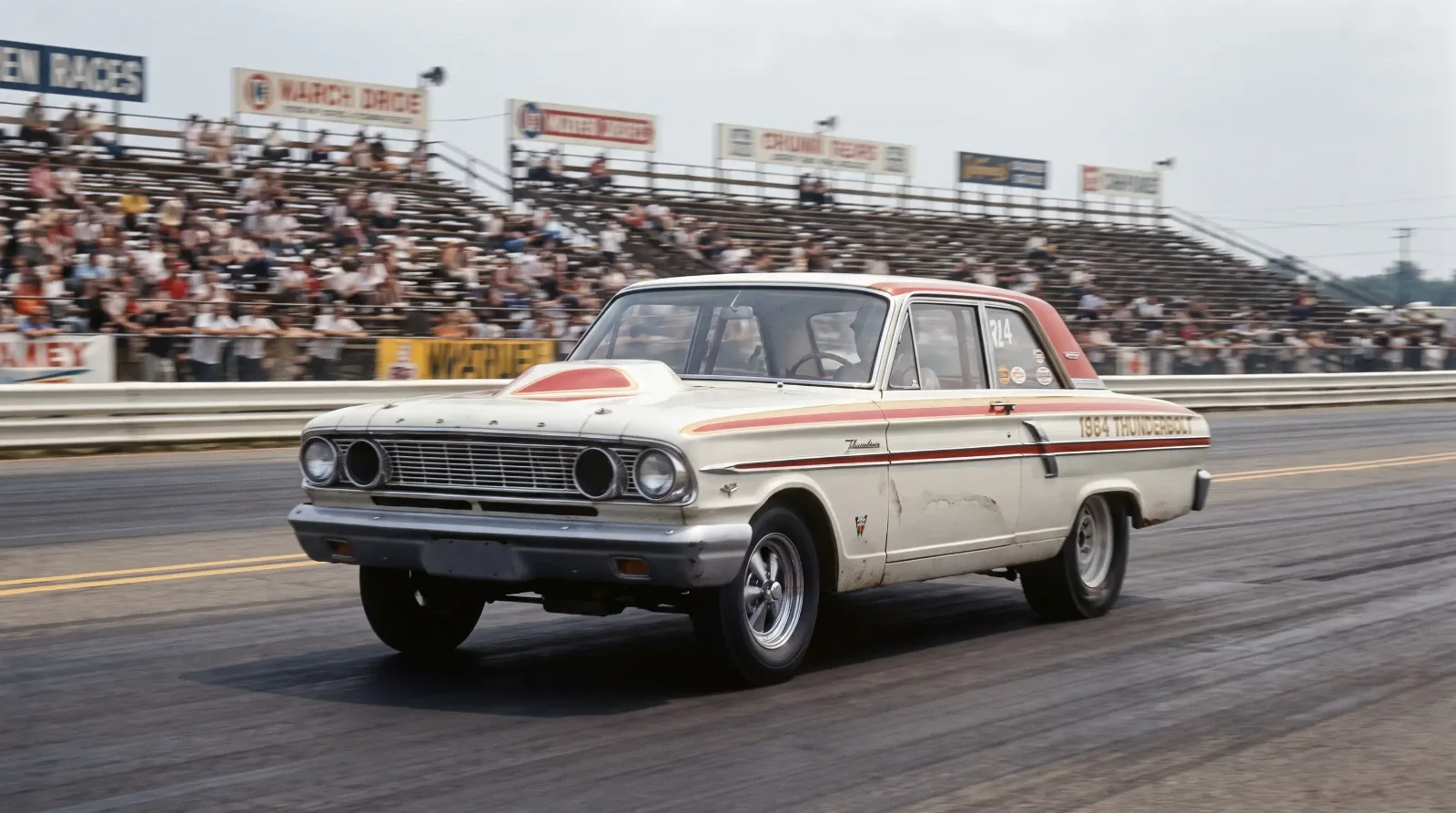
The sanctioning bodies were smart about this. Instead of only fighting the street scene, some tracks tried to import it. Open "test and tune" nights and grudge sessions gave the street racers a legal place to settle things with a timing slip instead of a flashlight. The strip offered what the road couldn't, a real number at the end and an ambulance parked at the far end just in case.
It never fully worked, because part of the appeal of the street was that it was against the rules. But the factories kept feeding both worlds at once, building cars marketed on a racing image while the racing itself moved, slowly, toward the sanctioned side. To see how deliberate that was, read the full story of the factory racing programs that turned a street reputation into a showroom sales pitch.
"The trophy was never the reason. The reason was the guy standing next to you at the light, and the story you'd both tell about it for the rest of your lives."
Patrick Walsh
The man from that Ohio cruise night eventually bought his own Road Runner, decades later, and he takes it to sanctioned nostalgia events now. He runs the quarter legally, gets his slip, and goes home. But he told me the road behind the drive-in is still there, grown over at the edges, and he drives past it sometimes just to look. The law won in the end, mostly. The stories didn't lose.
Related Reading
Have a
Classic Car
for Sale?
Reach thousands of serious classic car collectors across the US.
Sell It Here →
Are You a Classic Car Dealer?
List your full inventory and connect with targeted classic car buyers.
Join as a Dealer →

About the author
Patrick Walsh
Automotive journalist covering classic car shows, events, and the enthusiast community across North America.




Comments
Be the first to comment on this article.