
Ask most people who ran a quarter mile in the muscle car years and they will tell you the strip felt like the Wild West. It wasn't. Somebody wrote the rules, somebody enforced them, and for about two decades two rival outfits fought over whose rulebook the cars would answer to. That fight shaped what got built in Detroit and what showed up in the staging lanes on a Sunday. If you want the real drag racing history, you start with the two sets of initials painted on the timing towers: NHRA and AHRA.
Car Features
6 min read
NHRA vs AHRA: The Sanctioning Story
How the NHRA and AHRA split American drag racing: Wally Parks, the 1957 nitro ban, and why two rulebooks shaped the muscle car era.
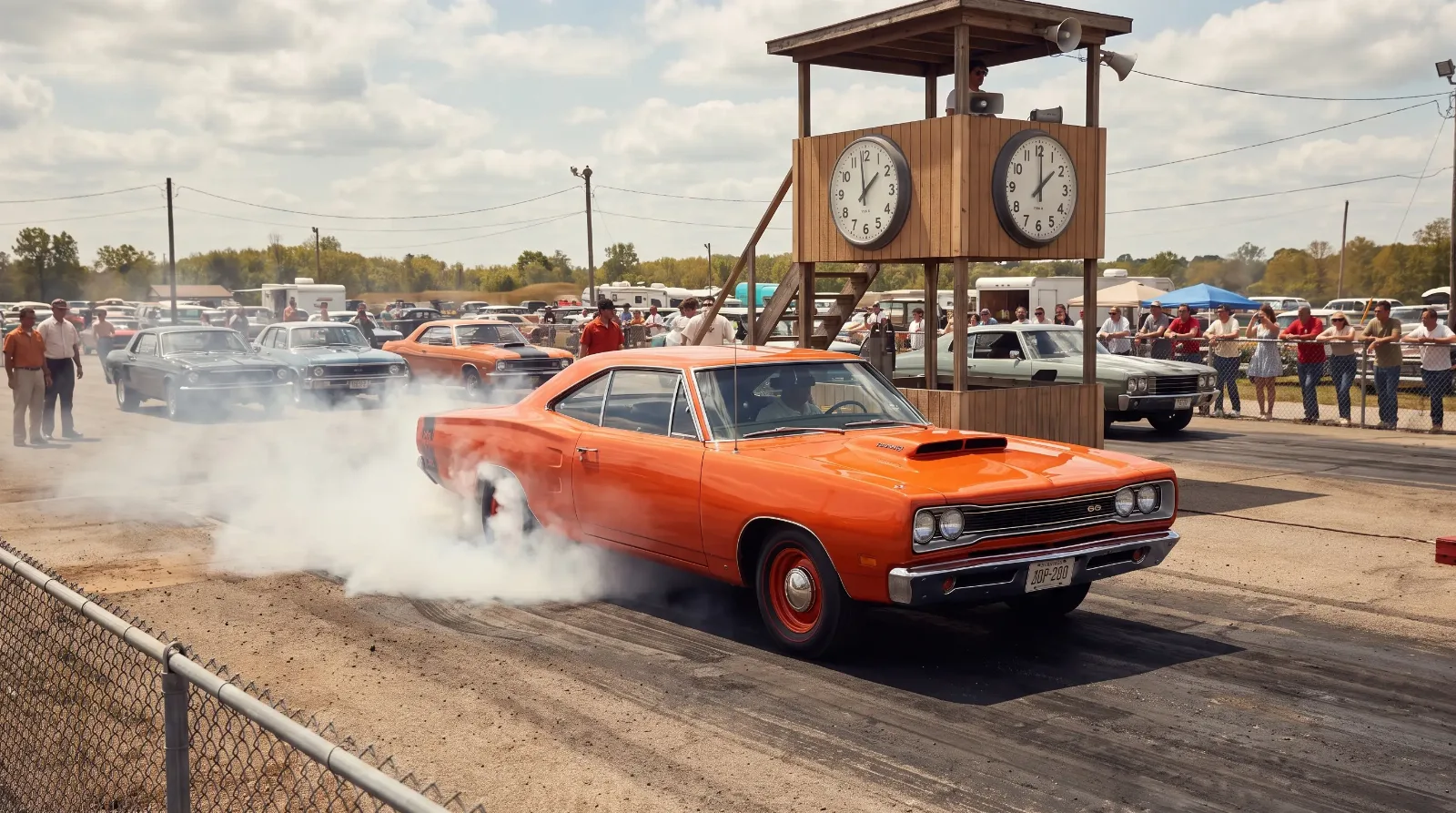
I came up around builders who cared about which sanctioning body a class belonged to, because it decided what you could bolt on and still be legal. The rulebook was the design brief. Change the rulebook and you change the car. That is the part outsiders miss.
Wally Parks and the founding of the NHRA
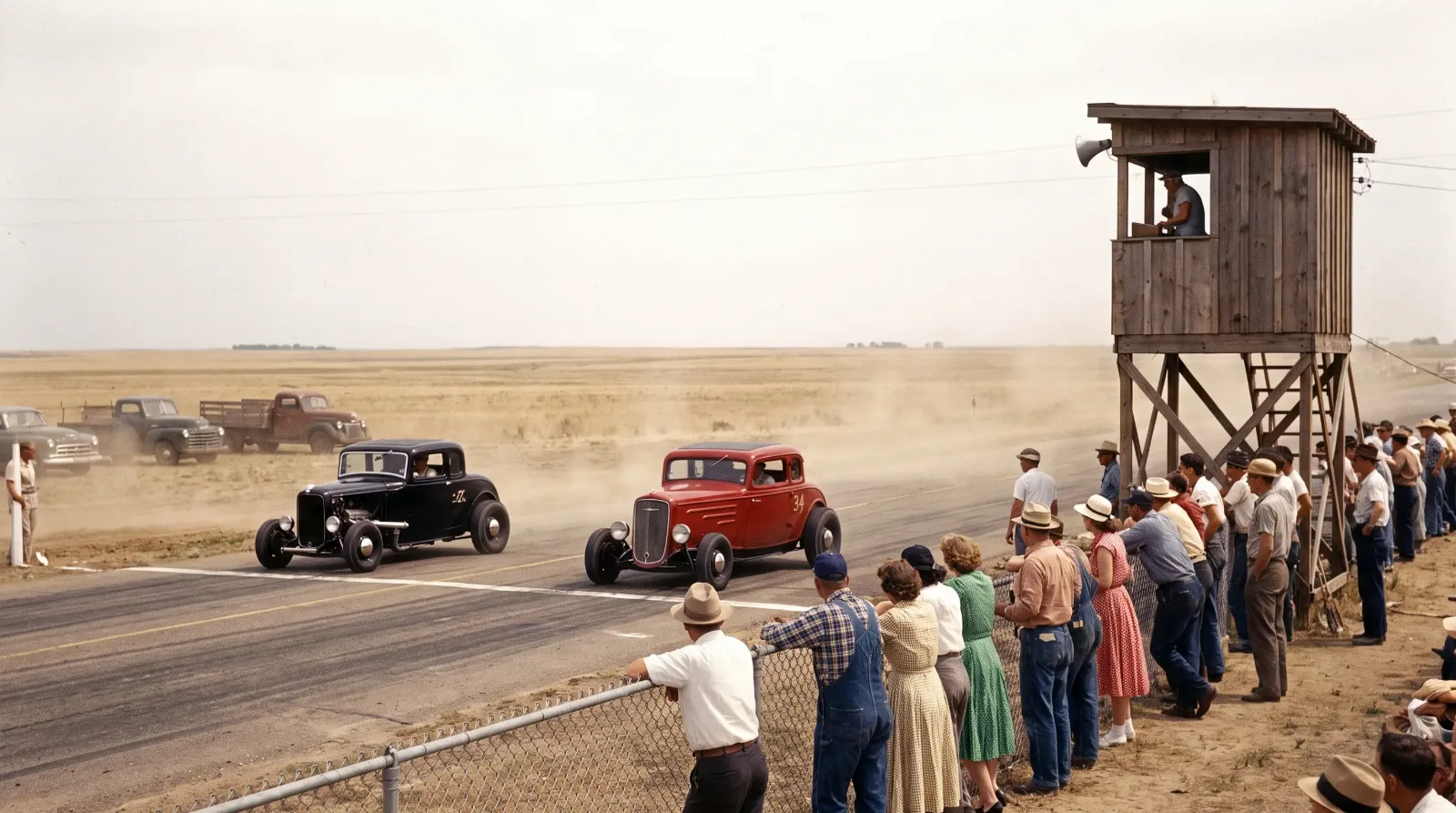
The National Hot Rod Association was founded in 1951 by Wally Parks, who at the time was also the editor of Hot Rod magazine. His pitch was simple and a little bit political. Street racing was getting kids killed and giving the whole hobby a bad name, so the answer was to move the racing off Woodward and the dry lakes and onto sanctioned strips with a starting line, timing gear, and a tech inspector who could turn you away.
Parks had the magazine behind him, which meant he had a megaphone nobody else in the sport could match. NHRA ran a touring safety program in the mid-1950s to teach tracks how to run an organized meet, and it held its first national event, the NHRA Nationals, in 1955 at Great Bend, Kansas. By the late fifties the NHRA was the establishment. It had structure, it had national coverage, and it had a founder who wanted the sport to look respectable.
That respectability came with a price. In 1957 the NHRA banned nitromethane fuel and kept the ban in place until 1963. For roughly six years the fastest cars at an NHRA event ran gasoline, not the nitro that made the real noise and the real numbers. Racers who wanted to run fuel had to look somewhere else.
How the AHRA became the rebel
Somewhere else turned out to be the American Hot Rod Association. The AHRA was formed in 1956, run out of Kansas City by Jim Tice, and it built its whole identity on being the body that said yes when the NHRA said no. While the NHRA sat on its fuel ban, the AHRA let cars burn nitro. That one decision pulled the loud, crowd-drawing machinery into AHRA events during the exact years the sport was exploding.
The AHRA also embraced match racing and the early Funny Cars when the NHRA was still deciding how it felt about a spectacle that didn't fit neatly into a class. If you wanted to see the wild stuff, the altered-wheelbase cars and the fuel burners, the AHRA program was often the place. That reputation stuck. The NHRA was the sanctioning body your dad approved of. The AHRA was the one that ran what the fans actually lined up to see.
Two rulebooks, two kinds of cars
Here is why any of this matters to a muscle car person. The sanctioning body wrote the class structure, and the class structure decided what the factories built. Weight breaks, cubic-inch limits, what counted as stock and what got you thrown into a faster bracket, all of it lived in the rulebook. A car engineered to be legal and competitive under one body's Super Stock rules might be sitting in the wrong class under the other.
The AHRA is often credited with pushing early heads-up factory classes and formalizing Top Fuel eliminator formats ahead of, or alongside, the NHRA. The two bodies leapfrogged each other on classes for years, and racers played them off one another, running an AHRA points chase one weekend and an NHRA divisional the next. For a builder that meant keeping two rulebooks on the bench and knowing which nut you could and couldn't touch for each one.
That split was a gift to the racers who paid attention. A car that got outclassed under NHRA weight rules could be a class killer under AHRA numbers, and a smart owner would haul the same machine to whichever event gave him the friendlier bracket. The two bodies also ran on different calendars in different regions, so a touring racer could chase money almost every weekend of the season if he was willing to learn both sets of tech. The downside was real. Get comfortable building for one rulebook and you'd fail tech at the other, sometimes over something as small as a wheel or a fuel spec. The guys who thrived were the ones who treated the rulebook like a puzzle instead of a nuisance.
| Sanctioning body | Founded | Founder | Reputation |
|---|---|---|---|
| NHRA | 1951 | Wally Parks | The establishment, safety-first, banned nitro 1957 to 1963 |
| AHRA | 1956 | Jim Tice | The rebel, ran nitro and match racing, embraced Funny Cars |
Why the NHRA outlasted its rival
The AHRA ran hard through the sixties and seventies and then faded, folding in the mid-1980s. The NHRA is still here. The reasons come down to the things Parks built early. National television relationships, a points structure that made a season mean something, and the credibility that came from being the body that put safety first when the sport badly needed it. The AHRA gave the fans the wild show, but the NHRA built the institution that could survive the founders.
"The rulebook is the real designer. You can love a car all you want, but somebody in an office decided what it was allowed to be before it ever rolled to the line."
Jim Vasquez
Both bodies deserve credit for the same thing from opposite directions. The NHRA got the racing off the street and gave it a structure that lasted. The AHRA kept the sport dangerous and loud enough that people paid to watch. You needed both to end up with the drag racing that fed the muscle car era, and if you want to see where all that competition spilled back onto public roads, read the full story of how the culture kept one foot on the strip and one on the boulevard.
Related Reading
Have a
Classic Car
for Sale?
Reach thousands of serious classic car collectors across the US.
Sell It Here →
Are You a Classic Car Dealer?
List your full inventory and connect with targeted classic car buyers.
Join as a Dealer →
About the author
Jim Vasquez
Southern California hot rod and custom car builder with roots in the traditional kustom kulture scene.




Comments
Be the first to comment on this article.