
The 1966 Ford Thunderbird sits at the end of a design chapter, the last year of the body Ford introduced for 1964, and Ford used that final year to hand the car its biggest engine option yet. For a collector cataloguing the differences between model years in this generation, the 428 cubic inch V8 is the detail that separates 1966 from everything that came before it, and it deserves to be understood on its own terms rather than treated as a footnote.
Car Features
6 min read
The 1966 Thunderbird and the 428 Big Block
The 1966 Ford Thunderbird closed out the Flair Bird generation with its biggest engine yet, the 428 cubic inch V8, and the documentation to prove it matters.
The last year of the Flair Bird body
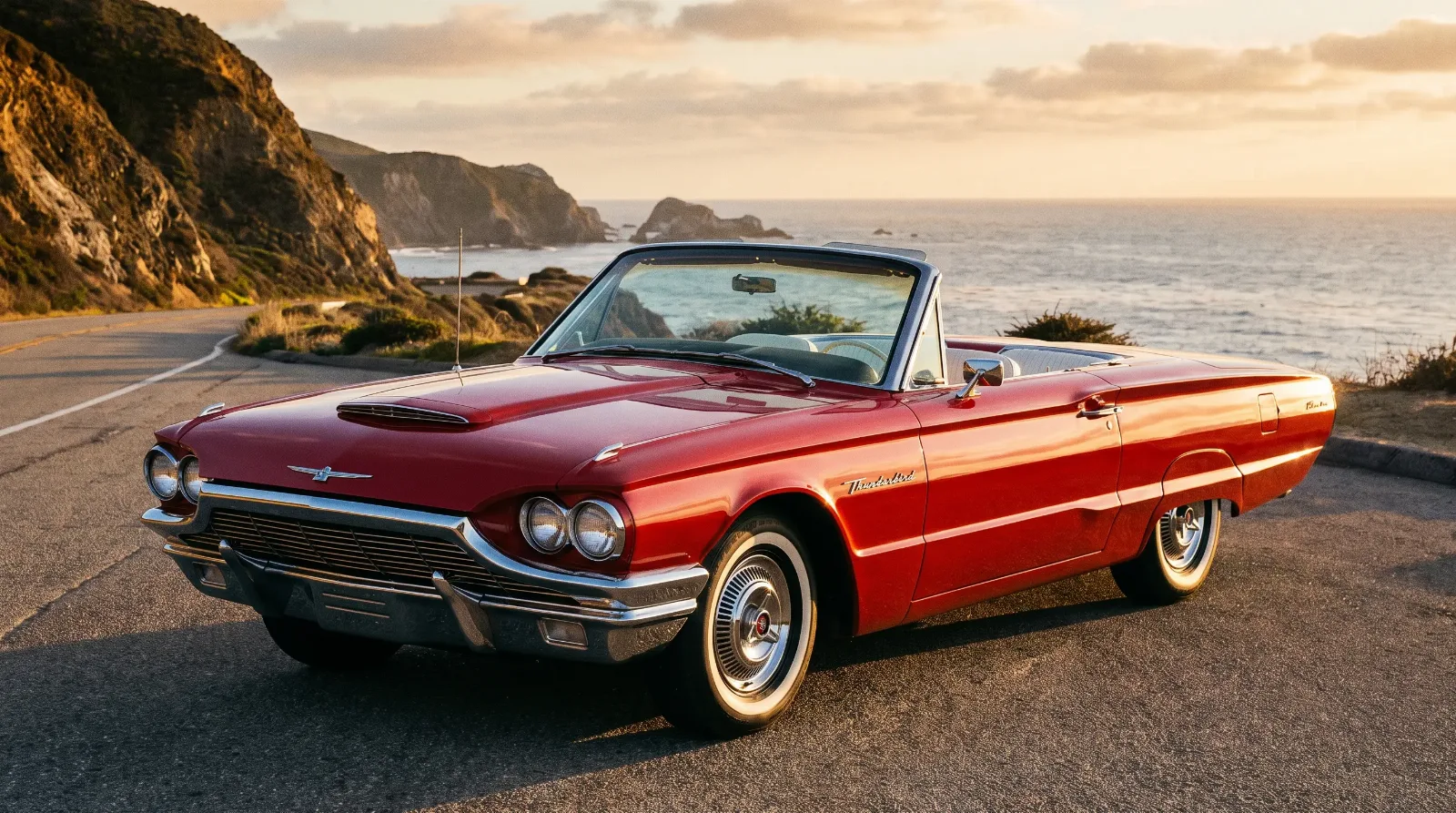
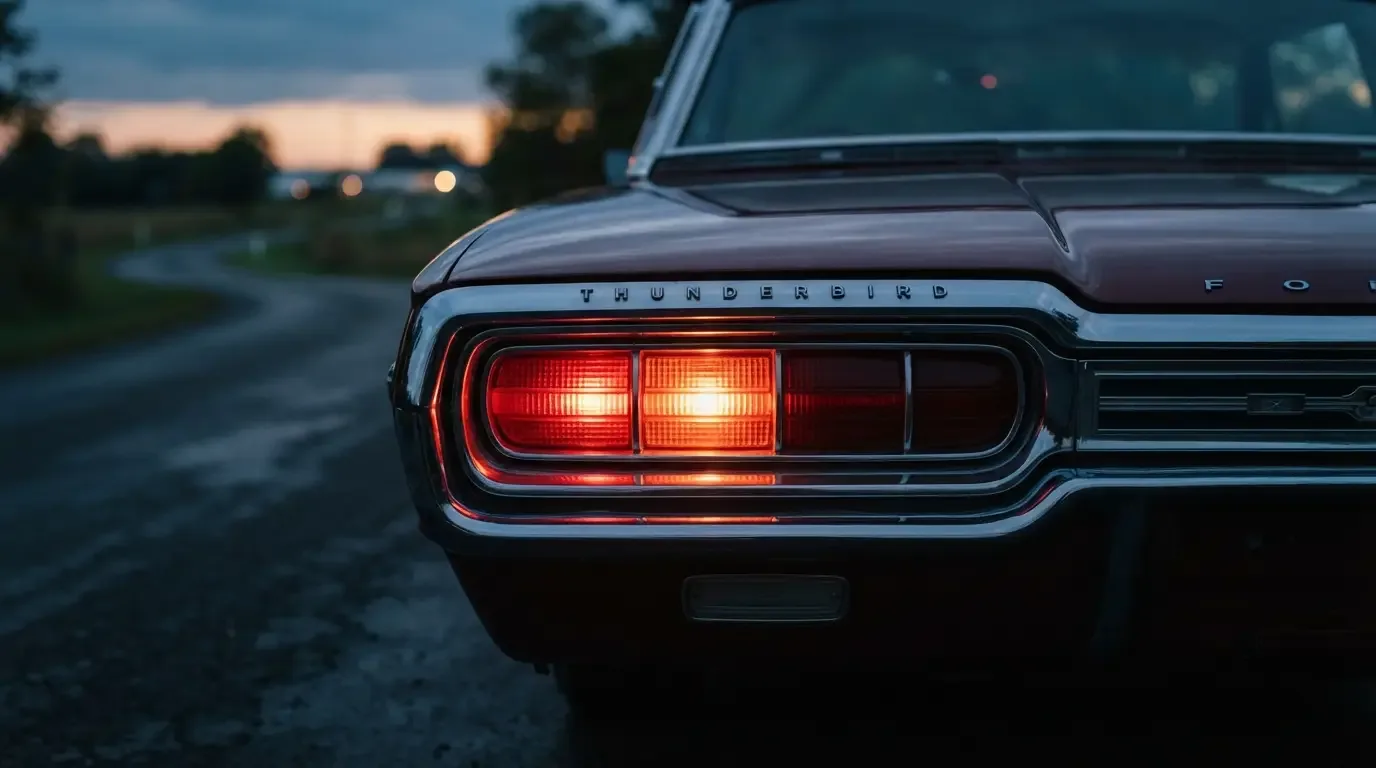
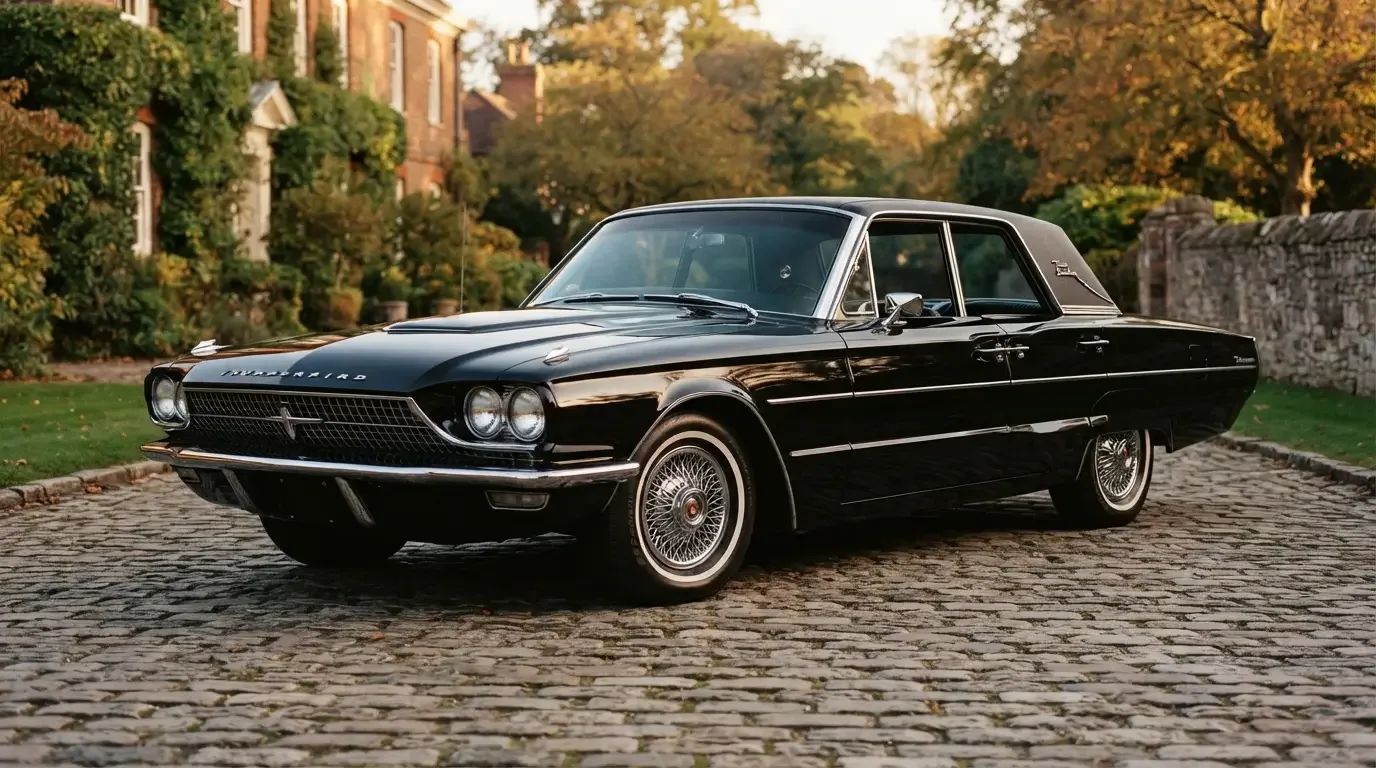
Ford referred to this generation informally as the Flair Bird, a nod to the sculpted, formal look the car carried from its 1964 introduction. By 1966 the styling had been refined rather than reinvented, with a new grille treatment and sequential taillights carried over from the year before, but the basic silhouette, long hood, close coupled cabin, short deck, remained the one buyers had come to associate with the nameplate. More on the 1964 Ford Thunderbird covers how that body and its formal roofline came together in the first place, and it is worth reading alongside this piece to see the full arc of the generation.
Documenting a 1966 car properly means starting with the fact that it is the final expression of a specific design, not a preview of what followed. The 1967 Thunderbird moved to a new body entirely, so 1966 closes out a chapter rather than opening one, and that context matters when you are trying to place a car correctly in the model's history.
The 428 arrives
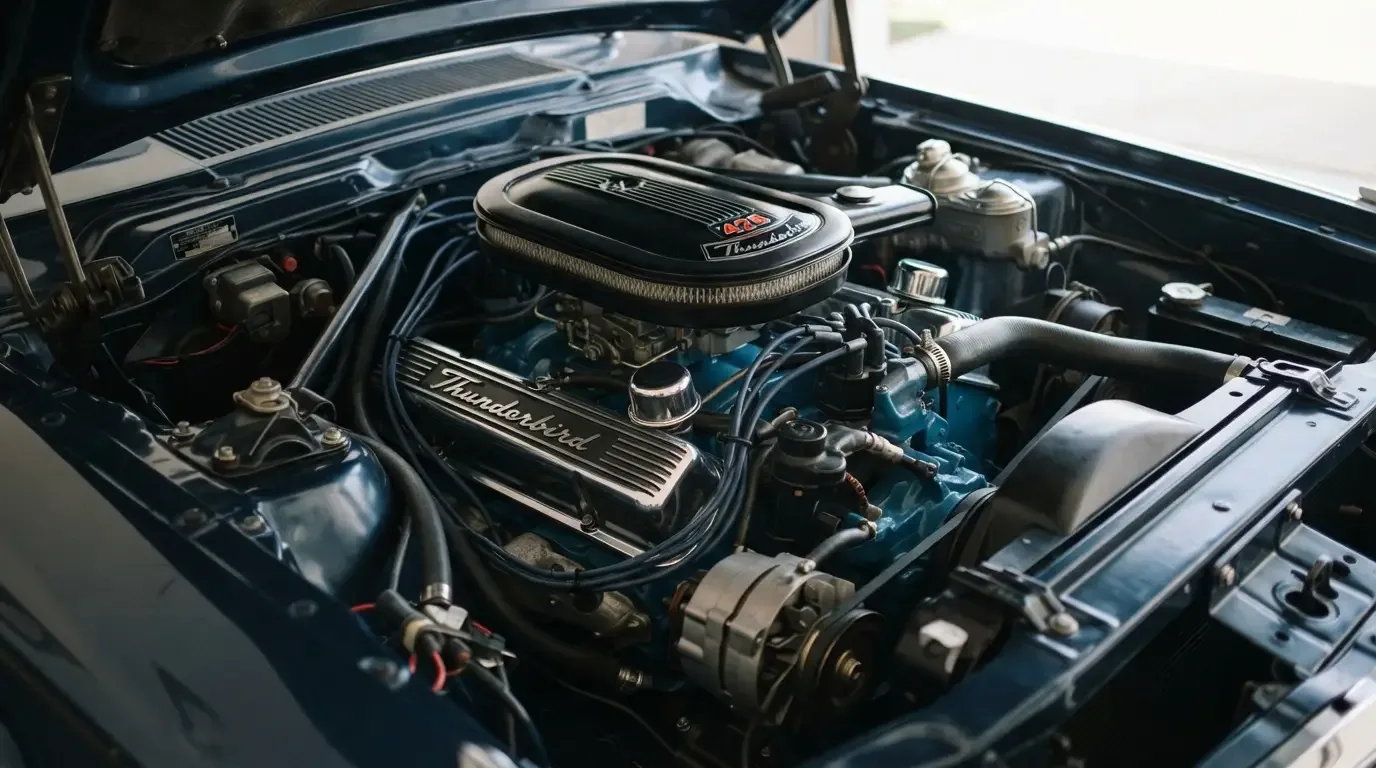
For 1966, Ford made the 428 cubic inch V8 available in the Thunderbird for the first time, stepping up from the 390 that had served as the standard engine through the earlier years of this body style. The 428 was part of Ford's FE engine family, built for torque and highway composure rather than outright track performance, which suited the Thunderbird's role as a personal luxury car rather than a sports coupe. Rated output sat at 345 horsepower (SAE gross), a meaningful step up that gave the car a stronger reserve of power for passing and towing than the 390 offered.
The significance of the 428 is not that it made the Thunderbird into something it was not. It did not turn the car into a muscle car competitor. What it did was match a bigger engine to a car whose weight, comfort features, and standard equipment list had grown since the model's earlier, lighter years. Documentation from this era shows Ford positioning the 428 as the engine for buyers who wanted the biggest, most capable Thunderbird available before the platform changed for 1967.
| Spec | 1966 Thunderbird 428 |
|---|---|
| Engine family | Ford FE series V8 |
| Displacement | 428 cubic inches |
| Horsepower | 345 hp (SAE gross) |
| Availability | Optional, 1966 model year only within this body generation |
| Body generation | 1964-1966, final year |
Why documentation matters on these cars
A 1966 Thunderbird with the 428 is not a car you can identify by sound alone from across a parking lot. The visual differences between engine options are subtle, sometimes limited to a badge or nothing at all, so provenance and paperwork carry real weight when authenticating one. Original build sheets, dealer invoices, and Marti style production reports are the tools a researcher reaches for before making any claim about what engine a specific car left the factory with.
This generation of Thunderbird has been reproduced, restored, and in some cases modified enough times over sixty years that a careful buyer should not take an engine claim at face value without supporting paper. That is not a knock on the model. It is simply the standard any well documented collector car from this period should be held to, and the 428 cars in particular reward that level of diligence because they represent the higher end of what a 1966 Thunderbird could be ordered with.
"When I am asked to verify a 1966 Thunderbird's engine, I do not start under the hood. I start with the paperwork, because the block stamps and casting numbers only tell the truth when you already know what you are looking for."
- Sarah Whitfield
Placing 1966 in the broader Thunderbird story
Every model year of the Thunderbird exists inside a longer continuity that started in 1955, and the 1966 car is a useful marker for understanding how far the nameplate had traveled from its two seat origins. Where this started lays out that full arc, from the original two seat roadster through the four seat personal luxury cars this generation represents, and it helps explain why a 1966 model with the 428 reads as the capstone of an era rather than just another model year.
For anyone researching or shopping this generation specifically, the differences between a 1964, a 1965, and a 1966 Thunderbird come down to a handful of details, the taillights, the grille, and now the engine roster topping out with the 428. Collectors who want the final and most powerful expression of the Flair Bird look to 1966 first, and they can find classic Thunderbirds on the market to compare what survives from that final model year against the documentation that should accompany it.
How the 428 changed the ownership experience
Period road tests and dealer literature from 1966 describe the 428 equipped Thunderbird as noticeably more relaxed at highway speed than the 390, with less need to work the throttle to maintain pace in traffic or on a grade. That kind of effortless cruising was exactly what the personal luxury car segment was selling in the mid 1960s, and Ford's engineers understood that the buyer in this segment valued quiet confidence over outright acceleration numbers. The 428 delivered that without asking the car to give up the comfort features that defined it, the power windows, power seats, and available air conditioning that made a Thunderbird feel like a small step up from an ordinary Ford.
Fuel economy suffered accordingly, and buyers who chose the 428 generally understood that tradeoff going in. This was not a car built around efficiency, and nobody shopping the top of Ford's personal luxury lineup in 1966 was doing so with fuel costs as the primary concern. What they wanted was a car that felt substantial, that pulled cleanly from a stop, and that did not strain itself merging onto a new interstate system that was still being built out across the country at the time.
Today, that same reserve of torque is one of the reasons a well sorted 428 car drives comfortably in modern traffic, decades after the engine was designed. Owners who take these cars on long distance tours consistently report that the 428 handles sustained highway speed with less drama than the smaller standard engine, which is a practical consideration for anyone planning to actually drive a 1966 Thunderbird rather than trailer it between shows.
Sources and notes
Related Reading

About the author
Sarah Whitfield
Third-generation classic car collector specializing in pre-war American and European coachbuilt automobiles. Researcher and concours enthusiast.
Related Listings - Ford Thunderbird
Comments
Be the first to comment on this article.