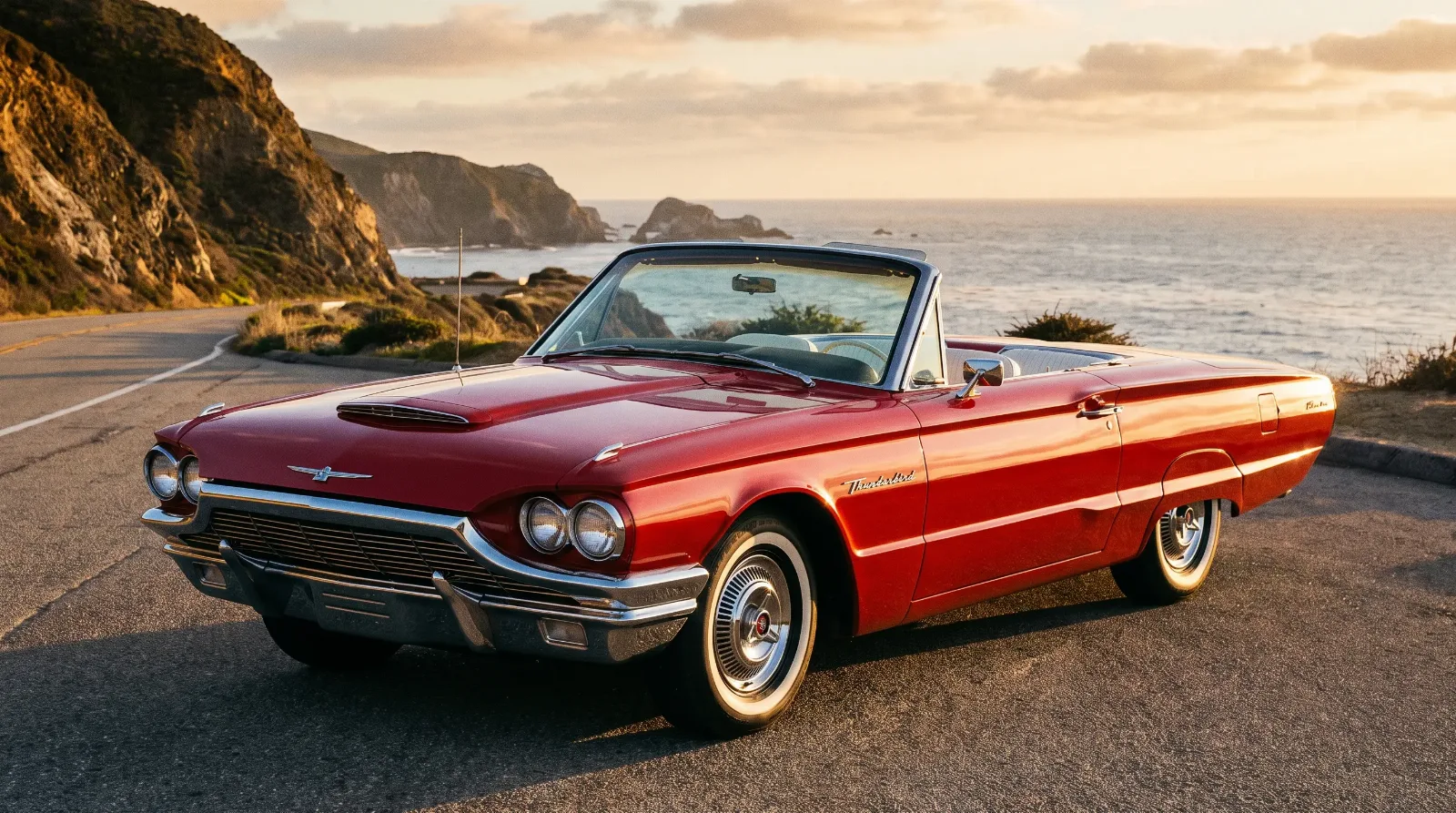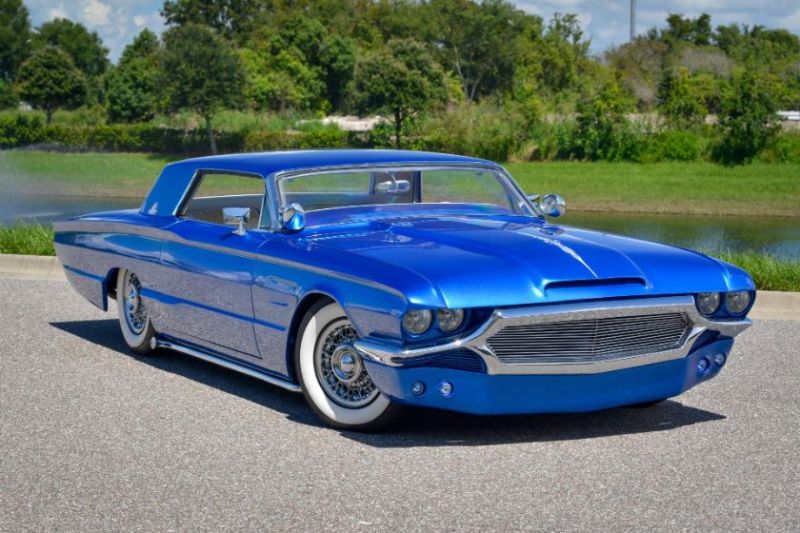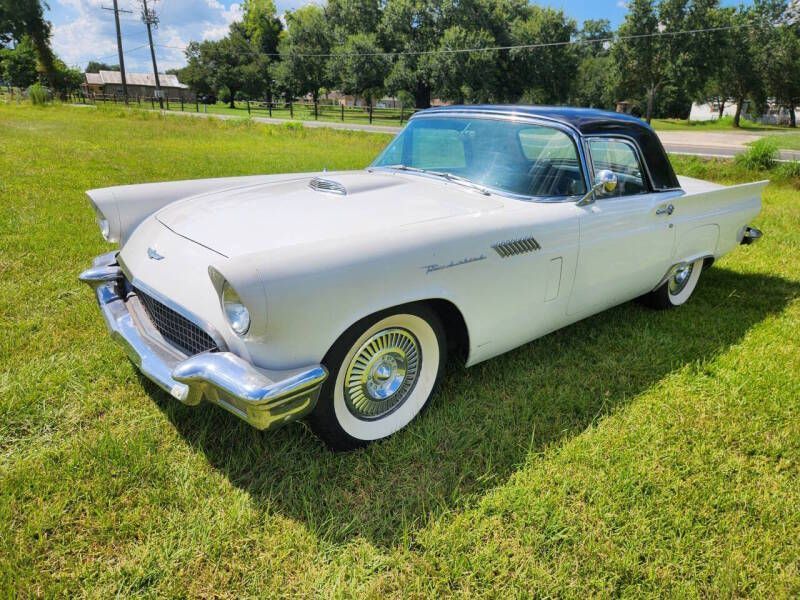
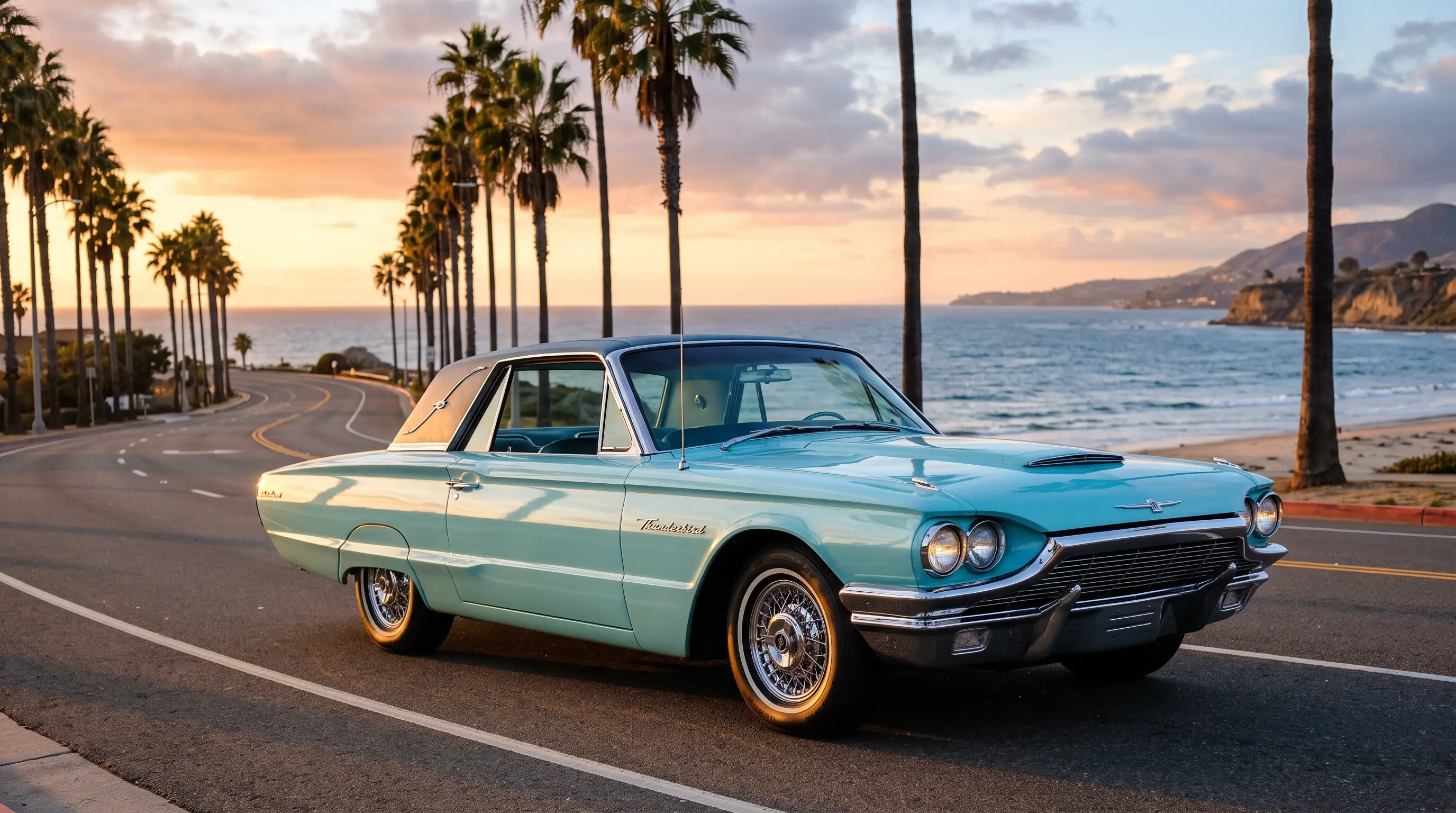
My grandmother owned a 1965 Thunderbird the color of a ripe plum, a shade Ford called Vintage Burgundy, and she used to say the car looked different depending on what time of day you caught it. Morning light made it look almost black. By late afternoon it glowed. I didn't understand what she meant until I started researching 1965 thunderbird colors for a piece on the Flair Bird generation and realized Ford's paint department in the mid-1960s was doing something closer to costume design than automotive engineering. Color wasn't an afterthought bolted onto the end of the development process. It was part of how the car argued for itself.
The Flair Bird, built from 1964 through 1966, arrived at a moment when American car buyers had genuine appetite for personality expressed through paint. Ford's color palette for the Thunderbird in those years reads today like a small museum of period taste, and understanding it tells you almost as much about mid-1960s American life as it does about the car itself.
A palette built for a specific kind of buyer
The Thunderbird was never marketed as a young person's car in this generation. It sat above the Mustang and Galaxie in Ford's lineup as a personal luxury coupe, aimed at buyers who wanted something more sophisticated than a family sedan but weren't chasing the raw performance image of the pony car boom happening right alongside it. The color names Ford chose reflect that positioning directly. Where the Mustang leaned into playful, energetic names, the Thunderbird's 1965 palette favored words that suggested restraint and wealth: Silver Mink, Chantilly Beige, Prairie Bronze, Ivy Green, Vintage Burgundy, Diamond Blue.
These weren't accidents of naming. Ford's marketing department understood that a Thunderbird buyer in 1965 was often cross-shopping against a Buick Riviera or a Lincoln Continental, and the color story had to hold up next to those cars. A shade like Prairie Bronze, applied under the era's lacquer finishes, had a depth to it that photographed beautifully in brochures and looked even better parked outside a country club.
Vinyl roofs changed the color equation
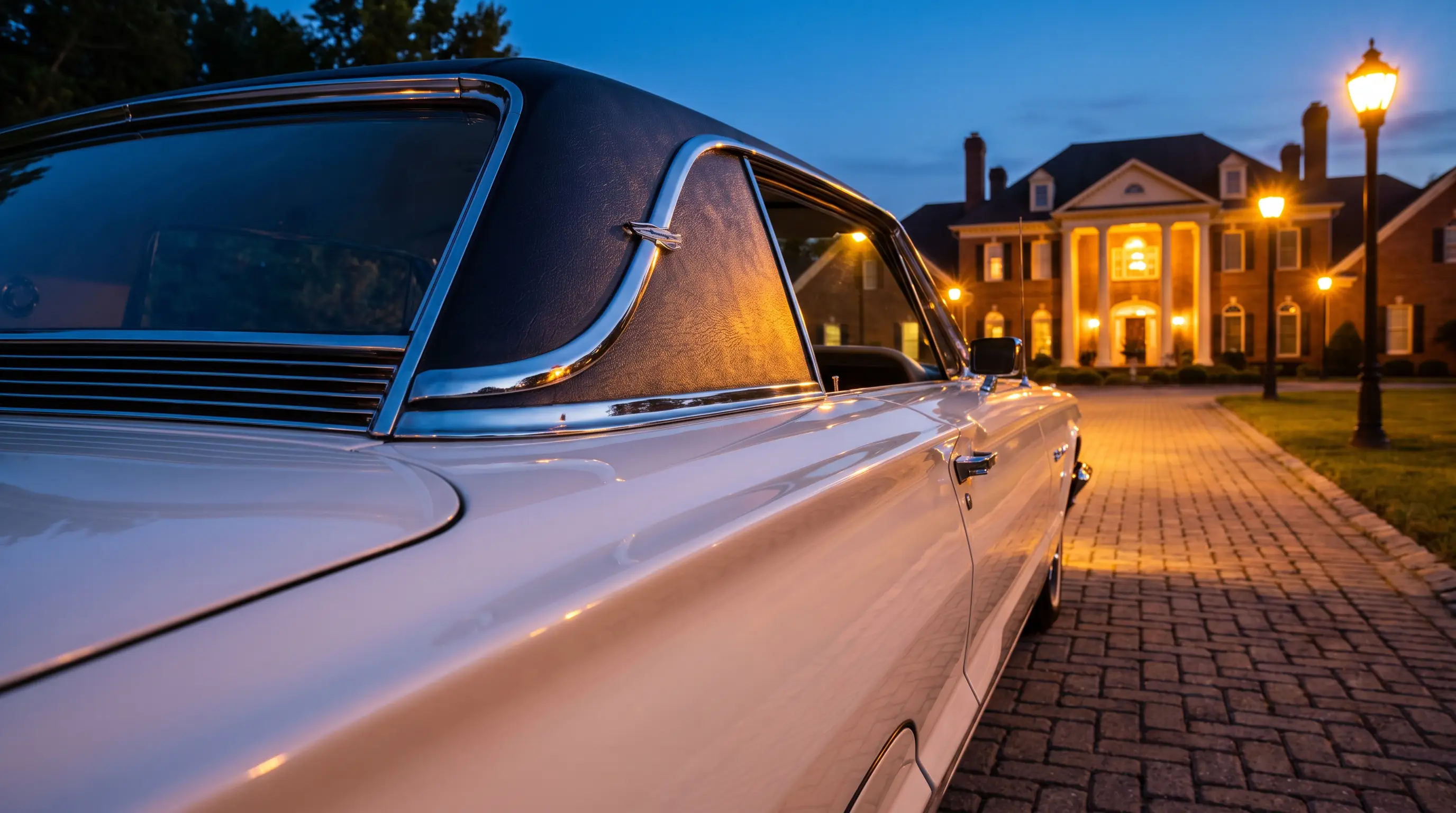
The Landau hardtop trim, with its vinyl-covered rear roof section, added a second layer to the color decision that convertible buyers didn't have to think about. A black or white vinyl top read very differently depending on the body color underneath it. Black vinyl over a light body color like Wimbledon White gave the car a crisp, almost formal contrast that suited the Thunderbird's personal luxury pitch. The same black vinyl over a darker body color tended to visually shrink the roofline, making the car look lower and longer, which was exactly the effect Ford's stylists wanted for a coupe competing against European grand tourers on showroom floor presence.
You can trace a good deal of this thinking back through our complete history of the Flair Bird generation, where the roofline and greenhouse proportions were engineered specifically to make color and trim choices land with maximum effect. Ford wasn't guessing. The design team tested body color and vinyl top combinations extensively before finalizing the order guide, because they understood that a personal luxury car sells on how it looks parked at rest as much as how it drives.
The rarer shades collectors chase now
Not every 1965 thunderbird color survived in equal numbers, and that scarcity shapes today's collector market in ways that have nothing to do with mechanical rarity. Some shades were simply less popular when new, which means fewer cars were ordered in them, which means fewer survive now regardless of how many were actually built well. Ivy Green is one of the harder colors to find today in original, undamaged paint, partly because green fell out of fashion faster than blues and neutrals across the whole industry in the following decade, and partly because green metallic lacquers of the era were notoriously difficult to match during repairs, so damaged cars in that shade were more likely to get repainted a different color entirely rather than restored correctly.
| 1965 Thunderbird color | Character | Collector visibility today |
|---|---|---|
| Wimbledon White | Crisp, formal, pairs well with black vinyl top | Common |
| Vintage Burgundy | Deep, shifts with light | Uncommon |
| Ivy Green | Cool, understated | Rare in original paint |
| Diamond Blue | Light, formal, popular with Landau trim | Common |
| Prairie Bronze | Warm, deep, catalog favorite | Uncommon |
"A color tells you a story before you've read a single fact about the car. When I sit with a 1965 Thunderbird in its original Ivy Green, I'm not just looking at paint, I'm looking at a choice somebody made in a Ford showroom sixty years ago, and that choice is part of the object now."
- Nora Beckett
Repaints and what they cost the story
Paint is one of the easiest things to change on an old car and one of the hardest things to get back once it's gone. A Thunderbird that's been repainted a non-original color loses something that has nothing to do with structural value and everything to do with narrative value. The car stops being a specific 1965 Ford Thunderbird ordered in a specific shade by a specific buyer and becomes, instead, a generic old car wearing whatever color a later owner happened to like. Collectors who care about originality will pay a real premium for a car still wearing its factory color, even a common one like Wimbledon White, over a rarer color applied later without documentation.
That premium shows up clearly if you spend time watching what actually sells. Buyers looking to browse classic Thunderbird listings will notice that sellers who can point to a build sheet or a Marti Report confirming original paint color tend to price their cars higher and still move them faster than sellers offering a repainted, undocumented equivalent. The paperwork matters almost as much as the paint itself.
How dealers actually sold the palette
Ford's regional zone offices had some flexibility in how heavily they stocked particular colors, which means the popularity of a given 1965 thunderbird shade wasn't uniform across the country. Dealers in warmer, sunnier markets tended to order more light colors like Silver Mink and Wimbledon White, partly because buyers in those regions understood how much a dark color could bake in direct sun, and partly because light colors simply photographed better on a dealer lot under strong daylight. Dealers in the Northeast and Midwest, by contrast, moved more of the deeper tones like Vintage Burgundy and Prairie Bronze, colors that read as substantial and formal against gray winter skies in a way a pale color sometimes doesn't.
This regional variation matters today for anyone trying to source a specific color combination. A car originally sold new in the Southwest is statistically more likely to have started life in a lighter shade, while a car with strong Northeast provenance has better odds of an original dark color. It's not an ironclad rule, since individual buyers ordered whatever they wanted regardless of regional trends, but it's a useful piece of context when a seller's story about a car's originality doesn't quite add up with where the car supposedly spent its early life.
Interior and exterior color relationships
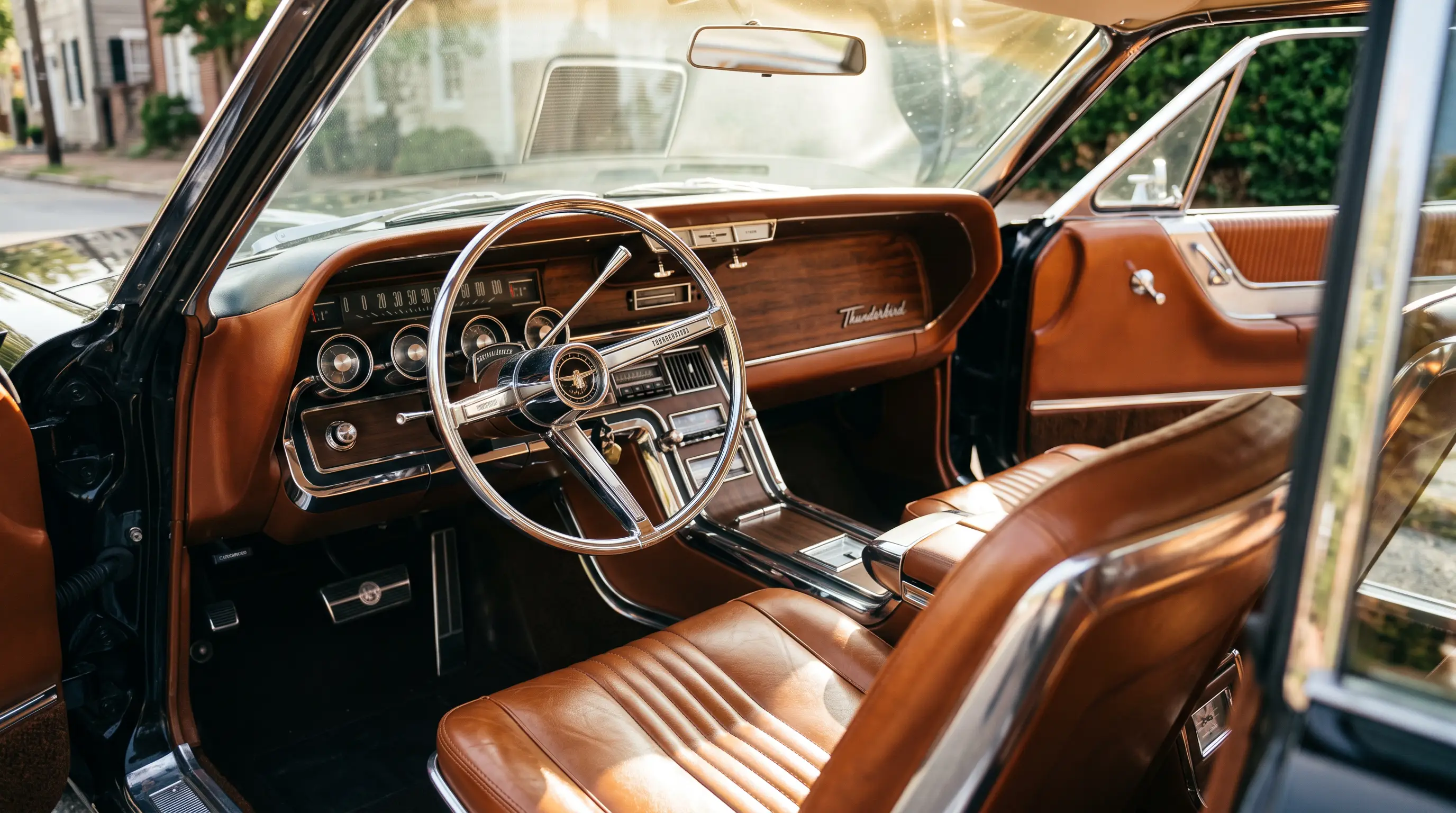
Ford's order guide didn't simply pair colors at random. Certain exterior shades had a noticeably wider range of compatible interior options than others, and the more premium exterior colors, Prairie Bronze among them, tended to come with the richest interior pairings, reflecting how Ford wanted to position those shades as the aspirational end of the palette. A buyer who wanted the full formal effect could order a dark exterior with a lighter, contrasting interior, or go monochromatic with a tone-on-tone approach that Ford's brochures photographed particularly well against the Landau's vinyl roof treatment.
Getting these combinations right during a restoration isn't optional if originality is the goal. A correct 1965 thunderbird color on the outside paired with an incorrect, non-factory interior shade will still cost a car points at a judged show and will still read as wrong to anyone who has spent real time studying period order guides. The two halves of the color story, exterior paint and interior trim, were designed together and should be evaluated together.
Living with the color choice
What strikes me most, sitting with these cars at shows, is how deliberately Ford thought through a decision that modern buyers barely register. Nobody cross-shops paint charts today the way a 1965 Thunderbird buyer did, weighing Prairie Bronze against Vintage Burgundy against a black vinyl roof and what that combination would say about them in a parking lot. That level of intention is part of why these cars still hold attention on a show field. The color wasn't decoration. It was argument, and six decades later the argument still reads clearly to anyone who knows how to look.