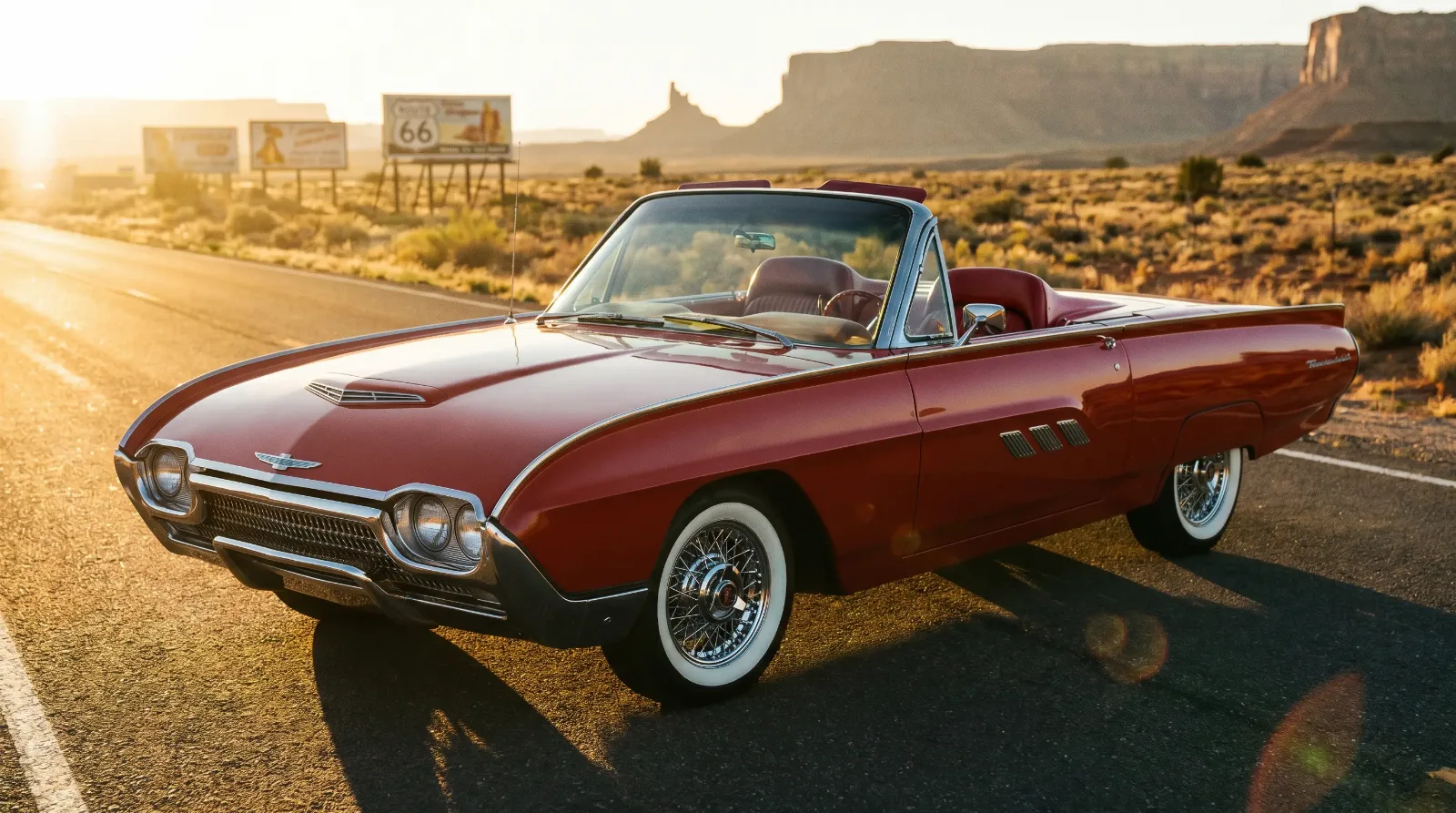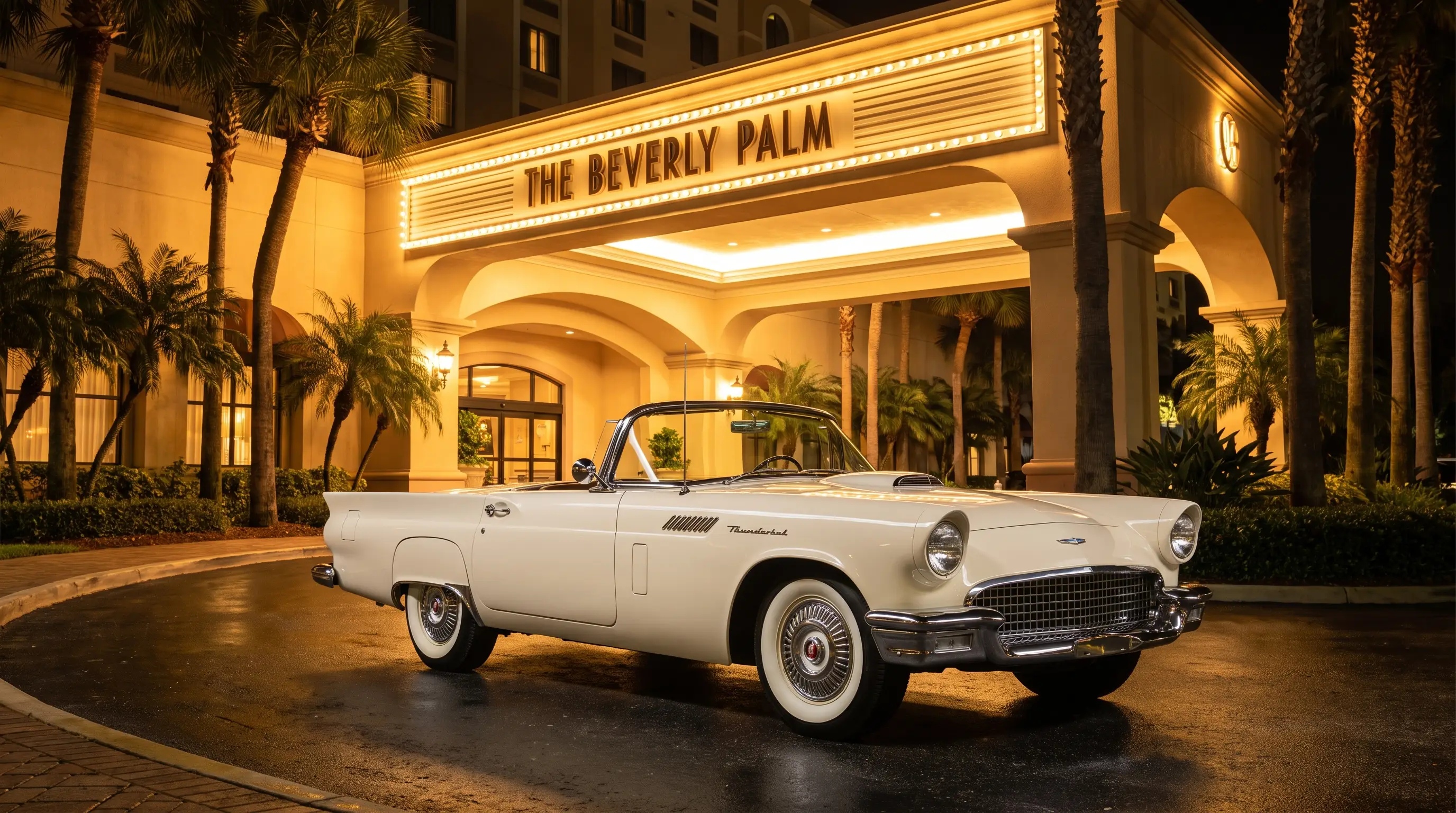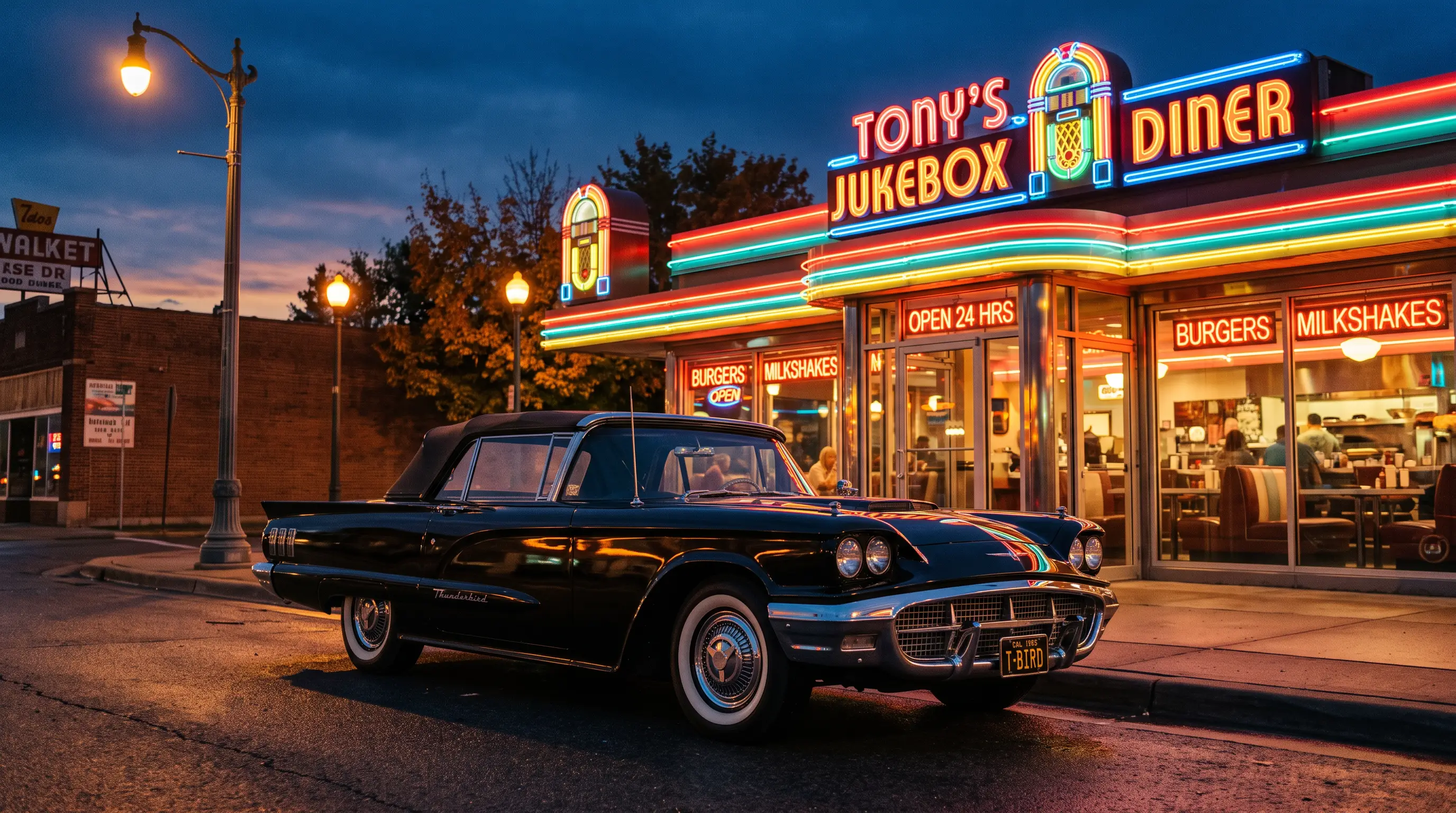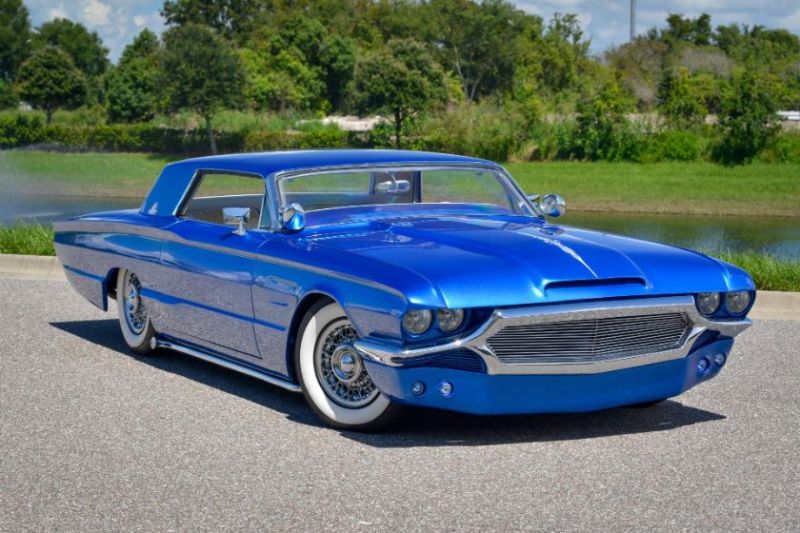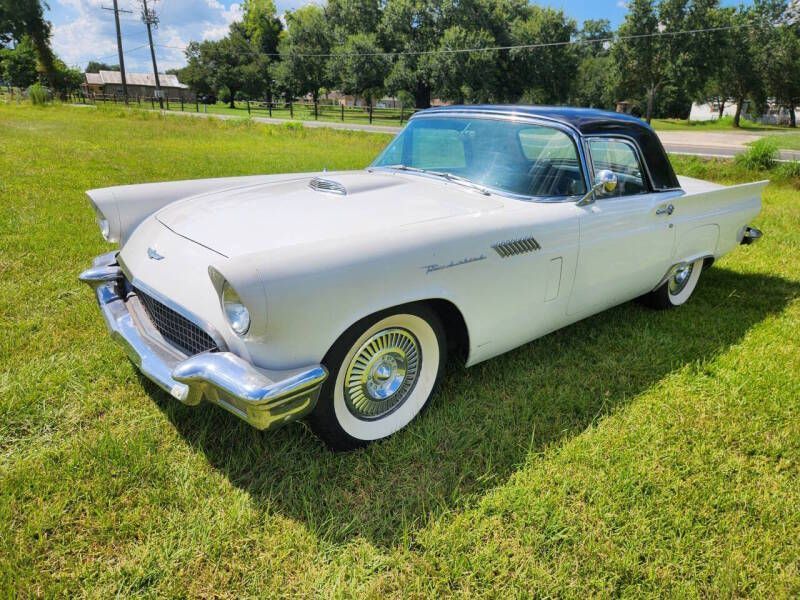
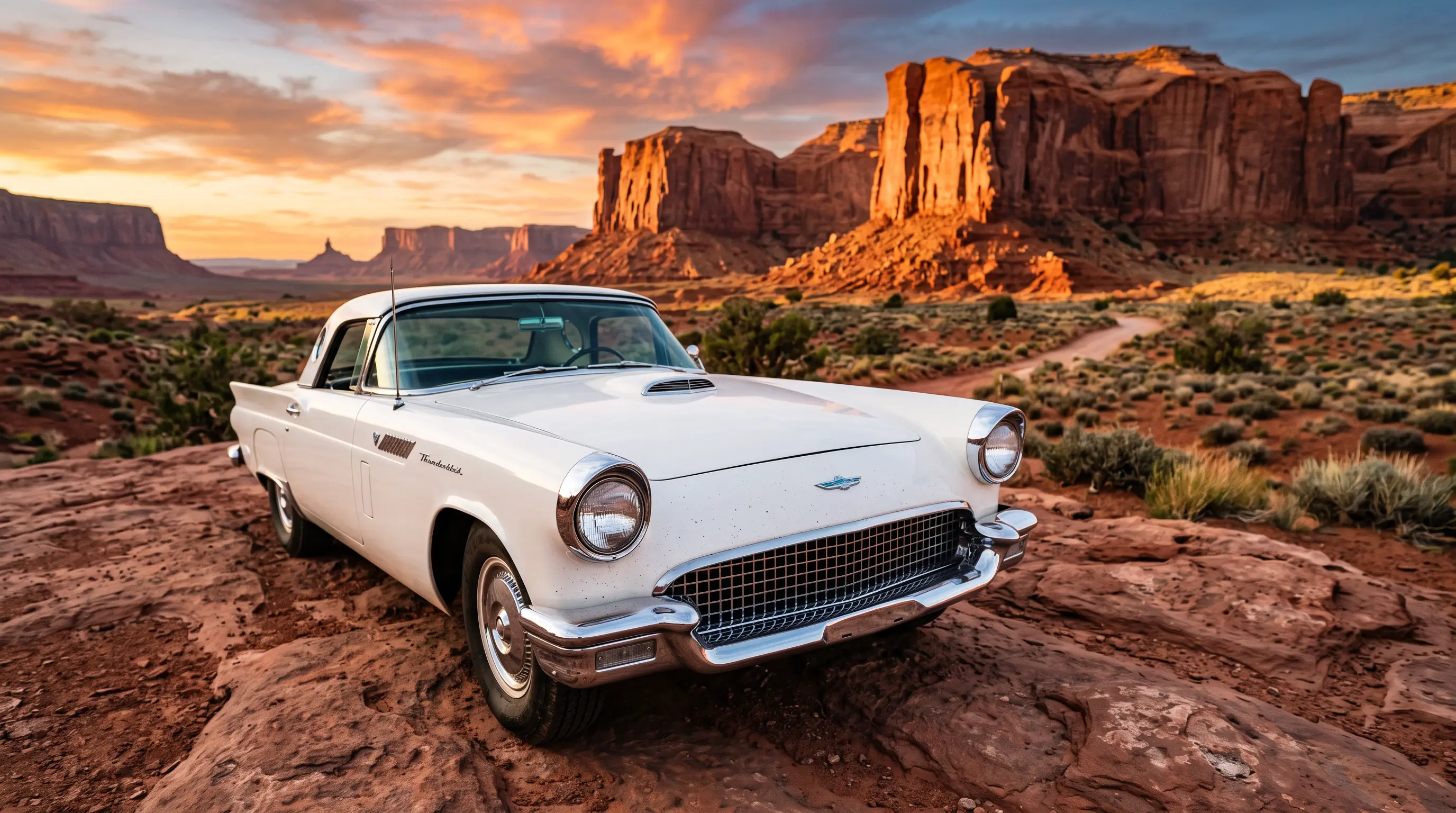
Ford named its most glamorous fifties coupe after a creature that predates the automobile by centuries, and the company never fully explained why in period advertising. The thunderbird logo meaning traces back to a figure found across dozens of Indigenous nations in North America: a massive, powerful bird whose wingbeats were said to produce thunder and whose eyes flashed lightning. Ford's stylized emblem, a simple bird in profile with outstretched wings, was a commercial designer's shorthand for that myth, not a literal retelling of it, and the gap between the two has fueled curiosity about the car's name for seventy years.
Where the name actually came from
The naming story most often repeated inside Ford is almost too tidy. In 1954, with the two-seat concept nearing production, Ford ran an internal contest for a name, offering a modest cash prize and a suit to the winner. A stylist named Alden "Gib" Giberson is credited with suggesting Thunderbird, reportedly recalling the word from a golf course or resort in the Southwest that had borrowed it from regional Indigenous imagery, a common practice in mid-century American branding. Executives liked the sound of it: short, evocative, and vaguely powerful without being aggressive. It beat out a list of also-rans that history has mostly forgotten, and Ford paid its usual prize for the winning suggestion.
What Ford did not do, at least not in any surviving documentation, is consult with the nations whose traditions the thunderbird figure actually belongs to. The company borrowed a powerful piece of imagery the way a great deal of mid-century American commerce did, treating it as available folklore rather than a living spiritual tradition with specific meanings that vary considerably from one nation to another.
This pattern was hardly unique to Ford. American businesses of the era reached for Indigenous names and imagery constantly, from resort hotels to sports teams to household products, usually without royalty payments, consultation, or credit of any kind. The thunderbird motif specifically had already circulated widely in commercial branding for decades before Giberson's suggestion, appearing on everything from motels to airline liveries, which likely made the word feel available and familiar to Ford's naming committee rather than borrowed from anywhere specific. That familiarity was itself a product of earlier, similarly uncredited commercial use.
The myth Ford borrowed from
In the traditions where it appears, the thunderbird is not a decorative bird. Among Plains, Pacific Northwest, and Great Lakes nations, accounts of the thunderbird describe an enormous spirit being associated with storms, protection, and, in many tellings, an ongoing struggle against underwater serpents or other malevolent forces. Its wingbeats bring thunder, its eyes produce lightning, and its presence in oral tradition and visual art long predates any contact with European settlers. The specifics differ by nation and region considerably, which is exactly why treating "thunderbird" as one generic myth, the way mid-century advertising tended to, flattens something that was never uniform to begin with.
Ford's logo, first appearing on the 1955 model, distilled all of that into a simple graphic bird, wings spread, rendered first in chrome and later in a stylized emblem that changed slightly with nearly every generation. It was never meant as an accurate representation of any specific nation's imagery. It was meant to look fast, modern, and a little bit mystical on a car hood, and on that narrower goal it succeeded completely.
Contemporary discussions about naming and imagery borrowed from Indigenous traditions have grown considerably more careful than they were in 1954, and museums and cultural organizations today generally encourage brands to acknowledge the specific communities and meanings behind imagery like this rather than treating it as generic decoration. Ford's original naming process reflects the norms of its own era rather than today's, and reading that history honestly means holding both facts at once: the emblem was effective commercial design, and it was also built on imagery the company never fully credited or explained to the public buying the car.
Why the name stuck for two and a half decades
A handful of other American automakers experimented with similar naming approaches around the same period, borrowing words with a similar mythic weight for their own halo models, though none achieved quite the same lasting association between name and product that Ford managed with the Thunderbird. Part of that comes down to consistency. Ford stuck with the name across four radically different body styles and twenty five years of production, never once considering a rebrand even as the car itself changed almost beyond recognition from one generation to the next. Consistency of that kind is rare in an industry that renames and repositions products constantly, chasing whatever term tests best with focus groups in a given year.
Whatever its origins, the name proved durable in a business where model names get retired constantly. Part of the reason is simple marketing logic: a two-seat sports car needed a name that suggested speed and drama, and few English words do that job as efficiently as one borrowed from a legend about a bird that makes thunder with its wings. Part of it is that Ford invested real money reinforcing the connection, using bird imagery in advertising copy, dealership displays, and eventually the car's own badge design well into the personal luxury era of the 1970s, long after the two-seat sports car concept had given way to a much larger, plusher coupe.
The broader cultural life of the name, including how it echoed through music and popular slang once the car had established itself, gets more attention in a related story covering the Thunderbird's surprisingly long run as a lyrical shorthand for freedom and speed.
"Ford never claimed to be teaching a history lesson with that badge. They wanted a word that sounded like it belonged on a fast car, found one in a story nobody at the company fully understood, and ran with it for twenty five years."
- Patrick Walsh
A borrowed name that still carries weight
Understanding where the name came from does not diminish the car, but it does add useful context to why it worked as well as it did. Ford was not the only mid-century American company borrowing Indigenous words and imagery for commercial purposes, and the Thunderbird sits alongside plenty of other examples from that period. What makes it a more interesting case than most is how completely the name and the car eventually became fused in the public mind. Ask most people today what a thunderbird is, and a surprising number will describe Ford's coupe before they describe the mythological bird it was named after, a reversal that says something about how effective the branding turned out to be.
The full arc of that branding, from a contest-winning suggestion in 1954 through decades of chrome birds on hoods and trunk lids, is covered in more detail in our ford thunderbird history retrospective. And if the name and the legend behind it have you thinking about the real thing, you can go look at Thunderbirds for sale now and see how that borrowed emblem still sits on hoods today, decades after Giberson's suggestion won a suit and a small cash prize.
Sources and notes
- Little Bird: The 1955-1957 Ford Thunderbird - Ate Up With Motor
- The Ford Thunderbird - Ford Motor Company
- Birth of a Legend - Lehigh Valley Thunderbird Club
- Classic Thunderbird Club International
- Car of the Week: 1955 Ford Thunderbird - Old Cars Weekly
- Ford Thunderbird (first generation) - Wikipedia