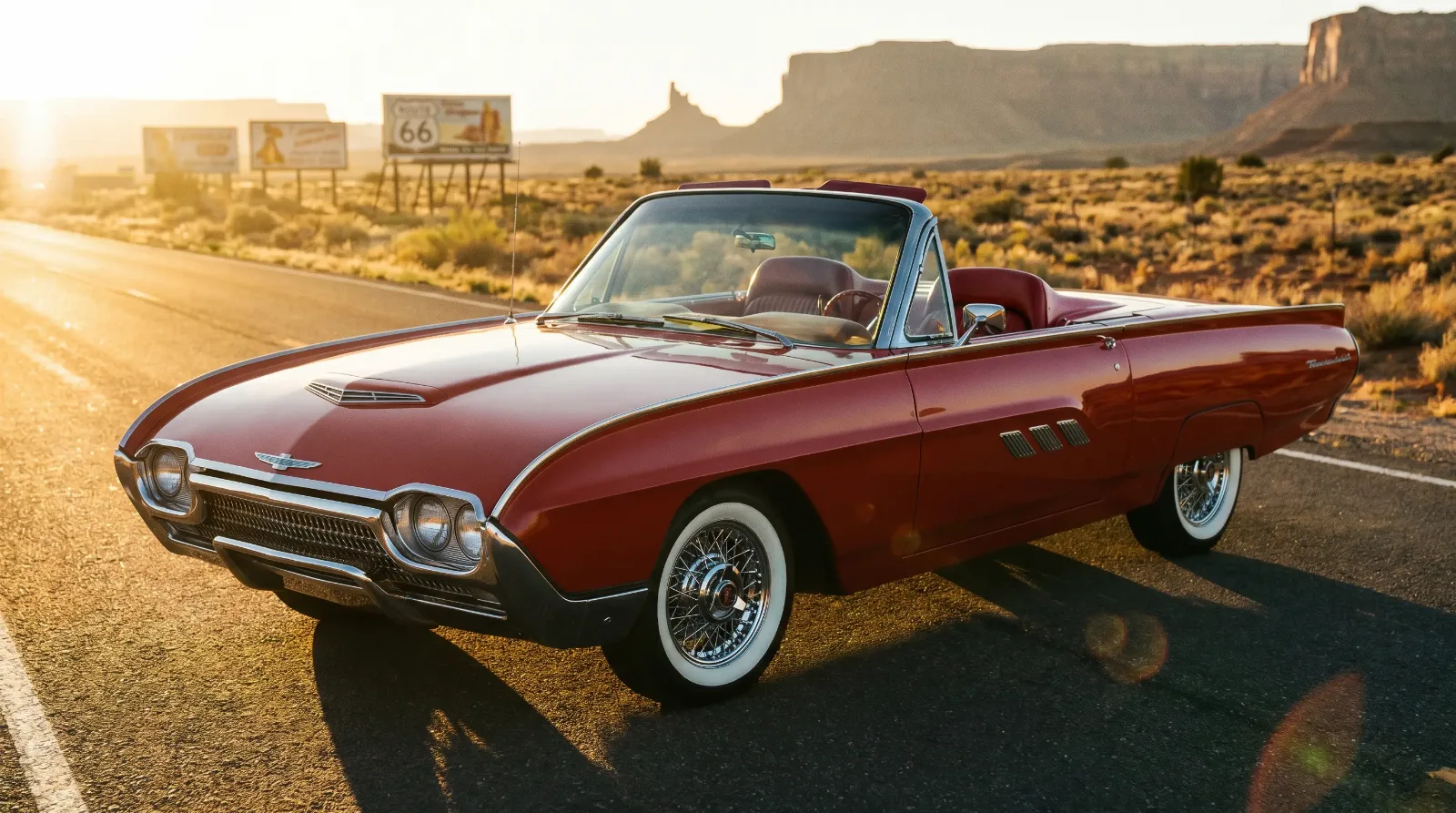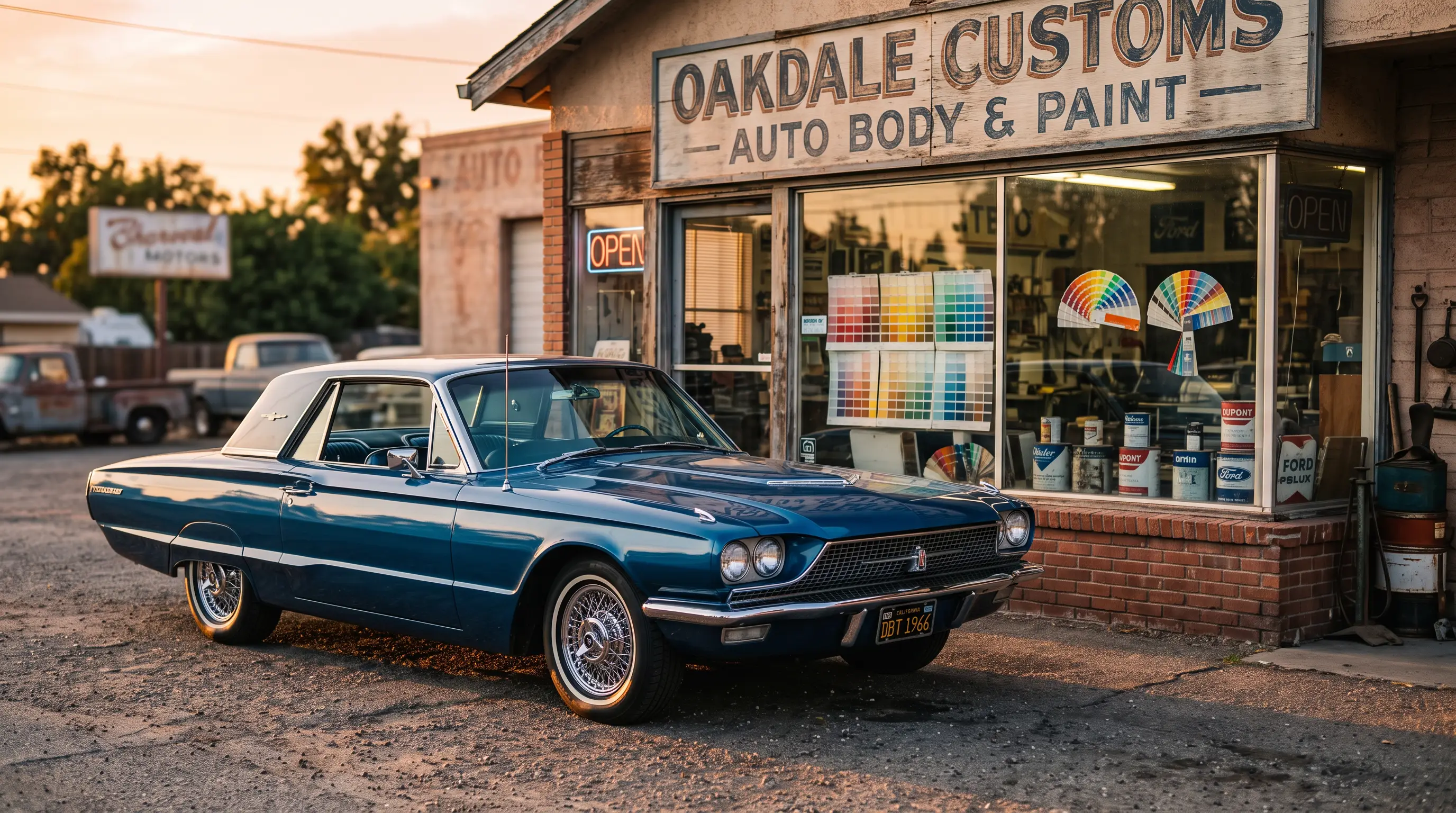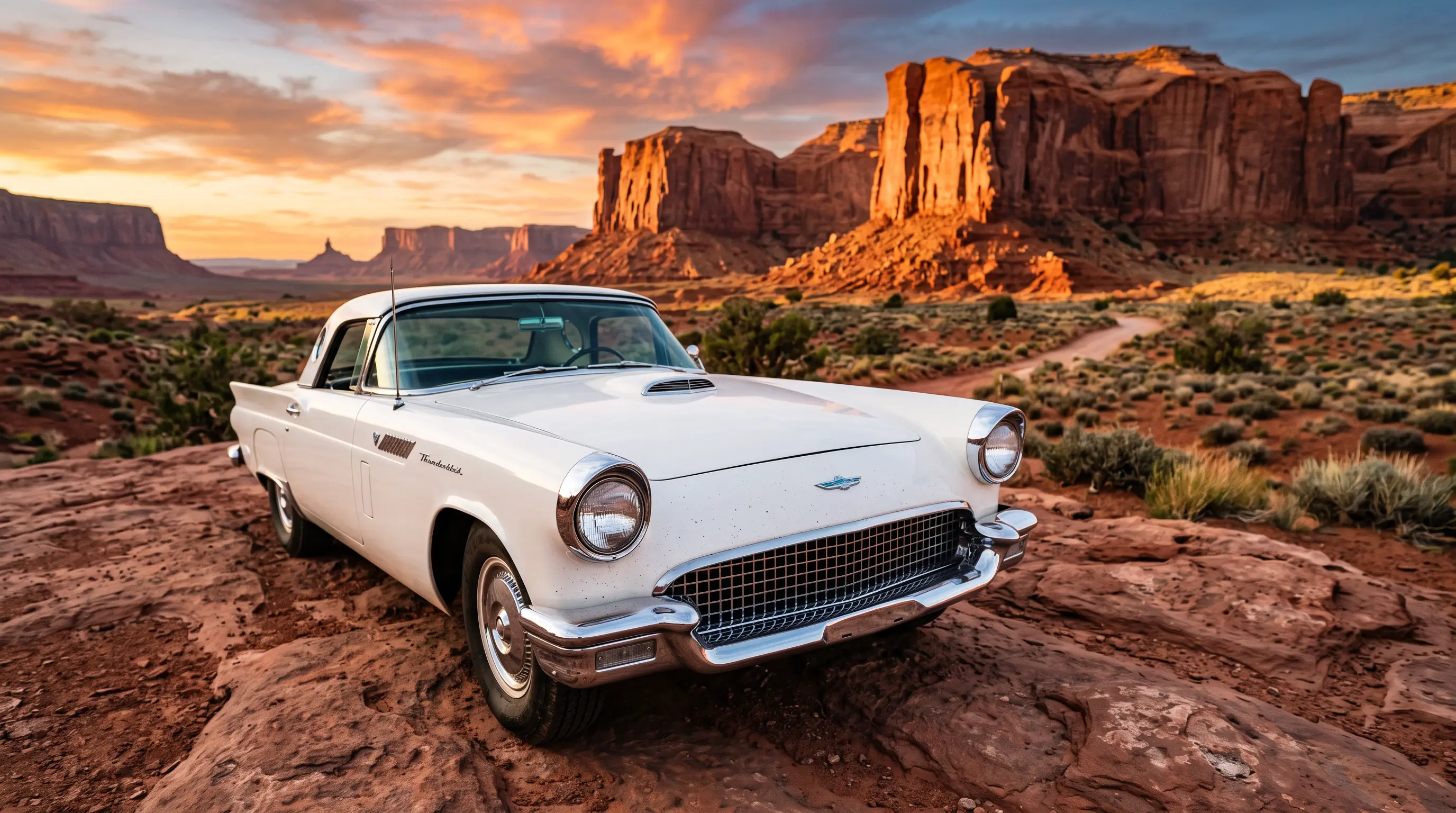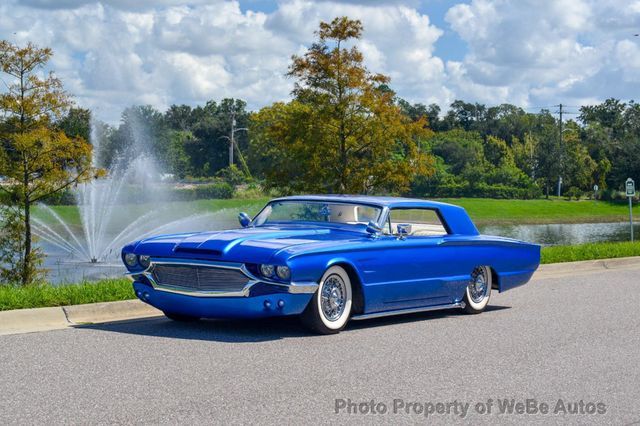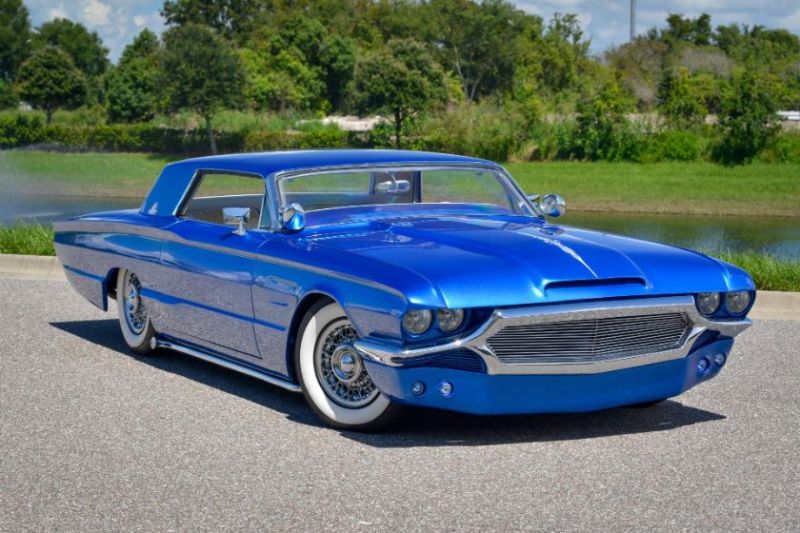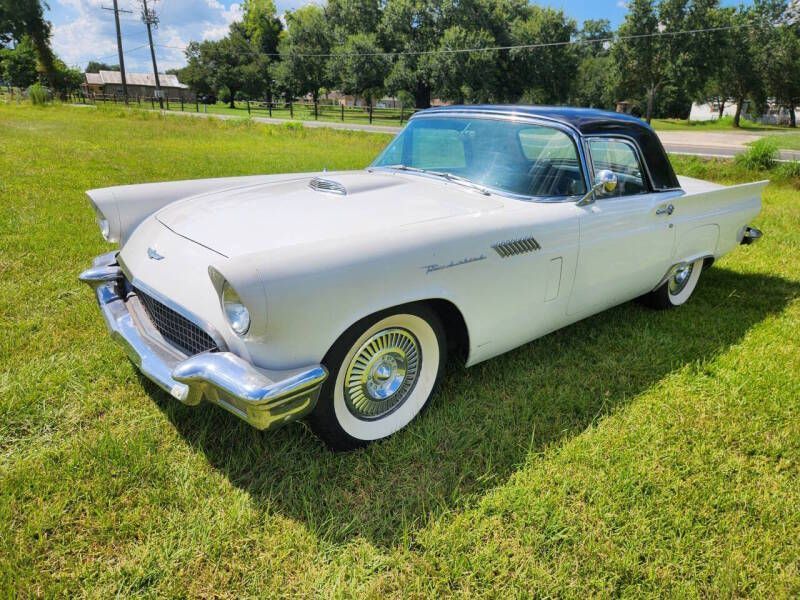
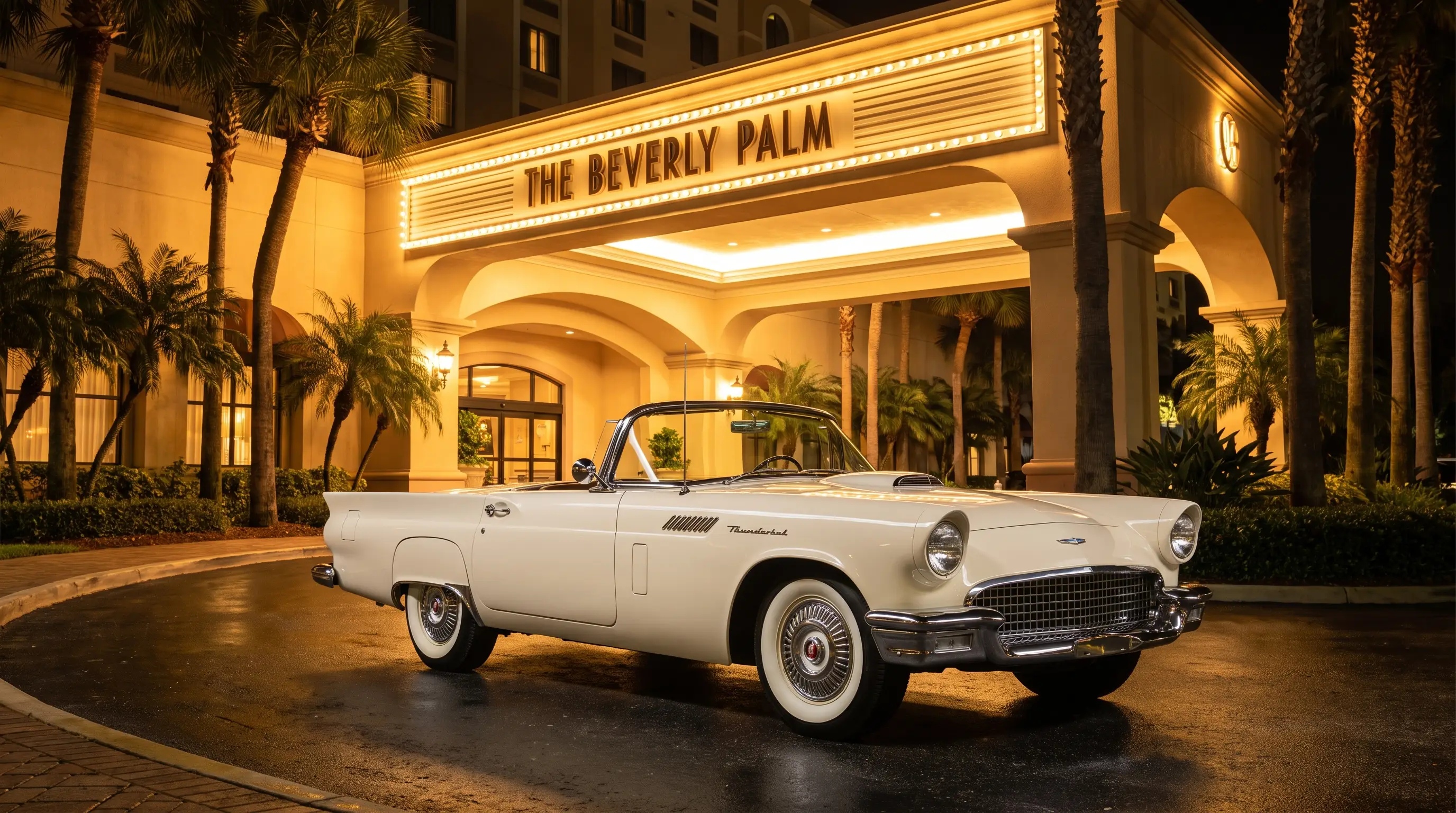
The Ford Thunderbird has always photographed well, and that is not an accident. From the moment the two-seat 1955 model rolled into showrooms, it read as a car for people who expected to be looked at. Over the following two decades, a long list of celebrity Thunderbird owners proved the point, treating the car less like transportation and more like a costume piece for their public lives. Some bought it for the wind in their hair, others for the way it sat at a curb outside a restaurant, but the pattern holds across every generation of the classic era: when someone famous wanted a car that said "I have arrived" without saying "I am trying too hard," they reached for a Thunderbird.
The first-generation crowd, 1955 to 1957
The original two-seat Thunderbird sold in modest numbers by Detroit standards, which only sharpened its cachet. It was small, personal, and expensive enough that owning one signaled disposable income and good taste in roughly equal parts. Studio publicity departments understood this immediately. Actresses were photographed leaning against the fender at gas stations, and male stars were shown behind the wheel with a jacket slung over one shoulder, sunglasses on, engine idling. The two-seater was gone after 1957, replaced by the larger four-seat "Squarebird," but its brief life set the template that every later generation would borrow from: the Thunderbird as personal statement rather than family hauler.
Marilyn Monroe owned one of these early cars, a story detailed at length in the full story of the model's rise, and her ownership alone did more for the nameplate's glamour reputation than any advertising budget could have managed. She was hardly alone. Musicians touring through Los Angeles and Nashville in the late fifties gravitated toward the two-seater because it fit a stage persona: fast, compact, unmistakably new.
Studio contracts of the period often included clauses about which cars a star could be photographed in, and a surprising number of publicists specifically requested a Thunderbird for premiere arrivals and magazine spreads, according to accounts passed down through several long-running fan clubs. It was cheaper for a studio to arrange a loaned car for an afternoon shoot than it was to build an entire glamour narrative from scratch, and the Thunderbird arrived already carrying that narrative. A single afternoon behind the wheel, done right, could generate wire photos that ran in newspapers coast to coast within days.
The Squarebird and Bullet Bird years find a wider audience
When Ford stretched the Thunderbird to four seats for 1958, the car's fan base widened along with the body. It was no longer strictly a two-person toy; it could carry a family to church or a bandleader and his wife to a premiere, and that flexibility pulled in a different slice of celebrity owner. Television personalities of the early sixties favored the Squarebird and its Bullet Bird successor for exactly this reason. It photographed as prosperous without looking like a producer's company car, and its swiveling bucket seats and push-button transmission gave interviewers something tangible to marvel at when a star showed off the driveway.
Musicians kept circling back to the nameplate too, a habit covered from a different angle in the full story on how the car worked its way into American popular culture generally. Where the two-seater had been a Hollywood prop, the Squarebird and Bullet Bird became something closer to a status marker for the entertainment middle class: session musicians, local television hosts, minor league sports figures. It was aspirational rather than exclusive, and that made it more common in celebrity garages, not less.
Talk show hosts of the period leaned on the car for a specific kind of visual joke as well, parking a new Thunderbird outside the studio for an episode built around driving lessons or a comedy bit about learning to parallel park a wide American coupe. The car was recognizable enough by the early sixties that audiences did not need the model explained to them, which made it a reliable prop for exactly this sort of segment. That level of casual, unpaid recognition is difficult for any brand to buy outright, and Ford largely got it for free through a decade of incidental appearances rather than formal placement deals.
"Every generation of Thunderbird had its own kind of famous owner. The fifties two-seater belonged to movie stars. By the sixties it belonged to anyone on television, and by the seventies it belonged to anyone who wanted to look like they were on television."
- Patrick Walsh
Musicians, athletes, and the personal luxury boom
By the late sixties and into the seventies, the Thunderbird had grown considerably in size and shifted its identity toward personal luxury, competing more directly with Cadillac and Lincoln in showroom traffic. This era brought in a different type of famous owner: recording artists who wanted a car with presence for arriving at a club, and professional athletes cashing endorsement checks who wanted something roomier than a sports coupe but flashier than a sedan. The big-bodied Thunderbirds of the early seventies, with their hidden headlights and formal rooflines, suited that crowd well. They were not subtle cars, and subtlety was rarely the point for the people buying them.
Country and soul artists in particular treated a new Thunderbird as a milestone purchase, the kind of thing you bought once a record started selling. It showed up in liner notes, in interviews, and eventually in songs themselves, a connection worth tracing further if you want a related story on how often the car turned up in lyrics across several decades of American music.
Why the celebrity connection stuck
What separates the Thunderbird from other cars with a famous owner or two is the consistency of the pattern across nearly twenty five years and four distinct body styles. A convertible sports car, a formal four-seat coupe, and a long personal luxury cruiser do not usually share a customer base, yet each Thunderbird generation attracted its own wave of recognizable owners without much apparent effort from Ford's marketing department. The car simply kept doing what it had always done: signaling arrival, confidence, and a bit of showmanship, whatever decade you happened to be shopping in.
That reputation has outlived the cars' original owners by a wide margin. Auction houses and private sellers still lean on documented celebrity ownership when it exists, because buyers respond to it the same way they did sixty years ago. If you are shopping the classic era yourself, it is worth taking the time to browse classic Thunderbird listings and see how much of that old glamour still clings to the cars on the market today. Most will not have a famous name in the history file, but the styling that made them famous-adjacent in the first place has not gone anywhere.
The takeaway for collectors
Documented celebrity ownership is rare enough in the hobby that it changes a car's story more than its price in most cases, and provenance claims deserve real scrutiny before anyone pays a premium for them. But the broader lesson from decades of famous Thunderbird owners is less about any single name and more about what the car represented consistently: an easy, photogenic shortcut to looking successful. That is a hard thing for a design team to engineer on purpose, and Ford managed it four separate times with four very different cars wearing the same badge.
Sources and notes
- Ford Thunderbird (first generation) - Wikipedia
- Little Bird: The 1955-1957 Ford Thunderbird - Ate Up With Motor
- 1955 Ford Thunderbird Production Numbers/Specifications - Automotive Mileposts
- 1957 Ford Thunderbird Production Numbers/Specifications - Squarebirds.org
- The cars of Marilyn Monroe, 60 years after her death - Hagerty Media
- Classic Thunderbird Club International