
There is a moment in George Lucas's American Graffiti when a white Thunderbird slides past under the sodium lights, a blonde woman at the wheel mouthing three words that the boy in the other car will spend all night chasing. She never stops. The car never stops. And that, more than any brochure Ford ever printed, is how a whole generation learned what a Thunderbird meant. Not a set of specifications. A feeling that pulls away from you just as you reach it. The Ford Thunderbird spent its classic years becoming exactly that kind of object, the one in the frame you cannot quite catch, and the story of how it got there runs through movies, through pop songs, and through the strange poetry of paint names.
Car Features
9 min read
Thunderbird in American Culture: Movies, Music and Color
From American Graffiti to Thelma and Louise to a Beach Boys hook, the classic Ford Thunderbird became a mood American culture never stopped chasing.
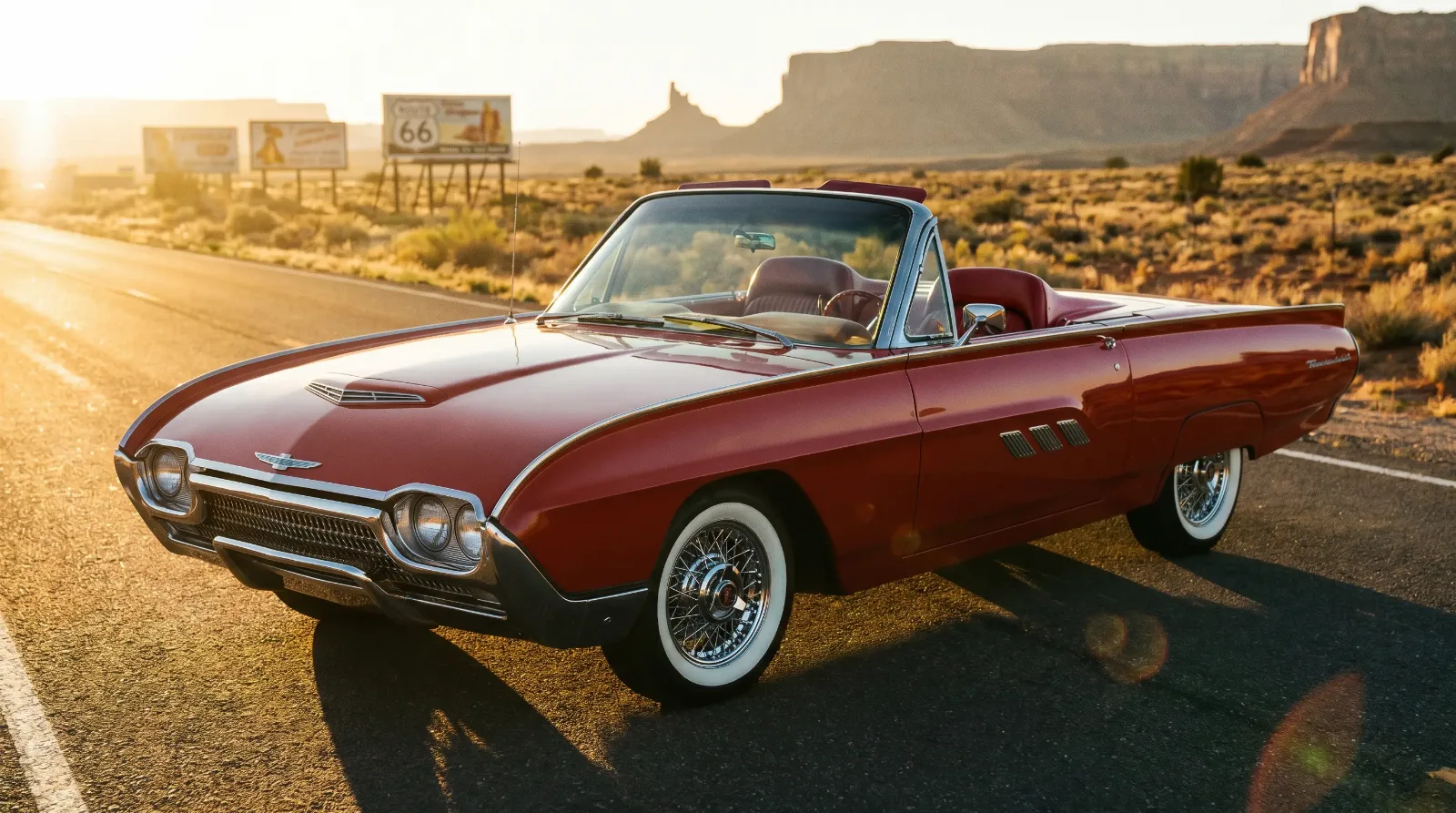
The white bird that started a chase
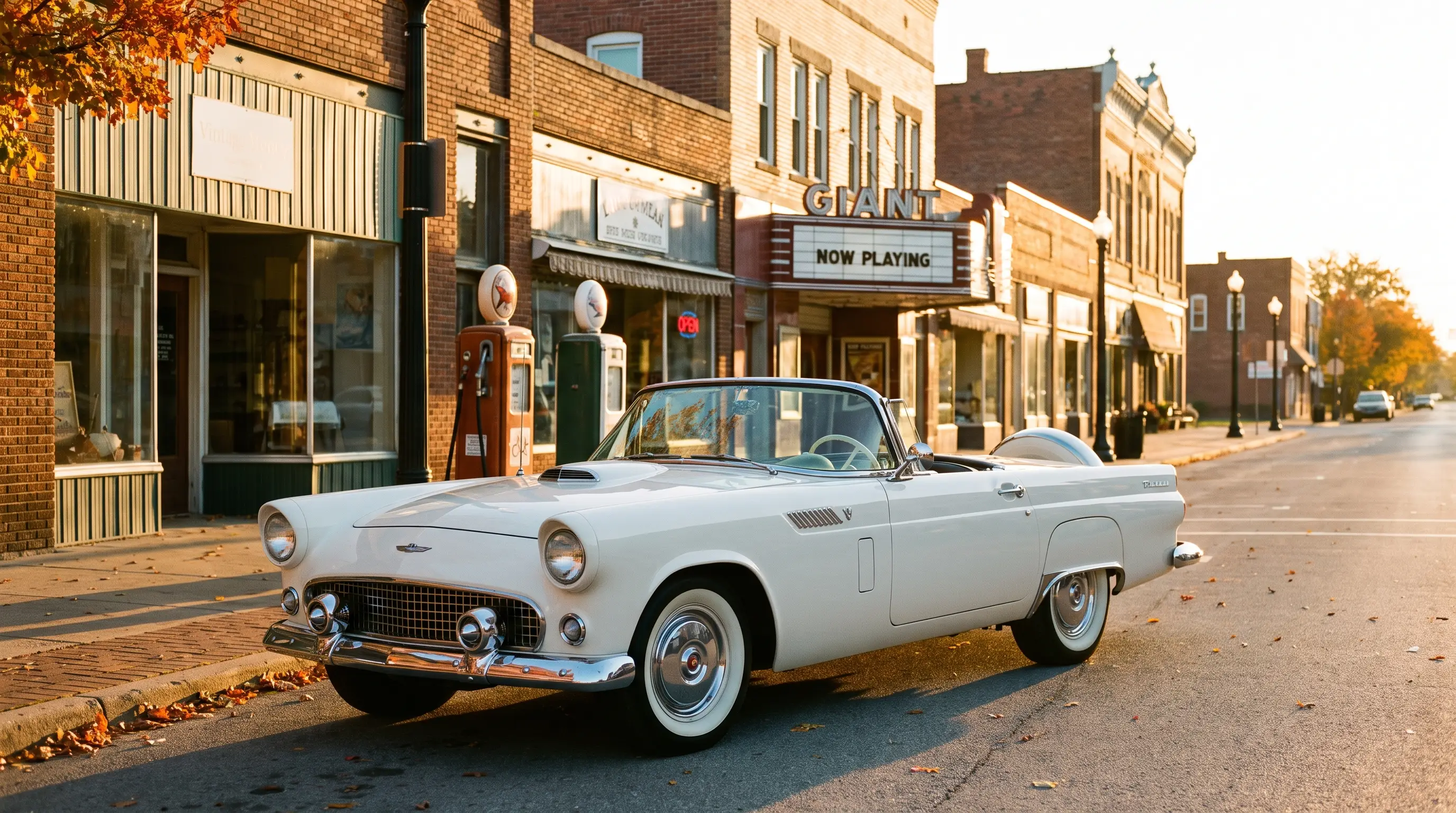
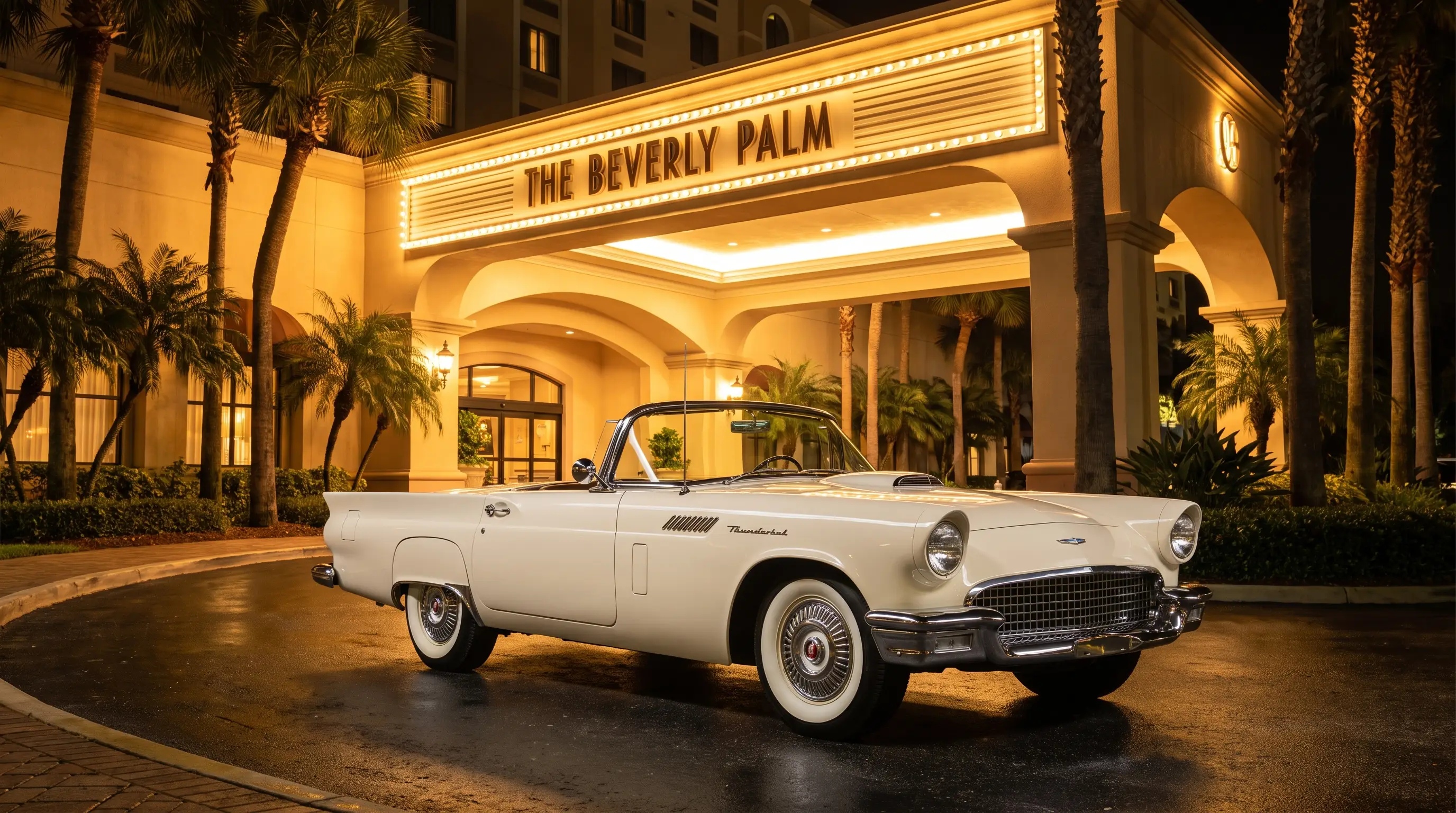
The 1956 Thunderbird in that 1973 film is barely on screen, and it does not need to be. The whole plot bends around it. The unnamed woman in the white two-seater becomes the thing the movie is really about, the beautiful unreachable evening that will end when the sun comes up. Lucas did not pick a Thunderbird by accident. By the early 1970s the first-generation car already carried a decade of associations, and audiences read it instantly as glamour, distance, and a little bit of danger.
That is the trick the Thunderbird pulled off almost from birth. It was never the fastest car in the shot or the loudest. It was the one that suggested a life just out of reach. Filmmakers understood this and used the car as shorthand, and each time they did, they deposited another layer into the ford thunderbird history that collectors trade on now.
The car in the song
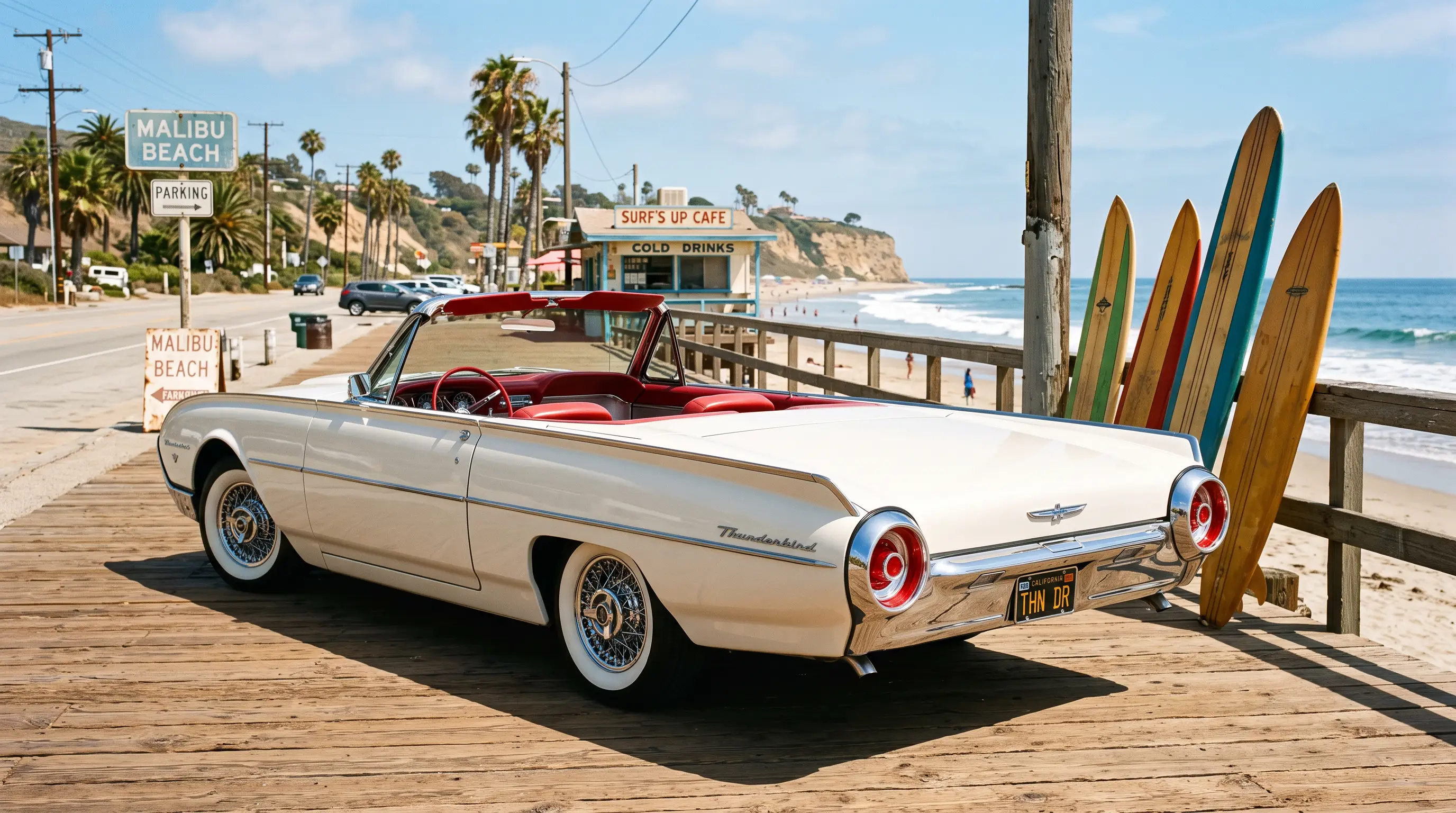
In 1964 the Beach Boys handed the Thunderbird its own anthem without ever building a verse around the engine. Fun, Fun, Fun is a song about a girl who borrows her father's Thunderbird, tells him she is going to the library, and drives it instead. The hook lives in the last line, the one everyone can still sing, about her father taking the car away. The Thunderbird in that song is freedom, and specifically a young woman's freedom, which was its own quiet statement in 1964.
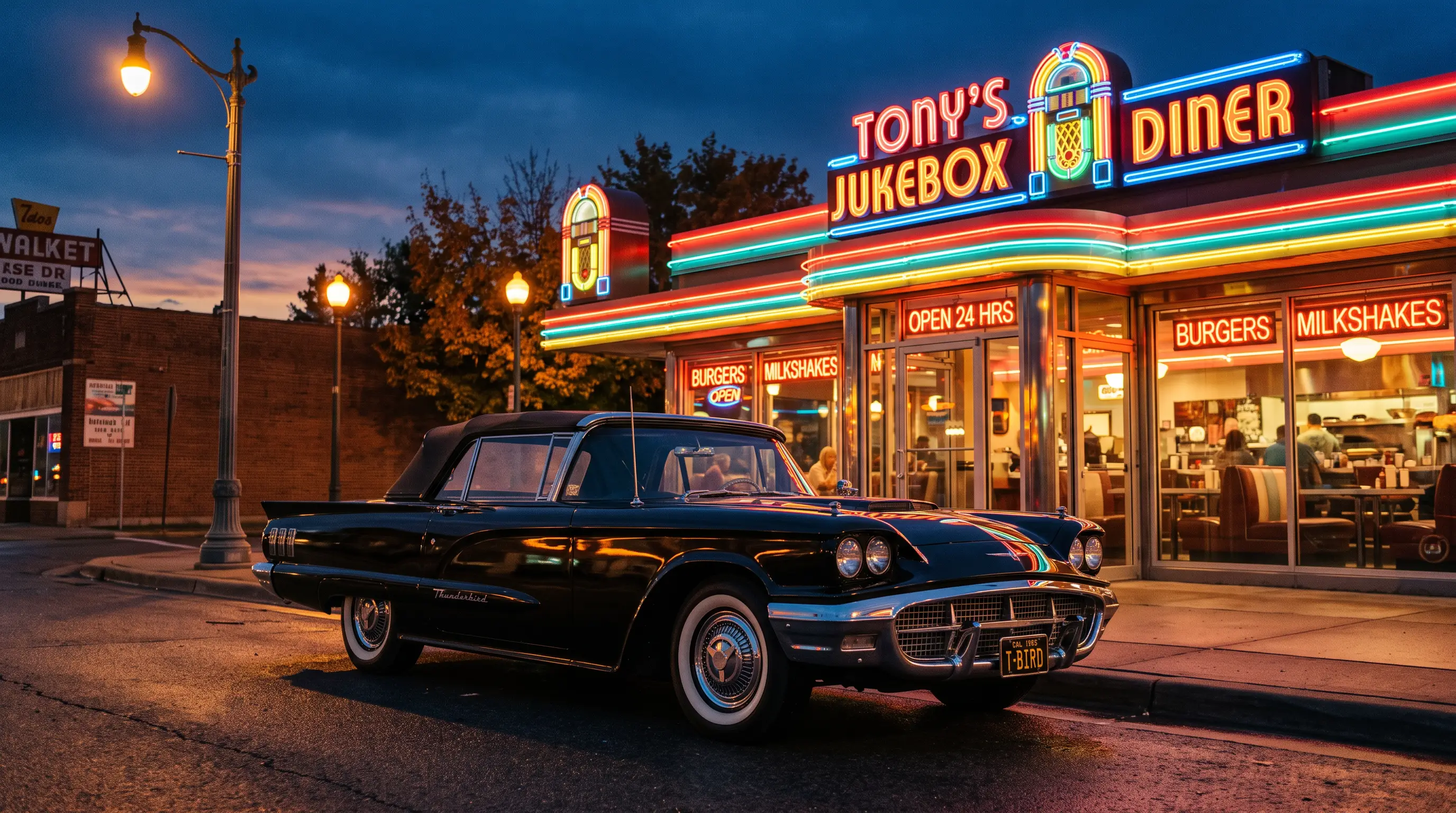
What matters is which car the culture chose to write about. Not a truck, not a sedan. A Thunderbird. The name had already become a stand-in for a certain American idea of escape, and a pop song aimed at teenagers only made the association permanent. Songs outlast advertising. Decades later people who have never sat in one can hum the reason the car feels the way it feels.
A convertible over a canyon
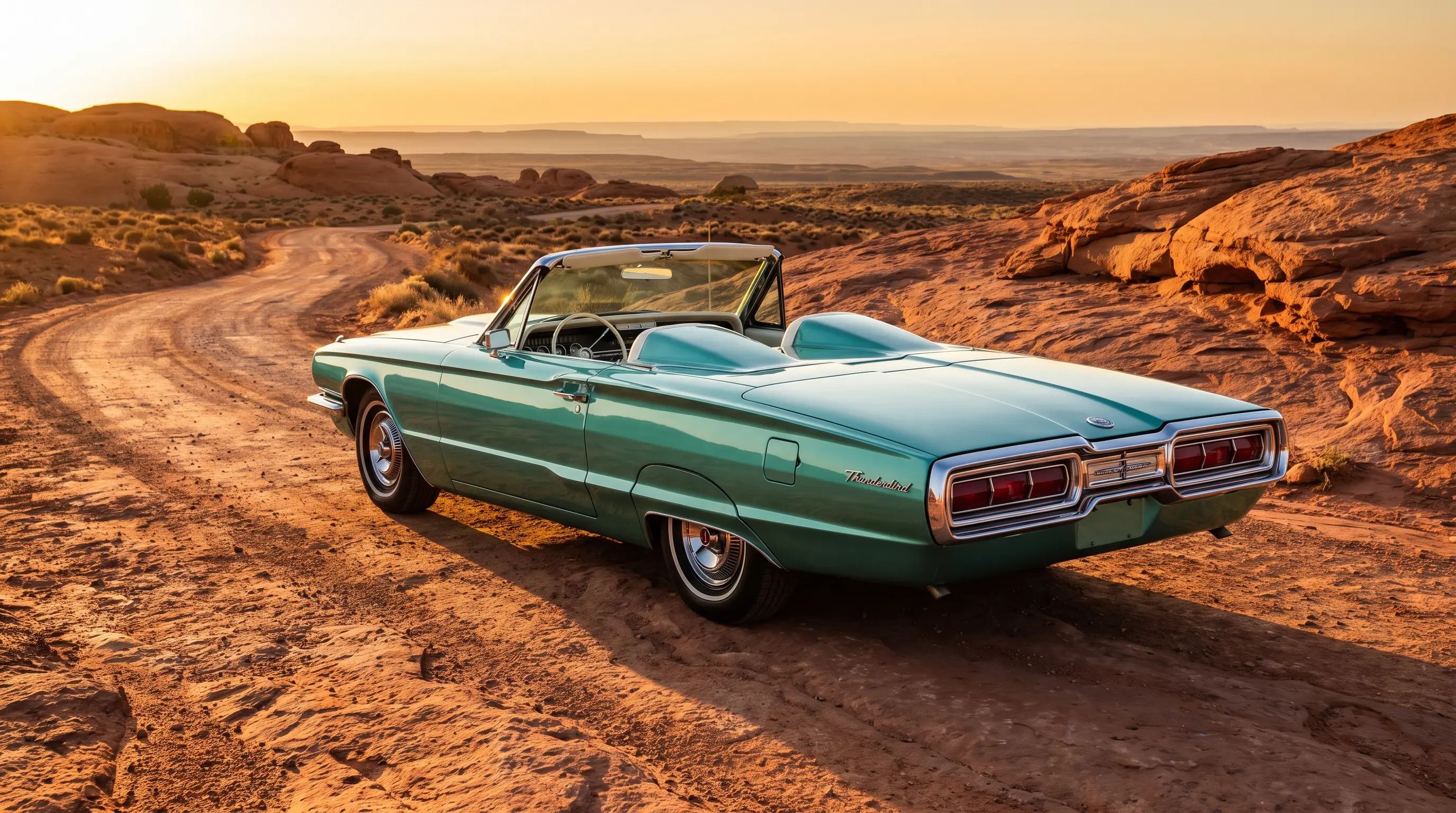
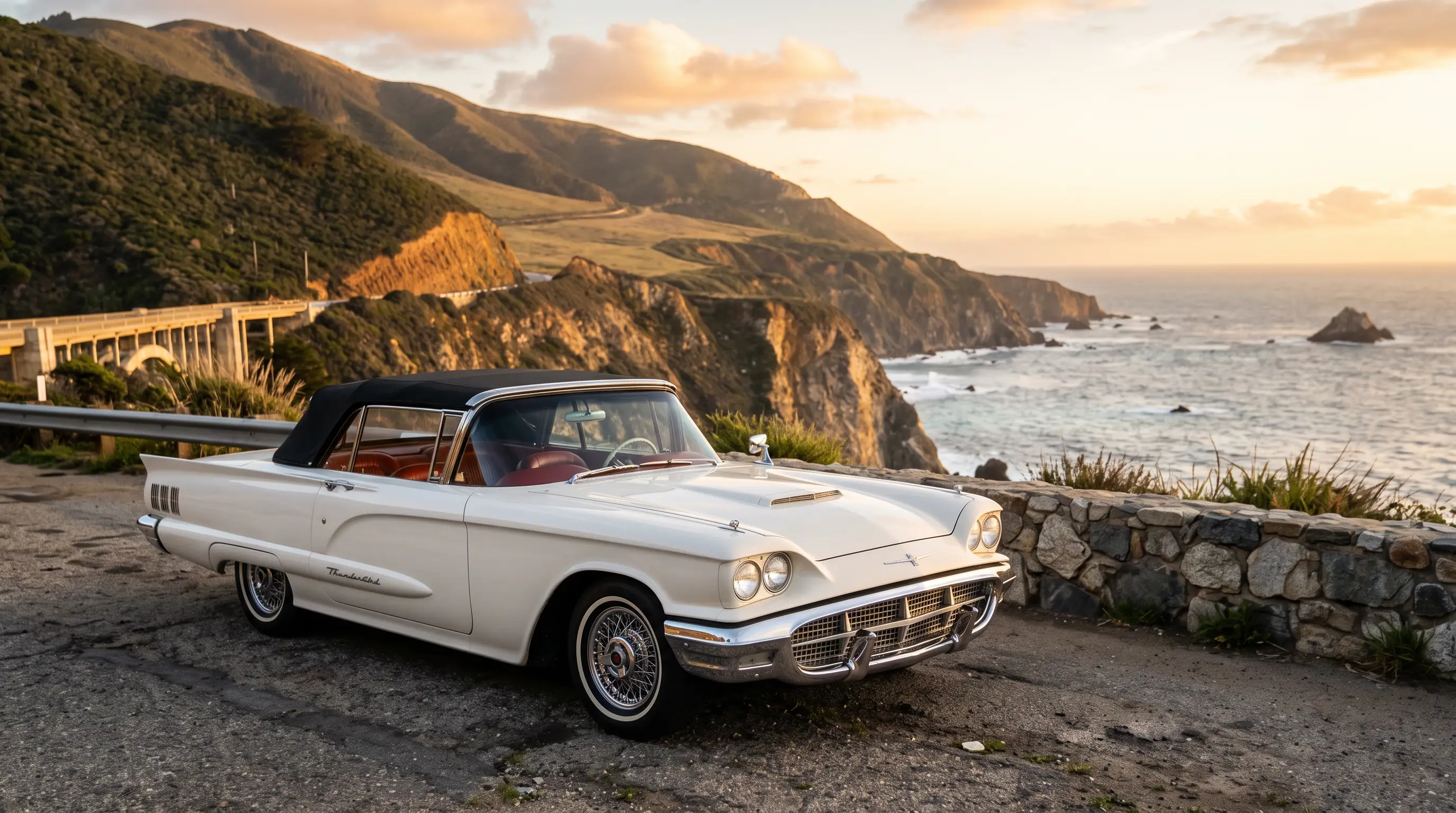
The Thunderbird's most famous appearance came later and darker. In Thelma and Louise, released in 1991, two women flee across the American West in a 1966 Thunderbird convertible painted a pale aqua that the desert light turns almost silver. The car becomes a third character. It carries them, it exposes them, and in the final frame it takes flight. For millions of viewers that turquoise convertible is the Thunderbird, full stop.
It is worth noticing what the filmmakers reached for. They wanted a car that read as beautiful and a little vulnerable, open to the sky, unmistakably from an earlier and more hopeful decade. A mid-1960s Thunderbird convertible did all of that at a glance. The car's whole design language, low and wide and chrome-bright, was built to photograph like a promise, and the movie spent two hours turning that promise inside out.
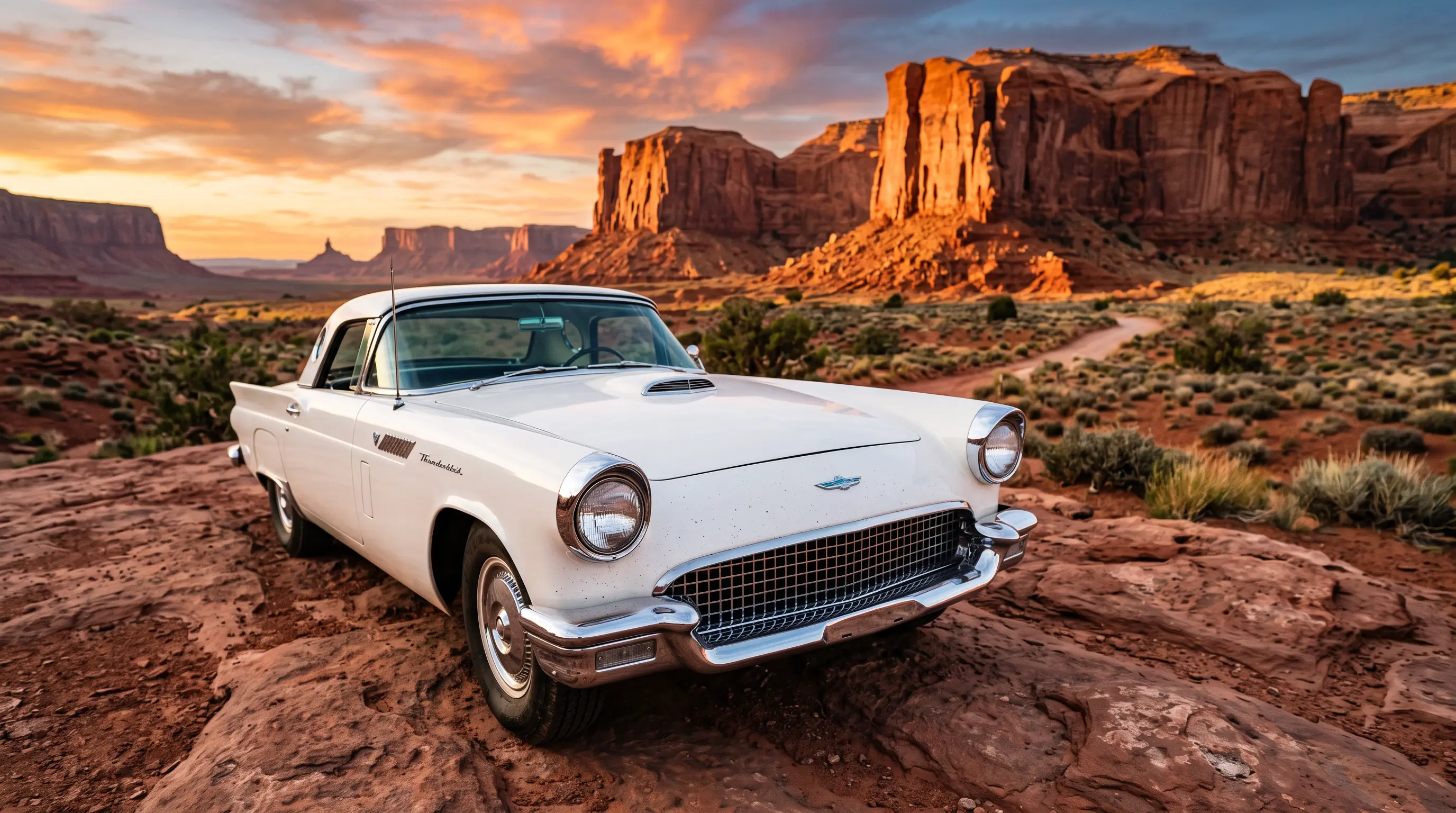
"You can tell how deeply a car has soaked into the culture by whether people picture a scene before they picture a spec sheet. Say Thunderbird and someone sees a white coupe under streetlights, or an aqua convertible against red rock. That is not marketing. That is memory, and it is the rarest thing a car can own."
- Nora Beckett
The culture of color
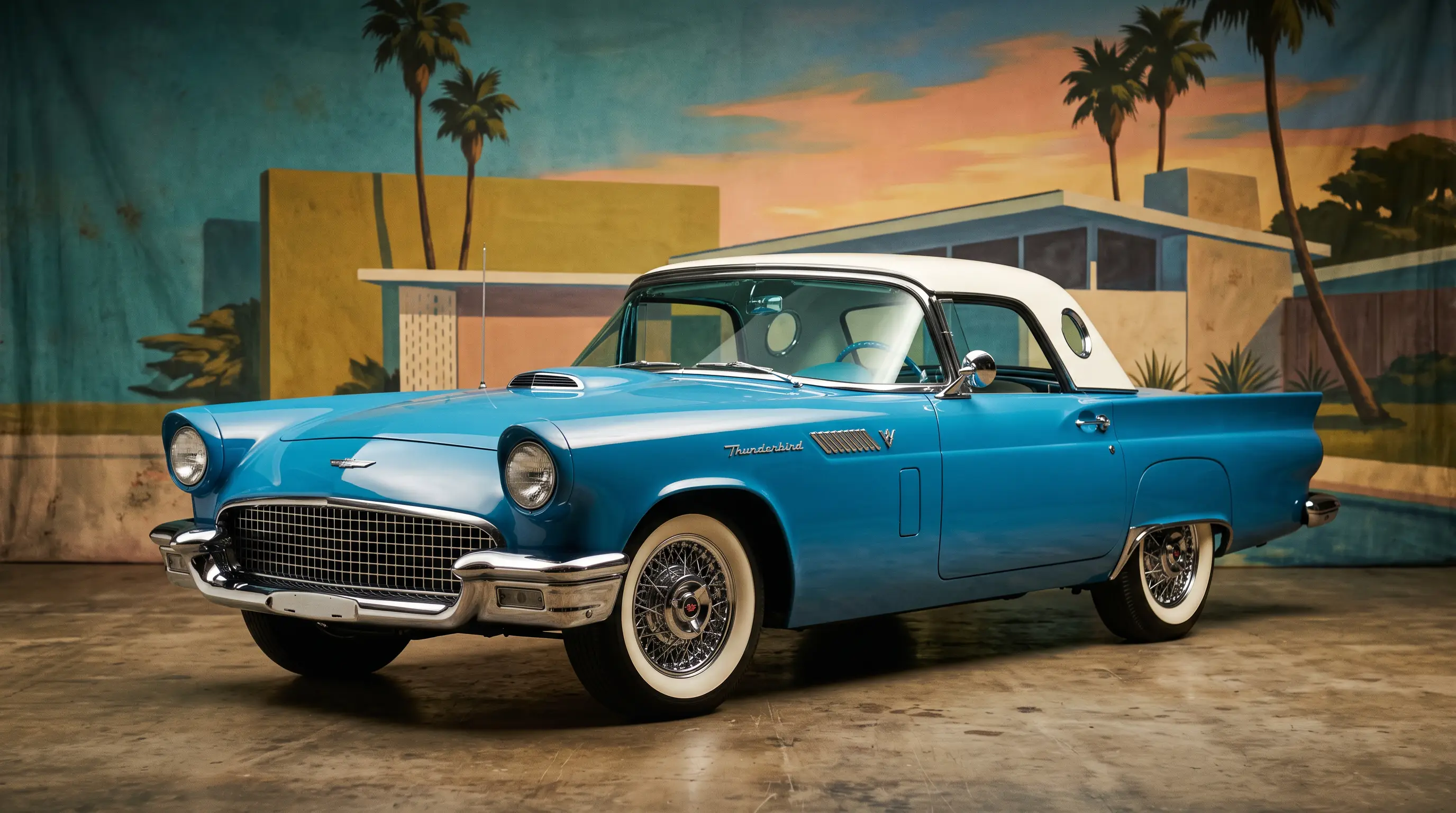
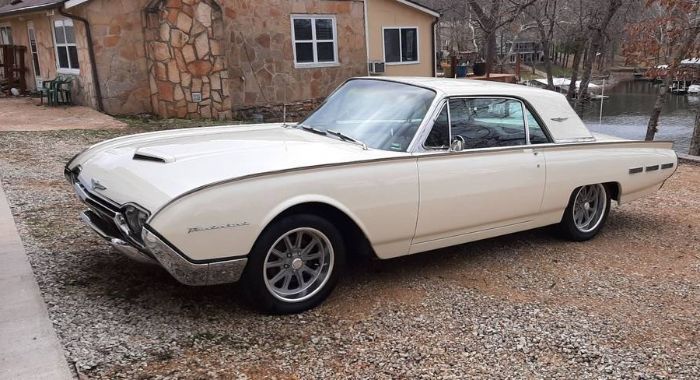
Some of the Thunderbird's romance lived in its paint. The 1950s and early 1960s cars came in colors with names that read like a diner menu and a sunset had a child. Fiesta Red. Colonial White. Thunderbird Blue. Peacock. Corinthian White. Ford understood that a personal luxury car sells on the same shelf as perfume, and it named the colors accordingly.
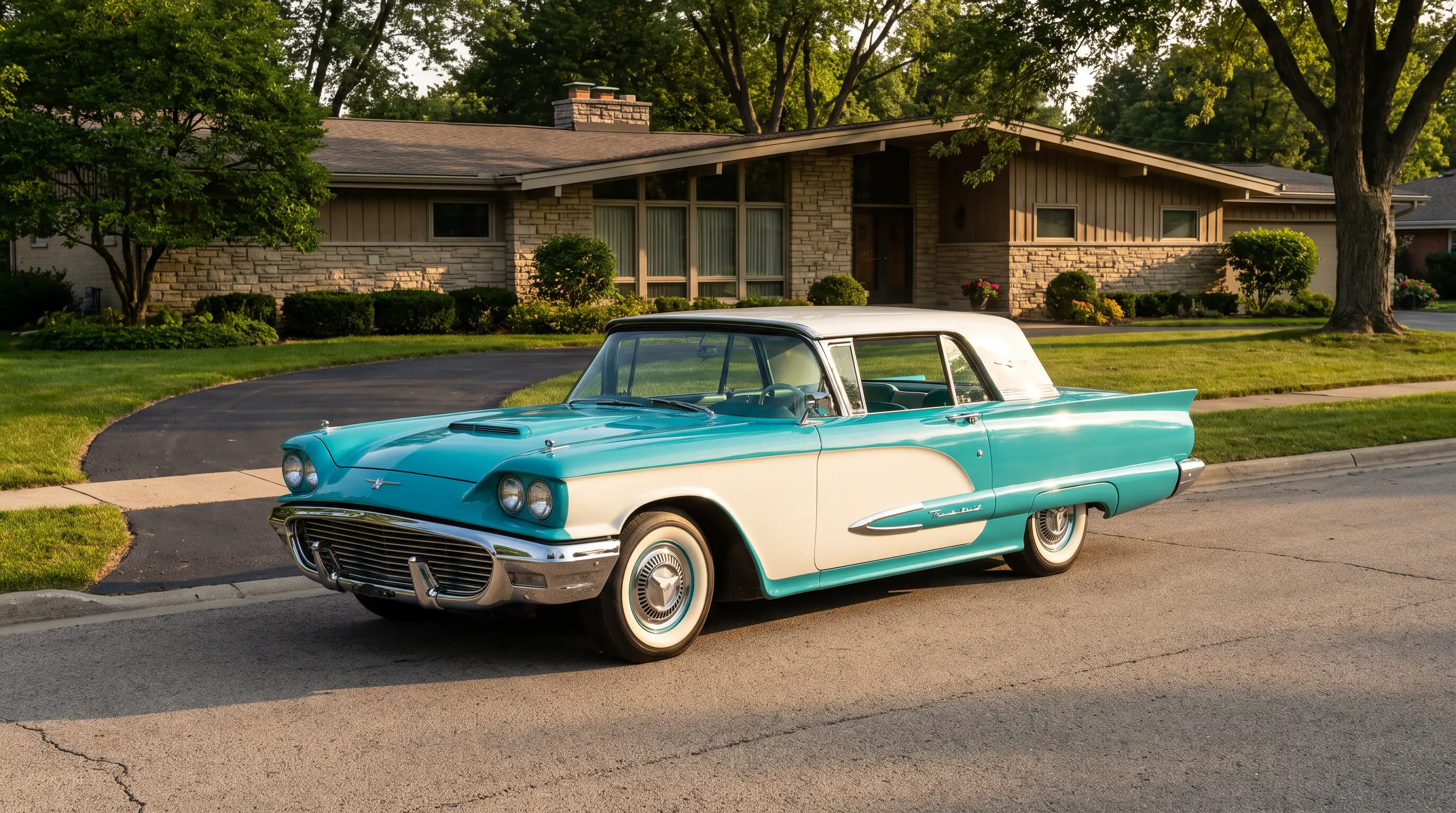
Two-tone combinations turned the cars into rolling illustrations. A white roof over a coral body, a soft green paired with cream, these were choices as personal as clothing, and they said something about the buyer parked at the drive-in. Collectors chase original color combinations today for exactly this reason. A Thunderbird wearing its factory shade is not just correct, it is a small time capsule of what an optimistic American thought looked expensive in 1957.
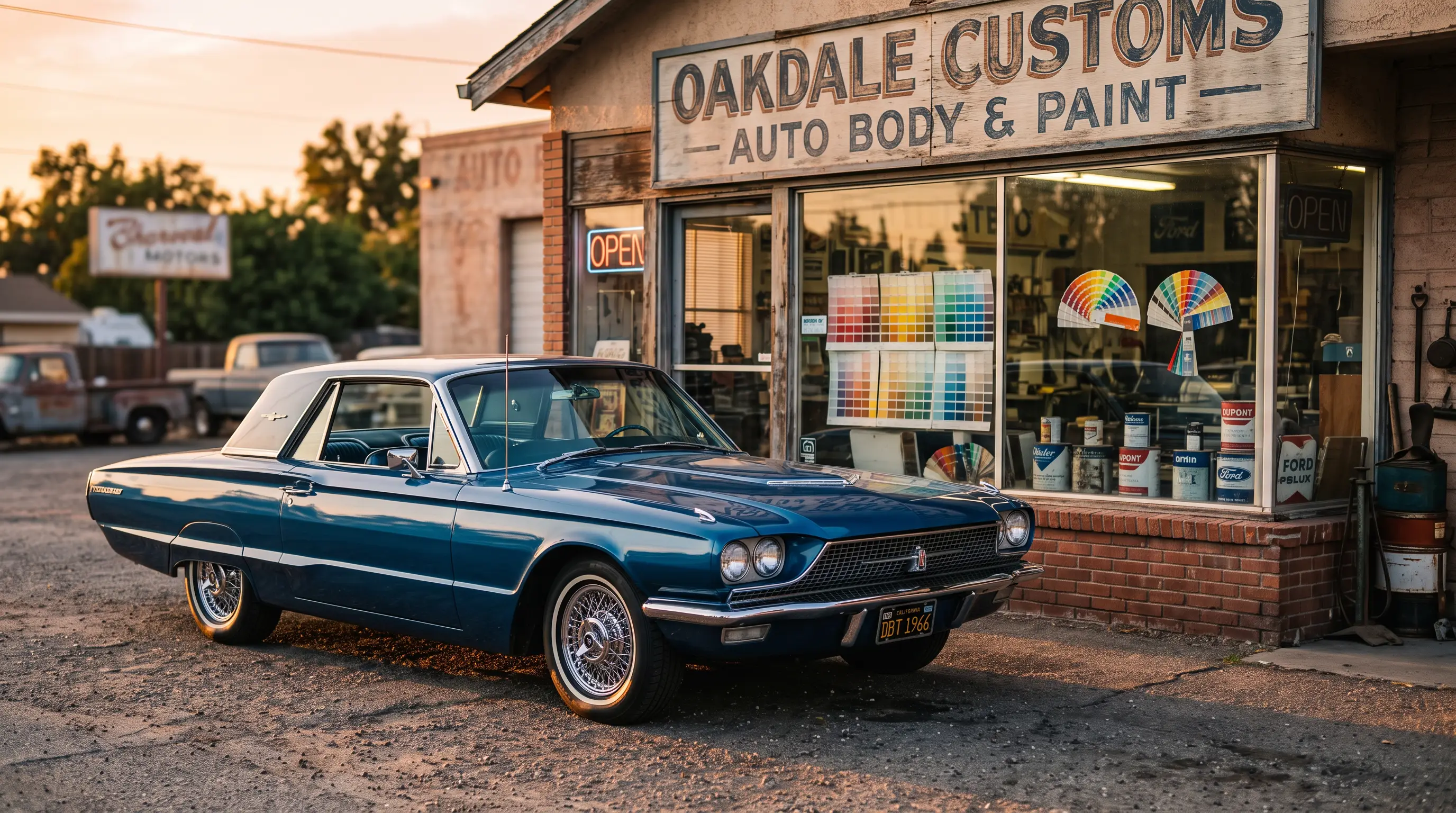
Color also tracked the mood of the country. The pastel confections of the mid 1950s, all sherbet pinks and turquoise and buttery yellows, gave way to deeper, more confident tones as the 1960s arrived. By the time the mid decade convertibles rolled out, the palette had cooled into aquas and dark reds and elegant blacks, the colors of a nation that had traded its postwar giddiness for something more composed. You can almost read the years off a lineup of Thunderbirds by their paint alone, the way you can date a photograph by the clothes in it.
There is a tenderness in how owners talk about these shades now. People do not say they own a red one. They say Rangoon Red or Candyapple, and they say it the way you might name a color from your grandmother's kitchen. The paint became part of the emotional inventory of the car, one more thread tying a machine to a memory, and it is a large reason a correct original color is worth protecting rather than covering with whatever is fashionable this decade.
| Cultural touchpoint | Thunderbird involved | Why it stuck |
|---|---|---|
| American Graffiti (1973) | White 1956 two-seater | The unreachable dream car of the whole film |
| Fun, Fun, Fun (1964) | The Beach Boys' borrowed T-Bird | Made the car a symbol of youthful freedom |
| Thelma and Louise (1991) | Aqua 1966 convertible | A third character that takes flight in the final frame |
| Period paint names | Fiesta Red, Colonial White, Peacock | Sold the car like a luxury object, not transport |
The word that became a promise
Consider the name itself. Ford borrowed the Thunderbird from Native American mythology, a great winged spirit that beats its wings to make thunder, and then spent years teaching the public to hear glamour in it instead. A stylist named Alden Giberson is usually credited with the suggestion, and he could not have known he was handing the company a word that would outlast every version of the car it was bolted to. Say the name aloud. It sounds like weather and power and something a little untamed, which is a great deal to ask of two syllables and a chrome badge.
The advertising leaned into that from the start. Ford did not sell the first Thunderbird as transportation. It sold a personal car, a phrase the company coined to separate the Thunderbird from ordinary sedans and from Chevrolet's more athletic Corvette. The pitch was never about how many people it held or how much it could tow. It was about who you became when you sat in it. That framing seeped into everything downstream, the films and the songs and the wistful way people still talk about the ones that got away.
You can see the same instinct in how the two-seat cars are remembered against the Corvette. Chevrolet built a sports car and asked you to drive it hard. Ford built a boulevard companion and asked you to be seen in it. Both cars survive as icons, but they occupy different rooms in the American imagination, and the Thunderbird's room is softer, later in the evening, with better music playing. That is a marketing decision from 1955 that never wore off.
Why the image outlived the car
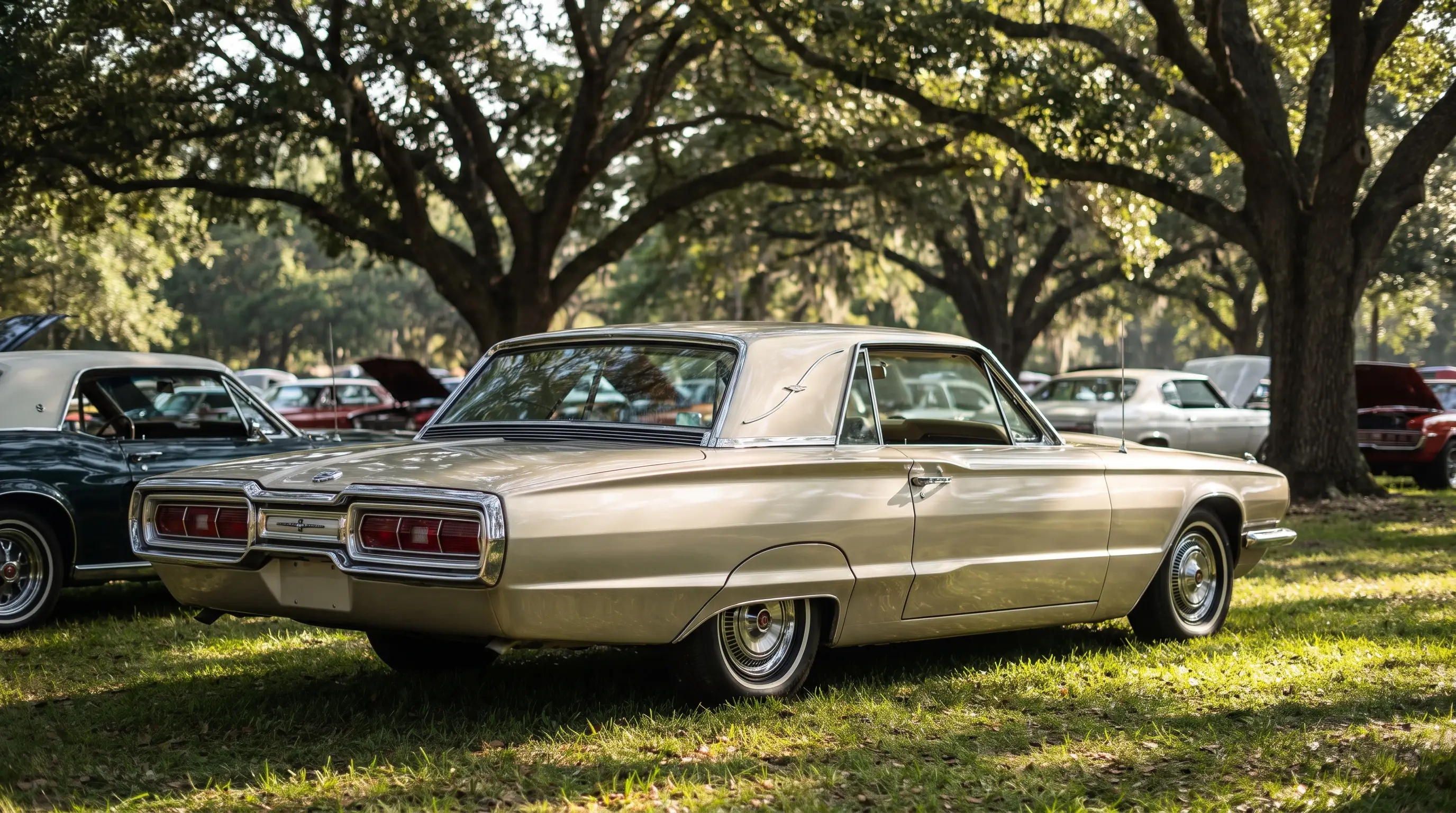
The classic Thunderbird stopped being built in its recognizable form long ago, but the picture it planted has proven far more durable than the sheet metal. Ask someone under forty to describe a Thunderbird and you are as likely to get a movie still as a model year. That is unusual. Most cars are remembered as machines. The Thunderbird is remembered as a mood.
Part of the reason is that Ford kept changing the car while the culture kept the name still. Coupe, convertible, four-seater, four-door, the shape shifted every few years, but the songs and the films and the paint chips held the meaning in place. The car was a moving target and the myth was a fixed point, and the myth won. If you want the full sweep of how the physical car evolved beneath that steady image, our our ford thunderbird retrospective lays out every generation in order.
The one that pulls away
The Thunderbird earned its place in American memory not by winning races but by being the car in the frame that you never quite reach, the white coupe turning a corner, the aqua convertible catching the last of the light. That is a strange kind of immortality for a mass-produced Ford, and it belongs to very few cars. The two-seat cars that started all of it carry the heaviest share of that romance, and they are worth a closer look if you want to keep exploring. When the picture finally gets under your skin, there is usually a classic Thunderbird for sale waiting to become the next scene someone remembers.
Sources and notes
Related Reading
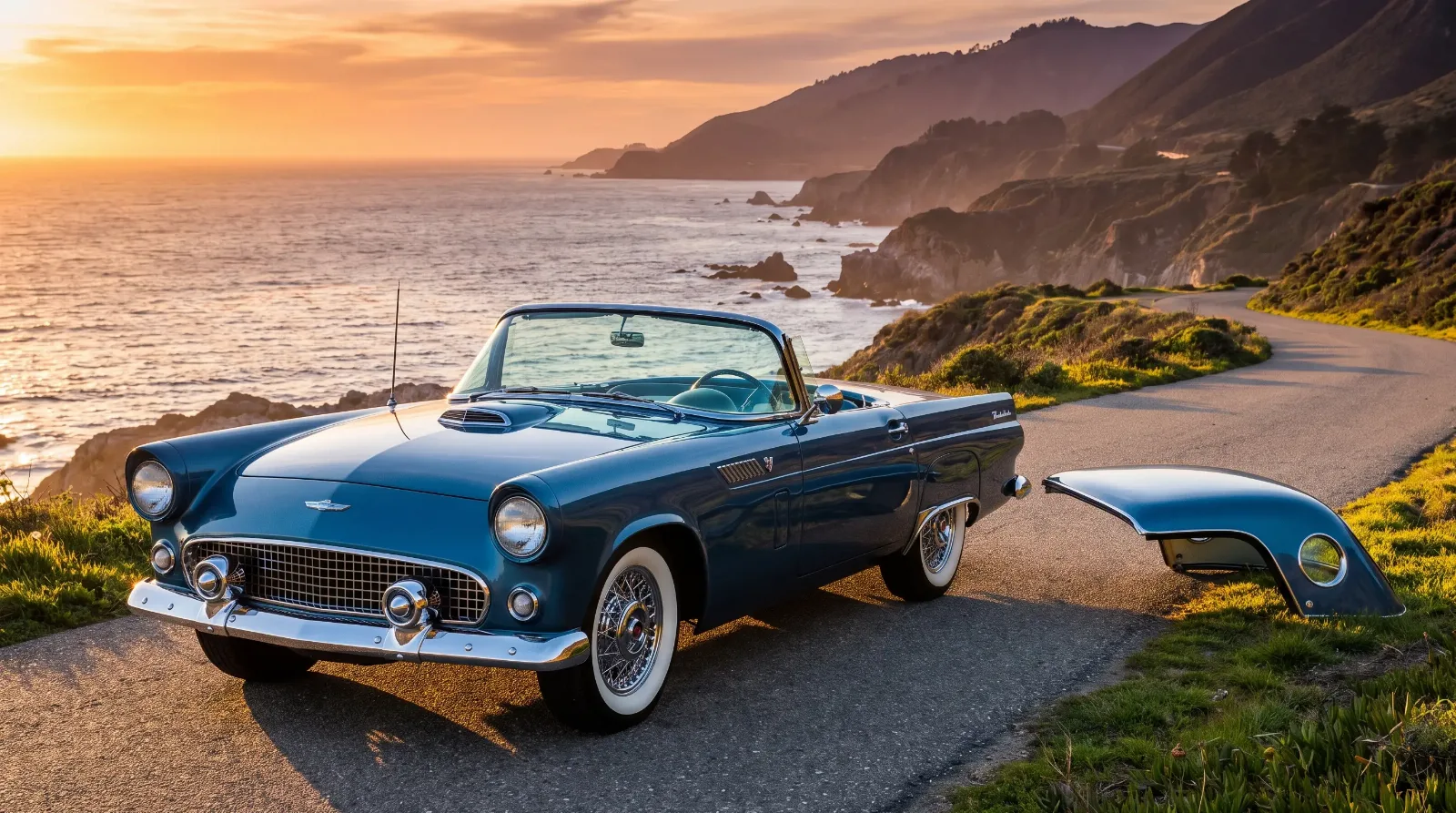
Article
The Ford Thunderbird Story: How Ford Invented the Personal Luxury Car
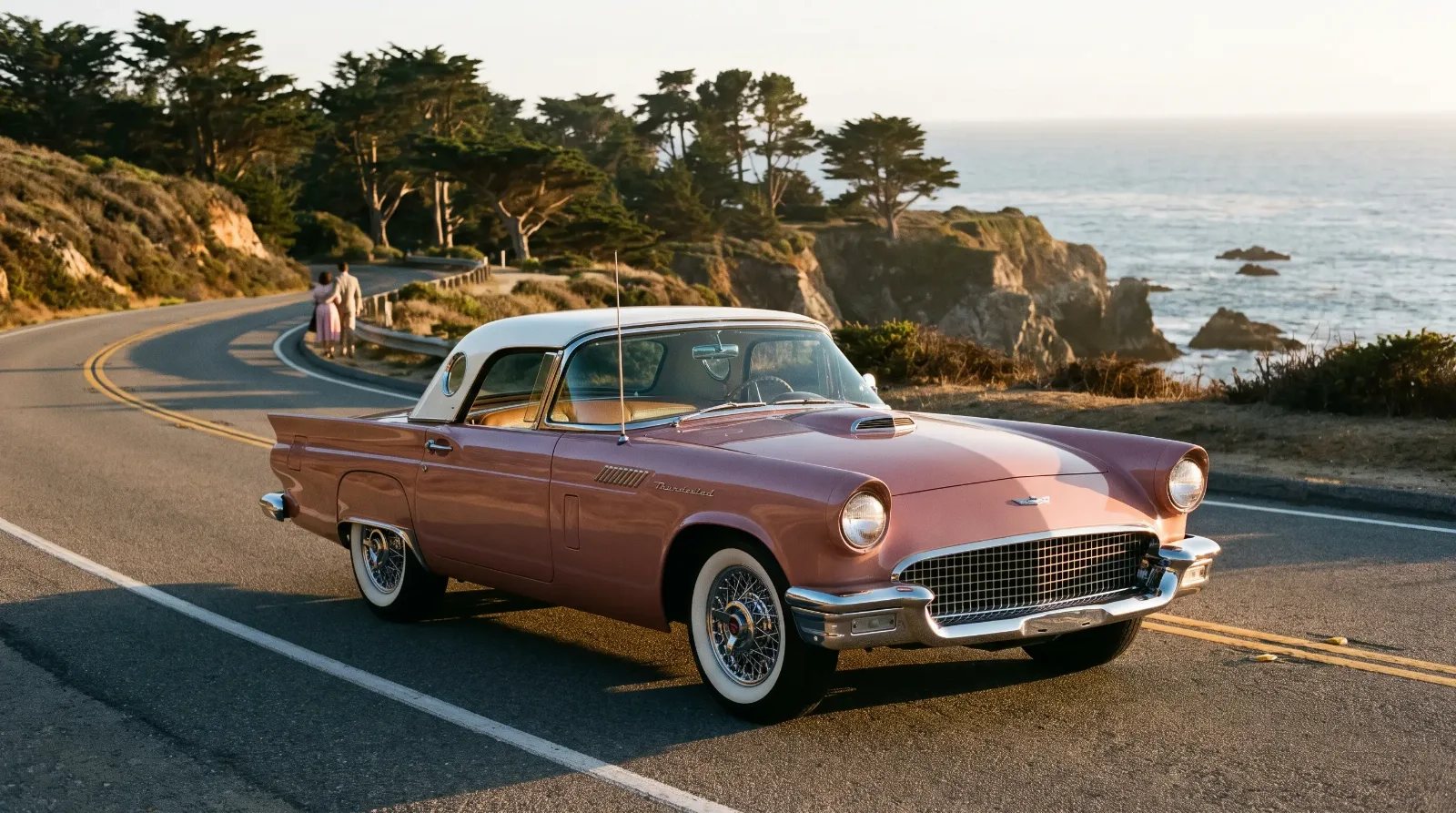
Article
The Two-Seat Thunderbird (1955-1957): Ford's Answer to the Corvette
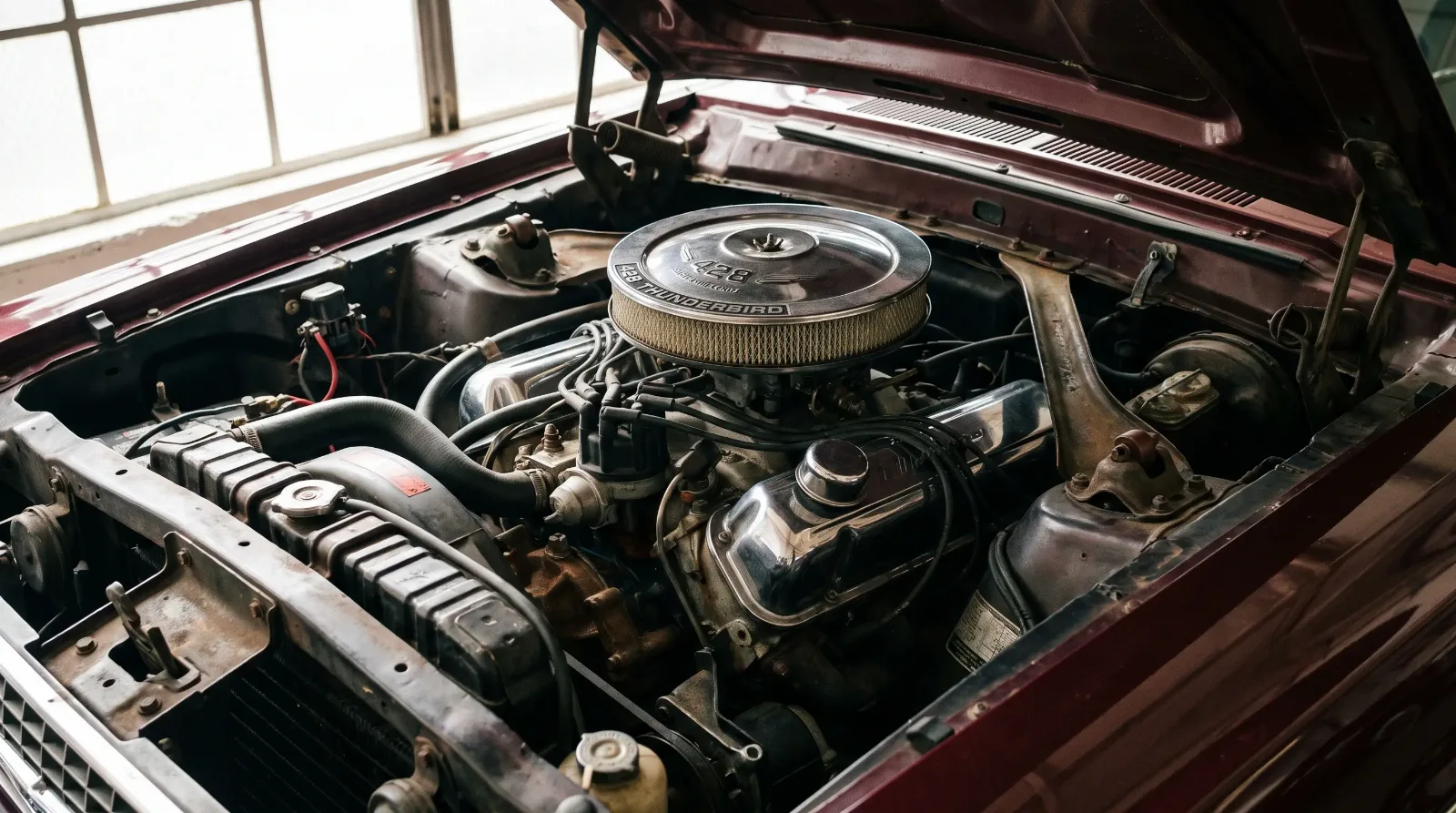
Article
Thunderbird Engines: From the Y-Block to the 428 Big Block
Article
American Graffiti: The White 1956 Thunderbird and the Mystery Blonde
Article
Thelma and Louise: The 1966 Thunderbird Convertible
Article
The Beach Boys' Fun Fun Fun and the Thunderbird
Article
Suzanne Somers and the Ghost Thunderbird
Article
Thunderbird Color Names as Culture
Article
Celebrity Thunderbird Owners Through the Decades
Article
The Thunderbird Name and Logo: The Native American Myth
Article
The Thunderbird in Song: A Six-Decade Playlist
Article
Selling the Dream: Thunderbird Advertising History
Article
Two-Tone Paint and Thunderbird Style
Article
The Vintage Thunderbird Club and the Collector Community
Article
How the Thunderbird Became an American Icon
Article
Marilyn Monroe and Her 1956 Thunderbird
Article
The Most Expensive Thunderbirds Ever Sold at Auction
Have a
Ford Thunderbird
for Sale?
Reach thousands of serious classic car collectors across the US.
Sell It Here →
Are You a Classic Car Dealer?
List your full inventory and connect with targeted classic car buyers.
Join as a Dealer →
#pop culture
#car culture
#ford thunderbird
#american graffiti
#beach boys
#classic car color
#Thelma and Louise

About the author
Nora Beckett
Automotive features writer and photographer who tells the human stories behind the cars, from show fields to cross-country road trips.
Related Listings - Ford Thunderbird




Comments
Be the first to comment on this article.