
The 1956 chevy bel air has spent most of its life being described as the middle child, the year stuck between the clean debut of 1955 and the finned icon of 1957. That framing is convenient, and it is also wrong in a way worth correcting. The 1956 car was not a placeholder. It was a deliberate facelift of a successful design, it carried the highest-output versions of the small-block yet offered, and its production records show a car selling in enormous numbers to a public that had clearly decided the Bel Air was the Chevrolet to own.
Car Features
10 min read
The 1956 Bel Air: The Underrated Tri-Five
Dismissed as the middle child, the 1956 Bel Air carried the strongest small-blocks yet and a new full-width face. The record corrects the myth.
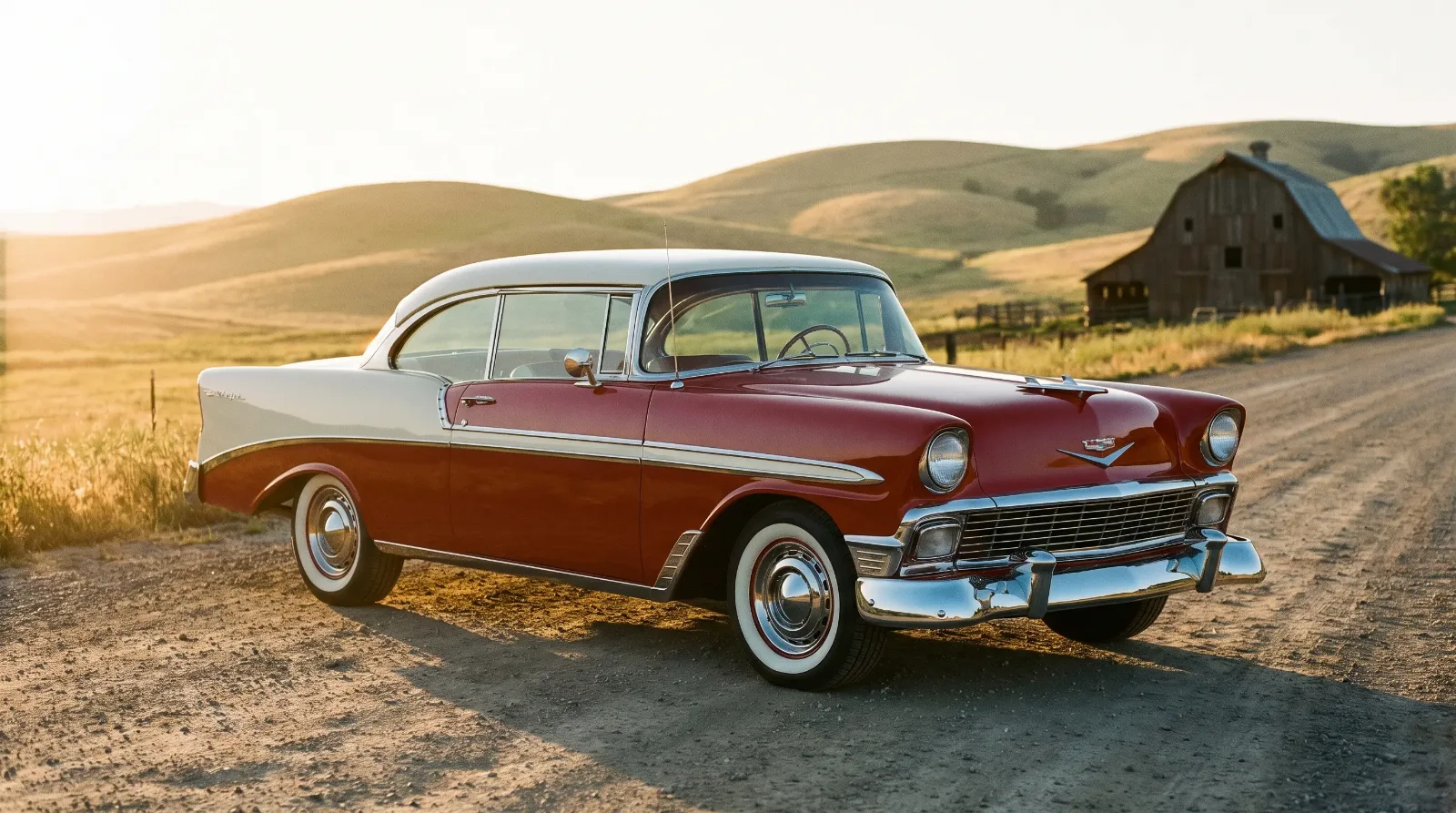
What actually changed for 1956
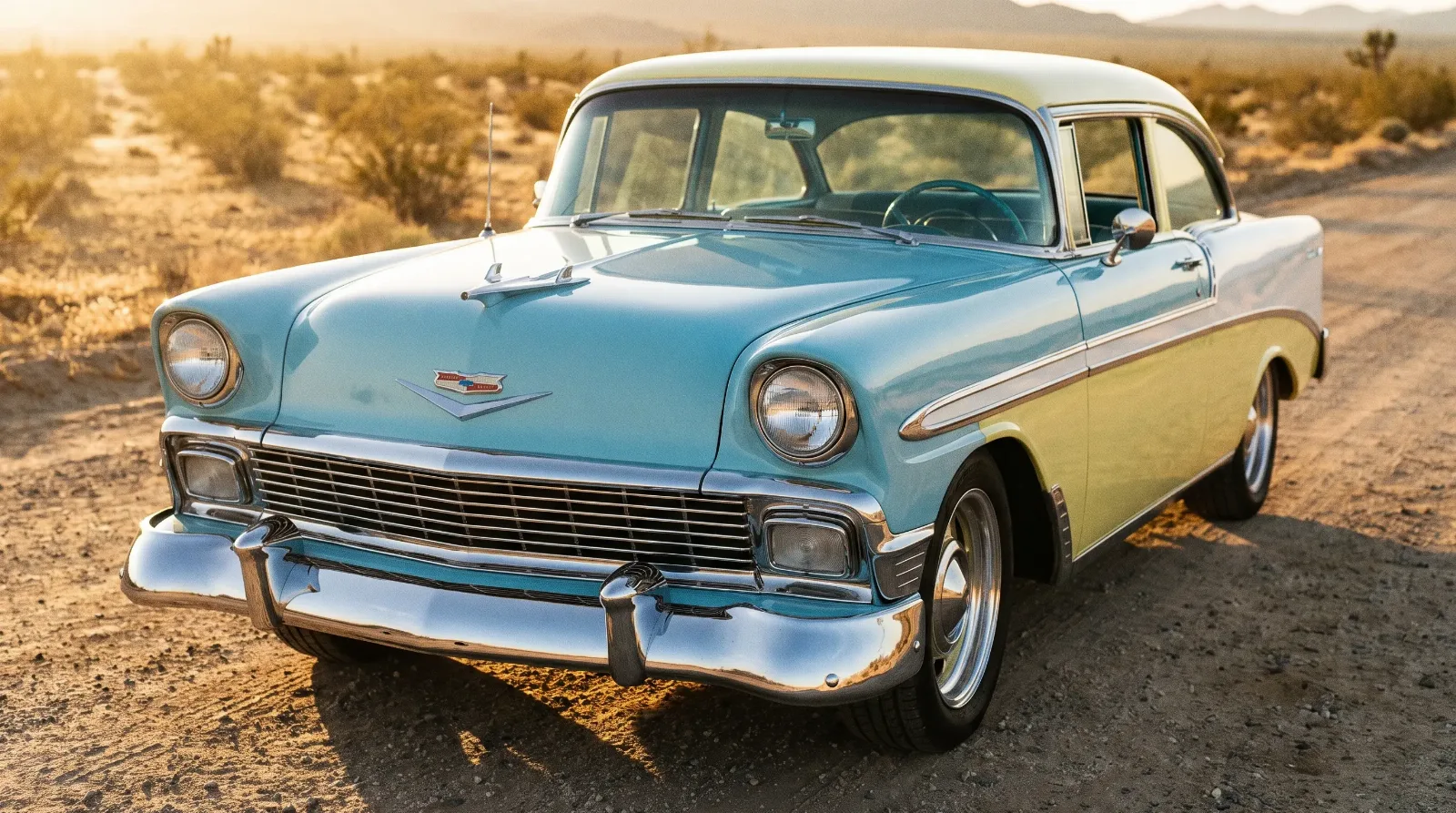
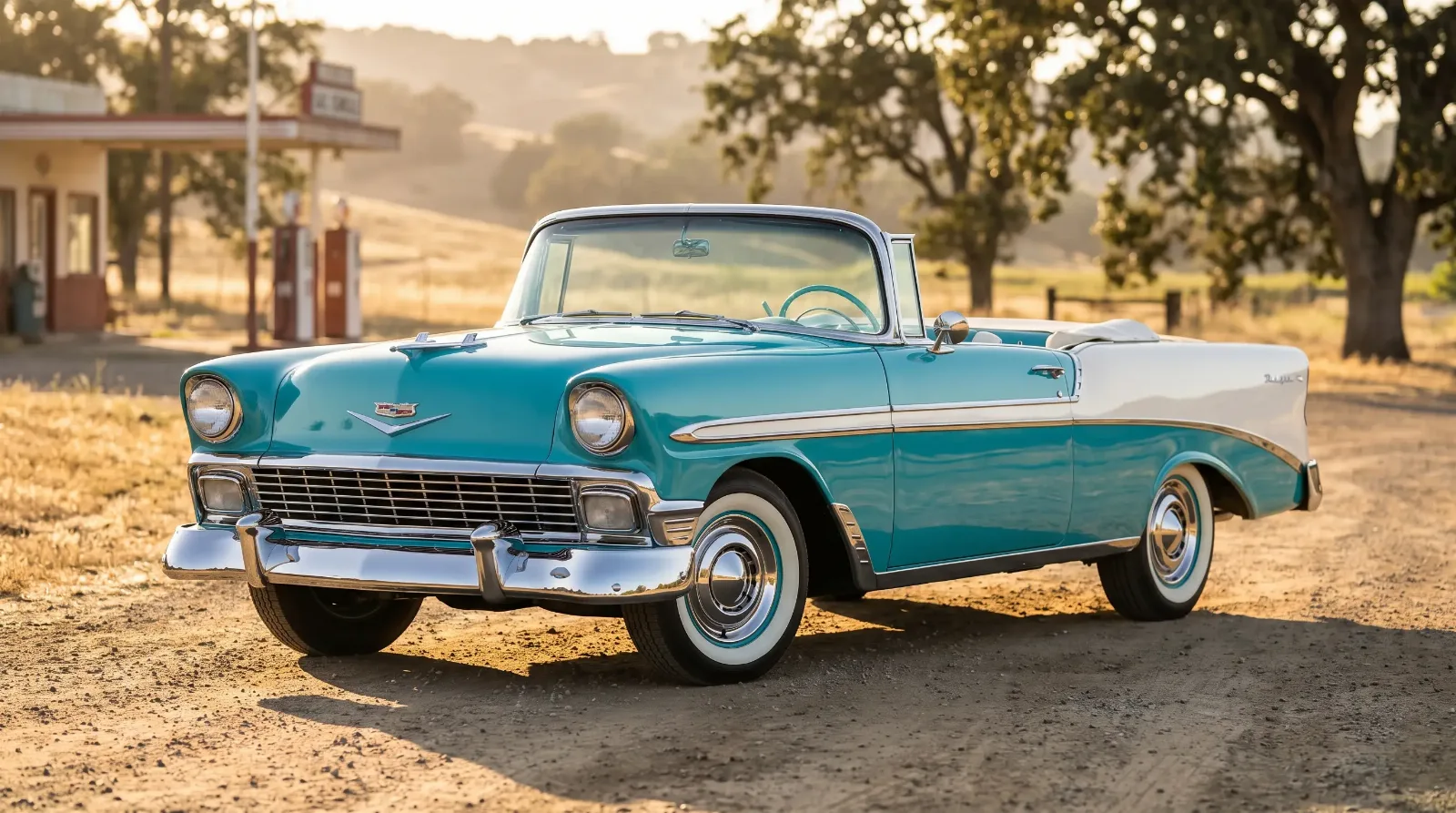
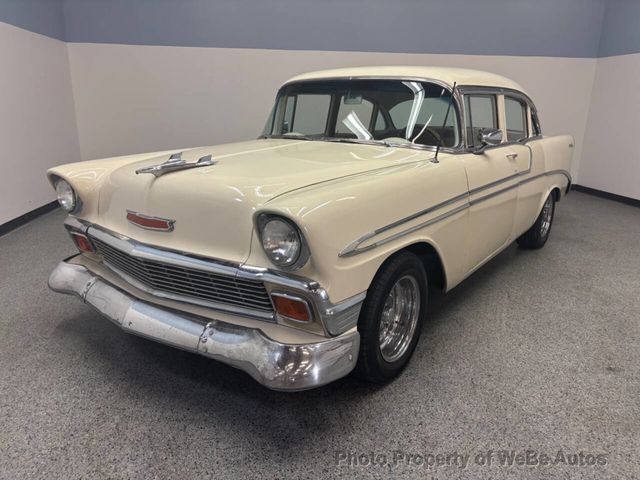
Chevrolet did not redesign the car for 1956. It refreshed it, and the changes were more thorough than the "just a facelift" shorthand suggests. The most obvious revision was the front end. The 1955 car used a narrow grille flanked by body-colored panels, a look some buyers found too plain for a top-line automobile. For 1956 the stylists fitted a full-width grille that stretched across the entire nose, giving the car a wider, more substantial face that matched the pricier competition.
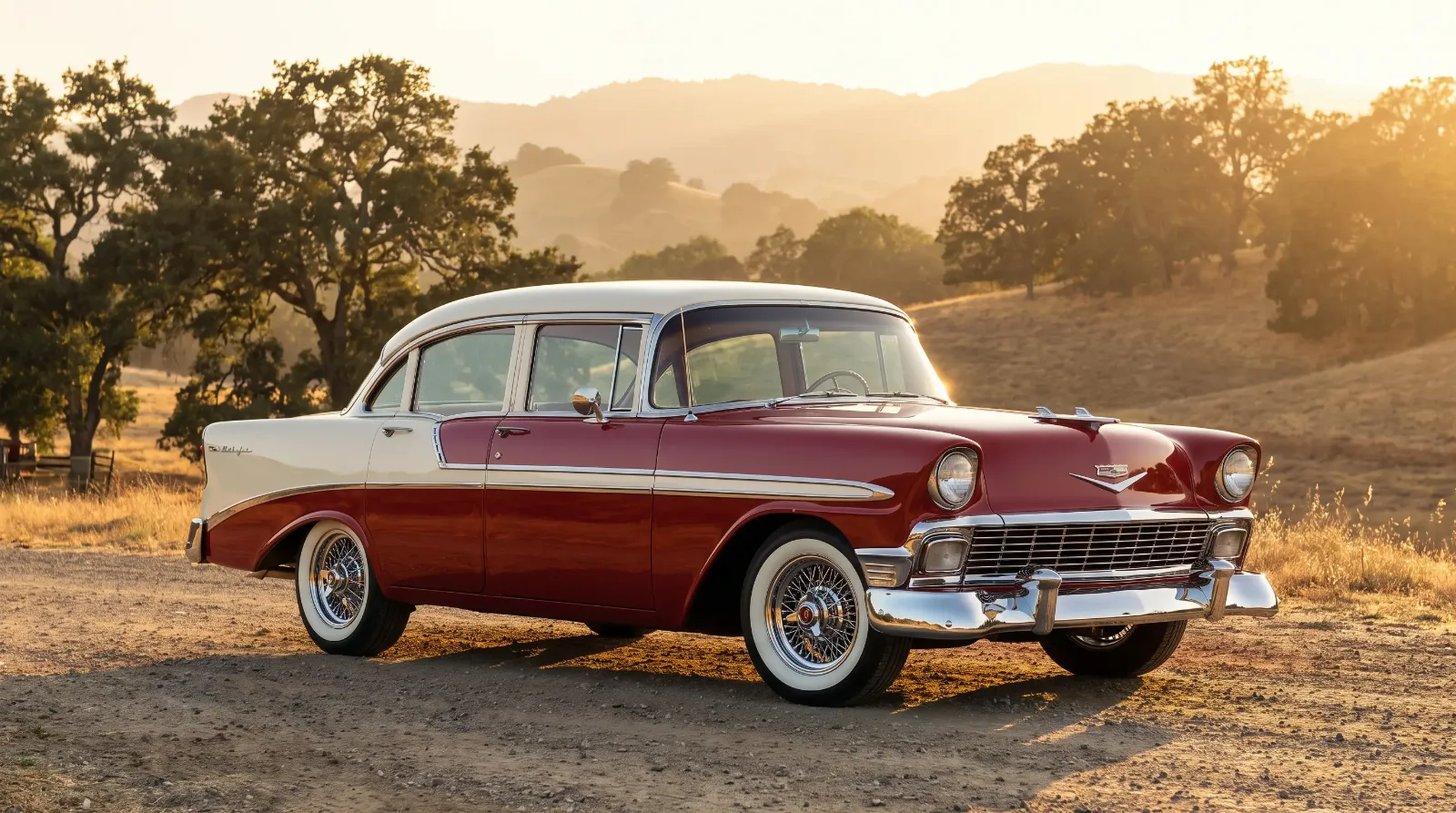
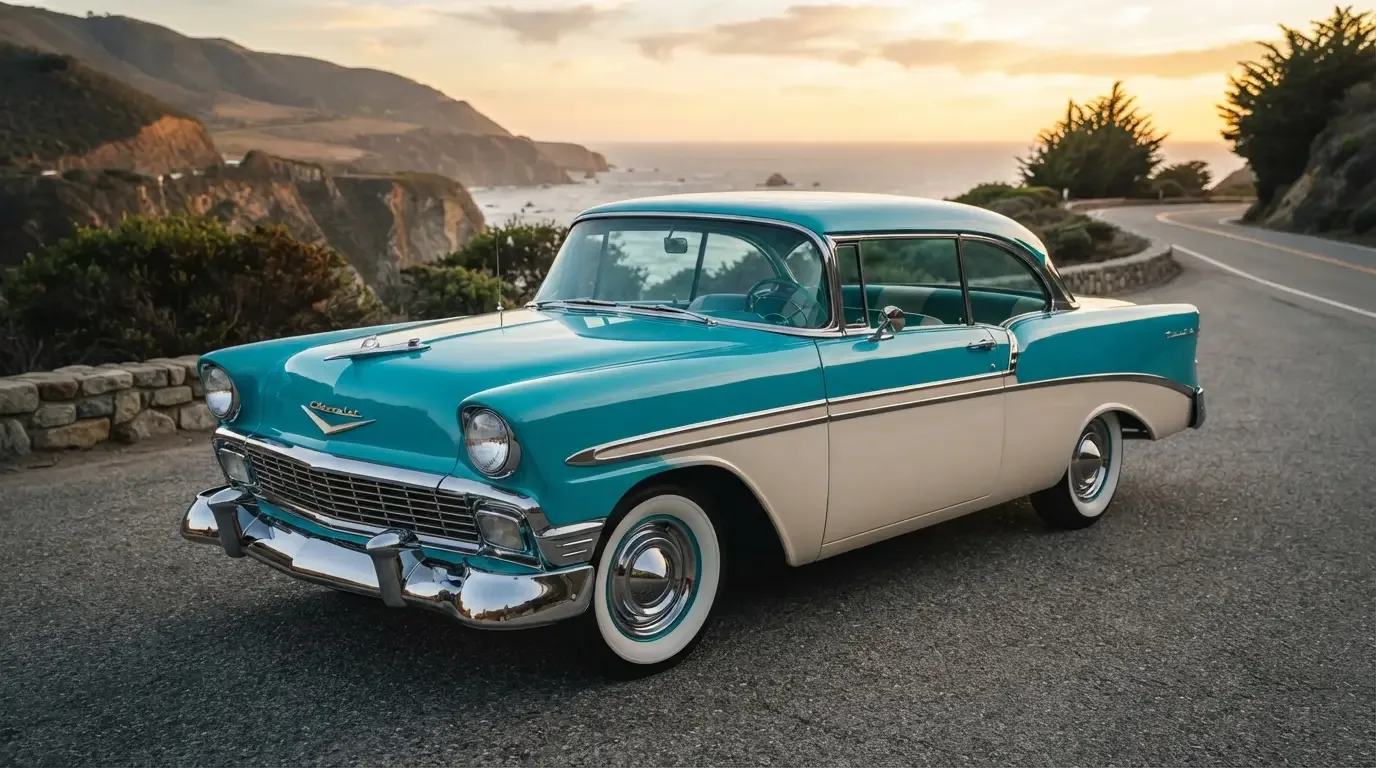
The side trim was reworked as well. The 1956 Bel Air adopted a two-tone treatment with a chrome spear that swept back from the front and turned down along the rear fender, creating the panel that two-tone and even three-tone paint schemes filled. Front and rear, the bumpers and light treatments were revised, and the taillights on the two-door models incorporated a design detail that would carry forward. None of this was radical, but taken together it gave the 1956 a distinct identity that a careful eye reads instantly against its neighbors.
The engines: more power than the year gets credit for
Here is where the middle-child narrative falls apart. The 265 cubic inch small-block returned for 1956, but Chevrolet pushed it harder than it had in 1955. The Power Pack four-barrel cars gained output, and by the top of the range the 265 was rated at 225 horsepower in its top dual four-barrel form with hydraulic lifters, a meaningful jump for an engine barely a year old. For a low-priced car, those figures were remarkable, and they were achieved before the more famous 283 even existed.
The inline six remained available for buyers who wanted economy over acceleration, but the story of 1956 is the continued rise of the V8. Chevrolet had discovered that customers would pay to make their affordable car quick, and it fed that appetite. The engineering direction set in 1956, chasing more power from the same basic block, points directly at what the division would do the following year. Buyers tracing the mechanical thread across the decade will find the fuller context in our our chevy bel air retrospective, which sets each year against the whole.
Reading the production numbers
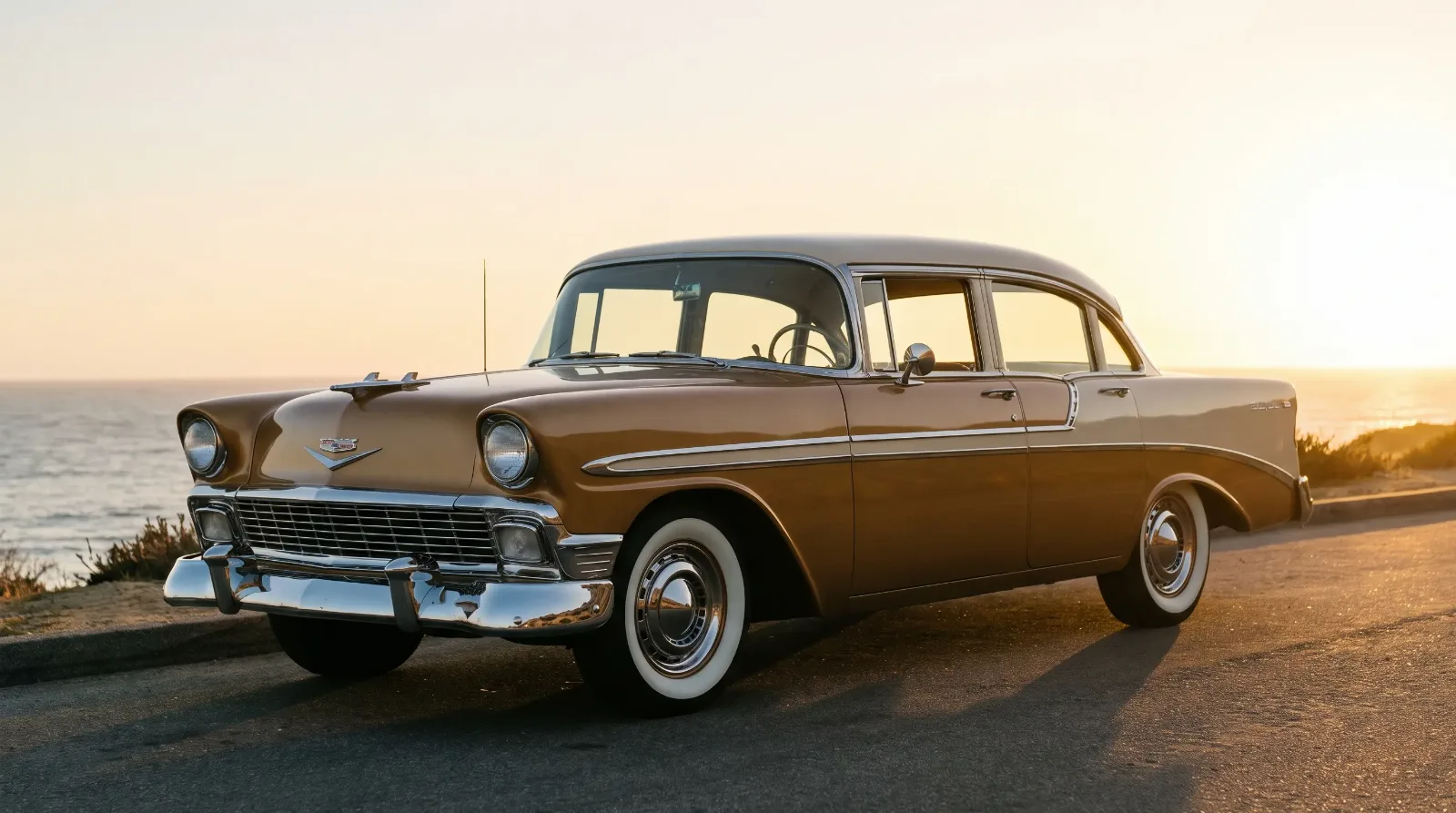
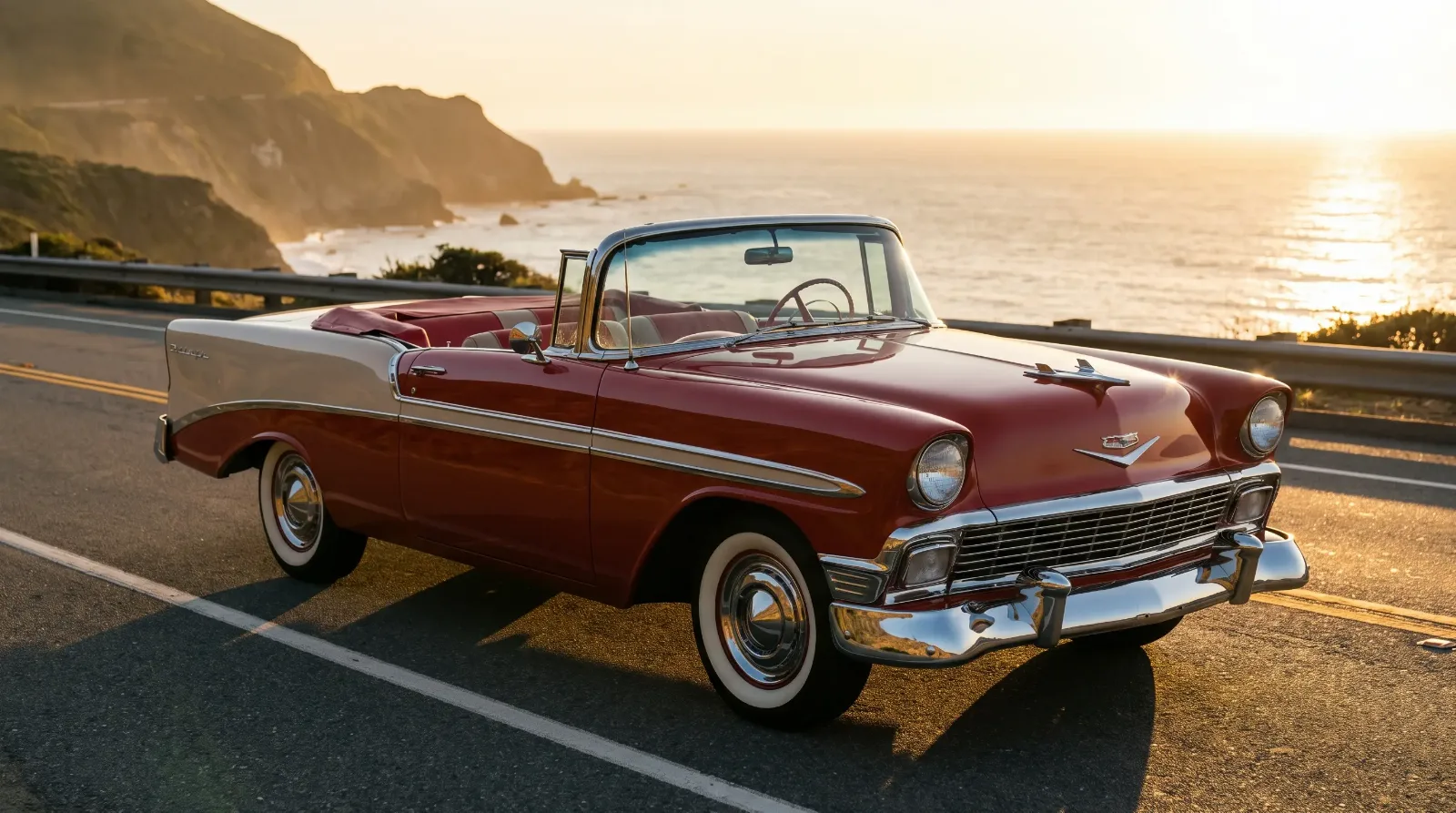
Chevrolet built the Bel Air in every mainstream body style for 1956: two- and four-door sedans, the Sport Coupe two-door hardtop, a new four-door hardtop called the Sport Sedan, the convertible, and the Nomad wagon. The four-door hardtop was the notable addition, giving families the pillarless look with the practicality of rear doors, and it sold well enough to prove there was appetite for the format.
The overall picture from the records is of a car near the peak of its commercial power. Chevrolet moved these cars in the hundreds of thousands across the range, and the Bel Air series accounted for the richest slice of that volume. What the raw numbers hide, and what matters to collectors now, is the split between the desirable body styles and the ordinary ones. Convertibles and Nomads were built in comparatively small quantities, while four-door sedans poured out in volume, and that original production balance shapes today's values as much as any restoration ever could.
| Attribute | 1956 Chevrolet Bel Air |
|---|---|
| Design status | Facelift of 1955 body |
| Key styling change | Full-width grille, revised side trim |
| New body style | Sport Sedan four-door hardtop |
| Top V8 | 265 cu in, 225 hp (dual four-barrel, hydraulic lifters) |
| Six-cylinder option | 235 cu in Blue Flame |
| Wagon variant | Nomad two-door hardtop wagon |
Correcting the record on the middle year
The persistent misconception is that 1956 is the year to skip, the compromise between two better cars. The people who actually live with these cars tend to disagree, and the reasons are practical. The 1956 has the full-width grille that many find better resolved than the 1955 front, and it lacks the tailfins that some buyers consider excessive on the 1957. It sits in a stylistic sweet spot, more finished than the first car, less flamboyant than the last.
There is also a value argument. Because the 1957 draws so much attention and money, the 1956 has historically been the more attainable Tri-Five, often offering a similar driving experience and much of the same charm for less. That gap has narrowed as the whole category has climbed, but the 1956 still tends to represent the sensible buy for someone who wants the era without paying the premium the final year commands. A buyer weighing the differences between years may also want to read a related story on the car that followed, which we cover in a related story.
"People repeat that 1956 is the forgotten Tri-Five as if it were settled fact. Look at the build records and the power ratings and you see a car that outsold most of its rivals and carried the strongest engines Chevrolet had yet built. Forgotten is a marketing word, not a historical one."
- Tom Ramirez
The four-door hardtop and a changing market
The single most telling addition for 1956 was the four-door hardtop, the body style Chevrolet called the Sport Sedan. It answered a specific and growing demand. Families wanted the clean pillarless look of the two-door hardtop but needed the practicality of rear doors for children and passengers, and until 1956 the Bel Air buyer had to choose one or the other. The Sport Sedan gave them both, with the same absence of a fixed post between the side windows that made the hardtop feel so open.
The commercial logic behind that decision reveals how the market was maturing. In the early part of the decade a hardtop was a novelty aimed at buyers who wanted style over utility. By 1956 the format had become mainstream enough that Chevrolet could justify a four-door version, betting that plenty of practical family buyers would pay for the look. The bet paid off, and the four-door hardtop became a fixture of the range for years. For the collector, the Sport Sedan occupies an interesting position now. It carries genuine period significance as the year the format arrived, yet it has never commanded the money the two-door hardtop does, which makes it one of the more sensible ways to own an authentic piece of the era.
Trim, color, and the two-tone era
The 1956 arrived at the height of Detroit's love affair with two-tone and even three-tone paint, and the Bel Air's side trim was designed to frame it. The chrome spear created a defined panel that factory schemes filled with contrasting colors, and the period color charts read like an inventory of postwar optimism. This was a car meant to be seen, and the color combinations were part of how it sold.
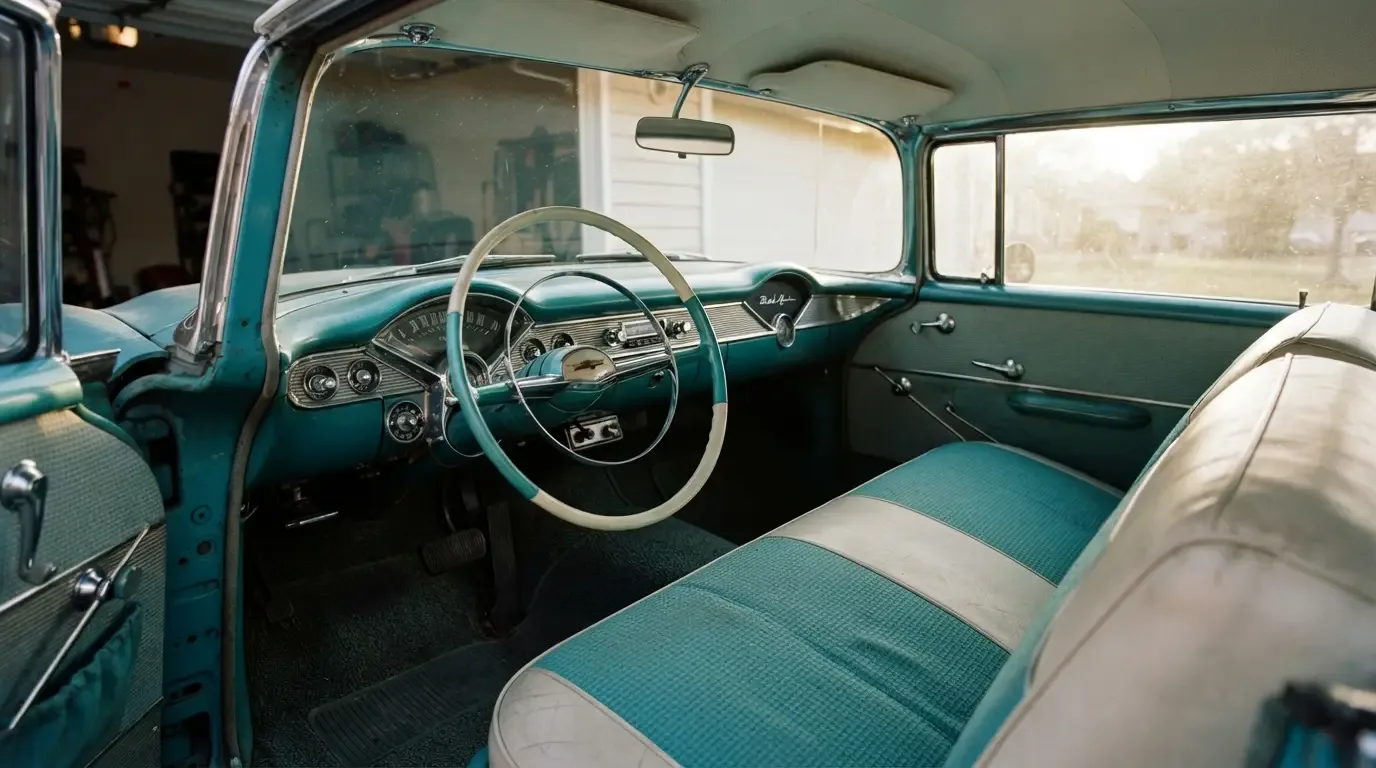
Inside, the Bel Air continued to justify its top-of-range position with richer upholstery, more chrome, and trim details the cheaper One-Fifty and Two-Ten cars did without. For collectors, matching the interior and paint to the original factory codes is part of documenting a car properly, and the 1956's wide palette makes that both a challenge and a pleasure. A car wearing its correct period combination tells a truer story than one repainted in whatever looked good at the time.
The competition it was built to beat
The 1956 facelift makes more sense when you remember what Chevrolet was fighting. Ford had redesigned its full line and was pressing hard in the low-priced field, and the two companies traded the sales lead year to year in a rivalry that dominated the era. The wider, more chrome-laden face Chevrolet fitted for 1956 was a direct response to the perception that the 1955 car, for all its virtues, looked a little plain next to competitors that piled on the brightwork. Detroit in the mid-1950s equated visible chrome with value, and the Bel Air had to look expensive to justify its position at the top of the range.
The power increases served the same competitive purpose. Ford had its own V8, and the horsepower race between the two was public and fierce, fought out in advertising and on the street. By pushing the 265 to higher outputs, Chevrolet made sure the Bel Air could not be dismissed as the slower choice. This context matters for understanding the car as more than a styling exercise. The 1956 was engineered and trimmed to win a specific fight against a specific rival, and it largely did, holding its ground in a market where a single model year's misstep could cost hundreds of thousands of sales. The survivors that reach collectors now are products of that pressure, built by a company that could not afford to coast, and the quality of the result reflects the stakes.
Where the 1956 belongs
Judged honestly, the 1956 Bel Air is not a lesser car sandwiched between two better ones. It is the year the Tri-Five formula matured, with a more confident face, the strongest small-blocks yet, and a full range of body styles including a new four-door hardtop. The records show a car at the commercial peak of the nameplate, and the survivors show a design that has aged with more grace than its reputation admits.
For the collector, the appeal is a genuine Tri-Five experience that has traditionally cost less than the final year, wrapped in styling many people quietly prefer. That combination makes it worth a serious look rather than a passing glance. The car also rewards the buyer who reads history rather than reputation, because so much of the received wisdom about the 1956 was written by people repeating the middle-child line without checking it. The build records, the power ratings, and the survivors themselves argue for a more generous verdict, and the collectors who have owned these cars for years tend to be the ones defending them most firmly. Anyone ready to compare survivors and prices can see what is on offer among the current Airs for sale now and judge the underrated middle year on its own evidence.
Sources and notes
Related Reading
Article
The Chevrolet Bel Air Story: The Car That Made the 1950s
Article
The 1955 Bel Air: The Hot One and the Small-Block Revolution
Article
The 1957 Bel Air: America's Most Beloved Classic
Article
The 1956 Bel Air: The Full-Width Grille
Article
What Changed From 1955 to 1956
Article
The 1956 Bel Air Sport Sedan
Article
The 1956 Bel Air Convertible
Article
The 265 and the New 225 Horsepower
Article
The Hot One's Even Hotter: 1956 Advertising
Article
1956 Bel Air Colors: Reading the Two-Tone Code
Article
The 1956 Bel Air Interior: Documenting an Original Cabin
Article
1956 Bel Air Production: The Factory Record
Article
The 1956 Bel Air at Pikes Peak
Article
Why 1956 Is the Underrated Tri-Five
Article
Collecting the 1956 Bel Air: A Value Breakdown
Have a
Chevrolet Bel Air
for Sale?
Reach thousands of serious classic car collectors across the US.
Sell It Here →
Are You a Classic Car Dealer?
List your full inventory and connect with targeted classic car buyers.
Join as a Dealer →

About the author
Tom Ramirez
Corvette researcher and historian based in Bowling Green, Kentucky. Two decades documenting Corvette production history from original factory records.
Related Listings - Chevrolet Bel Air




Comments
Be the first to comment on this article.