
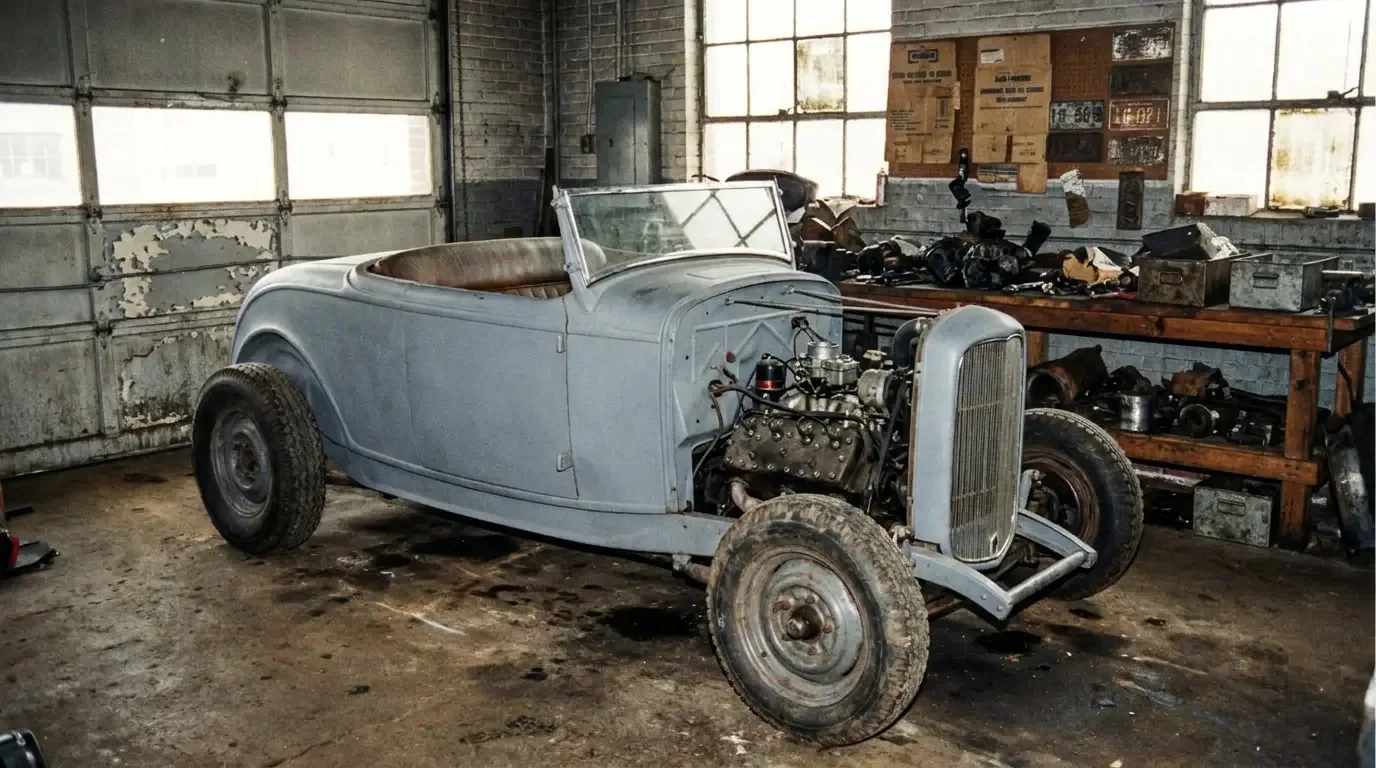
By the end of the 1980s, a strange thing had happened to the hot rod. The cars that started as backyard specials built by kids with more nerve than money had turned into six-figure showpieces. Billet aluminum wheels. Flawless candy paint sprayed in climate-controlled booths. Interiors stitched tighter than a new sedan. Beautiful, expensive, and hauled to shows on enclosed trailers so the tires never touched a real road. Somewhere in a Southern California garage, a group of builders looked at all that polish and decided they wanted no part of it. What came out of that reaction is the rat rod, and its beginning has more to do with attitude than with any single car.
Car Features
6 min read
The Origins of the Rat Rod
How the rat rod grew from a late-1980s and 90s reaction against pricey trailer-queen street rods and the traditionalist revival that followed.
The trailer queen problem
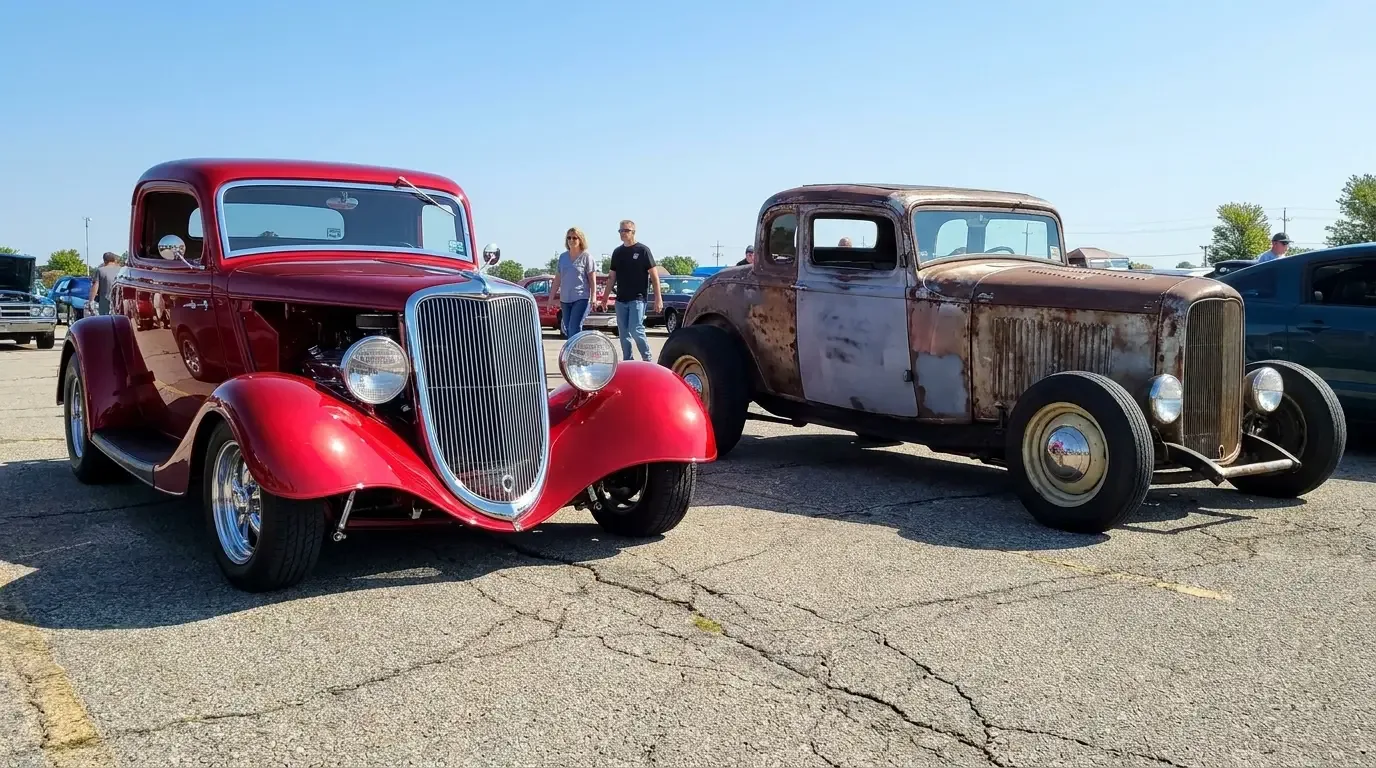
To understand where the rat rod came from, you have to understand what people were reacting against. Through the 1980s the street rod hobby got expensive fast. Reproduction fiberglass bodies, crate engines, professional shops, and a national show circuit pushed the top builds into a spending war. The cars that won trophies were often the ones that never got driven. Enthusiasts started calling them trailer queens, a jab at machines too precious to risk on the highway.
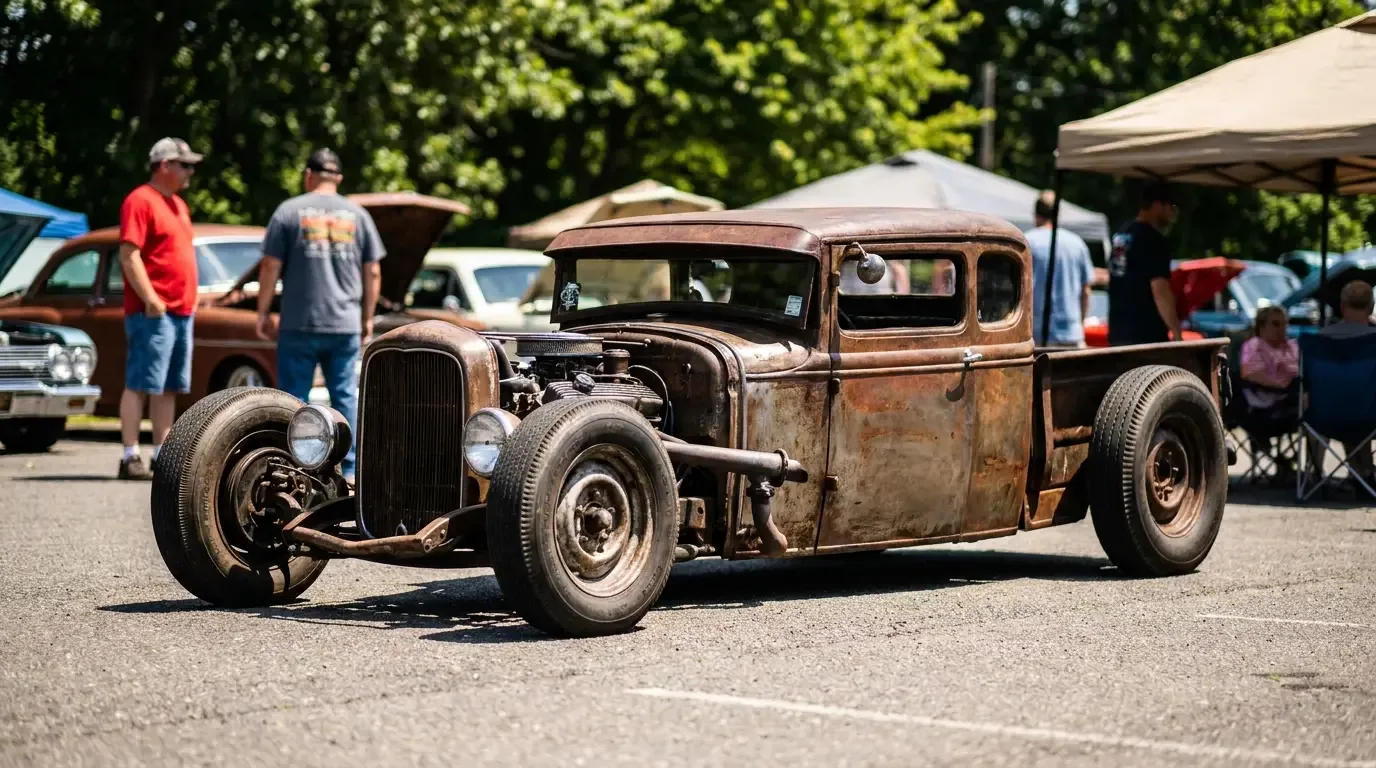
For a certain kind of builder that was a betrayal of the whole idea. Hot rodding began in the 1930s and 40s with cheap, cut-down Fords assembled from junkyard parts by people who could not afford anything better. The rat rod movement was, at heart, an argument that the hobby had lost the plot. If you want the fuller version of that argument, see what is a rat rod. The short answer is that a rat rod is a deliberately unfinished, low-buck car built to be driven, not admired behind velvet rope.
"The first time I saw a primered roadster parked next to a fifty-thousand-dollar show car, the primered one had bugs on the windshield and a cooler in the back seat. One of them had been somewhere. That told me everything."
Patrick Walsh
Where the name came from
The origin of the term itself is genuinely disputed, and anyone who tells you they know for certain is guessing. Two names come up again and again. One is Gray Baskerville, the longtime Hot Rod magazine writer, who is often credited with using "rat rod" in print to describe rough, primer-covered cars around the late 1980s and into the 1990s. The other is Anthony Castaneda, a Southern California hot-rodder from the Shifters car club, who has said he coined the phrase when his group was interviewed in Rod & Custom magazine in the early 1990s.
The logic Castaneda has described is worth repeating. His crew ran traditional hot rods that were missing the expensive finishing touches, no fresh paint, no fancy upholstery, and they figured those cars were the four-wheeled cousins of the "rat bikes" motorcyclists were building on the cheap. Rat bike, rat rod. Whether Baskerville or Castaneda said it first, the phrase spread through the same word-of-mouth channels that carried every other piece of hot-rod slang.
The traditionalist revival
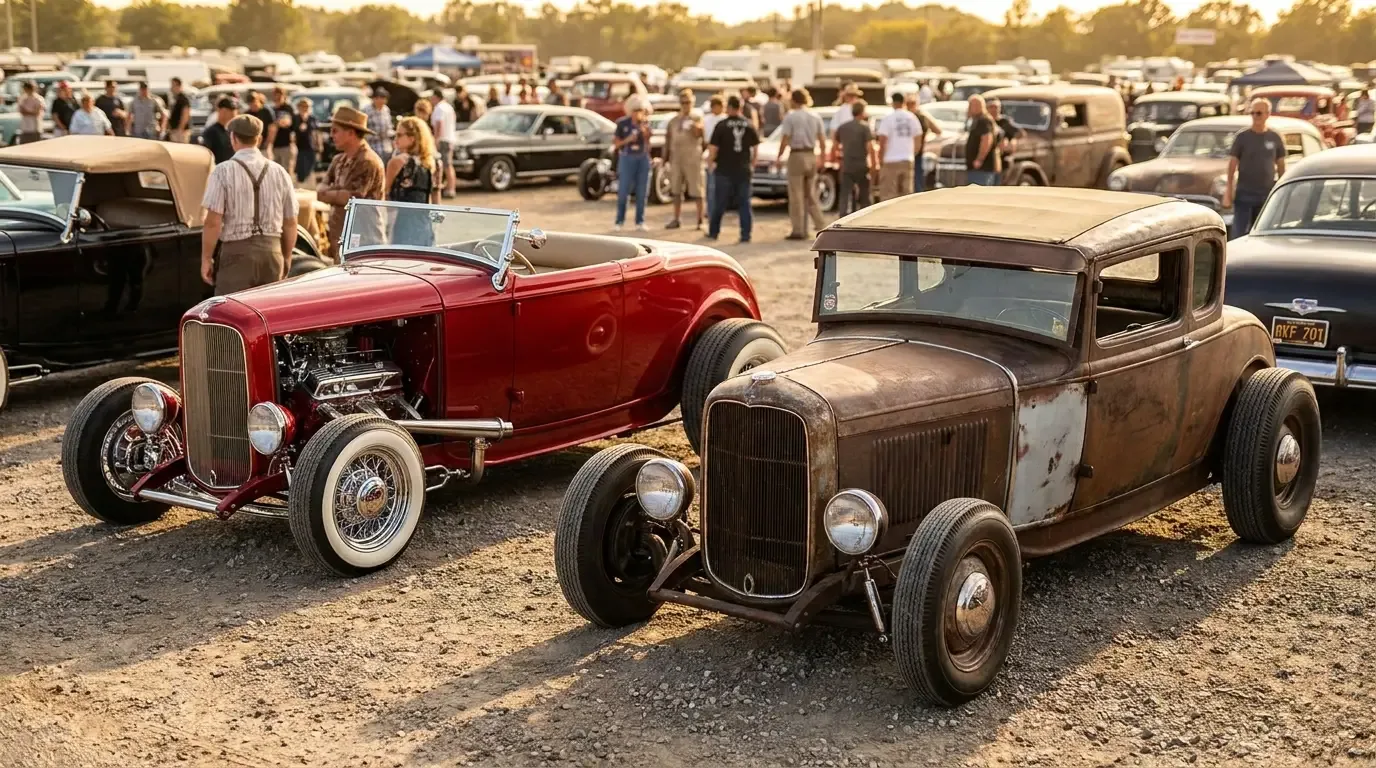
The rat rod did not appear out of nowhere. It rode in on a broader wave of nostalgia for the early days of the sport. Through the 1990s a traditionalist movement gathered steam, builders who wanted their cars to look like they rolled out of 1955 rather than a modern billet catalog. Flathead engines, period wheels, chopped tops, and honest patina were the whole point. The rat rod grew out of that same soil, then pushed the idea further into the raw and the unfinished.
Online forums and gatherings did the rest. Message boards let far-flung builders trade photos and techniques, and events built around the traditional look gave the cars somewhere to show up and be seen. What had been a scattered handful of contrarians in a few California garages became a recognizable style with its own vocabulary. If you want to see how the rat rod separates from its stricter cousin, the piece on Rat Rod vs Traditional Hot Rod lays out where the two part ways.
Key figures and the magazines that spread it
A few names and outlets did most of the work carrying the idea into the open. The artist Robert Williams, known outside car circles for the original Appetite for Destruction album cover, ran a rust-primered Ford roadster lettered "Eights & Aces" that is frequently cited as an early, influential example of the look. Ed "Big Daddy" Roth, whose Rat Fink character had been a Kustom Kulture icon since the early 1960s, gave the whole rough-and-weird aesthetic a mascot and a lineage, though Rat Fink itself predates the rat rod by decades.
The print press mattered as much as any single builder. Rod & Custom and Hot Rod put primered, unfinished cars in front of a national audience, and later specialty titles leaned into the traditional and rat-rod scenes directly. Coverage turned a regional attitude into a movement people in other states could copy.
| Milestone | Approx. date | Why it matters |
|---|---|---|
| Rod & Custom "beater" feature | Dec 1972 | Early celebration of cheap, primer-only cars |
| "Rat rod" enters common use | Late 1980s–early 1990s | Baskerville and/or Castaneda credited with the term |
| Traditionalist revival gathers pace | 1990s | Nostalgia for period-correct hot rods creates the context |
| Forums and shows spread the look | Late 1990s–2000s | Regional style becomes a national movement |
What ties the whole origin story together is a single stubborn idea. A car should be built cheap, built by hand, and actually driven. Everything else about the rat rod, the rust, the found-object parts, the deliberate roughness, follows from that first act of rebellion against a hobby its founders thought had gotten too clean and too costly.
Sources and notes
- Period hot-rod and custom-car press (feature articles and editorials from the traditional and rat-rod eras).
- Builder and club interviews recounting the coining and early spread of the term.
- Kustom Kulture and hot-rod history references covering Ed Roth, Rat Fink, and early primered builds.
- Enthusiast forum and club records documenting the 1990s traditionalist revival.
- Some early dates and attributions remain genuinely disputed in the historical record and are stated here as approximate.
Related Reading
Have a
Classic Car
for Sale?
Reach thousands of serious classic car collectors across the US.
Sell It Here →
Are You a Classic Car Dealer?
List your full inventory and connect with targeted classic car buyers.
Join as a Dealer →

About the author
Patrick Walsh
Automotive journalist covering classic car shows, events, and the enthusiast community across North America.
Comments
Be the first to comment on this article.