
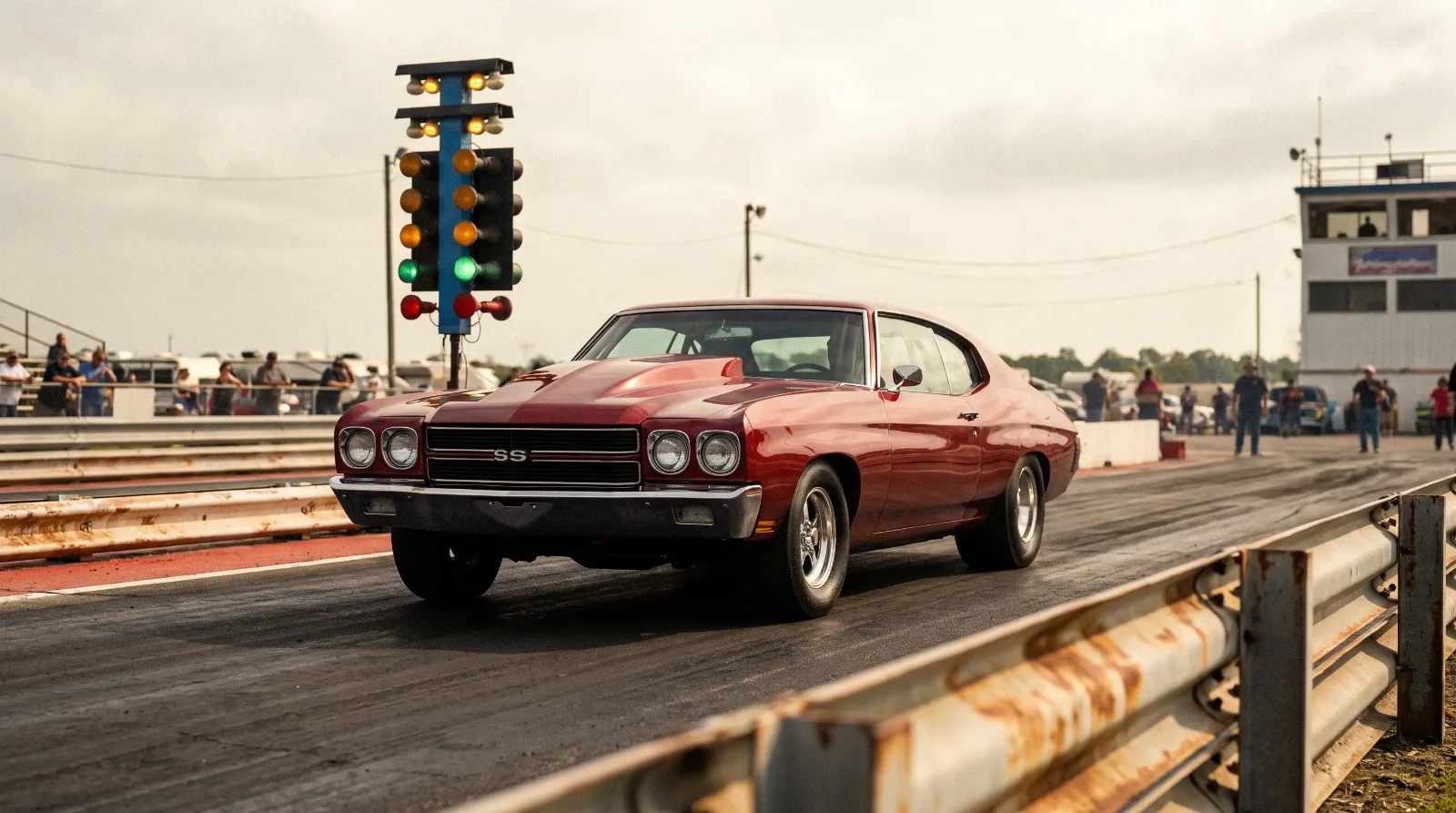
Everybody wants to talk about the factory cars and the six second monsters. Fine. But the racing that kept the sport alive, the racing that still runs every weekend at a beat up strip an hour outside your town, is bracket racing. No sponsors. No trailer full of spares. A guy, a car he built in his own garage, and a number he thinks he can hit. That is the real drag racing, and a lot of it happens in old muscle cars that never stopped working for a living.
Car Features
6 min read
Bracket Racing and Grassroots Muscle Today
How bracket racing keeps classic muscle cars on the strip every weekend. The handicap format, why old iron still wins, and how to build a bracket car.
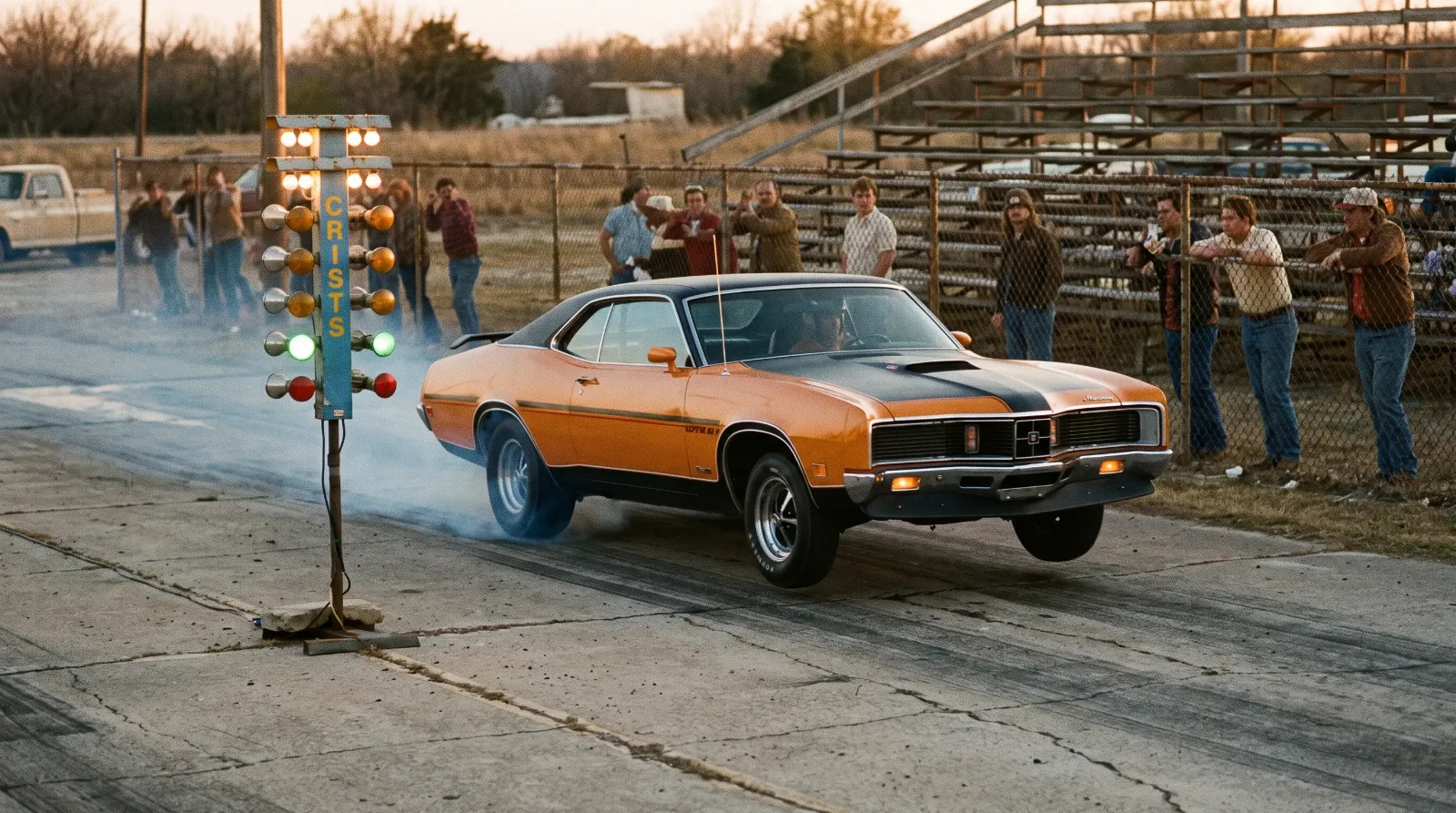
I have watched too many people write off bracket racing as the slow lane. They have it backwards. The format is brutal in its own way, and it rewards a builder who knows exactly what his car does, run after run, in the heat and in the cold. Consistency is the whole game. A pretty car that runs a different time every pass is worthless on a bracket ladder.
How bracket racing actually works
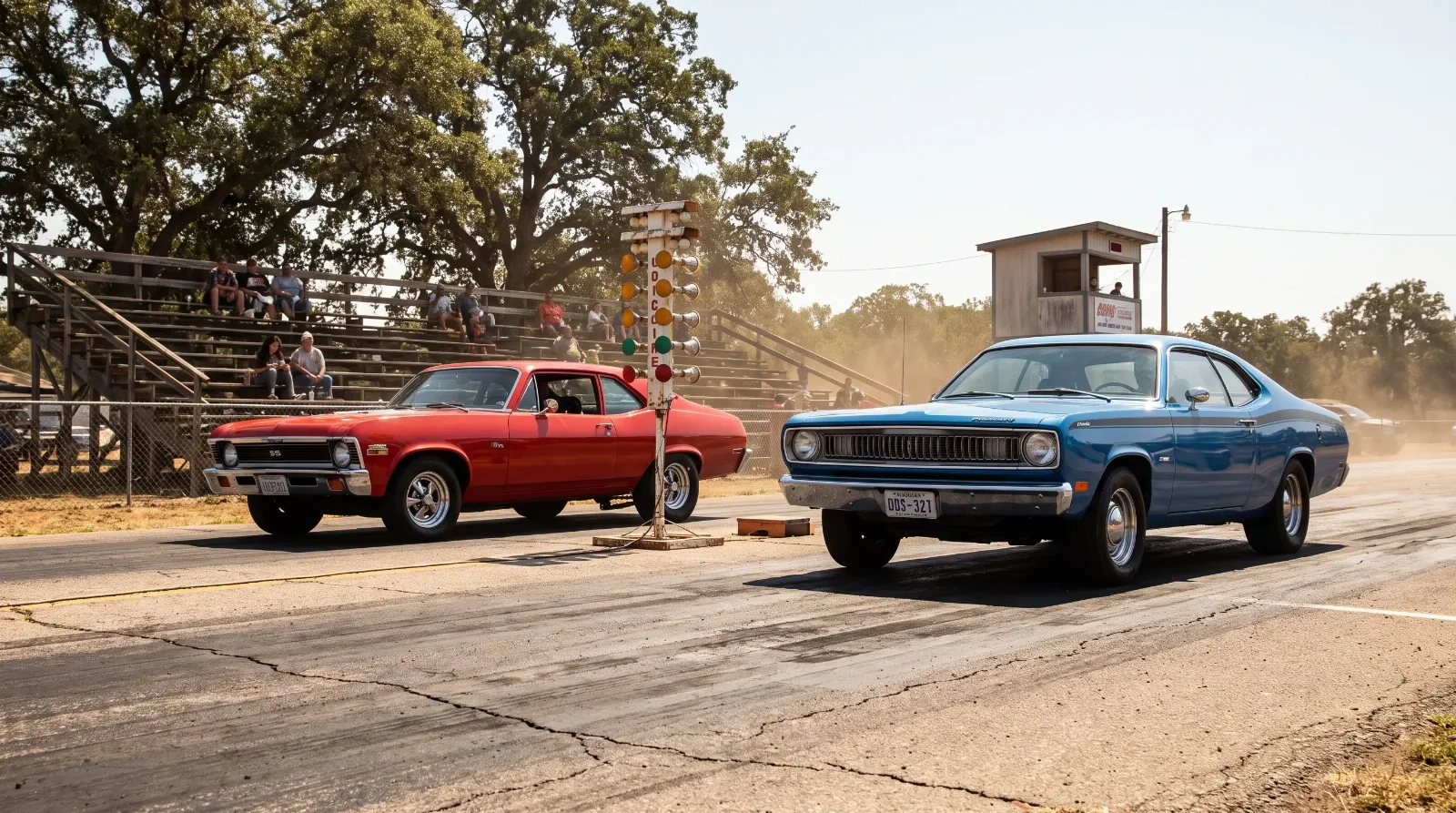
The idea is a handicap. Before the run you dial in a number, your predicted elapsed time for the quarter mile, and you write it on the window. The tree gives the slower car a head start based on the gap between the two dial-ins. Whoever crosses the line first wins, with one catch that catches everybody sooner or later. Run quicker than your dial and you break out. Break out and you lose, even if you got there first.
So the skill is not raw speed. It is knowing your car. It is leaving the line clean on the tree, holding a straight lane, and running the number you promised. A ten second car and a sixteen second car can line up together and have a fair fight. That is the genius of it. The mechanical arms race that plays out in read the full story does not decide a bracket race. The driver does.
Why old muscle cars still fill the lanes
Walk the pits at a Saturday night bracket program and you will see the same iron that filled the showrooms in 1970. Chevelles, Novas, Darts, Mustangs, and a pile of A body Mopars. There is a reason for that. These cars are simple. A carbureted small block or big block, a solid rear axle, and a body you can actually work on. When something breaks you fix it with hand tools and go again next week.
The other reason is attitude. A guy who grew up around this stuff does not want to bracket race a modern econobox. He wants to do it in the kind of car that made him fall in love with the sport. That is not nostalgia for its own sake. It is a builder choosing a platform he understands down to the bolt. The whole culture around these cars gets covered in more depth, and we cover it in detail, but the short version is that muscle cars and the local strip grew up together and never really separated.
Building a bracket car the right way
If you want to build one, resist the urge to chase the biggest number. I have seen it a hundred times. A guy dumps money into a combination that makes noise and headlines and cannot run the same time twice. On a bracket ladder that car goes home early. The build I respect is the boring one, the one dialed for repeatability. Good converter, a transmission that shifts the same every time, a rear gear matched to the track, and a driver who has done a thousand launches.
Safety keeps up with speed, and that matters here. Once a car dips into the low tens or quicker, the tech shed wants a roll bar or a cage, an approved harness, and the right driveline loop. None of that is optional. The strip enforces it because the physics do not care how proud you are of your paint.
There is a temptation to street drive the same car you bracket race, and I understand it. That was the whole point of these machines once. But be honest about the compromise. A converter and gear that make the car happy at the strip make it miserable on the highway, and a car set up for the daily commute leaves time on the table every pass. Plenty of guys run a middle ground and race what they drive. Just know you are giving up a tenth or two to keep the plates on it, and on a bracket ladder a tenth is the difference between a trophy and a long drive home.
"The guys who win bracket races are not the guys with the loudest cars. They're the ones who know their car so well they can call the run before it happens. That knowledge doesn't come from a catalog. It comes from a thousand passes."
Jim Vasquez
Where grassroots racing goes from here
The good news is that this corner of the sport is healthy. Local tracks live and die on bracket nights, and there is a steady flow of younger racers discovering that a decent classic muscle car makes a fantastic starter bracket machine. It teaches you patience, discipline, and how to actually read what your car is doing. Those are the same skills that made the old drivers great, just at a price a working person can afford.
If you have caught the bug and want a period platform to start with, you can find muscle cars on the market and look for a solid, honest car rather than a trophy queen. A bracket car does not need to be perfect. It needs to be consistent, safe, and yours. Build it, learn it, and you will understand this sport in a way no spectator ever will.
Related Reading
Have a
Classic Car
for Sale?
Reach thousands of serious classic car collectors across the US.
Sell It Here →
Are You a Classic Car Dealer?
List your full inventory and connect with targeted classic car buyers.
Join as a Dealer →

About the author
Jim Vasquez
Southern California hot rod and custom car builder with roots in the traditional kustom kulture scene.




Comments
Be the first to comment on this article.