
The letters are Italian. Gran Turismo Omologato, which translates roughly to "grand touring, homologated," meaning a car built in sufficient numbers and certified to a governing body's specification to compete in that body's grand touring racing category. Ferrari used the badge first, on the 250 GTO of the early 1960s, a car built in tiny numbers specifically to satisfy FIA homologation rules for GT-class racing. Pontiac borrowed the three letters four years later for a mid-size American coupe that never went near an FIA-sanctioned grid, and that gap between the name's origin and its actual application is where most of the confusion around the badge starts.
Car Features
7 min read
What Does GTO Actually Stand For?
GTO means Gran Turismo Omologato in Italian, but Pontiac's GTO never went through the racing homologation the name implies.
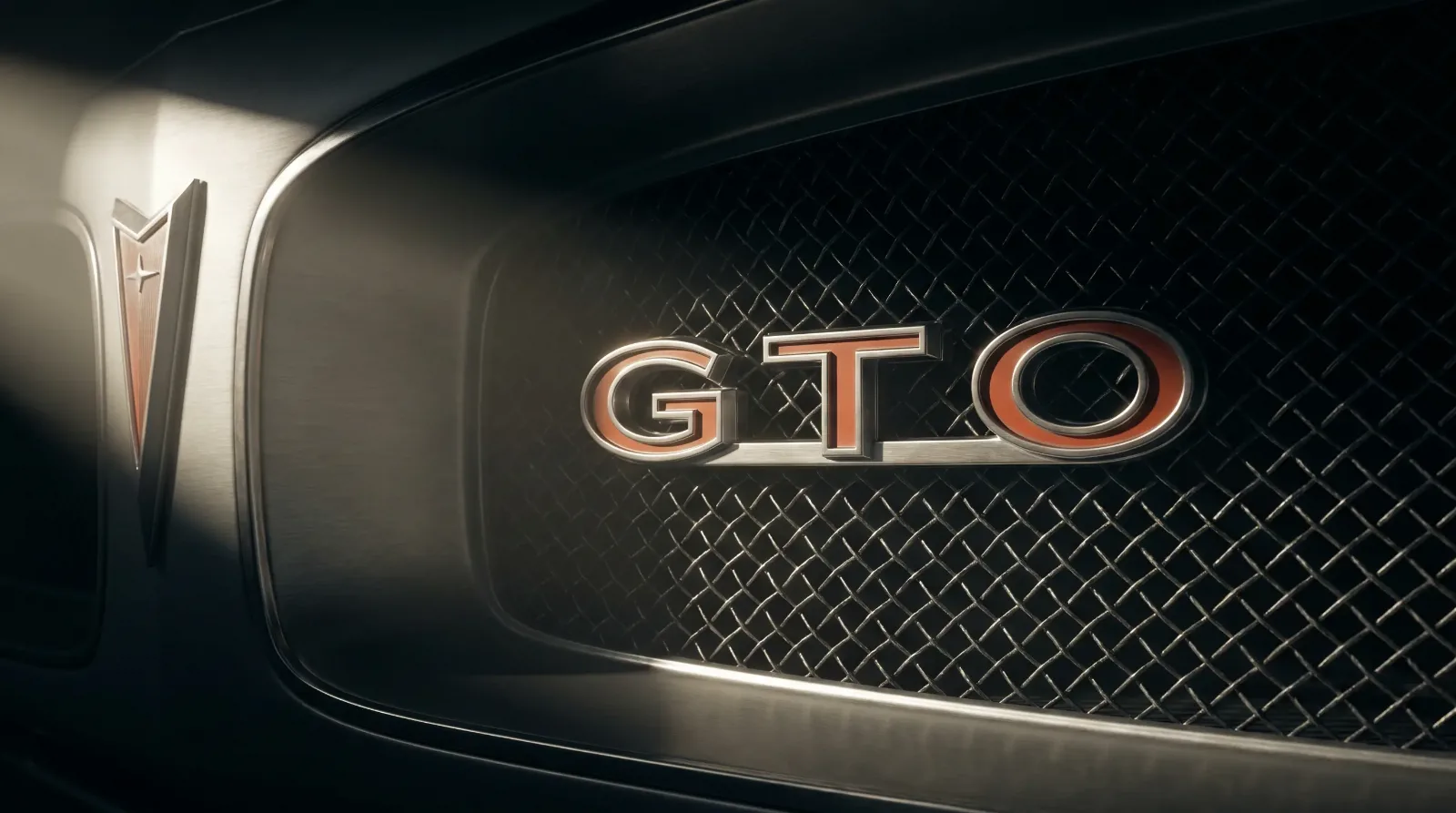
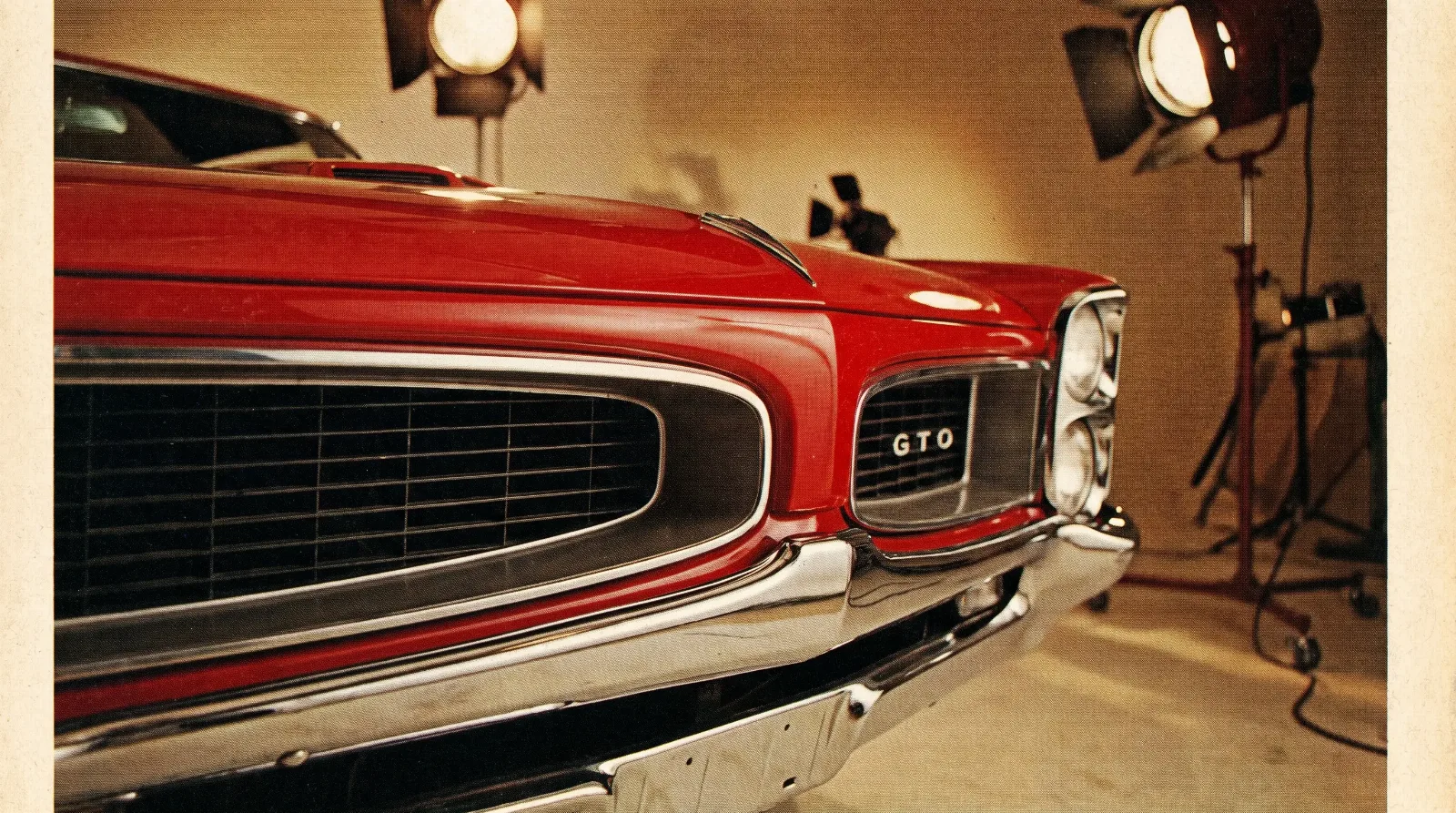
Here is the plain record. For 1964, Pontiac chief engineer John DeLorean, working with engineers Bill Collins and Russell Gee, wanted to put the division's larger 389 cubic inch V8 into the smaller, lighter Tempest and LeMans body. Corporate policy at the time capped engine displacement in intermediate-size GM cars, which should have killed the idea outright. The workaround was to offer the big engine as part of an options package rather than a distinct model, a technicality that let it slide past the displacement rule. That option package needed a name, and "GTO" was chosen deliberately, borrowing the prestige of Ferrari's badge for a car with none of the racing pedigree behind it.
Why the borrowed name caused an argument
Purists objected almost immediately, and not quietly. Ferrari's GTO existed because the factory built the required minimum number of cars and submitted them for FIA homologation, a real bureaucratic process with a real racing purpose behind it. Pontiac's GTO underwent no such process. It was never submitted to any sanctioning body, never intended to compete for a GT-class homologation slot, and never needed to be, because American factory racing in the mid-1960s ran on entirely different rulebooks, mostly NHRA and NASCAR classifications that had nothing to do with FIA GT homologation. Critics in the automotive press at the time, and plenty of Ferrari owners since, have pointed out that Pontiac's use of the name was closer to marketing borrowing than genuine badge inheritance.
Pontiac's own people were candid about the choice being deliberate rather than accidental. The division wanted a name that signaled European performance credibility on an American car built for straight-line speed, and "GTO" delivered that signal instantly to anyone who followed international racing even loosely. It worked. Within two model years the GTO had become its own standalone model rather than a Tempest option, and the borrowed name had shed most of its controversy simply by becoming successful enough to stand on its own reputation.
"Pontiac never pretended the badge came with a racing pedigree. What they wanted was the association, and once the car backed it up on the street and at the strip, nobody was still arguing about FIA paperwork. The name earned its keep on its own terms."
Tom Ramirez
How the package was actually ordered
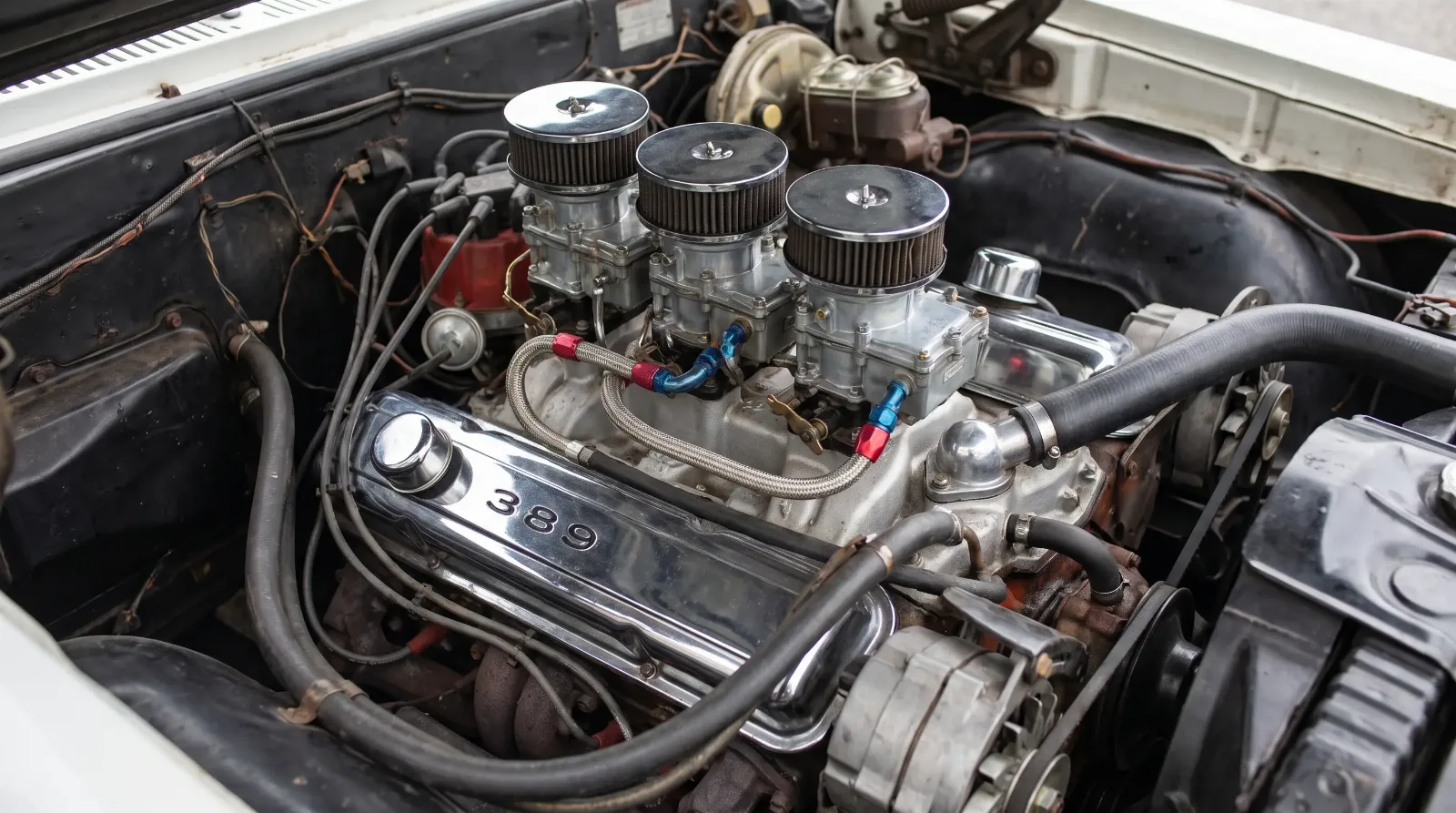
For that first 1964 model year, the GTO was a line item on the Tempest and LeMans order form, RPO 382, priced at $295.90 over the base car, rather than a separate model in its own right, built around the 389 V8 in standard four-barrel form rated at 325 horsepower, with an optional Tri-Power triple two-barrel carburetor setup that pushed output to 348 horsepower and 428 lb-ft of torque. Buyers checked a box, paid the option price, and drove home with a Tempest or LeMans that carried GTO badging, a stiffer suspension, dual exhaust, and the bigger engine. That RPO 382 code is documented in period literature, and collectors tracking build sheets today rely on it, along with matching cowl tags and engine casting numbers, to confirm a car is a genuine factory GTO rather than a later clone built from a base Tempest.
| Detail | 1964 GTO option package |
|---|---|
| Base platform | Tempest / LeMans (not yet a standalone model) |
| Engine | 389 cubic inch V8, four-barrel standard |
| Optional induction | Tri-Power (three two-barrel carburetors) |
| Became standalone model | 1966 |
| Origin of the "GTO" name | Borrowed from Ferrari's Gran Turismo Omologato badge |
Did anyone at Ferrari actually object?
Stories have circulated for decades that Enzo Ferrari personally protested Pontiac's use of the name, and while the anecdote gets repeated often at car shows, no lawsuit or documented legal objection from Ferrari over the badge ever surfaced. That tracks with the underlying legal reality: "GTO" was an FIA homologation designation, not a Ferrari trademark, so there was nothing exclusive for Ferrari to defend even if the company had wanted to. What is better documented is the general tension in enthusiast circles at the time between purists who felt the name should be reserved for genuinely homologated racing cars, and a buying public that simply liked what the three letters sounded like on the back of a fast American coupe. That tension is itself part of what GTO stands for as a broader subject, since the acronym's literal translation and its actual American usage diverged almost from day one.
Why the meaning still gets debated
Ask a Pontiac historian and a Ferrari purist the same question, what does GTO stand for, and you will get the same literal translation but two very different tones. One treats it as a footnote in a bigger story about how a Detroit engineer outmaneuvered a corporate displacement rule. The other treats it as a small act of badge appropriation that happened to work out extremely well for the company that did the borrowing. Both readings are defensible, and that disagreement is part of why the name has stayed interesting long after the last classic GTO rolled off the line in 1974.
What the name means for collectors today
For anyone shopping surviving cars, the acronym's origin story is more than trivia. It shapes how the hobby talks about authenticity. A genuine 1964 or 1965 GTO carries documentation tied to that original option package, the RPO code, the cowl tag, the engine casting numbers, and collectors treat those details with the same seriousness Ferrari people apply to matching numbers on an early 1960s GT car. The irony is not lost on longtime Pontiac people: a name borrowed to suggest European homologation rigor eventually grew its own documentation culture just as demanding, built around Detroit's own paperwork trail instead of an FIA file.
That parallel also explains why GTO club registries and marque historians put so much weight on build sheets and option codes rather than just trusting a car's badges. Badges can be added to any Tempest with enough determination and a parts catalog. A correct RPO code on a factory build sheet, cross-checked against the VIN and engine stamping, cannot be faked nearly as easily, and that verification process has become its own specialty within the hobby, one that owes its existence indirectly to the same homologation-minded thinking Ferrari used decades earlier for very different reasons.
The name's staying power also owes something to timing. The GTO arrived just as American car culture was hungry for exactly this kind of international-sounding performance shorthand, and it landed years before the phrase "muscle car" had fully entered common use. That context matters for understanding the badge's full impact, which is covered in more depth in the full GTO story, and it also connects to how the nickname "the Great One" later attached itself to the same car, a separate but related piece of GTO folklore worth reading if you want read on.
If the history has you thinking about tracking one down, current listings turn up regularly where you can browse GTO listings and compare surviving examples against everything documented here, from Tri-Power 389s to the option codes that separate a genuine GTO from a well-dressed Tempest.
Sources and notes
Related Reading
Have a
Pontiac GTO
for Sale?
Reach thousands of serious classic car collectors across the US.
Sell It Here →
Are You a Classic Car Dealer?
List your full inventory and connect with targeted classic car buyers.
Join as a Dealer →
#Pontiac GTO
#pontiac history
#gto option package
#tri power 389
#gran turismo omologato
#gto meaning

About the author
Tom Ramirez
Corvette researcher and historian based in Bowling Green, Kentucky. Two decades documenting Corvette production history from original factory records.
Related Listings - Pontiac GTO




Comments
Be the first to comment on this article.