
Nobody at Pontiac Motor Division sat down in 1964 and decided the new Tempest option package needed a barnyard nickname. Nobody can point to a single, fully documented moment when "Goat" was born, either, and that is worth saying up front. What survives is folklore, several competing stories that all sound plausible, repeated by different people who each swear theirs is the real one. The most commonly told version has the name arriving sideways, through a garage or a drag strip or a bench-racing session where somebody said the three letters out loud fast enough that they came out as one word instead of three. GTO. Goat. Once a few hundred people heard it that way, it stuck, and Pontiac never had a chance to talk anyone out of it.
Car Features
8 min read
Why the GTO Is Nicknamed 'The Goat'
The GTO never officially became 'the Goat.' It just got said out loud enough times that the nickname outran the acronym.
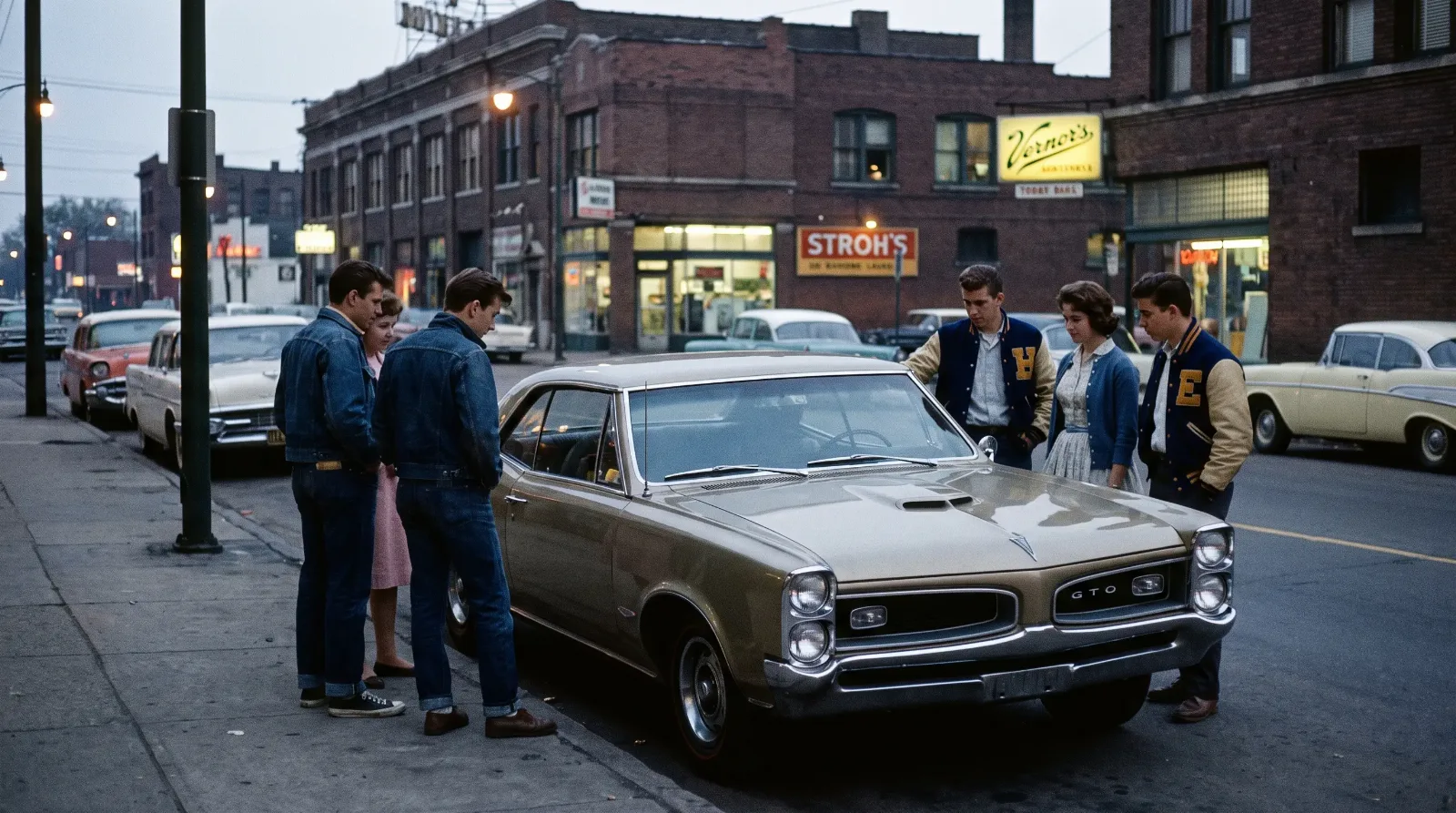
The mechanics of it are almost embarrassingly simple. Say "G-T-O" quickly, the way a teenager hollering across a parking lot in 1965 would have said it, and the sounds blur into something close to "gee-toe" or "goh-toe." Slur that a little more, add some regional accent, and you land on "goat" without much effort at all. It is the same kind of phonetic drift that turned "Chevrolet Nomad" into nothing memorable and left "GTO" wide open, because unlike a full word, an acronym has no fixed pronunciation to defend. People filled in the blank themselves, and the blank they filled in was an animal everybody already had an opinion about.
The competing theories
The phonetic-drift story is the one most often repeated, but it is not the only one. Jim Wangers, the marketing figure most closely tied to the GTO's launch, has told audiences that the nickname grew out of simply tacking an "A" onto the G-T-O letters to make a pronounceable word, essentially the same phonetic idea dressed up as a deliberate move rather than an accident. A separate, performance-minded theory holds that "goat" described an animal that will eat anything put in front of it, a nod to a car that ate up the street and everything else racing it. A third strand, more of a period joke than a serious theory, claimed GTO really stood for "Gas, Tires, Oil," the three things the car reportedly consumed in equal quantities. None of these has ever been nailed down as the definitive origin, and that is probably the most honest answer available: the nickname has several plausible parents and no birth certificate.
A nickname that fit the car's personality
What made "Goat" survive past a single drag strip in 1965 was that it fit. A goat is stubborn, a little unruly, not particularly refined, and capable of causing more trouble than its size suggests. That description worked just as well for a mid-size Tempest with a 389 under the hood as it did for the animal. Pontiac's own admen leaned into that gap between the car's polished European-sounding badge and its street-fighter behavior, and once the buff books started printing "Goat" in headlines, the nickname crossed from slang into official-adjacent shorthand.
There is also a simpler explanation that gearheads have repeated for sixty years without much disagreement: it is just easier to say. "Hand me the Goat's keys" moves faster than "hand me the GTO's keys," and in a hobby built on quick exchanges in driveways and parking lots, the shorter word wins. Car culture is full of this kind of compression. A Corvette becomes a Vette, a Volkswagen becomes a Bug, a Trans Am becomes a T/A. The GTO becoming the Goat follows the exact same pattern, and once a magazine writer put it in print, there was no pulling it back.
"I've heard three different guys at three different shows swear they personally coined 'Goat' in 1965, and I believe all three of them a little bit. That is how nicknames actually spread. Nobody owns them, everybody claims them, and the car earns them by being memorable enough to bother nicknaming in the first place."
Patrick Walsh
Did Pontiac ever fight the nickname?
Not really, and that is part of what makes the story interesting. Pontiac's own advertising in the mid-1960s occasionally winked at the nickname rather than resisting it, understanding that a car people gave a pet name to was a car people had already fallen for. Compare that to badges that never picked up a nickname at all. Nobody calls a Ford Fairlane anything but a Fairlane. The GTO getting rechristened as the Goat within a couple of model years is itself evidence of how fast the car became a cultural object rather than just a trim package on a Tempest.
The timing matters too. The GTO launched for 1964 as an option on the Tempest and LeMans, the brainchild of John DeLorean and his team, who stuffed a big car's engine into a smaller car's body and effectively kicked off the muscle car era in the process. Within two seasons the car was popular enough, and controversial enough among purists, that it needed a shorthand people could argue about in bars and at the strip. "Goat" gave them one.
Why the nickname outlasted the car itself
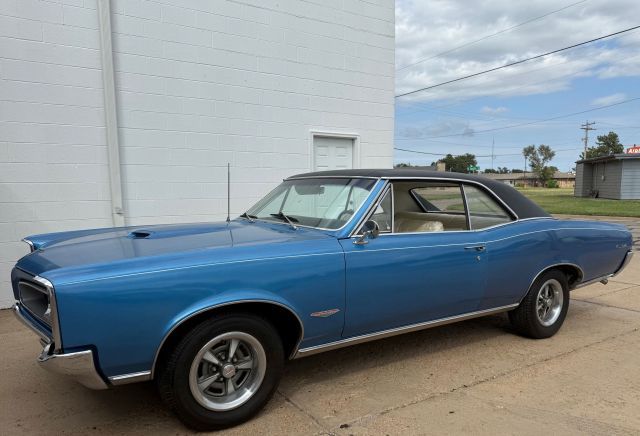
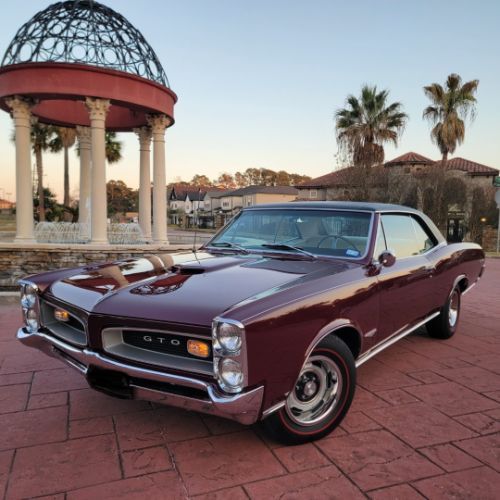
Pontiac built GTOs through 1974, ending the run on a Ventura-based platform that shared little with the original, and the division itself was gone by 2010. The nickname did not go anywhere. Walk a car show today and you will hear "Goat" applied casually to everything from a numbers-matching 1966 hardtop to a rough 1970 project sitting under a tarp. That kind of staying power is rare. Most factory option packages from the 1960s are footnotes now, remembered only by specialists. The GTO got a nickname warm enough that people still use it exclusively, sometimes forgetting what the three letters even stand for.
That gap between the acronym and the nickname is worth sitting with for a second, because it says something about how the car was actually experienced by the people who bought it. Nobody was cross-shopping a GTO because of what the letters meant. They were buying a car that felt like a Goat, quick off the line, a little ornery, not entirely housebroken. The name that stuck was the name that matched the driving experience, and that is a rarer alignment than it sounds.
The name still causes arguments
Ask five owners how "Goat" started and you will likely get five slightly different answers, some involving specific drag strips, some involving a specific issue of a car magazine, none of them fully documented. That fuzziness is part of the GTO name and myths that have followed the car since 1964, and it connects directly to the bigger question of where the letters GTO came from in the first place, which has its own tangled history worth untangling if you want read on.
None of that ambiguity has hurt the car's reputation. If anything, a nickname nobody can fully pin down adds to the legend rather than subtracting from it. The GTO has always been a car people talk about more than they talk about spec sheets, and a debated nickname is exactly the kind of detail that keeps those conversations going at every show, every swap meet, and every driveway where somebody lifts the hood on a 389 and explains, again, why they call it the Goat.
How the nickname shows up in the hobby today
Spend a season around GTO owners and you notice the word doing real work. Parts suppliers name catalogs after it. Regional car clubs put a horned animal on their newsletter masthead without ever explaining the joke, because nobody in the room needs it explained. Auction listings still lead with "Goat" in the headline even when the full model name follows two words later, because the shorthand pulls more attention than the acronym ever did on its own. That is not marketing dressing something up. That is a nickname that became the primary identity of the car for a huge slice of the people who love it.
There is a generational layer to this too. Younger enthusiasts who never saw a GTO on a new-car lot often learn the nickname before they learn what the letters stand for, which flips the usual order entirely. For most badges, the formal name comes first and slang follows decades later, if it follows at all. With the GTO, the Goat arrived early enough, and stuck hard enough, that it now functions almost like a second official name, printed on shirts, stitched on jackets, and shouted across parking lots exactly the way it was in 1965.
For the full arc of how a Tempest option became a legend with a barnyard nickname, the Pontiac GTO story covers the car from its 1964 debut through its final year, and it is worth reading alongside the nickname's history to see how closely the two are tangled together.
Sources and notes
Related Reading
Have a
Pontiac GTO
for Sale?
Reach thousands of serious classic car collectors across the US.
Sell It Here →
Are You a Classic Car Dealer?
List your full inventory and connect with targeted classic car buyers.
Join as a Dealer →

About the author
Patrick Walsh
Automotive journalist covering classic car shows, events, and the enthusiast community across North America.
Related Listings - Pontiac GTO


Comments (1)
B
Bobby Szymanski
1 month ago
Never understood why this model gets overlooked. Equal or better engineering than the cars that get all the coverage, usually at considerably lower cost.