
On Wednesday, August 26, 1987, a red Camaro IROC-Z reached the end of the line in Norwood, Ohio. A worker named Don Johnson installed its final part. Then there was nothing left to build. The day became known as Black Wednesday, and the name tells you how the day felt to a town that had built cars since 1923. The Norwood Camaro plant had turned out Camaros since the 1967 launch, and from the next morning every new Camaro would come from California. This is why GM made that call, and what it meant for the car and for the people who built it.
Car Features
6 min read
Why Camaro Production Left Norwood in 1987
The last Norwood Camaro, a red IROC-Z, was built on August 26, 1987. Why GM closed the Ohio plant, and what the move to Van Nuys meant for the car.
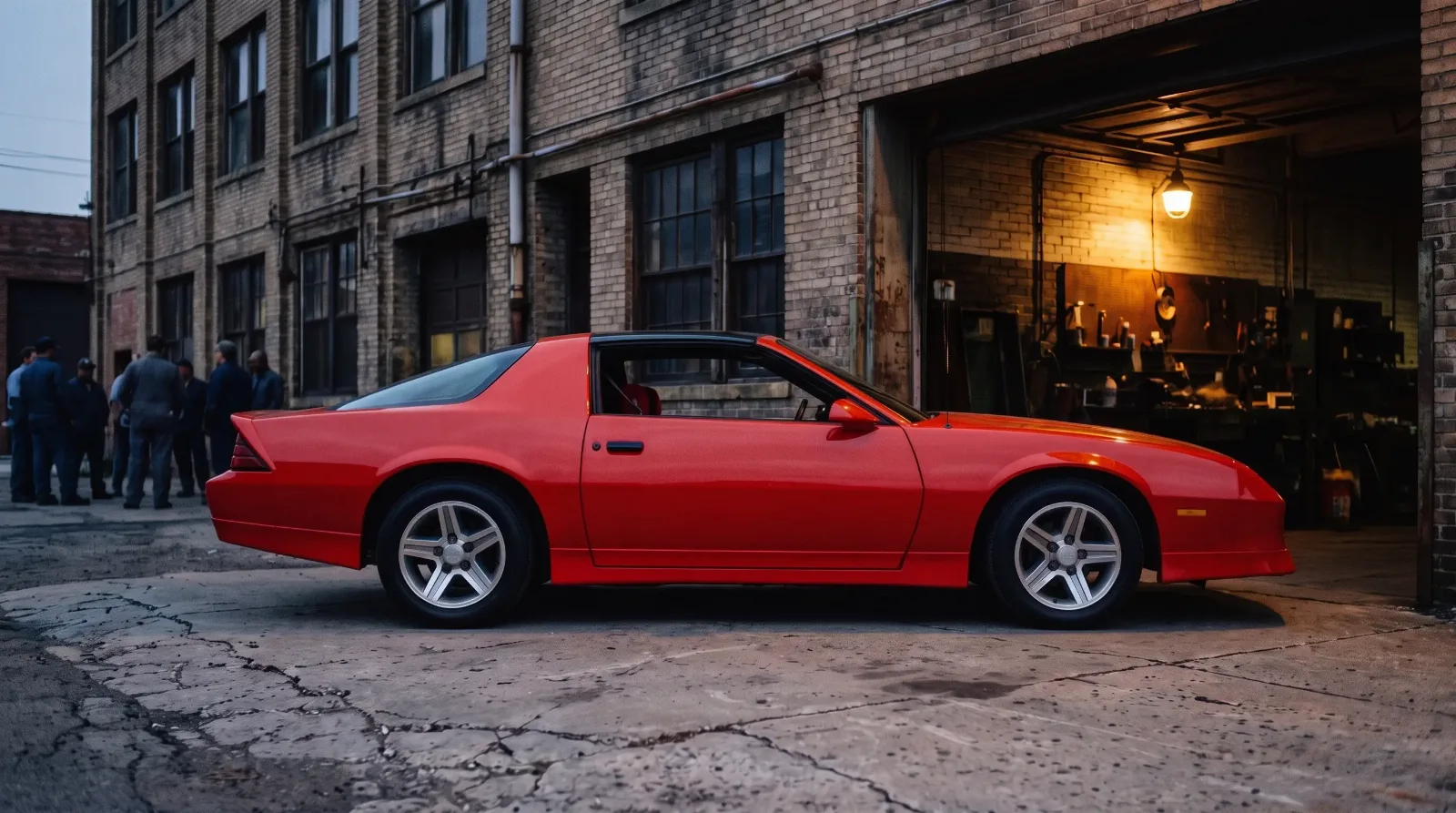
For the generation around this story, start with our third-gen Camaro guide. Here the subject is a building, and the city that lost it.
Sixty-four years at Norwood
Norwood Assembly opened on August 13, 1923, and its first car was a Chevrolet Superior. Over 64 years the plant built more than eight million cars. For most of that time nobody outside Ohio thought of it as the Camaro's home. That changed in 1967.
From the start, Norwood carried most of the Camaro's weight. Official records summed by VIN give Norwood 154,698 of the 1967 cars against 65,008 from Van Nuys, California. In 1969 the split was 211,922 Norwood cars to 31,163 from Van Nuys. When the 1970 car was late because its quarter-panel dies had to be rebuilt, the extended run of 1969 production from August to November 1969 came from Norwood alone. The Firebird moved there in 1969 as well, so both F-bodies came down the Norwood line.
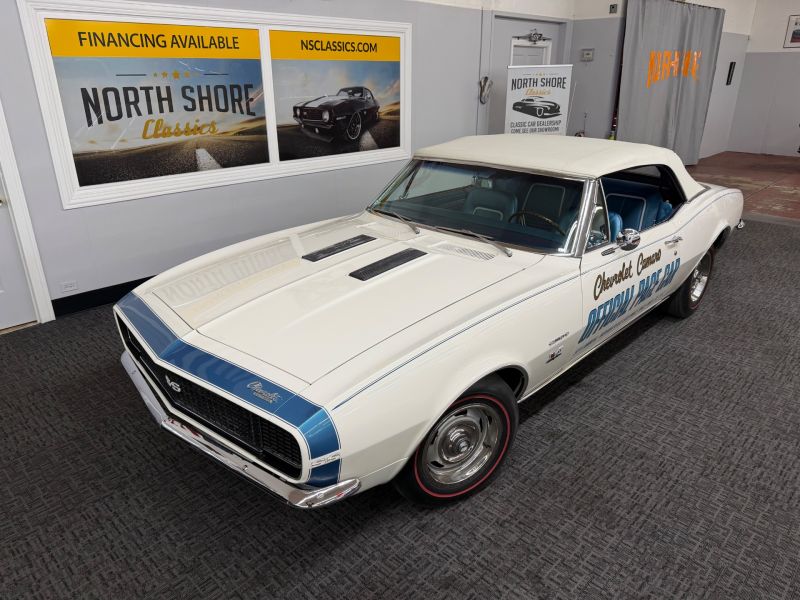
Some of the most photographed early Camaros began there too. The 1967 Cherokee show convertible started life as an SS convertible pulled from the Norwood line, and most of the 3,675 Z11 Indy pace car convertibles of 1969, roughly 3,200 to 3,300 of them, were Norwood cars, with about 500 from Los Angeles. When collectors talk about first-generation Camaros, they are very often talking about cars built in Ohio.
The 1972 strike that GM remembered
Any history of Norwood has to stop at 1972. A UAW strike shut the plant from April 7 to September 27, 174 days, at the time the longest strike in GM history. Norwood was the only plant building the Camaro and Firebird that year, so the F-body simply stopped. About 1,100 partly built Camaros could not meet the 1973 bumper standards, and they were scrapped.
The car survived. Norwood paid a quieter price. After the strike GM moved Nova production away from the plant, to protect that model from future labor trouble. The Camaro stayed, and Norwood kept building it for another 15 years, but the plant carried a reputation from then on. When GM later listed its reasons for closing the place, high absenteeism was among them, and it is hard to read that word without thinking of 1972.
Why GM closed the Norwood Camaro plant
The closure was announced on November 6, 1986, as part of a round of GM plant closings that included other facilities. The reasons on record are practical ones: the plant was obsolete and expensive to run, absenteeism was high, and the building itself worked against it.
That last reason is the one a visitor could see from the street. Norwood was a three-story plant, and by the 1980s a plant stacked on three floors was less efficient than the one-story plants GM ran elsewhere. And Norwood could not grow into one. It was boxed in by highways, rail lines and houses, with no room to expand. A factory that had been well placed in 1923 was in the wrong shape and in the wrong spot for the way cars were built 60 years later.
"Every Norwood Camaro has a hometown printed into its VIN. The plant is gone, and its ground is a mixed-use development now. A car with that N in it is one of the few places the old line still exists."
Patrick Walsh
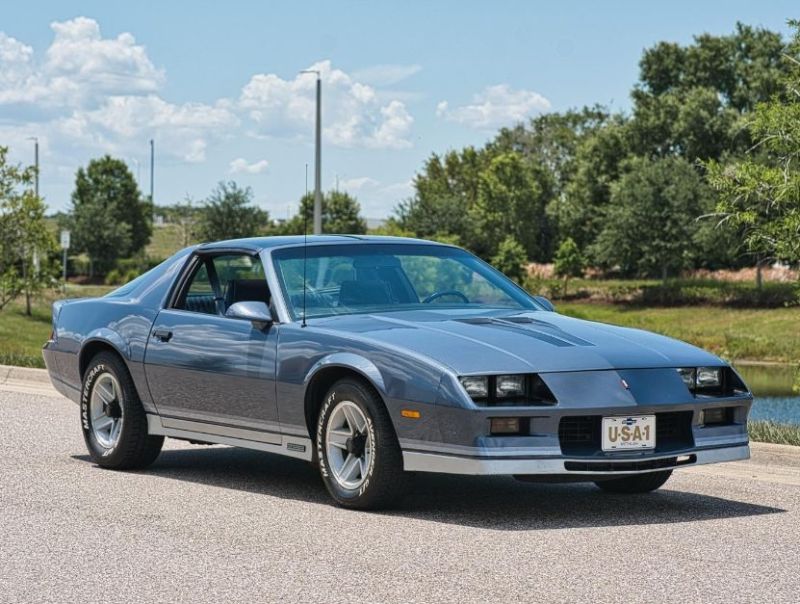
None of this was about the Camaro itself. The car was not cancelled and not redesigned because of Norwood. Its 1987 model year, with the new convertible and the 350 IROC-Z, was a busy one. GM still had Van Nuys, and it moved all Camaro production there.
What leaving Norwood meant for the Camaro
From the 1988 model year, all Camaros were built at Van Nuys. The total that year was 96,275, down from 137,760 for 1987 and 192,128 for 1986. One plant was now carrying the whole line through the rest of the third generation, including the late RS coupe that replaced the Sport Coupe as the entry Camaro in 1989. I would not pin that drop on the plant alone, but the numbers show a smaller Camaro business running on one line.
Van Nuys did not last much longer. It closed in 1992, a move linked to air-quality remediation, and the last third-gen Camaro, a red Z28 coupe, was built there on August 27, 1992. The fourth generation moved to Sainte-Thérèse, Quebec, from November 1992. Two red cars, five years apart, closed out two American Camaro plants. After 1992 no classic-era Camaro was built in the United States.
Norwood paid the most. More than 4,000 people lost their jobs at the closing, with the usual estimate about 4,200. The plant had supplied roughly 35 percent of the city's tax base. Most of it was demolished in 1989, and on November 28 of that year the city made a deal with Belvedere Corp. for a $100 million mixed-use development on the site, Central Parke. The ground that built eight million cars was handed a new purpose.
For owners, the legacy is small and specific. A Camaro with an N in its VIN came from Ohio, any year from the 1967 launch to that Wednesday in 1987. If you own one, you have a piece of a factory that no longer exists. For how Norwood fits into the rest of the car's life, from the first coupes to the last, read our classic Camaro history.
Sources and notes
Related Reading
Have a
Chevrolet Camaro
for Sale?
Reach thousands of serious classic car collectors across the US.
Sell It Here →
Selling a classic? Here's how: where to sell your classic car online
Are You a Classic Car Dealer?
List your full inventory and connect with targeted classic car buyers.
Join as a Dealer →
#chevrolet camaro
#gm history
#1980s cars
#Norwood Assembly
#Van Nuys Assembly
#third generation Camaro
#Camaro IROC-Z

About the author
Patrick Walsh
Automotive journalist covering classic car shows, events, and the enthusiast community across North America.
Related Listings - Chevrolet Camaro
Comments
Be the first to comment on this article.