
Picture a Chevrolet dealer in the spring of 1943, standing on an empty showroom floor. No new cars are coming. None will come for years. The last unsold 1942 models have long since been claimed, and what's left is a business built entirely around keeping old cars alive, tires patched, batteries nursed, engines rebuilt with whatever parts a rationing board would release. That dealer's story, repeated in nearly every American town, is the human side of the wartime civilian car ban.
Car Features
6 min read
When Building New Cars Was Banned (1942-45)
From 1942 to 1945, American factories built essentially no civilian cars. Here is what life looked like for drivers, dealers, and mechanics during that stretch.
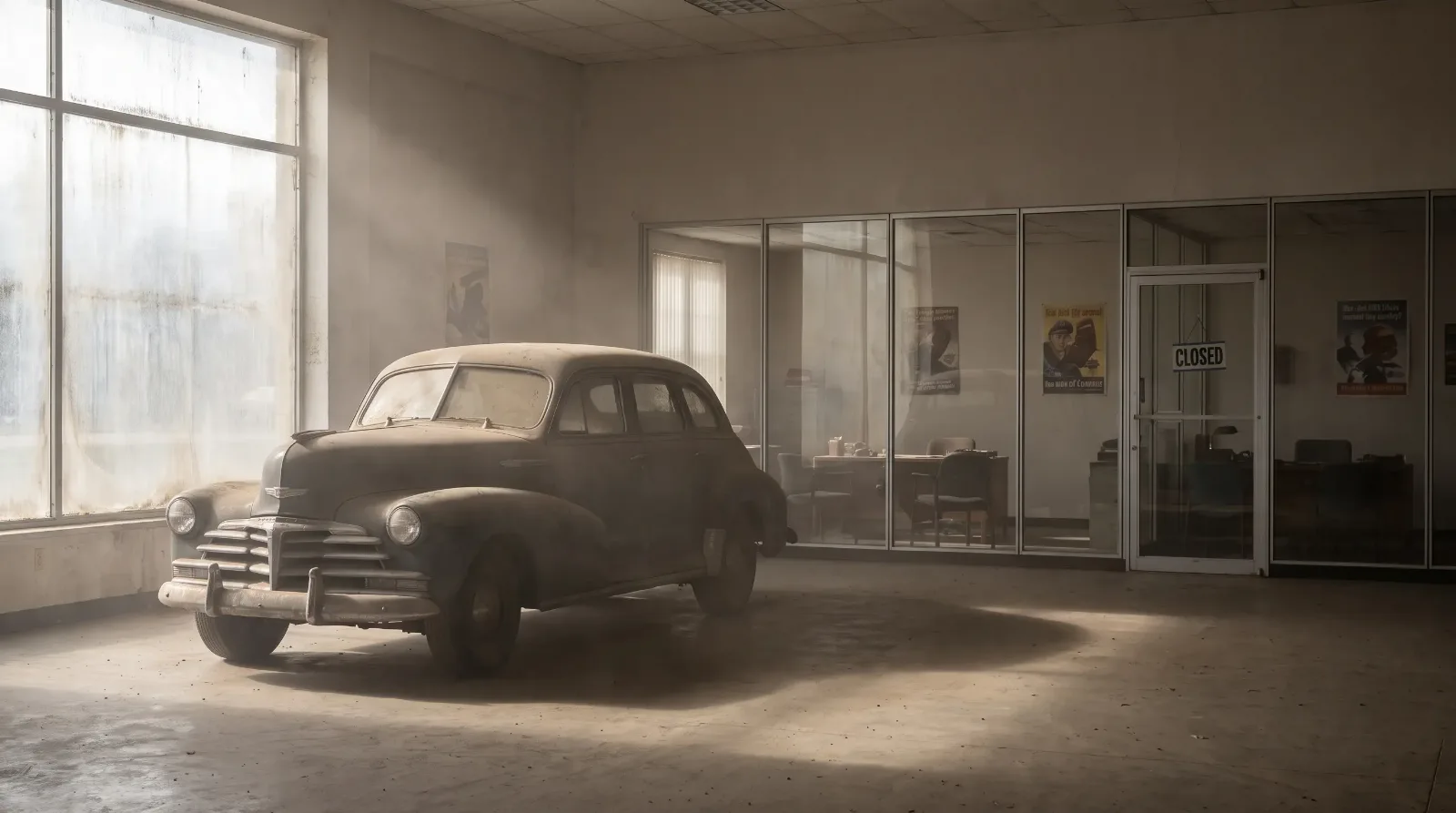
The ban itself is easy to state in a sentence: from February 1942 until the fall of 1945, American factories built essentially no new civilian automobiles. But that sentence hides three and a half years of improvisation by ordinary people who still needed to get to work, haul goods, and keep something running with no new cars on the way.
A country asked to make do
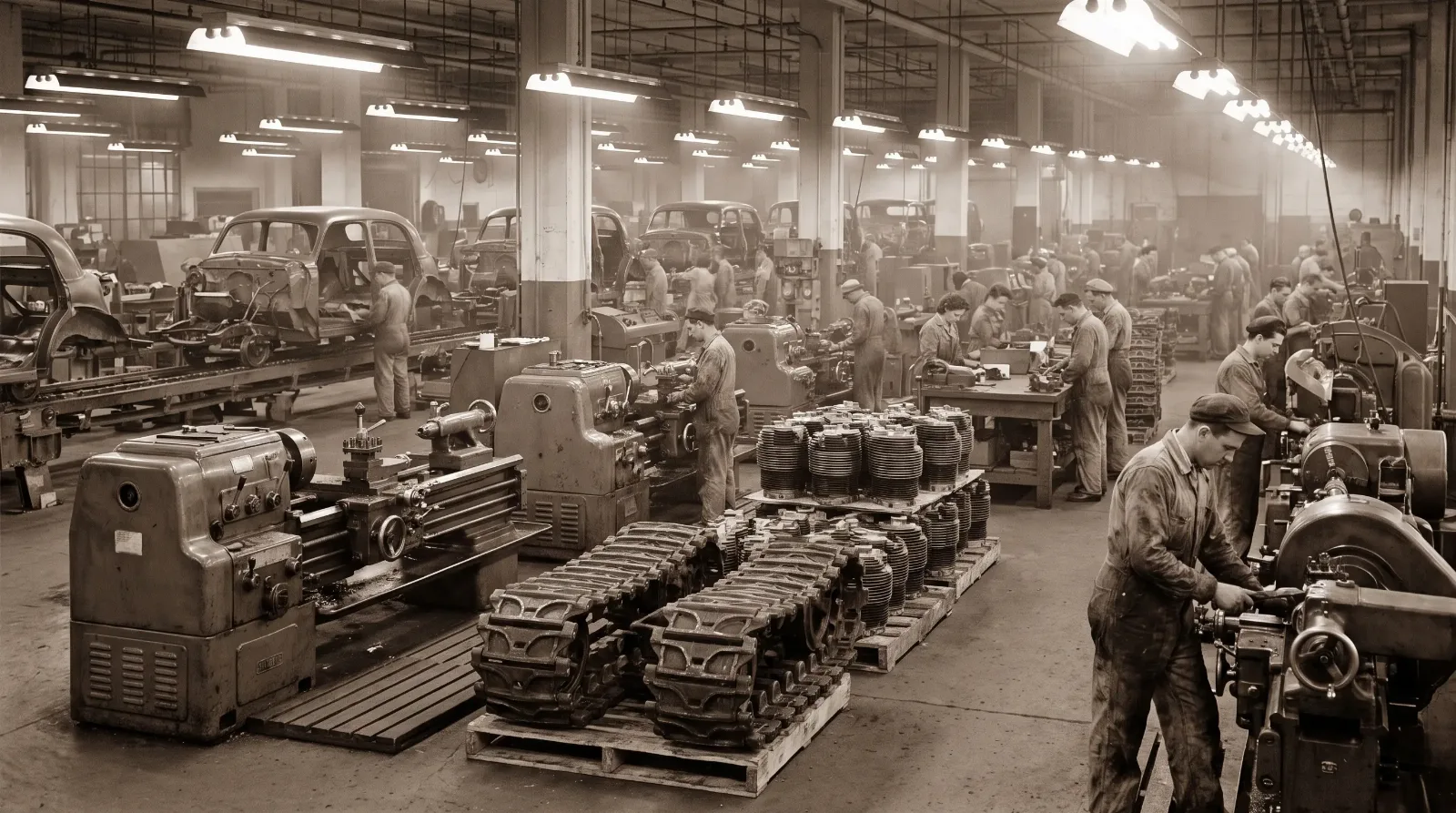
The order that halted production was about materials, not sentiment. Steel, rubber, and countless other resources were needed for tanks, planes, and ships, and every pound spent on a family sedan was a pound not going to the war effort. Detroit's plants did not sit idle; they retooled almost overnight into some of the most important manufacturing centers of the war, but the civilian car line simply went away.
For the public, this meant the car in the driveway had to last. Gasoline was rationed, which slowed everyday driving anyway, but tires were the sharper problem. Rubber shortages made new tires nearly impossible to get for ordinary civilians, and recapping worn tires became a small industry of its own. A family with a healthy set of tires guarded them the way people guard something irreplaceable, because for those years, they were.
The rationing boards and who got what
Local rationing boards decided who could buy the tiny trickle of parts and, in rare cases, the small number of vehicles still built for essential civilian use, doctors, farmers, and certain war-industry workers among them. Getting an allocation meant proving your need, in writing, to a panel of neighbors who had the same shortage everyone else did. It was a slow, bureaucratic process, and it made car ownership during the war feel less like a private matter and more like a shared civic negotiation.
Gasoline rationing worked on a similar principle, with windshield stickers, A, B, or C, marking how much fuel a household was allowed based on the board's judgment of their need. Most drivers carried an A sticker and a strict weekly ration, enough for essential trips and little else. Sunday driving, once a common leisure activity, became something close to unpatriotic, and newspapers of the period ran regular reminders urging people to leave the car parked unless the trip was necessary. The effect went beyond fuel savings; it changed how people thought about the car itself, from a symbol of freedom to a resource that had to be justified.
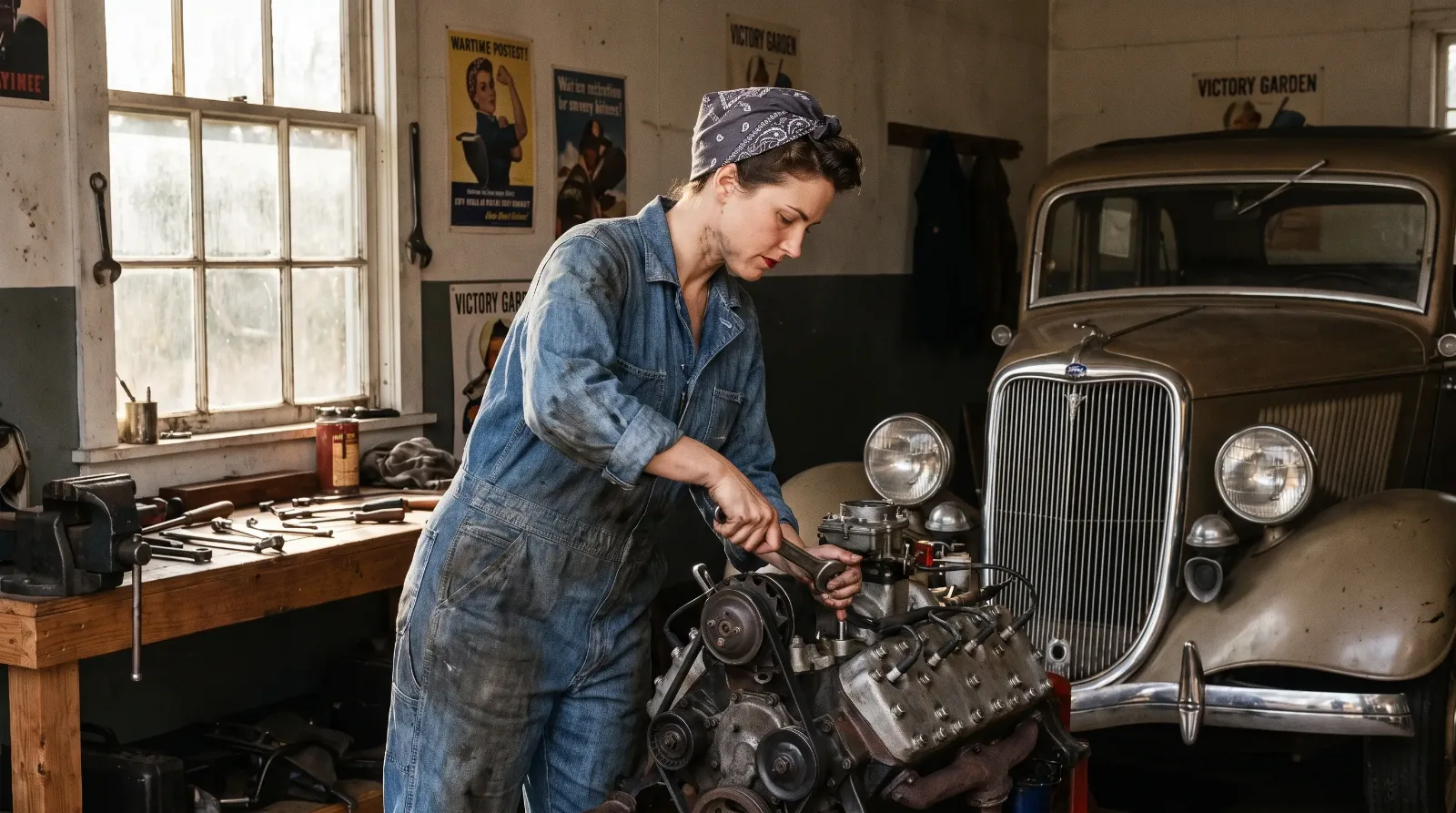
Mechanics became essential workers in a quiet way. Keeping a decade-old car running through the war years required real skill, improvised parts, and patience that modern owners of daily drivers rarely need. Junkyards became parts sources of last resort, and swapping components between makes, when a fit could be forced, was common practice rather than a hobbyist's trick.
Women took over a large share of this repair work by necessity, since so many men who had done the family's mechanical labor were serving overseas. Magazines and local shops offered basic maintenance classes aimed specifically at women drivers, covering tire patching, battery care, and simple engine troubleshooting. That shift in who understood how a car actually worked outlasted the war itself, and it quietly reshaped assumptions about who belonged under the hood for a generation afterward.
What happened inside the factories
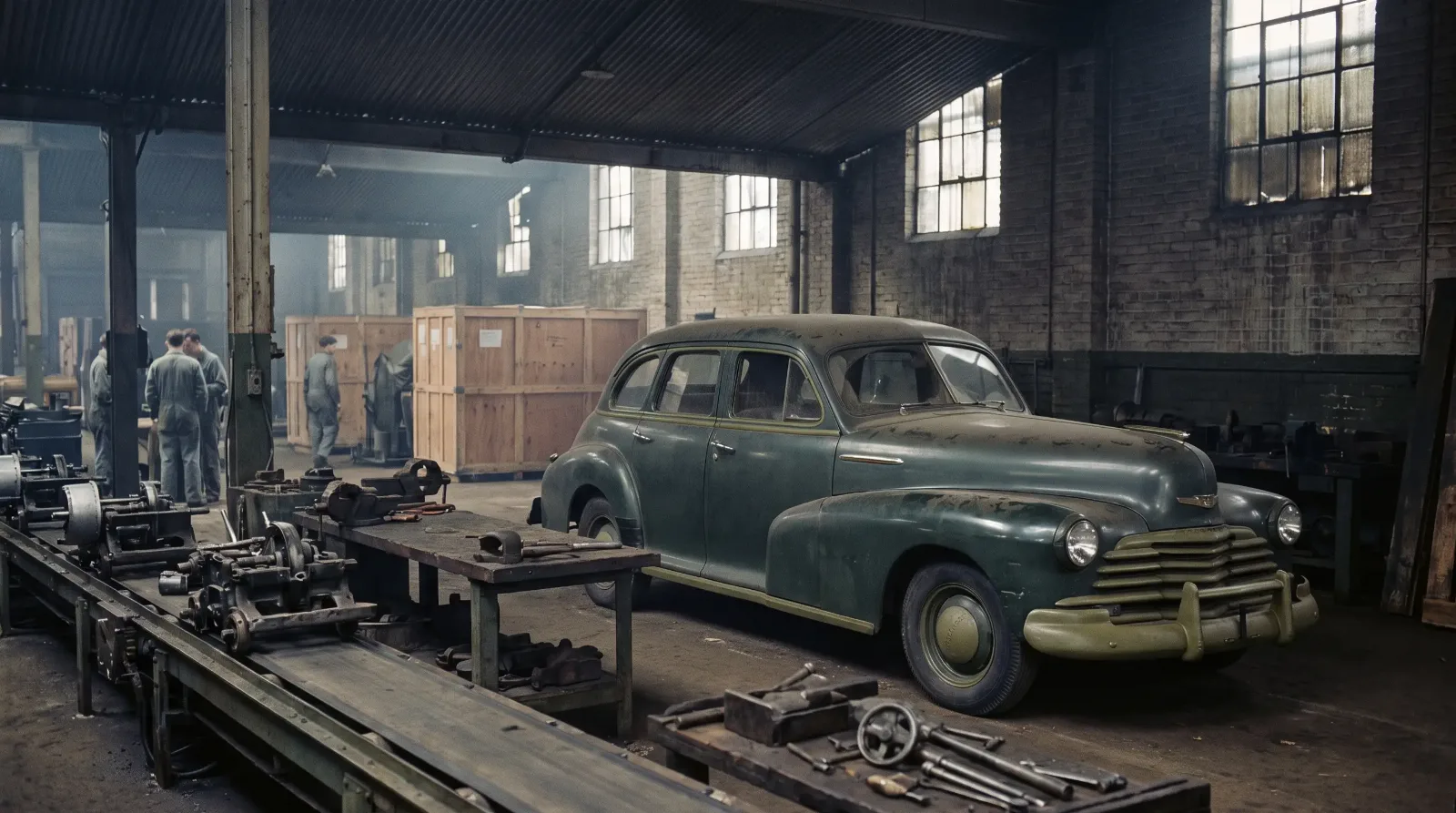
While the public made do, the plants that used to build Buicks and Fords were turning out aircraft engines, tank parts, and ammunition. The scale of that conversion is one of the more remarkable stories of the American home front, and it deserves its own telling. For a closer look at how the tooling and workforce actually shifted from cars to war material, a related read traces that transition plant by plant.
The people who had built cars did not stop building things. They built the machines that helped win the war, often on the very same floors, sometimes using adapted versions of the same jigs and fixtures. That continuity matters, because when the war ended, those same plants and that same workforce were what allowed the industry to restart civilian production as quickly as it did.
Coming back to a changed market
When the ban lifted in the fall of 1945, the demand waiting on the other side was enormous. Millions of Americans had spent years nursing worn-out cars and saving money with nowhere to spend it. The first postwar cars, largely warmed-over 1942 designs at first, sold as fast as factories could build them, regardless of how dated their styling already looked next to what was coming.
That pent-up demand shaped the industry for years afterward. Waiting lists stretched for months, and buyers sometimes paid dealers premiums just to move up the list, an arrangement officially discouraged and unofficially common. The scarcity of the war years had trained an entire generation of buyers to want a new car badly, and manufacturers spent the rest of the decade meeting that appetite.
The ban is a small window in automotive history, three and a half years out of more than a century of production, but it left a lasting mark on how people thought about cars. A vehicle that had been a fairly routine purchase became, for a few years, something people fought to keep running and then fought to replace. That tension between scarcity and desire is part of what makes the cars from this period, and the ones that followed them, worth studying closely today, a story picked up in more depth in our deep dive on wwii civilian car ban.
"You talk to people who lived through it and the cars almost become secondary. What they remember is the waiting, the rationing board, the neighbor who somehow had a spare tire. The car ban touched daily life in a way most policy decisions never do."
Patrick Walsh
Understanding the ban means understanding it as a shared experience rather than just an industrial statistic. It shaped how a whole generation related to their cars, and that relationship echoes through the cars, and the stories, that came after.
Sources and notes
- Car Coach Reports - the history of gas rationing stickers
- Automotive News - no new cars, but that didn't stop U.S. automakers and dealers during WWII
- TeachingHistory.org - the auto industry goes to war
- Goodwood - World War II, when car production last hit pause
- Fold3 - gasoline rationing begins, July 1942
- J.H. Graham - All this and victory too, 1946 cars
Related Reading
Have a
Classic Car
for Sale?
Reach thousands of serious classic car collectors across the US.
Sell It Here →
Are You a Classic Car Dealer?
List your full inventory and connect with targeted classic car buyers.
Join as a Dealer →
#pre-war classics
#wwii civilian car ban
#wartime rationing
#1940s automotive history
#home front
#postwar demand

About the author
Patrick Walsh
Automotive journalist covering classic car shows, events, and the enthusiast community across North America.




Comments
Be the first to comment on this article.