
There's a particular sound a C10 bench seat makes when someone slides across it to let a third person in, vinyl catching just slightly before it gives. Anyone who grew up riding three-across in one of these trucks knows that sound, and it hasn't changed much across three decades of these cabs, even while almost everything around it did. The seat, the dash, the little details a driver touched a thousand times without thinking about them, tell a quieter story than the sheet metal does. This is that story.
History & Heritage
6 min read
C10 Interior Options Across Three Generations
From bare vinyl work benches to Silverado-trim cabins with cruise control and power windows, the C10's interior tells its own quiet story across three generations.
The first generation cab: built for work, not comfort
Early C10 cabs were plain by design. A rubber floor mat instead of carpet, a painted metal dash instead of anything padded, a single bench seat covered in vinyl that held up to a work boot better than it flattered anyone sitting on it. Options existed, but they were modest: a heater, an AM radio, maybe a two-tone paint scheme that hinted at some personality outside the base spec sheet. This was a truck built for a driver who needed it to survive a decade of gravel roads and loading docks, and the interior reflected exactly that priority. Comfort was an afterthought, not a selling point.
What's easy to miss now is how deliberate that plainness was. Chevrolet wasn't cutting corners so much as building to the actual customer, and that customer wasn't shopping for a cabin experience. He was shopping for something that would start every morning and haul what he needed hauled.
The Action Line years: comfort starts creeping in
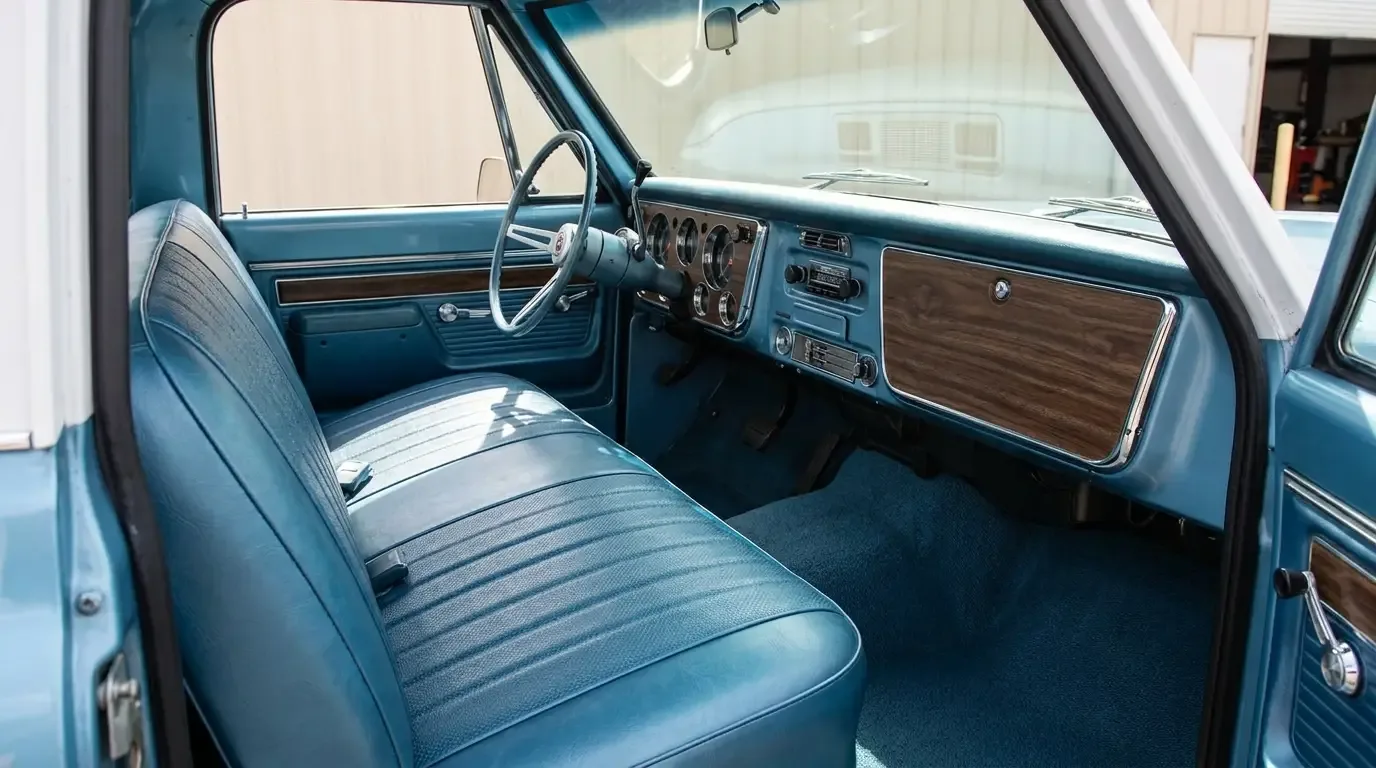
By the time the Action Line cab arrived, something had shifted. The bench got wider and a little more supportive. Woodgrain trim started showing up on the dash of higher trim levels, a small detail that changed the whole feel of sitting behind the wheel. Custom Sport trucks brought carpet, better door panels, and a dash cluster that looked like someone had actually designed it rather than just stamped it. Air conditioning became available as the years went on, though it remained rare enough on trucks of this era that finding one with factory air still feels like finding something extra.
Radios moved from a single AM speaker to an available factory AM/FM setup starting in 1971, a small thing that mattered enormously to whoever was doing the driving. These were still work trucks first. But Chevrolet had noticed that some buyers wanted the truck in the driveway to look like it belonged there, not just in the field.
Square body cabs: the interior finally catches up
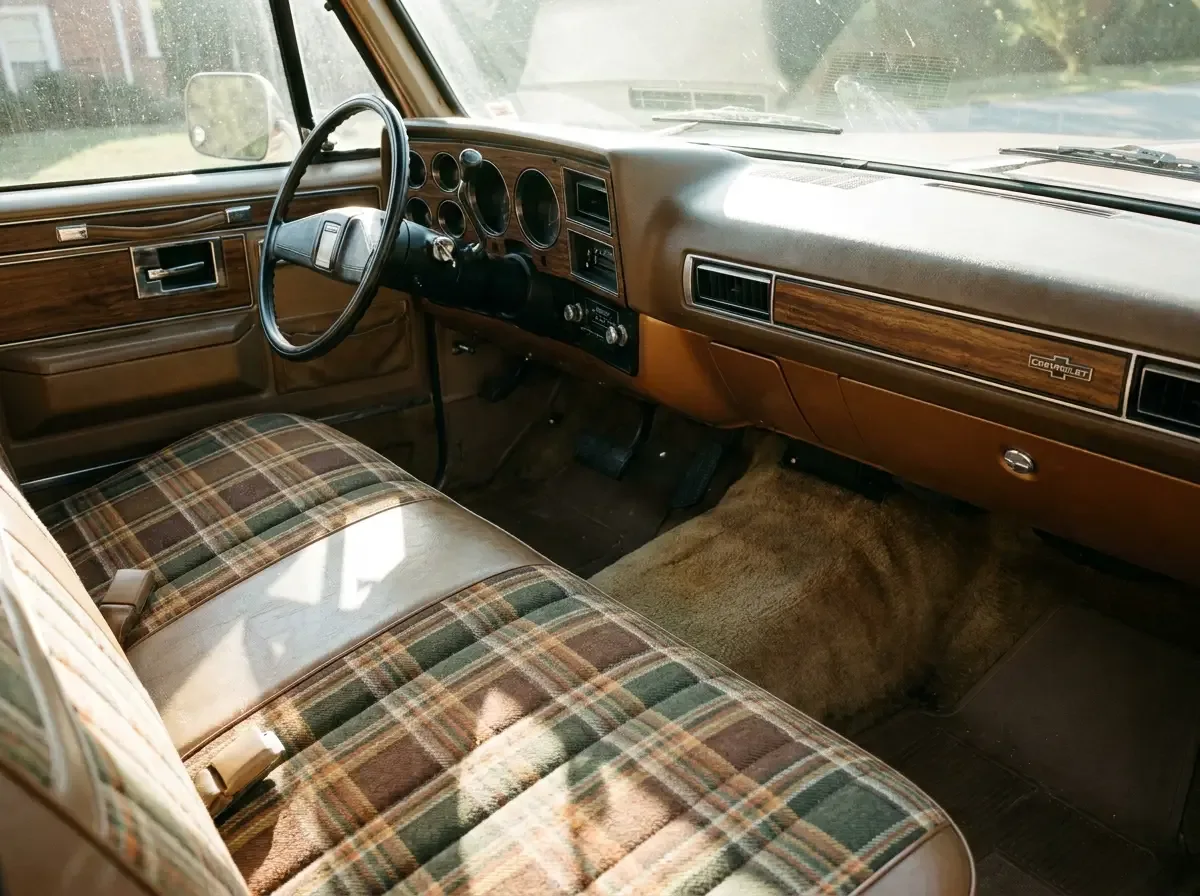
The third generation cab is where the shift became impossible to miss. Silverado and Custom Deluxe trim brought genuinely nice interiors, cloth or vinyl bench and bucket seat options, real door panel trim, and a dash design that looked purposeful rather than functional-only. Cruise control, tilt steering, power windows and locks all became available as the run matured, options that would have been unthinkable on the base 1960s work truck. The truck hadn't stopped being a truck. It had just stopped apologizing for wanting to be comfortable too.
That woodgrain wasn't wood at all, of course. It was Di-Noc, a self-adhesive vinyl film 3M had been selling to automakers since the 1950s, and GM leaned on it heavily enough across square body dashes and door panels that "correct Di-Noc" has become its own small obsession among people restoring these cabs today, hunting the right grain pattern and the right sheen under a showroom light. The cloth insert Chevrolet offered on Silverado-trim bench seats through the late 1970s carried a houndstooth-adjacent weave that nobody at the factory ever bothered naming for posterity, so owners now just call it "the plaid seat" and leave it at that, the way a family nickname outlives whatever the thing was actually supposed to be called.
| Generation | Base interior | Top trim additions |
|---|---|---|
| First gen (1960-1966) | Vinyl bench, painted dash, rubber floor | Heater, AM radio, two-tone paint |
| Action Line (1967-1972) | Wider bench, improved trim | Woodgrain accents, carpet, optional AC/FM |
| Square body (1973-1987) | Cloth/vinyl bench or buckets | Cruise, tilt, power windows/locks, Silverado trim |
Why the interior story matters as much as the exterior one
People restoring these trucks now spend as much time chasing the correct seat fabric pattern or the right dash knob as they do color-matching paint, and there's a reason for that. The interior is where a truck's real life happened. It's where a father taught a kid to work a clutch, where a bench seat held a dog on the way to a lake, where a radio dial got left on one station for so many years that changing it felt wrong even after the truck was sold. That's not nostalgia dressing up plain vinyl and painted metal. That's what the cabin actually was to the people who lived with it every day.
For the fuller arc of how this truck went from farm equipment to something people restore lovingly in a home garage, everything the C10 became lays out that whole journey, and the generation-by-generation guide is the place to go if you want the exterior and mechanical changes lined up alongside what was happening inside the cab at the same time.
"Nobody remembers the exact torque spec on their father's truck. They remember which seat cracked first, and who sat where."
Nora Beckett
What survives, and what people chase now
Original interiors this old rarely survive intact. Sun and use are hard on vinyl and harder on foam, and most of these cabs have been reupholstered at least once by the time they reach a second or third owner. What people chase in restoration now isn't perfection so much as accuracy, the right pattern, the right dash knob, the correct shade of a color that most people would never notice unless it was wrong. That obsession says something about what these trucks mean to the people who keep them running. The interior isn't an afterthought anymore, even though it started that way. It became part of the C10's place in truck culture, and that shift, from purely functional to genuinely cherished, is as much a part of this truck's story as anything under the hood.
Sources and notes
- Chevrolet C/K second generation (Action Line) overview
- GM Truck Generations: the 1967-1972 Action Line series
- 1968 Chevy CST (Custom Sport Truck) trim history
- History of Di-Noc woodgrain vinyl film in automotive use
- Forum discussion on original factory AM/FM radio availability
- Chevy C10 trim levels, Cheyenne through Silverado
Related Reading
Have a
Chevrolet C10
for Sale?
Reach thousands of serious classic car collectors across the US.
Sell It Here →
Are You a Classic Car Dealer?
List your full inventory and connect with targeted classic car buyers.
Join as a Dealer →

About the author
Nora Beckett
Automotive features writer and photographer who tells the human stories behind the cars, from show fields to cross-country road trips.
Related Listings - Chevrolet C10
More in History & Heritage
Comments
Be the first to comment on this article.