
In the 1930s the measure of a luxury car was cylinders. Eight was expected. Twelve was aspirational. Sixteen was a statement that money was no object, and Cadillac made that statement first and loudest. Lincoln answered on a different axis, and the contrast between the two approaches tells you almost everything about how each marque understood its own buyer.
History & Heritage
6 min read
Cadillac V16 and V12 vs Lincoln Zephyr and K-Series
Cadillac V16 vs Lincoln Zephyr and K-Series: how two marques answered the 1930s luxury question differently, and which strategy shaped the future.
This was one of the defining fronts in America's luxury war. Cadillac chased prestige through sheer cylinder count. Lincoln split its effort between a coachbuilt senior line and, later, a streamlined twelve that put refinement within reach of the merely comfortable. Both strategies had logic. Only one of them survived the decade in a form that pointed at the future.
Two answers to the same question
The question every luxury maker faced in 1930 was how to justify a price several times that of an ordinary car when the Depression was erasing customers by the month. Cadillac's answer was engineering theater. Lincoln's answer, at least at the top of its range, was coachwork, the traditional argument that the value lay in hand-built bodies from named craftsmen. These were not small differences of tuning. They were different theories of what luxury even meant.
The Cadillac V16, the statement engine
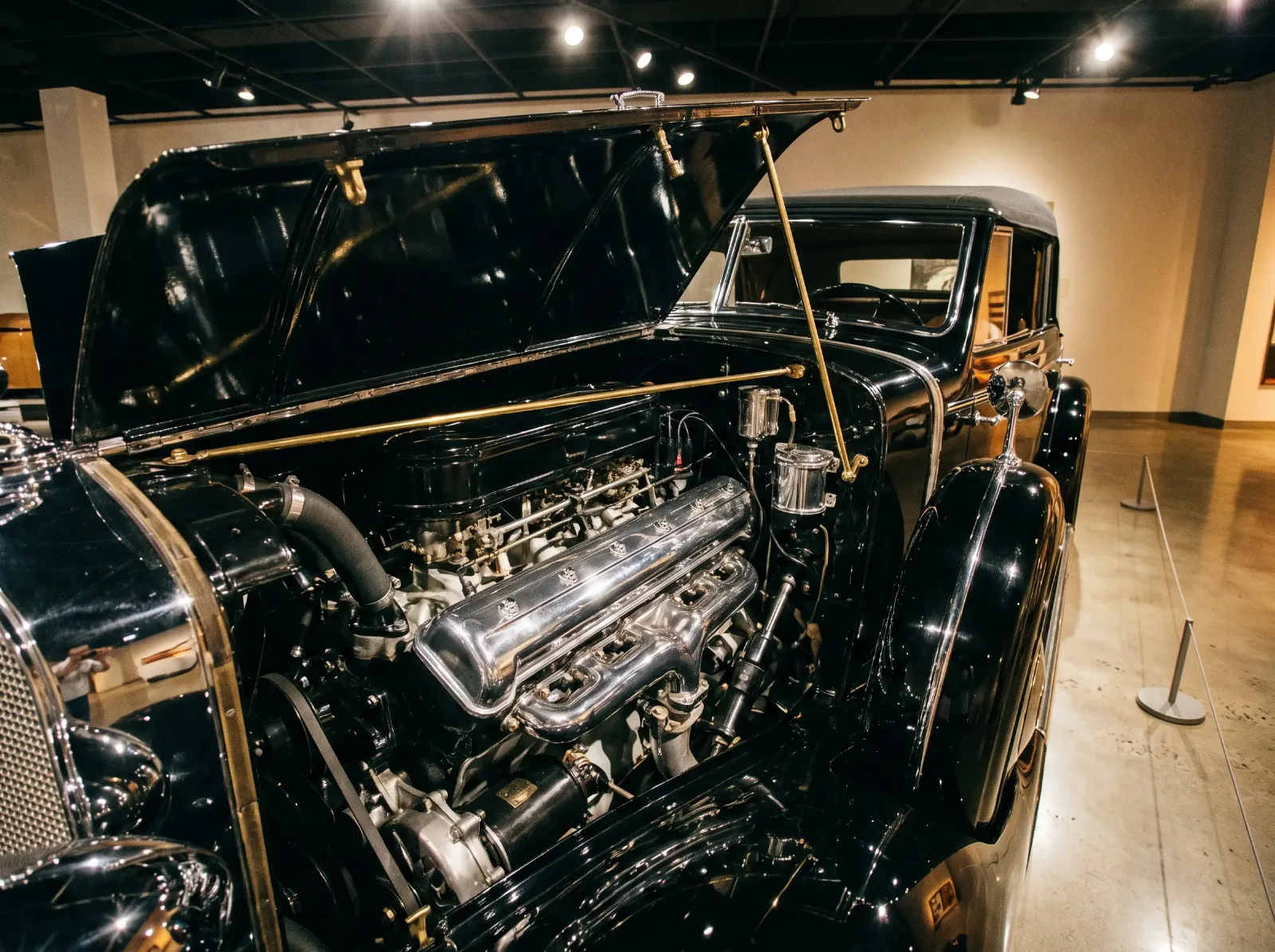
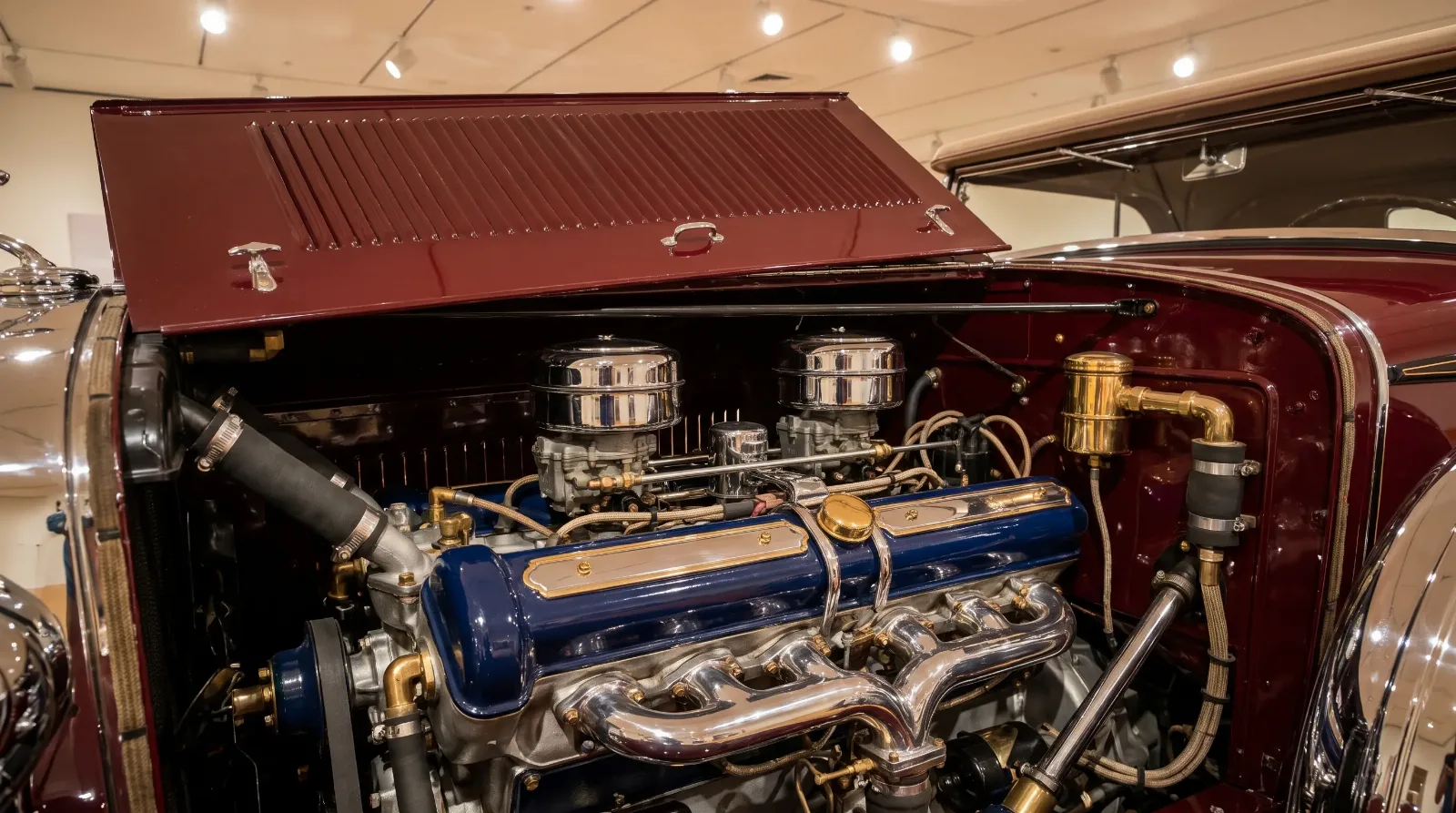
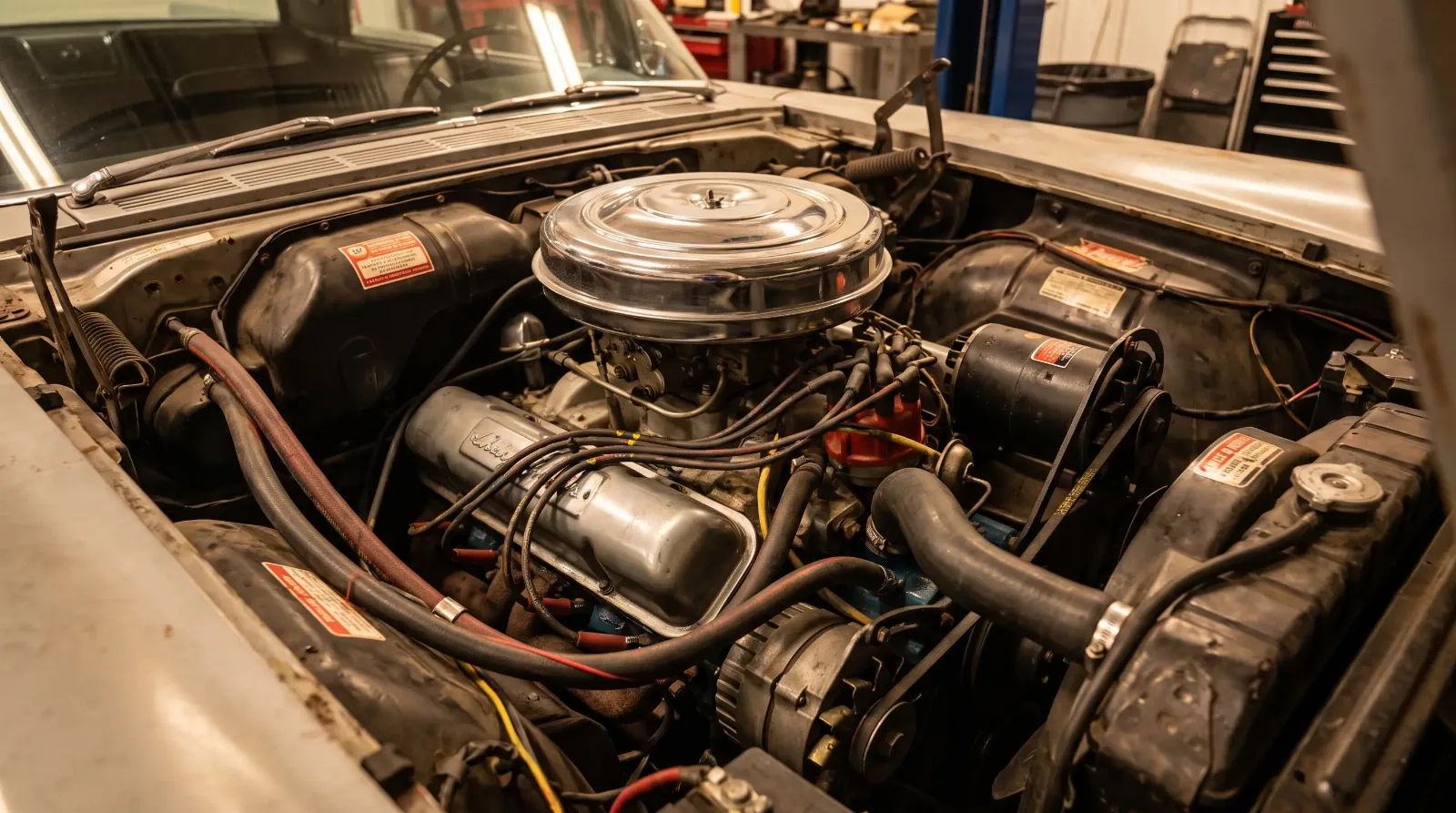
Cadillac unveiled its V16 at the New York Auto Show in January 1930, timing that turned out to be cruel, since the market for such cars was already collapsing. The engine was an overhead-valve unit of 452 cubic inches producing around 165 horsepower, and it was as much a piece of industrial sculpture as a powerplant, detailed with enamel and chrome so it would look right when the hood was raised for an admiring audience.
The V16 was smooth in a way that eight-cylinder cars of the day could not match, and it gave Cadillac an unassailable position at the very top of the American market. Production was small and grew smaller. Across the entire V16 program from 1930 through 1940, Cadillac built only about 4,000 of them, with the bulk sold in the first two years before demand thinned to a trickle. The first-generation overhead-valve sixteen accounted for the large majority; a second-generation flathead V16 of 431 cubic inches followed for 1938 through 1940 in far smaller numbers, barely 500 cars in three years.
Alongside it, Cadillac offered a V12 of 368 cubic inches from 1931, a car that delivered most of the sixteen's smoothness at a lower price. The twelve outsold the sixteen and did the practical work of holding Cadillac's upper-middle ground, while the V16 did the work of prestige.
The Lincoln K-series, coachbuilt gravity
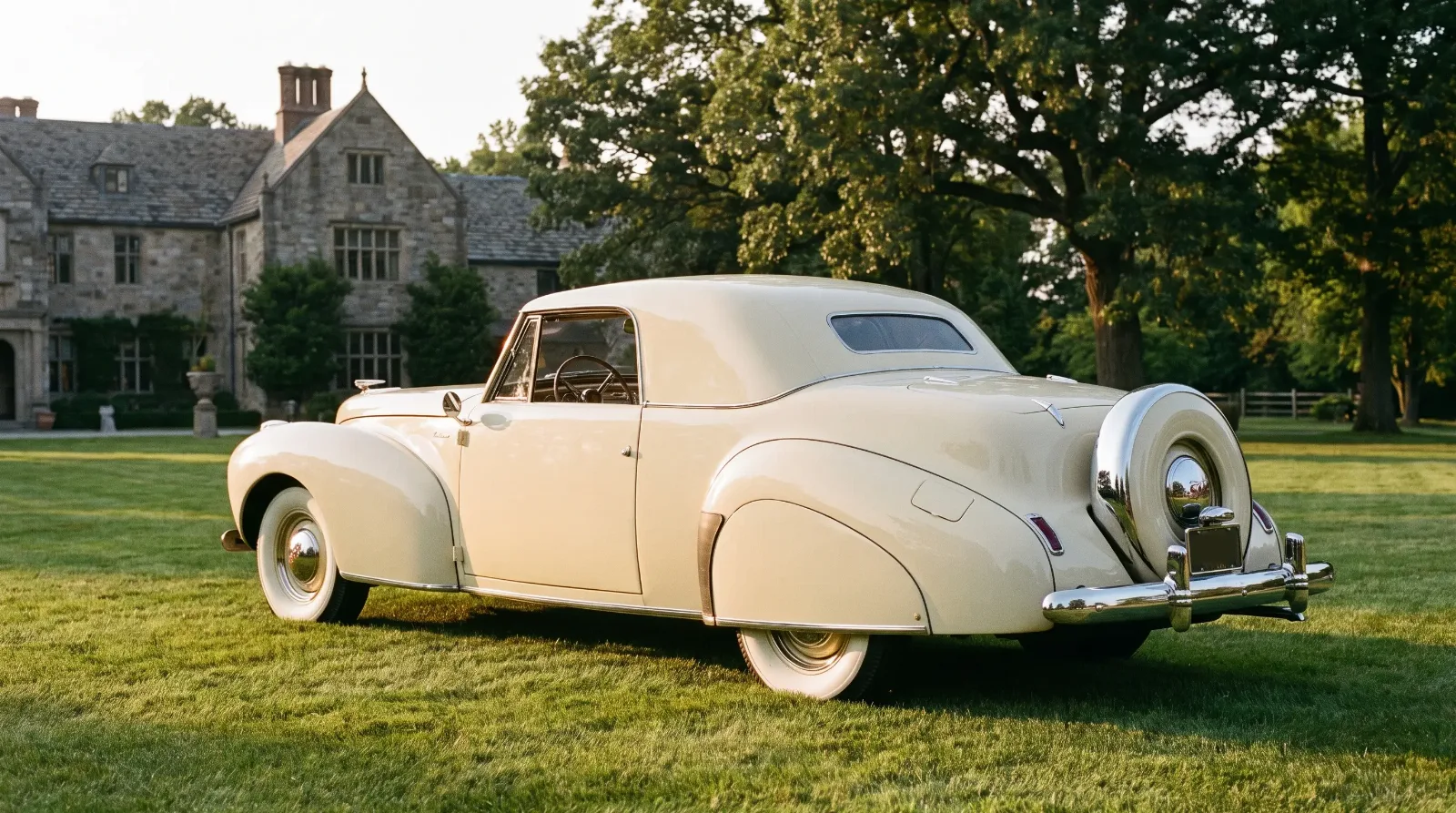
Lincoln's senior car through the decade was the Model K, a large, conservative, superbly built chassis meant to carry custom coachwork from the best houses of the day, LeBaron, Brunn, Willoughby, and Dietrich among them. The K arrived in 1931 and offered a V8 and then, in the KB, a large V12 of roughly 448 cubic inches producing about 150 horsepower.
The Model K was Lincoln's answer to the Cadillac V16 in spirit, though not in cylinder count. It made its case through the quality of its bodies and the solidity of Leland-era engineering rather than through spectacle. That was a defensible strategy for the traditional rich, but it was an expensive one, and the pool of buyers who wanted a formal coachbuilt Lincoln shrank every year the Depression ground on. The K-series soldiered to 1940 and then ended, the last of Lincoln's old-school senior cars.
The Zephyr changes the game
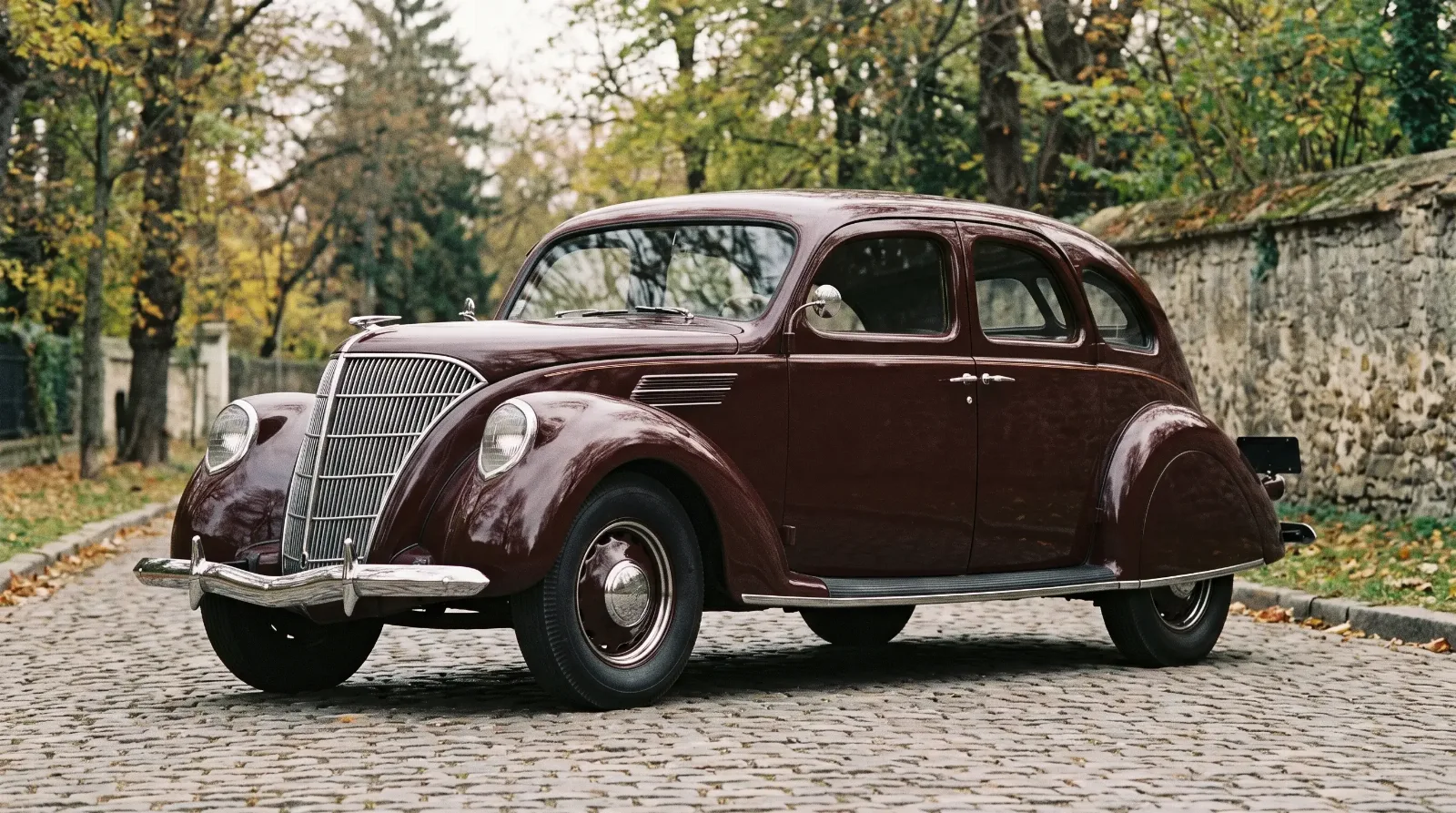
Lincoln's more consequential move came in 1936 with the Lincoln-Zephyr. Where the K looked back to the coachbuilt tradition, the Zephyr looked forward. It used a streamlined, unit-body design developed from John Tjaarda's work at Briggs, and it carried a V12, but a small and affordable one of 267 cubic inches producing around 110 horsepower.
The Zephyr's achievement was to make twelve cylinders attainable. It cost a fraction of a Model K or a Cadillac V12 and sold in numbers those cars never approached. It was not without flaws, the early twelves could run hot, suffered from marginal cooling passages, and were sensitive to maintenance, but it repositioned Lincoln from a marque that built a few grand cars to one that put refinement within reach of the professional class. Its unit-body construction was also genuinely advanced for a 1936 American car, giving it a rigidity and a low build that the separate-chassis competition could not easily match. It also gave Edsel Ford the platform from which the Continental would emerge.
| Multi-cylinder era | Displacement | Output | Role |
|---|---|---|---|
| Cadillac V16 (1930-37) | 452 cid OHV | ~165 hp | Prestige flagship |
| Cadillac V12 (1931-37) | 368 cid OHV | ~135-150 hp | Upper-middle volume |
| Lincoln K / KB V12 (1932-40) | ~448 cid | ~150 hp | Coachbuilt senior line |
| Lincoln-Zephyr V12 (1936-40) | 267 cid (later 292) | ~110 hp | Affordable streamlined twelve |
Who won the cylinder war
On prestige, Cadillac won without argument. Nothing Lincoln built in the decade carried the aura of the V16, and the sixteen remains the more coveted collector car today, valued in six and sometimes seven figures for the finest examples. On strategy, the verdict is more interesting. Cadillac's multi-cylinder cars were a magnificent dead end, expensive to build and impossible to sustain once the buyers vanished. Lincoln's Zephyr was the car that actually mattered for the future, because it proved that the twelve could be a volume proposition.
"The V16 is the car everyone remembers and rightly so. But the Zephyr is the car that read the decade correctly. Cadillac built the most impressive engine of the era, and Lincoln built the most important one, and those are not the same achievement."
Sarah Whitfield
The multi-cylinder contest ended with the war, and when peace came the terms changed entirely. The next battle would be fought not over how many cylinders a car had, but over how much power a modern overhead-valve V8 could make. Read on: next: The Postwar V8 Horsepower Race.
Related Reading
Have a
Classic Car
for Sale?
Reach thousands of serious classic car collectors across the US.
Sell It Here →
Are You a Classic Car Dealer?
List your full inventory and connect with targeted classic car buyers.
Join as a Dealer →
#automotive history
#prewar luxury
#Cadillac V16
#Lincoln Zephyr
#Lincoln Model K
#multi-cylinder engines

About the author
Sarah Whitfield
Third-generation classic car collector specializing in pre-war American and European coachbuilt automobiles. Researcher and concours enthusiast.
More in History & Heritage
Comments
Be the first to comment on this article.