
The prewar luxury argument was about cylinders. The postwar argument was about horsepower, and it was settled on the dyno and, briefly, on a Mexican highway. Between 1949 and the end of the 1950s, Cadillac and Lincoln pushed each other from about 150 horsepower to nearly 400, and the numbers tell a clean story of who led and who chased at each stage.
History & Heritage
5 min read
The Postwar V8 Horsepower Race: Cadillac vs Lincoln
The Cadillac vs Lincoln V8 horsepower race: from the 1949 OHV 331 to Lincoln's 375 hp in 1958, who led, who chased, and what the numbers meant.
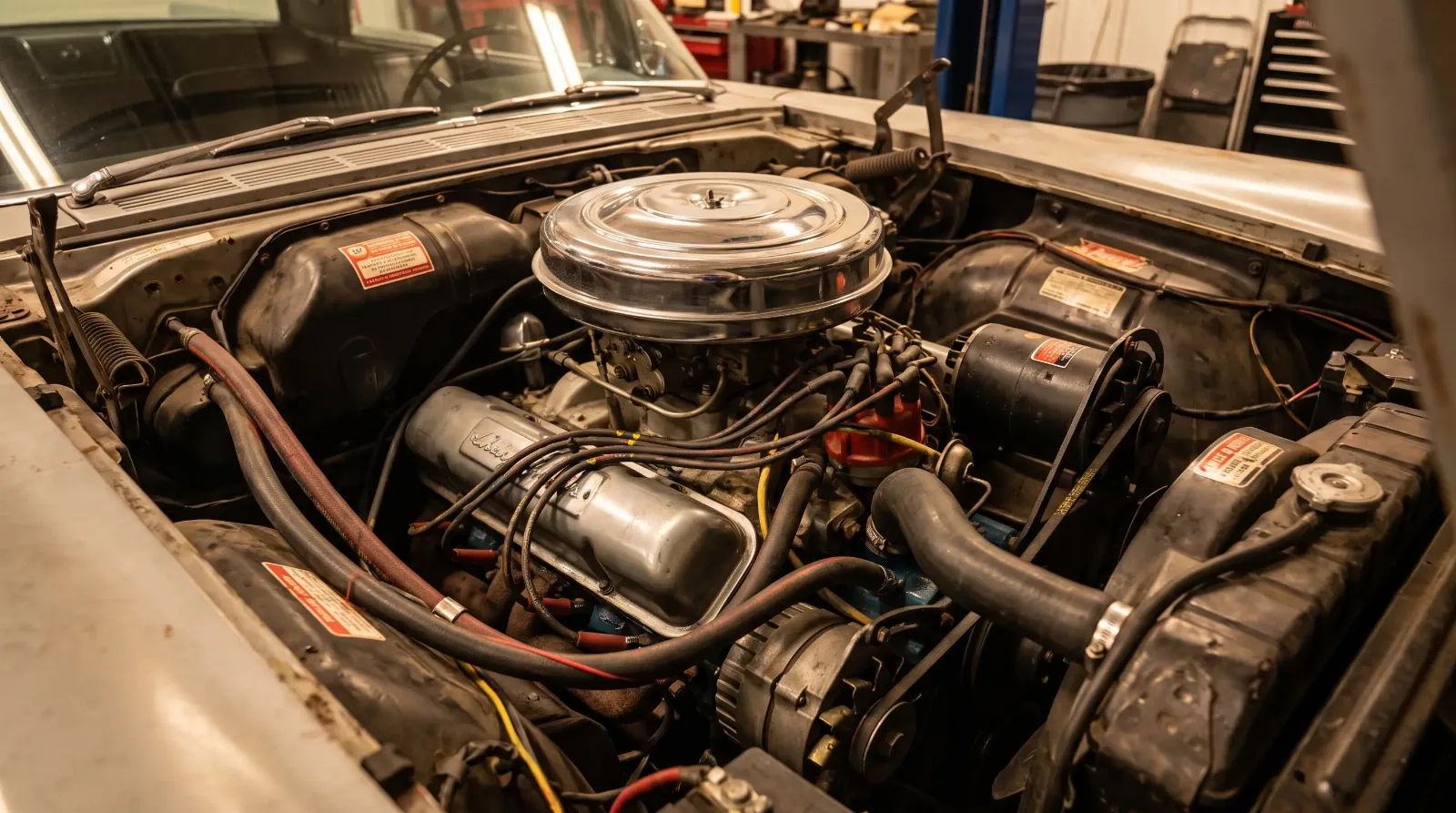
This was the next chapter in the ongoing Cadillac-Lincoln feud, and unlike the design battles it was easy to score. Output is a number. Either you had more of it than the other marque in a given model year, or you did not. Here is how the ledger ran.
1949: Cadillac lands the first punch
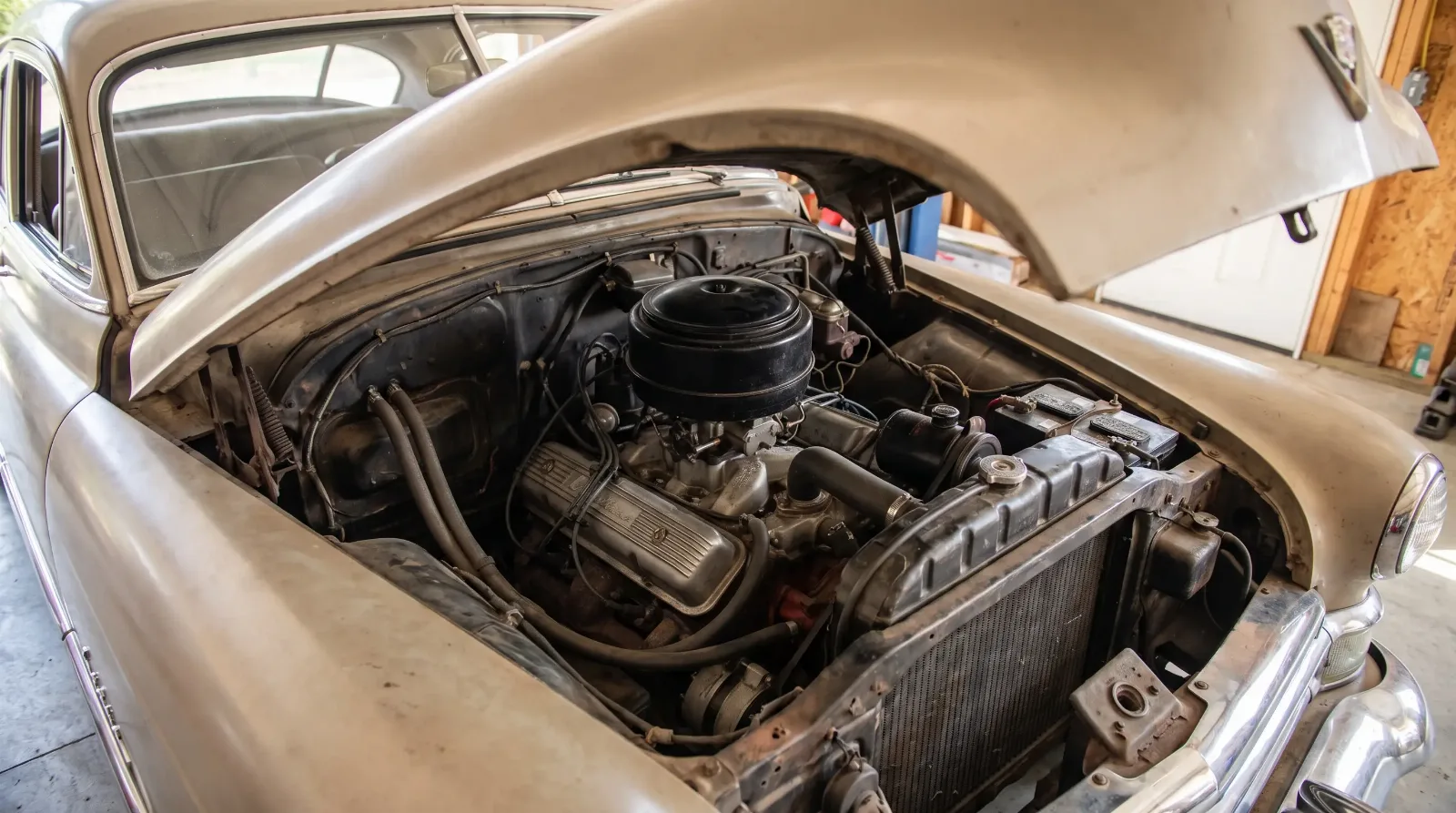
Cadillac opened the modern era in 1949 with a genuinely new overhead-valve V8 of 331 cubic inches producing 160 horsepower. The engineering mattered more than the figure. It was a lightweight, oversquare, high-compression design that could take more compression as fuel octane improved, which meant it had room to grow. It was, in valuation terms, an appreciating asset while the old flatheads were depreciating ones.
Lincoln arrived at the same 1949 model year still running a flathead V8 of 337 cubic inches making around 152 horsepower. On paper the gap was small. In practice Cadillac had the architecture of the future and Lincoln had the architecture of the past, and everyone in the industry could read the difference. Cadillac led, clearly, at the starting gun.
Lincoln's comeback ran through Mexico
Lincoln answered in 1952 with its own overhead-valve V8, 317 cubic inches and 160 horsepower to start, then a jump to 205 horsepower for 1953. And Lincoln did something Cadillac did not: it proved the engine in competition. Lincolns dominated the stock class of the Carrera Panamericana, the brutal Mexican road race, across 1952, 1953, and 1954, finishing near the front against far more exotic machinery.
That was the high point of Lincoln's technical credibility in the whole rivalry. For a few years the marque could claim not just competitive horsepower but proven durability under punishment, a claim Cadillac never matched on a racecourse. If you are weighing these cars as collectibles today, the Mexican Road Race Lincolns of 1952 through 1954 carry a competition story that most Cadillacs of the period simply do not.
The mid-fifties escalation
From 1955 the numbers climbed fast on both sides. Cadillac's 331 reached 250 horsepower in 1955, with the Eldorado tuned higher still. For 1956 Cadillac enlarged the V8 to 365 cubic inches and about 285 horsepower. Lincoln kept pace, moving to 341 cubic inches and 225 horsepower for 1955, then to a 368 cubic inch V8 at roughly 285 horsepower for 1956. By the middle of the decade the two marques were trading the lead year to year rather than one dominating.
| Model year | Cadillac V8 | Lincoln V8 | Lead |
|---|---|---|---|
| 1949 | 331 cid OHV, 160 hp | 337 cid flathead, ~152 hp | Cadillac |
| 1952 | 331 cid, 190 hp | 317 cid OHV, 160 hp | Cadillac |
| 1953 | 331 cid, ~210 hp | 317 cid, 205 hp | Roughly even |
| 1956 | 365 cid, ~285 hp | 368 cid, ~285 hp | Tie |
| 1958 | 365 cid, 310 hp (Eldo ~335) | 430 cid, 375 hp | Lincoln |
1958 and the peak of the war
The horsepower race crested in 1958. Lincoln introduced a massive 430 cubic inch V8 rated at 375 horsepower, the biggest number either marque had ever posted, in a car that was itself enormous. Cadillac's standard 365 cubic inch V8 made 310 horsepower that year, with the Eldorado's triple-carburetor version reaching around 335. On the single measure of advertised output, Lincoln finally led.
The lead was hollow, though, and this is where a market analyst has to separate the number from the value. Lincoln's 1958 cars were heavy, complex, and expensive to build, and they did not sell in Cadillac's numbers. The all-new unibody Lincolns of that year were also plagued by quality and reliability complaints that undercut the marque just as it posted its biggest horsepower figure. Cadillac won the decade on the metric that actually compounds, which is buyers. The horsepower figures made headlines. The registration figures made the business, and Cadillac dominated those throughout.
What the numbers actually meant
The horsepower race is remembered as a Cadillac era, and by the only measure that funds a company, it was. But the technical honors were genuinely split. Cadillac led out of the gate in 1949 and never surrendered the sales crown. Lincoln matched or beat it on output at several points and, uniquely, proved its engines in real competition. That fuller picture is part of the full classic luxury car story, and it is why the collector market treats the two marques differently even when their spec sheets read alike.
"Horsepower makes headlines. Sales make history. Lincoln out-muscled Cadillac on paper in 1958 and still lost the decade, because the number that compounds is the number of buyers who wrote the check. Cadillac understood that, and the auction results a lifetime later still reflect it."
David Mercer
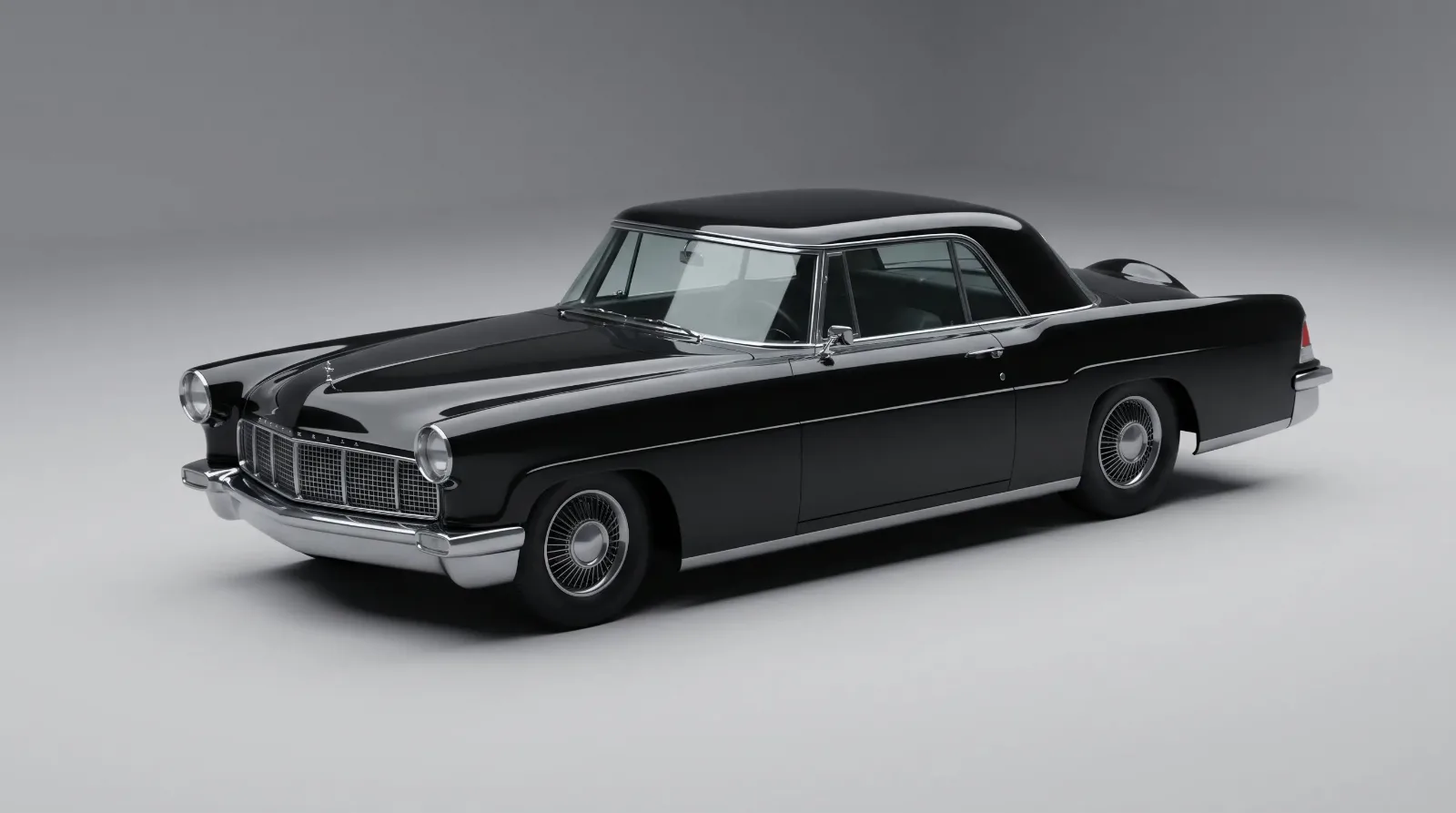
Values today track that split. Standard sedans from both marques remain affordable, and buyers scanning the current classic luxury cars for sale will find honest drivers within reach, while documented performance and halo cars pull well clear of the pack. The horsepower war eventually narrowed to a single, more focused duel: two personal luxury coupes built to be the best of their marques. Read on: next: Eldorado vs Continental Mark II.
Related Reading
Have a
Classic Car
for Sale?
Reach thousands of serious classic car collectors across the US.
Sell It Here →
Are You a Classic Car Dealer?
List your full inventory and connect with targeted classic car buyers.
Join as a Dealer →

About the author
David Mercer
Classic car market analyst with two decades of experience tracking collector car valuations, auction results, and investment trends.
More in History & Heritage
Comments
Be the first to comment on this article.