
By 1940 Cadillac had spent a decade winning. Its multi-cylinder cars had impressed the wealthy, its 1938 Sixty Special had rewritten the rulebook on how a formal sedan could look, and General Motors gave the division a marketing reach that Lincoln could not touch. Ford needed an answer that did not depend on outspending its rival, and the answer arrived in the shape of a single, quietly radical car built for the boss's son.
History & Heritage
6 min read
The 1940 Lincoln Continental: Edsel Ford's Answer to Cadillac
The 1940 Lincoln Continental history: how Edsel Ford answered Cadillac not with power or price but with pure design, and won a lasting reputation.
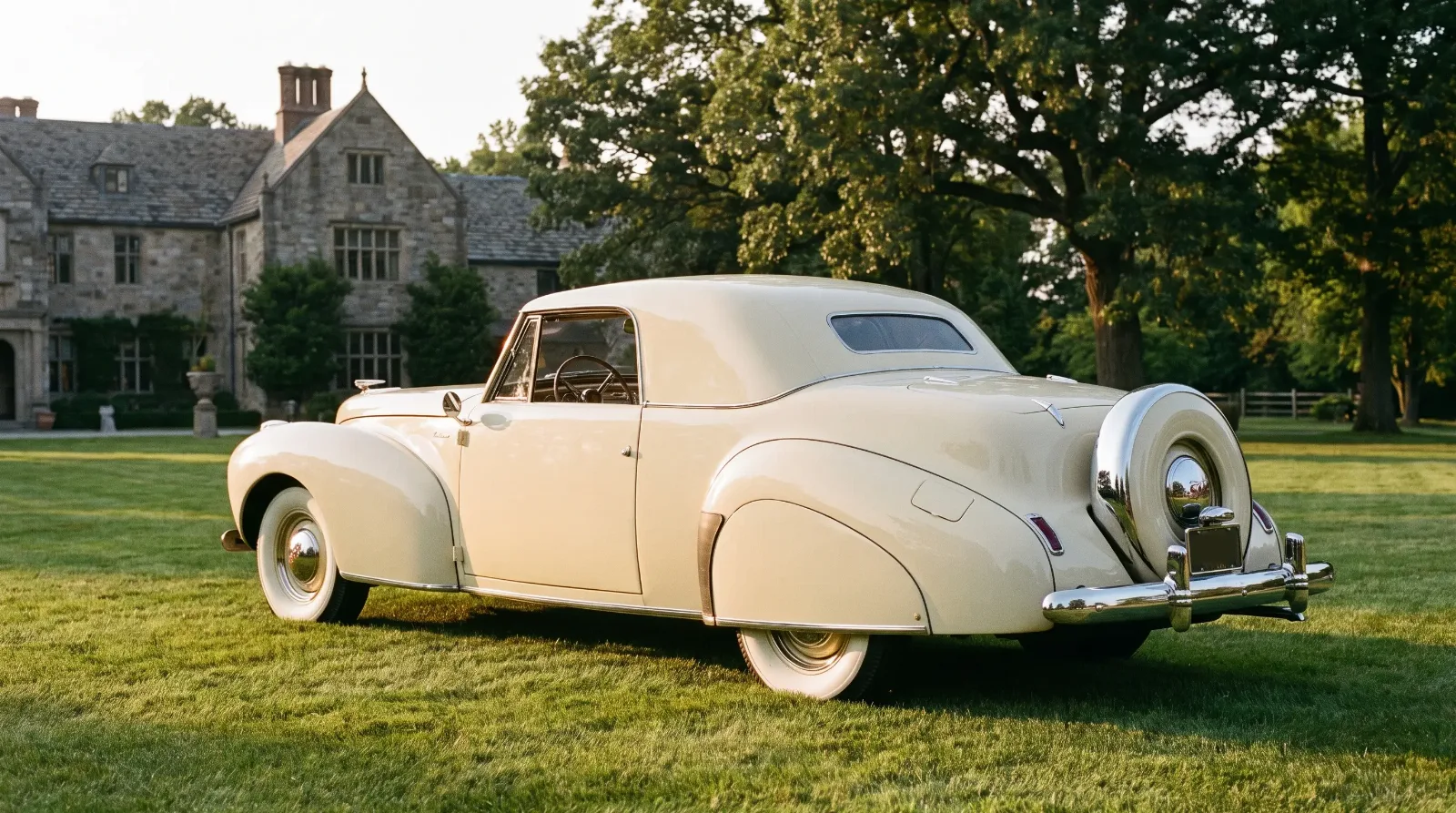
The 1940 Lincoln Continental did not beat Cadillac on volume, power, or price. It beat it on line. In the middle of the Cadillac-Lincoln rivalry, this was the moment Lincoln stopped trying to match Cadillac feature for feature and instead made an argument about taste that Cadillac could not immediately counter.
What Cadillac had that Lincoln lacked
The problem for Lincoln in the late 1930s was not engineering. The Model K and the Lincoln-Zephyr were sound cars. The problem was that Cadillac had seized the design conversation. Harley Earl's Art and Colour studio, and specifically the 1938 Sixty Special credited to a young Bill Mitchell, showed the industry a lower, cleaner sedan with thin pillars, no running boards to speak of, and a body that looked designed rather than assembled. It made most rivals, Lincoln included, look like they belonged to the previous decade.
Cadillac also had breadth. It offered buyers a ladder that ran from the affordable Series 61 up through the Sixty Special to the V16 flagship, a range that let the division capture the merely prosperous and the genuinely rich under one crest. Lincoln, by contrast, had the mass-market Zephyr at one end and the aging, expensive Model K at the other, with an awkward gap in between.
That gap was strategically dangerous. A buyer who had outgrown the Zephyr but did not want the formal, old-fashioned Model K had nowhere to go inside the Lincoln showroom, and Cadillac was happy to catch anyone who slipped through. Ford needed something to sit in that space, and it needed the something to carry a reputation the Zephyr could not confer. A halo car, in other words, and a distinctive one.
Edsel's weapon was design, not displacement
Edsel Ford understood that he could not out-engineer Cadillac in a single stroke, so he changed the terms. He asked his design chief, Eugene Gregorie, for a personal car in the European touring idiom, low and clean, with the mass pushed rearward and a long hood running ahead of a chopped cabin. The externally mounted spare tire at the rear gave the car a distinctive tail and later lent its name to the whole Continental look.
The car reached the public late in 1939 as a 1940 model. Where Cadillac's best work still read as a refined production sedan, the Continental read as a coachbuilt one-off that happened to be for sale. That was the point. Edsel was not trying to sell more cars than Cadillac. He was trying to establish that Lincoln could produce something Cadillac's studios, for all their skill, had not: a car of pure proportion, stripped of the ornament that American luxury still leaned on.
The Zephyr V12 against Cadillac's engines
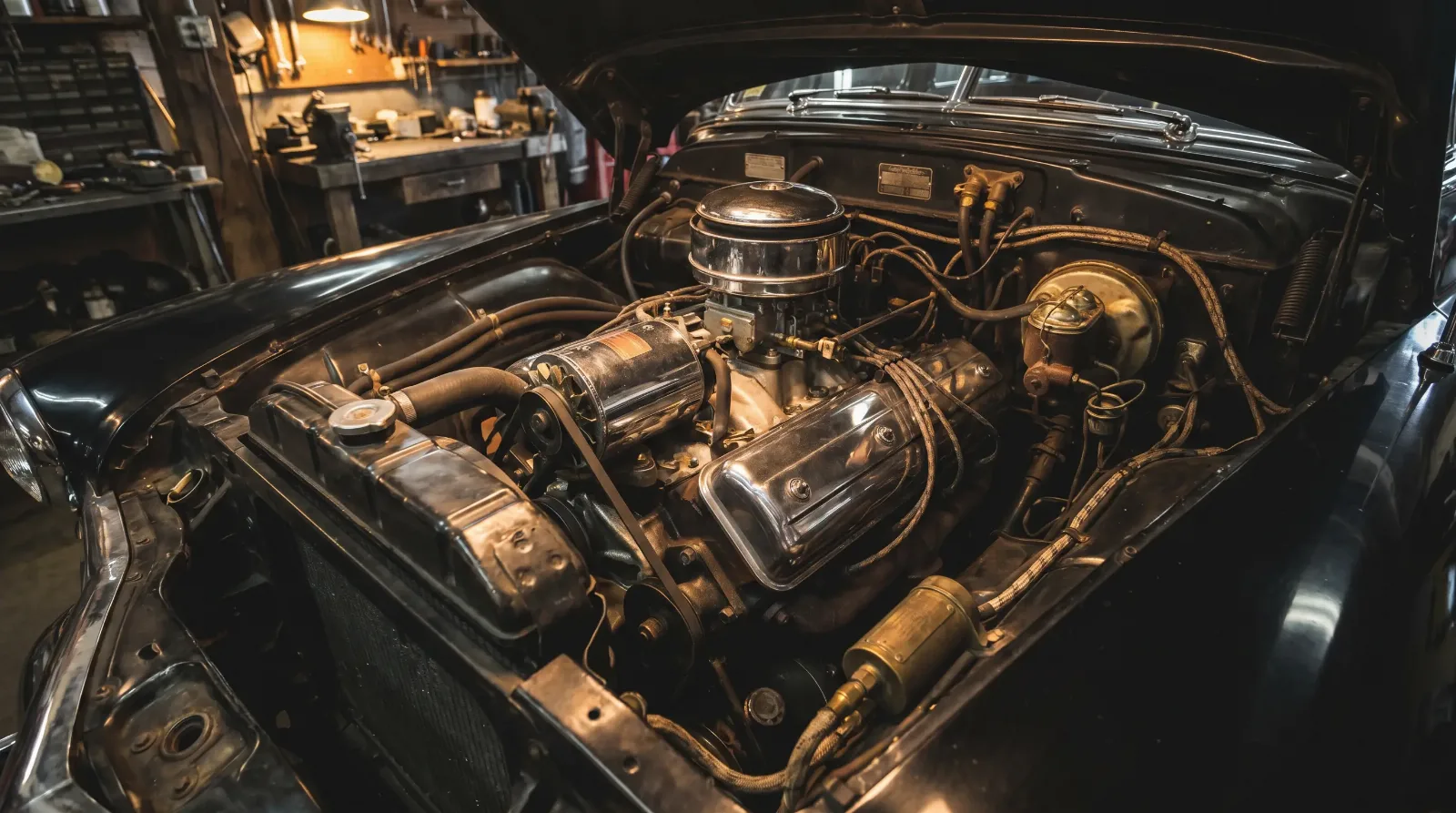
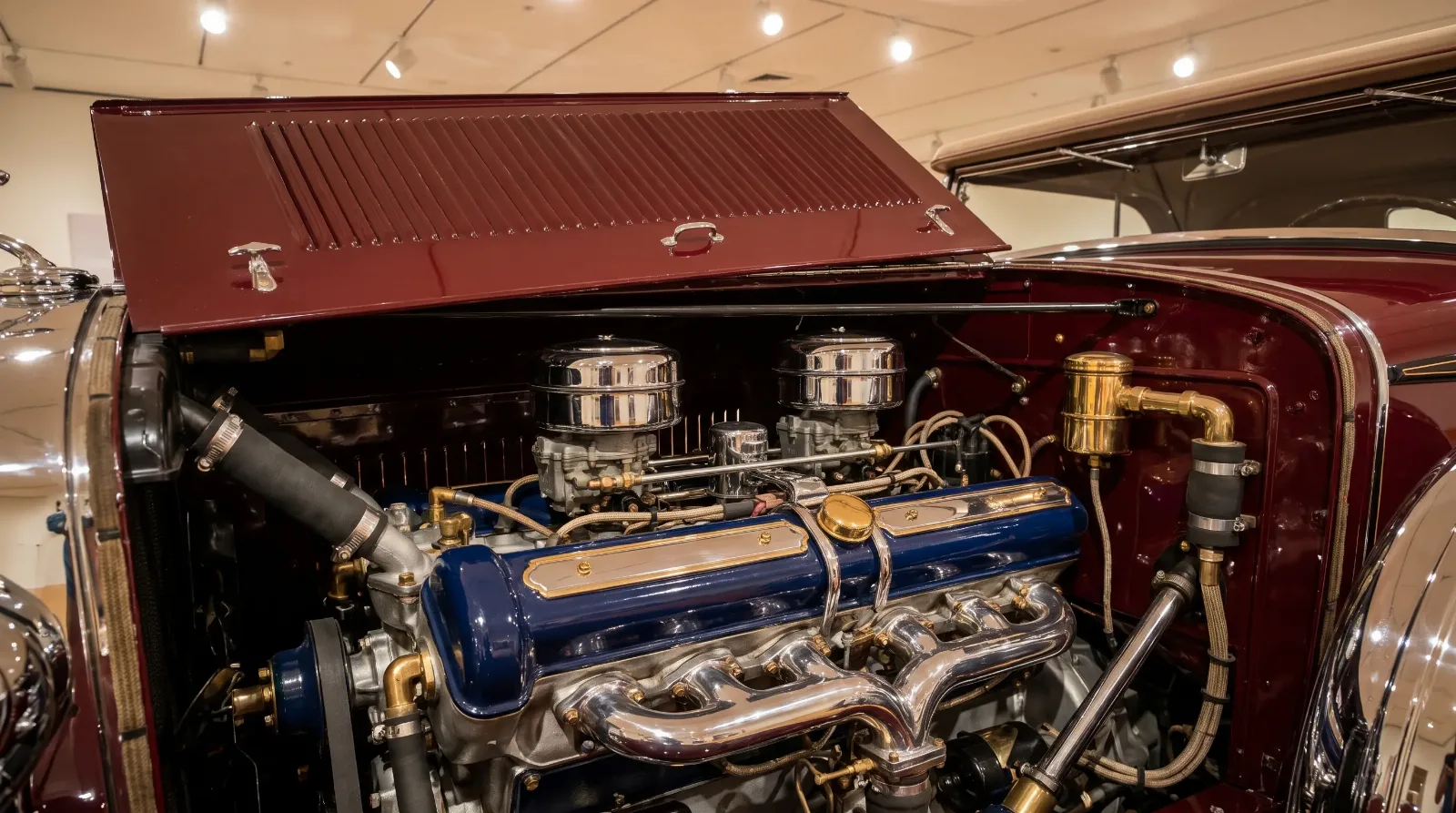
Under the long hood sat a Lincoln-Zephyr power unit, an L-head V12 of roughly 292 cubic inches producing around 110 to 120 horsepower. On paper this was not a match for Cadillac's strongest offerings. Cadillac's own multi-cylinder story was winding down by 1940, but its overhead-valve V8s were robust and its second-generation V16, though rare and costly, still crowned the range with sheer cylinder count.
The Zephyr twelve was chosen for the same reason Cadillac had built multi-cylinder cars in the first place: at this level, smoothness mattered more than outright output. The V12 was not without faults. It ran hot, and its cooling and lubrication punished neglect, which is why sorting that engine remains the central task in restoring one today. But in a well-kept car it delivered the effortless, quiet gait the body promised, and that refinement was the real rival to Cadillac's polish.
| Head to head, 1940 | Lincoln Continental | Cadillac (upper range) |
|---|---|---|
| Signature engine | L-head V12, ~292 cid, ~110-120 hp | OHV V8; V16 flagship still offered |
| Design case | Coachbuilt line on a Zephyr base | Sixty Special, studio-led elegance |
| Body styles, 1940 | Cabriolet and club coupe | Full range, sedan to limousine |
| 1940 volume | 404 cars (350 cabriolets, 54 coupes) | Tens of thousands across series |
| Positioning | Halo car, taste over breadth | Full luxury ladder |
Did the answer work?
Measured by sales, no. Cadillac outsold Lincoln by a wide margin in 1940, and the Continental's production ran to only a few hundred cars in its first year, a mix of cabriolets and coupes finished with a degree of hand labor unusual for a Ford product. Measured by reputation, the Continental succeeded completely. It gave Lincoln a halo the Zephyr alone never could, and it planted a flag for restraint in a market drifting toward chrome and heft.
"Cadillac won the 1940 sales year without breaking stride. What it could not do was answer the Continental on its own ground, because Edsel had moved the contest to proportion and taste, and there a single well-drawn car outweighs a full catalog."
Sarah Whitfield
The Classic Car Club of America later recognized the 1940 through 1948 Continental as a Full Classic, a rank reserved for the era's most distinguished machines and rarely granted to a car built on a mass-market platform. That recognition is the clearest verdict on Edsel's strategy. He did not beat Cadillac at Cadillac's game. He redefined the game so that a Lincoln could be judged among coachbuilt peers.
The Continental was one front in a wider engineering contest, one that ran from cylinder count to chassis. To see how the two marques armed themselves in the multi-cylinder era, read on: next: Cadillac V16 and V12 vs Lincoln Zephyr and K-Series.
Related Reading
Have a
Classic Car
for Sale?
Reach thousands of serious classic car collectors across the US.
Sell It Here →
Are You a Classic Car Dealer?
List your full inventory and connect with targeted classic car buyers.
Join as a Dealer →

About the author
Sarah Whitfield
Third-generation classic car collector specializing in pre-war American and European coachbuilt automobiles. Researcher and concours enthusiast.
More in History & Heritage
Comments
Be the first to comment on this article.