
Cadillac did not begin as a maker of ornament. It began as a maker of parts that fit. That distinction matters more than any tailfin or chrome grille the company ever produced, because the reputation Cadillac carried into the postwar era was built on engineering discipline first and prestige second. The car became a status object only after it had earned the right to be one.
History & Heritage
6 min read
Cadillac's Rise to GM's Flagship Marque
How Cadillac history turned machinist precision, the first V8, and the V16 into GM's flagship marque and the American Standard of the World.
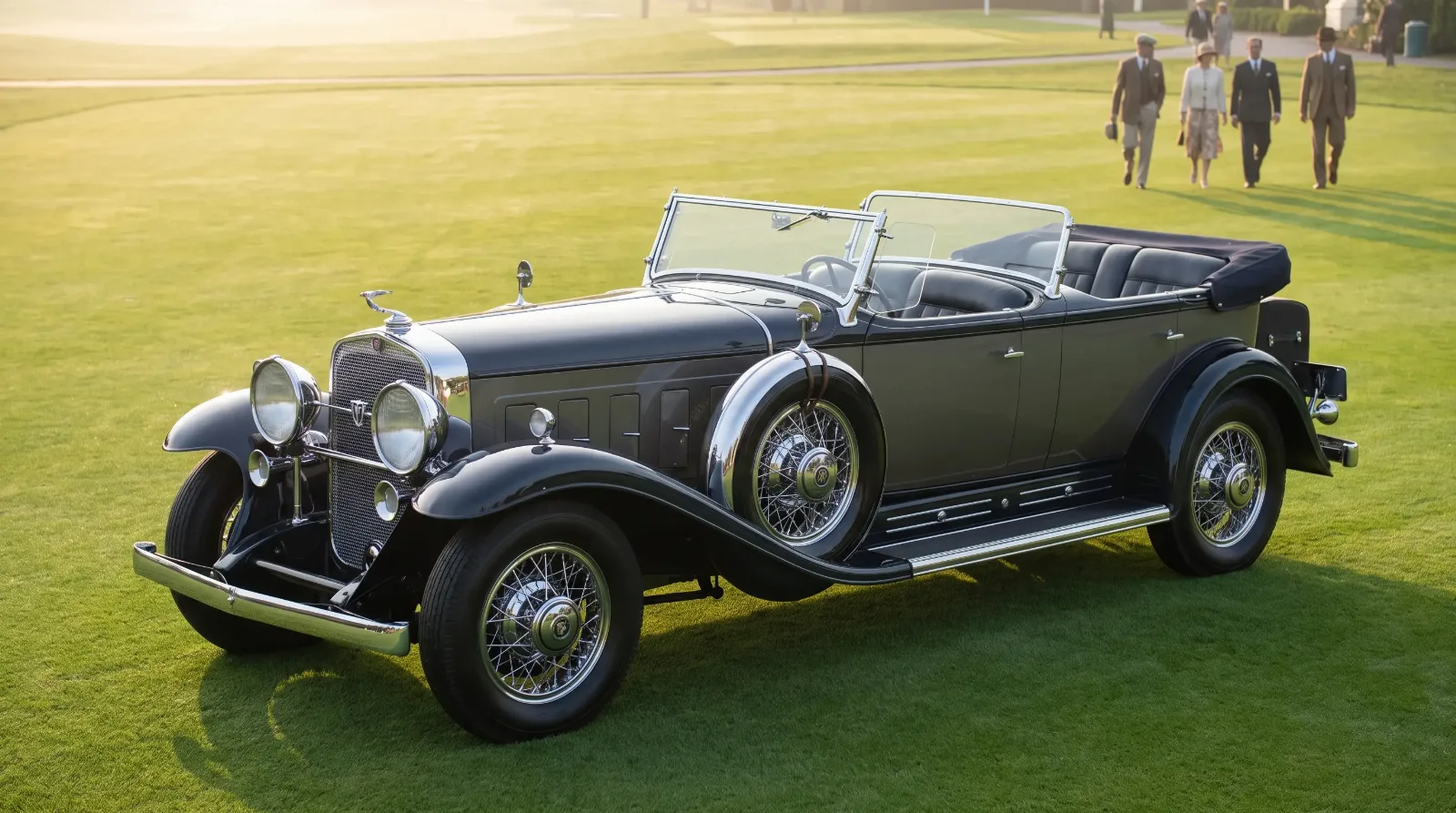
Understanding how Cadillac climbed to the top of General Motors means looking past the later Eldorados and reading the marque as an artifact of American manufacturing ambition. Its story runs alongside the wider arc of the segment, which you can trace in the classic luxury car's full history. What follows is the narrower question of how one Detroit company turned mechanical precision into a claim on the word "standard."
Precision before prestige
Cadillac was organized in 1902 from the wreckage of Henry Ford's second failed venture. Henry Leland, a machinist trained in the exacting world of precision toolmaking, took over and set a standard for tolerances that most of the young industry could not match. Leland cared about interchangeability, the idea that any part from the bin would fit any car without hand-fitting by a mechanic.
The proof came in 1908. The Royal Automobile Club in England ran a test at the Brooklands circuit: three Cadillacs were disassembled, their parts scrambled together and mixed with fresh components, then reassembled and driven. The cars ran. Cadillac won the Dewar Trophy for the feat, and the phrase "Standard of the World" attached itself to the marque and stayed. This was a period when most cars were essentially bespoke assemblies, so the achievement was substantial.
The self-starter and the first V8
Leland kept pushing. The 1912 Cadillac carried an electric self-starter developed with Charles Kettering's Delco, which also powered electric lighting and ignition. It removed the hand crank, a genuinely dangerous device, and Cadillac took a second Dewar Trophy in 1913 for the innovation. No other manufacturer had integrated the electrical system so completely.
In 1915 came the Type 51, with the first mass-produced V8 built in America. Displacing 314 cubic inches and making roughly 70 horsepower, it gave Cadillac a smoothness and torque that inline engines struggled to equal. The V8 architecture would define the marque for the next century. By the end of the 1910s Cadillac had two claims no rival could dismiss: it built to a machinist's tolerances, and it built more cylinders more reliably than anyone in its price class.
Joining General Motors
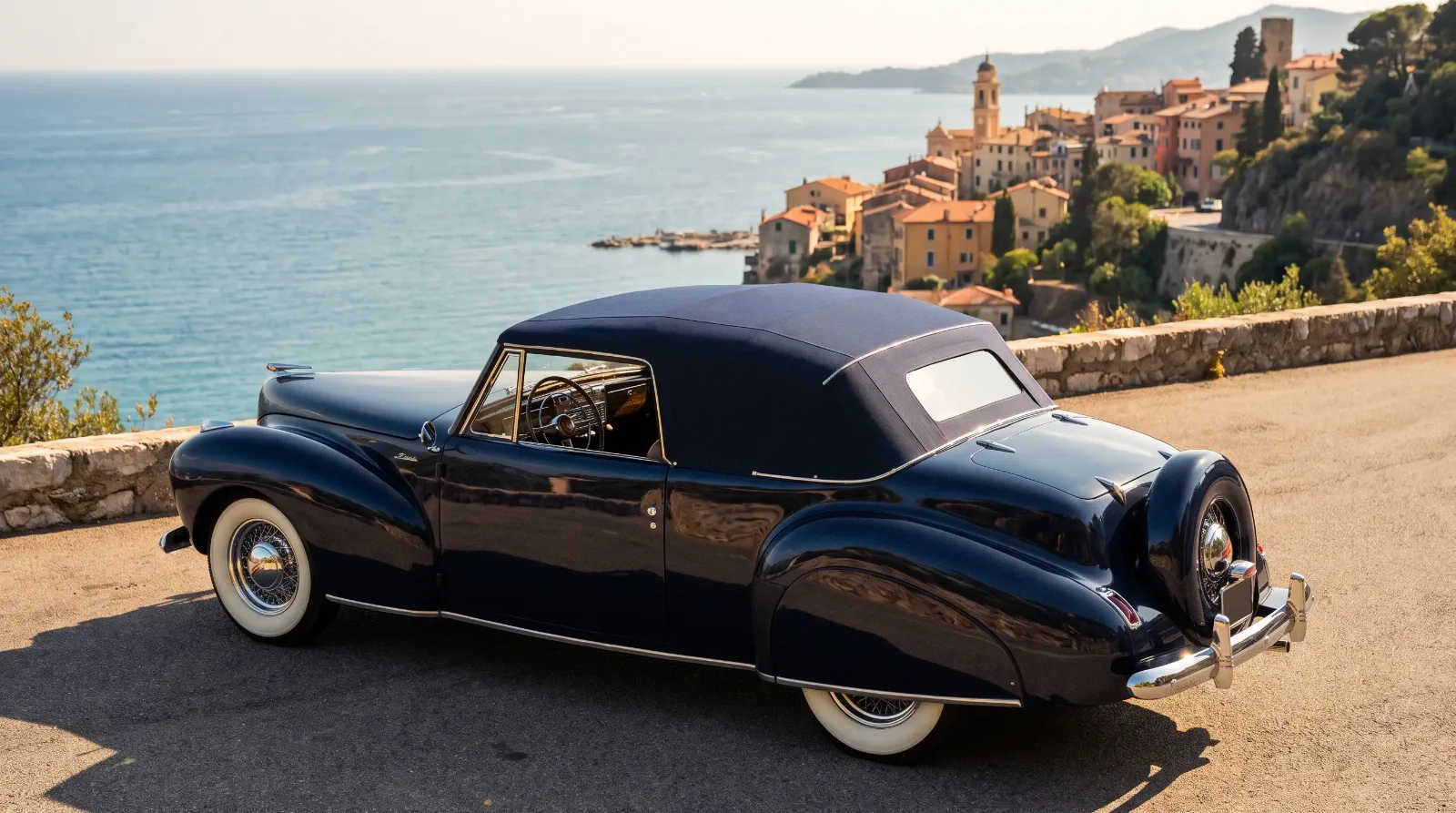
William Durant bought Cadillac for General Motors in 1909, paying somewhere around four and a half million dollars, a large sum for the era. Durant was assembling GM from a collection of makes, and Cadillac gave the new conglomerate its prestige anchor from the start. Leland stayed on to run it for several more years before leaving to found Lincoln.
Within GM's hierarchy, Cadillac sat at the top of a deliberate ladder of brands, each priced a step above the last, from Chevrolet upward. Cadillac occupied the summit. That structural position, not just the cars themselves, is what made it the flagship. The company had a reason to protect Cadillac's margins and its image, because the whole ladder depended on there being a crown at the top.
The V16 and the art of the showpiece
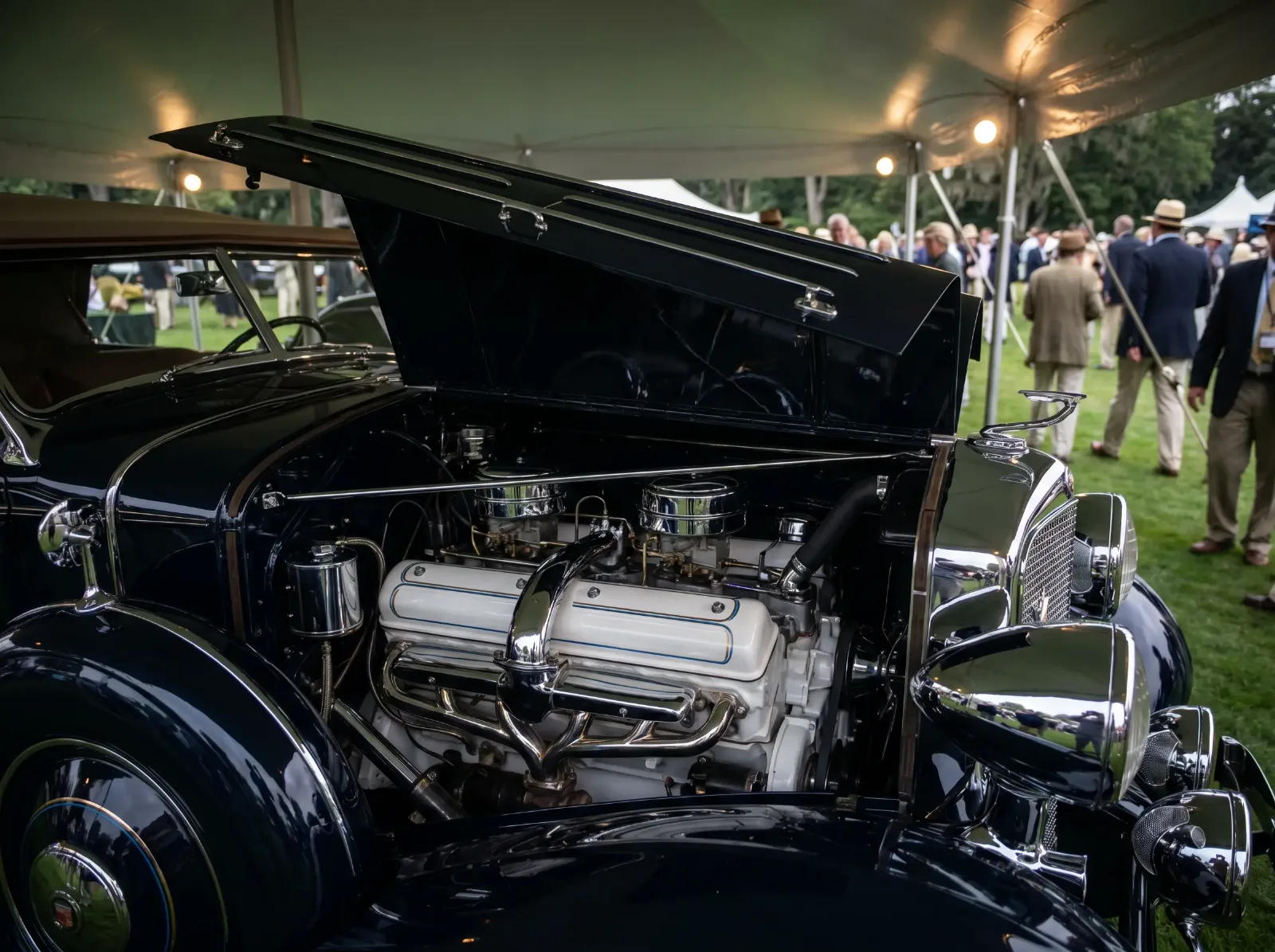
The clearest statement of Cadillac's ambition arrived in January 1930 with the V16. It was an overhead-valve sixteen-cylinder engine of 452 cubic inches, producing about 165 horsepower, and it was as much a piece of sculpture as machinery, with porcelain and polished surfaces meant to be admired when the hood was raised. The timing was cruel. The Depression arrived almost as the car did, and total first-generation V16 production across its 1930 to 1937 run came to only around 4,000 cars.
The coachbuilt V16s were bodied by the finest firms of the era, and they remain among the most sought pre-war American classics at concours today. The marque also learned to sell design. Harley Earl, hired in 1927, first shaped the 1927 LaSalle, Cadillac's companion make, and then built GM's Art and Colour styling section into a force. Cadillac was learning that the way a car looked could be engineered as deliberately as the way it ran. If you want to see how these pre-war showpieces trade now, the current market for classic luxury cars for sale shows how thin the surviving supply of the multi-cylinder cars really is.
| Milestone | Year | Significance |
|---|---|---|
| Founded | 1902 | Organized under Henry Leland |
| First Dewar Trophy | 1908 | Parts interchangeability, "Standard of the World" |
| Acquired by GM | 1909 | Became the group's prestige anchor |
| Electric self-starter | 1912 | Second Dewar Trophy |
| First mass-produced V8 | 1915 | Type 51, ~314 cid |
| V16 introduced | 1930 | 452 cid, ~165 hp showpiece engine |
| OHV "high-compression" V8 | 1949 | 331 cid, ~160 hp, postwar benchmark |
The postwar standard
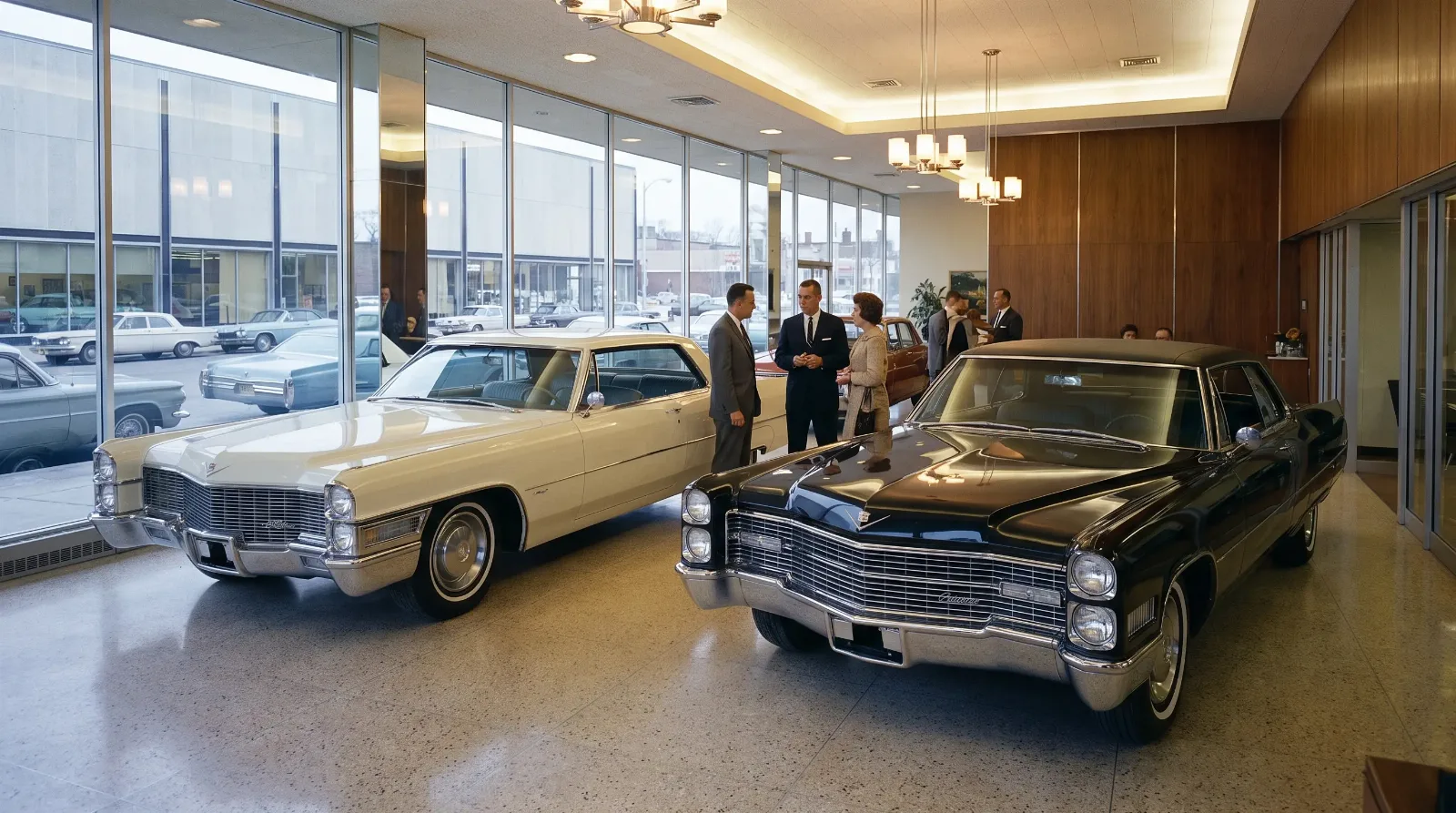
Cadillac emerged from the war with its position intact and then made it unassailable. The 1948 cars introduced the tailfin, an idea Harley Earl's studio drew from the twin-boom P-38 fighter, and the 1949 cars brought a new overhead-valve V8 of 331 cubic inches making around 160 horsepower. That engine, light and efficient by the standards of the day, set the template the whole industry chased through the 1950s.
"A Cadillac of the classic era rewards the same kind of looking a good piece of furniture does. The value was in how the thing was made, and the badge simply certified that the making had been done properly."
Sarah Whitfield
By the 1950s "Cadillac" had become the American shorthand for the best of anything, a linguistic fact that no marketing budget can buy. The company earned it across half a century of engineering firsts before it ever leaned on the name. From here the segment's story moves to Dearborn and a very different kind of luxury car, born not from a corporate ladder but from one man's taste. Read on: next: The Birth of the Lincoln Continental, 1939-40.
Related Reading
Have a
Classic Car
for Sale?
Reach thousands of serious classic car collectors across the US.
Sell It Here →
Are You a Classic Car Dealer?
List your full inventory and connect with targeted classic car buyers.
Join as a Dealer →

About the author
Sarah Whitfield
Third-generation classic car collector specializing in pre-war American and European coachbuilt automobiles. Researcher and concours enthusiast.
More in History & Heritage
Comments
Be the first to comment on this article.