
Most great luxury cars are designed by committee, shaped by market research and the demands of a sales network. The Lincoln Continental was not. It started as one man's personal automobile, built to his own taste for his own use, and only became a production car because everyone who saw it wanted one. That origin explains why the car still reads as coherent where so many of its contemporaries look negotiated.
History & Heritage
6 min read
The Birth of the Lincoln Continental, 1939-40: Edsel Ford's Personal Car
The Lincoln Continental 1940 history: how Edsel Ford's personal car, styled by Bob Gregorie on the Zephyr V12, became a coachbuilt-class Full Classic.
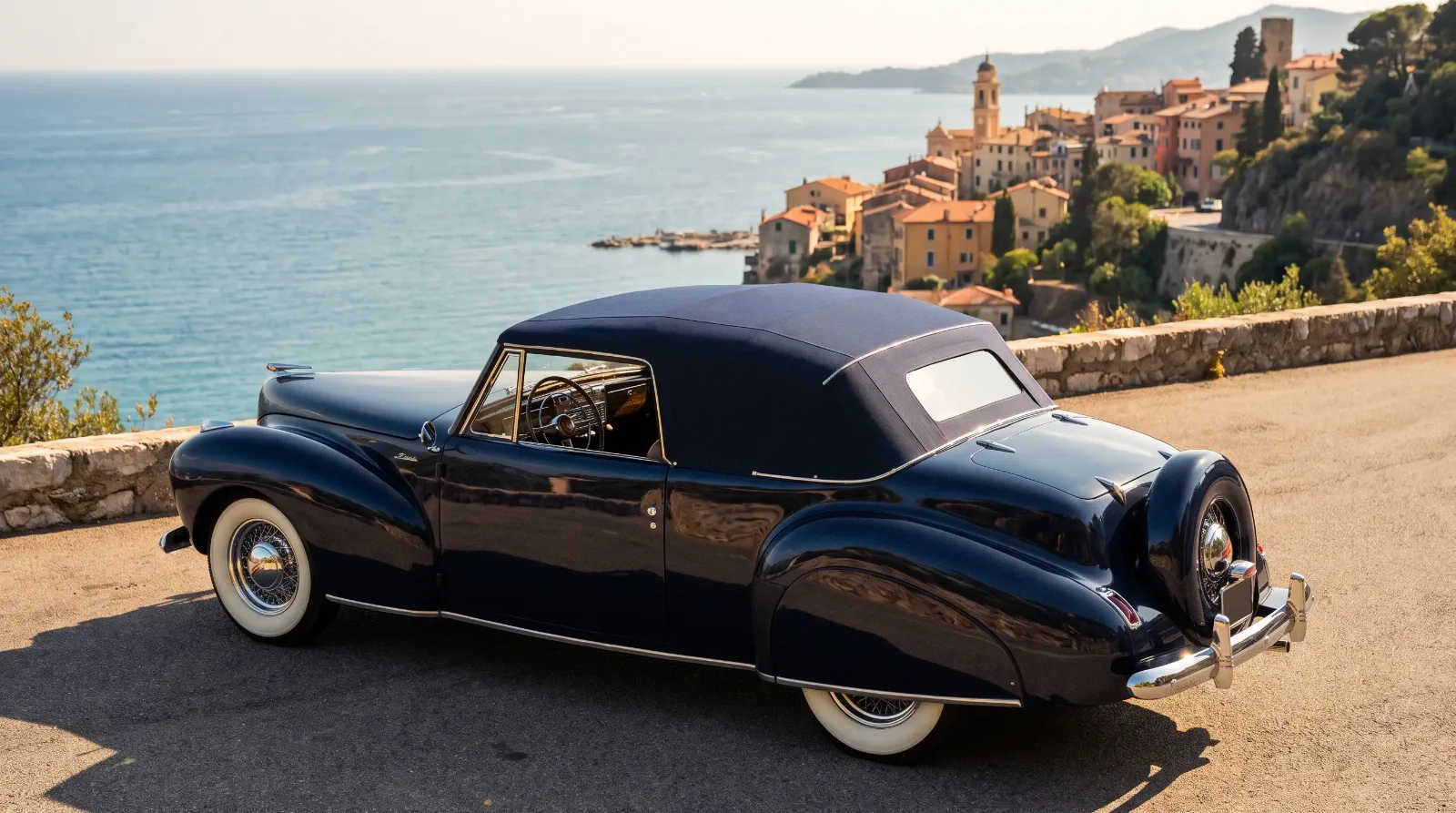
The man was Edsel Ford, son of Henry, president of Ford Motor Company, and by temperament the family's aesthete. To understand where the Continental fits, it helps to know how the segment got here, but the short version is that by the late 1930s American luxury design had grown heavy and formal. Edsel wanted something lighter, lower, and European in feeling.
Edsel Ford's European eye
Edsel returned from trips to Europe impressed by the low, clean lines of Continental touring cars, the kind of coachbuilt machines that looked fast standing still. He asked his chief stylist, Eugene Gregorie, known as Bob, for a personal car in that idiom. The instruction was direct: build something he could take to Florida in the winter of 1939 that would look like it belonged on the Riviera.
Gregorie worked from the existing Lincoln-Zephyr, itself a handsome car, and reshaped it. He lengthened the hood, chopped the roofline down, stripped away running boards where he could, and mounted the spare tire externally at the rear in a body-color housing. That rear-mounted spare became the car's signature and gave rise to the term "Continental kit" for the look on later cars.
From one prototype to a production run
Edsel drove the prototype in Florida in early 1939. The response was immediate. He reportedly wired back to Dearborn that he could sell a thousand of them, and the informal count of interested friends and acquaintances made the case. Ford put the car into production, and it reached the public late in 1939 as a 1940 model, badged as the Lincoln Continental.
Production was deliberately small. For 1940 the company built roughly 350 cabriolets and around 54 coupes, numbers that placed the Continental firmly in the coachbuilt-rival category despite coming off a Ford-owned line. These were expensive, hand-finished cars, and the low volume was part of the appeal rather than a failure of ambition.
The early cars were assembled with a degree of hand labor unusual for Ford. Body panels were leaded and finished by hand, and the fit of the doors and the long hood took time that a mass-production line was not set up to give. That is worth remembering when assessing survivors, because originality in these cars is harder to judge than in a fully standardized product. Small variations between examples are not always signs of later repair; some of them left the factory that way.
The Zephyr V12 underneath
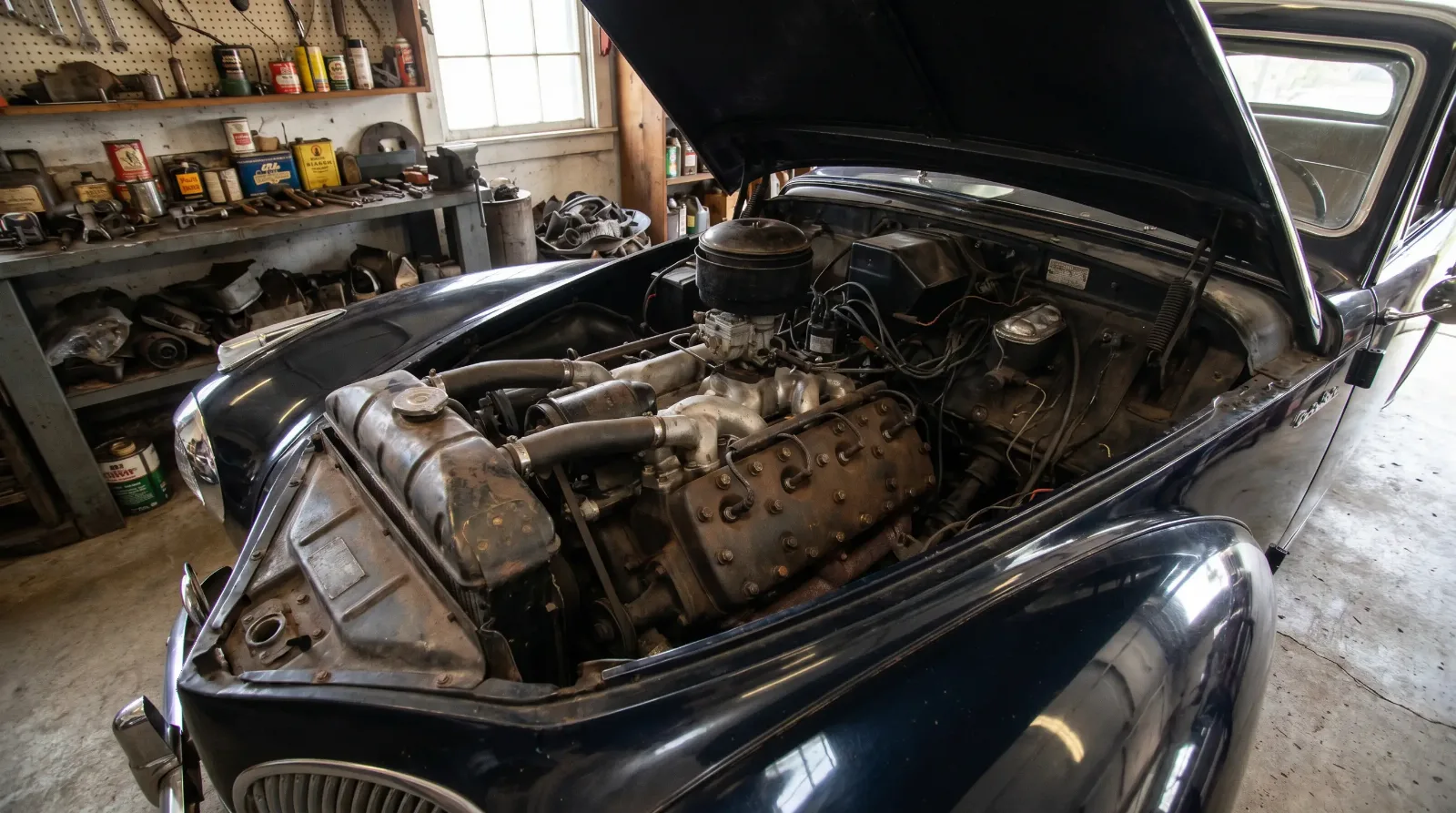
Mechanically the Continental was a Lincoln-Zephyr, which meant a V12. The engine was an L-head unit of 292 cubic inches producing around 110 horsepower, a smooth if not especially powerful design. The twelve-cylinder configuration mattered for the same reason Cadillac's multi-cylinder cars did: at this end of the market, smoothness and refinement counted more than outright speed.
The V12 was not without flaws. It ran hot, and its cooling and lubrication demanded attention that owners did not always give, which is why sorting the engine is still the central task in restoring one of these cars. But in a well-maintained example the V12 delivered exactly the effortless, quiet gait the body promised. A correct rebuild is expensive, specialized work, because parts and knowledge for the Zephyr twelve are far scarcer than for a common flathead V8, and that reality sits behind the price of every honest car. Buyers today looking through the current classic luxury cars for sale will find that a Continental's condition rides almost entirely on how honestly that engine has been cared for.
| Specification | Detail |
|---|---|
| Model years | 1939 prototype, 1940 production launch |
| Designer | Eugene "Bob" Gregorie, for Edsel Ford |
| Platform | Lincoln-Zephyr |
| Engine | L-head V12, ~292 cid |
| Output | ~110 hp |
| 1940 body styles | Cabriolet and club coupe |
| 1940 production | ~350 cabriolets, ~54 coupes |
Why it became a Full Classic
The Classic Car Club of America recognizes the 1940 through 1948 Continental as a Full Classic, a designation reserved for the most distinguished cars of the era. That is unusual for a car built on a mass-market corporation's platform, and it speaks to how completely Gregorie's design transcended its Ford origins. The Continental earned its place among coachbuilt machines on the strength of line alone.
The design evolved over its short prewar life. The 1941 and 1942 cars gained a wider grille and revised trim, and the model returned after the war largely unchanged for 1946 through 1948, when a new front end with a heavier, toothier grille marked the end of the first generation. Purists tend to prefer the cleaner 1940 and 1941 cars, where Gregorie's original restraint is least diluted, and the market usually reflects that preference. The externally mounted spare, so central to the look, also created a practical vulnerability: the housing and its mount trap moisture, and rust in that area is a common fault in cars that were stored outdoors.
"The Continental is the rare production car that photographs like a one-off. Gregorie moved the mass rearward and let the hood run long, and the whole thing holds together because one person with a clear eye decided every proportion."
Sarah Whitfield
Edsel Ford died in 1943, and the car he willed into being outlived him as a nameplate that Lincoln returned to for decades. The first Continental remains the purest expression of the idea: a personal car, made public by demand, that proved American luxury could be restrained and still commanding. The story now crosses the Atlantic to two marques that defined refinement on the other side of the Channel. Read on: next: Rolls-Royce and Bentley's Shared Prewar Heritage.
Related Reading
Have a
Classic Car
for Sale?
Reach thousands of serious classic car collectors across the US.
Sell It Here →
Are You a Classic Car Dealer?
List your full inventory and connect with targeted classic car buyers.
Join as a Dealer →

About the author
Sarah Whitfield
Third-generation classic car collector specializing in pre-war American and European coachbuilt automobiles. Researcher and concours enthusiast.
More in History & Heritage
Comments
Be the first to comment on this article.