
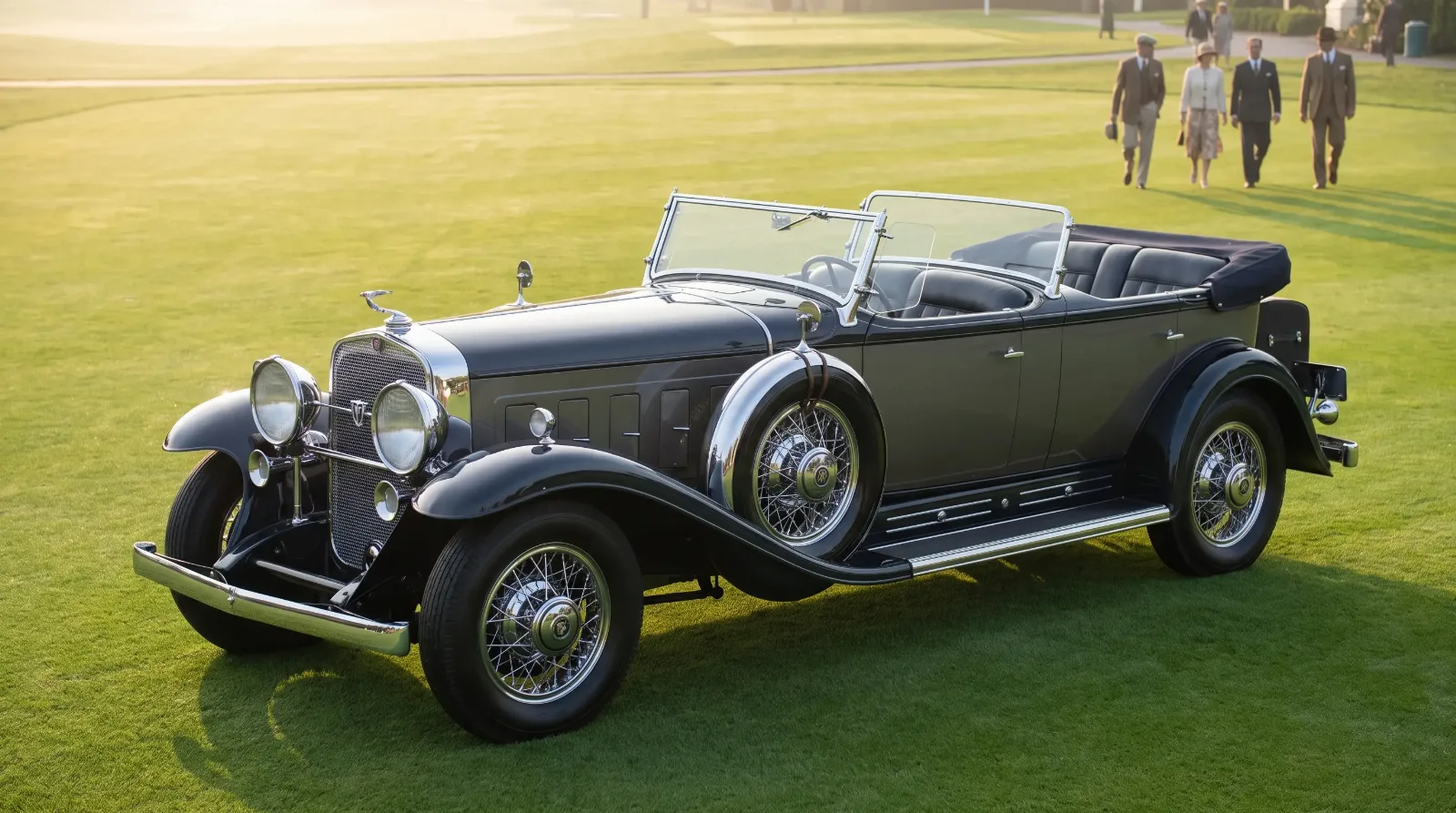
There is a photograph that hangs, at least in the mind, over this whole subject. A showroom full of gleaming multi-cylinder cars in 1930, and almost nobody walking in to buy one. The Depression-era luxury car makers built some of the most magnificent automobiles in American history right into the teeth of the worst economy the country had ever seen, and most of them did not live to tell about it. This is the story of how a whole class of proud, independent names died in the space of a few years.
History & Heritage
6 min read
How the Great Depression Killed America's Independent Luxury Makes
The Depression era luxury car makers built their finest cars as the market vanished. Why the independents died and the giants survived.
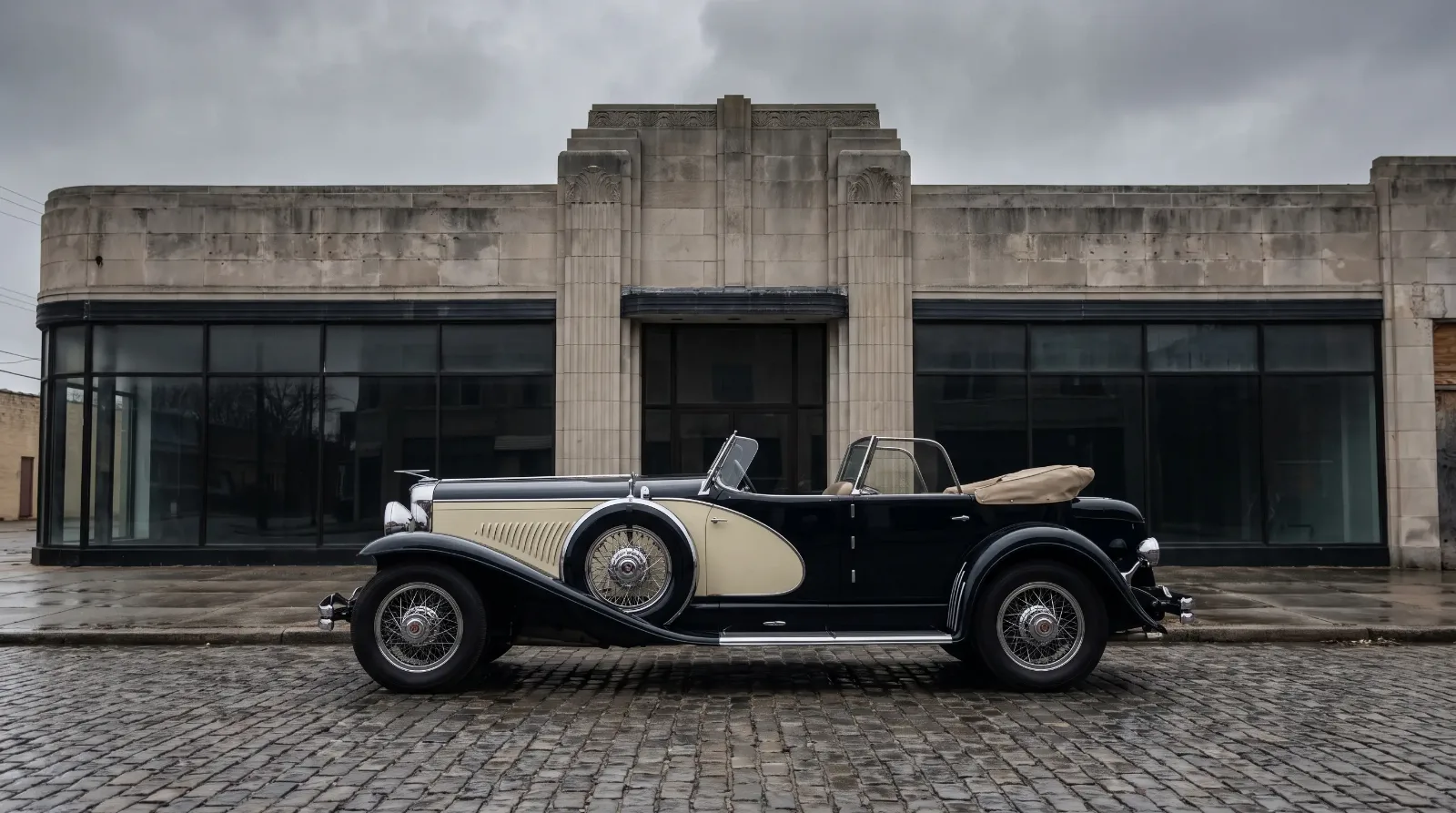
It is a hard story, but it explains something important. The luxury survivors were not always the best cars. They were the ones with a bigger company behind them.
A market that simply disappeared
When the stock market collapsed in October 1929, it did not just dent luxury sales. It removed the customer. The wealthy either lost fortunes outright or decided, in the mood of the early 1930s, that arriving somewhere in a $17,000 twelve-cylinder car was in poor taste. Total American car sales fell hard after 1929, and the fall was steepest at the top of the market where these independents lived.
The cruel irony is that the engineering was at its peak. Firms poured money into V12 and V16 engines exactly as the buyers for them evaporated. The cars got greater as the market got smaller. You can trace how the segment reached that summit in the complete history of the classic luxury car.
The names that fell
The casualty list reads like a roll call of American automotive pride. Cleveland's Peerless, one of the fabled "Three P's" alongside Packard and Pierce-Arrow, stopped building cars in 1931 and, when Prohibition ended, reinvented itself as a brewery. It is one of the strangest second acts in the industry.
Pierce-Arrow, the Buffalo marque famous for its headlamps faired into the fenders, had tied itself to Studebaker in 1928. When Studebaker went into receivership in 1933 the connection became an anchor, and Pierce-Arrow, cut loose and struggling on its own, finally folded in 1938. Marmon of Indianapolis built the extraordinary Marmon Sixteen and stopped car production around 1933 anyway. Franklin, the air-cooled holdout from Syracuse, was gone by 1934.
| Marque | Base | Roughly when it ended | Note |
|---|---|---|---|
| Peerless | Cleveland, Ohio | 1931 | Became a brewery |
| Marmon | Indianapolis, Indiana | 1933 | Built the V16 as it failed |
| Franklin | Syracuse, New York | 1934 | Air-cooled specialist |
| Stutz | Indianapolis, Indiana | c. 1934 | Famed for the Bearcat |
| Duesenberg / Cord | Indiana | 1937 | Fell with the Cord empire |
| Pierce-Arrow | Buffalo, New York | 1938 | Last of the great independents |
Why the survivors survived
Look at who made it through and a pattern jumps out. Cadillac survived because it was a division of General Motors, and GM could carry a luxury line through lean years on the strength of Chevrolet and the rest of the corporation. Lincoln survived because Ford owned it and Edsel Ford was determined to keep it. Packard survived by swallowing its pride and building the cheaper One Twenty to reach ordinary buyers.
The independents had none of those cushions. A firm that built only expensive cars, with no mass-market model to subsidize it, had no way to ride out a market that stayed dead for years. Quality did not save them. Some of the finest cars of the era came from companies that were already doomed when they built them.
"These companies did not fail because they lost their touch. They failed because they were purebreds in a year that only the mutts with a rich parent could survive. That is the whole tragedy in a sentence."
Patrick Walsh
The V16 that came too late
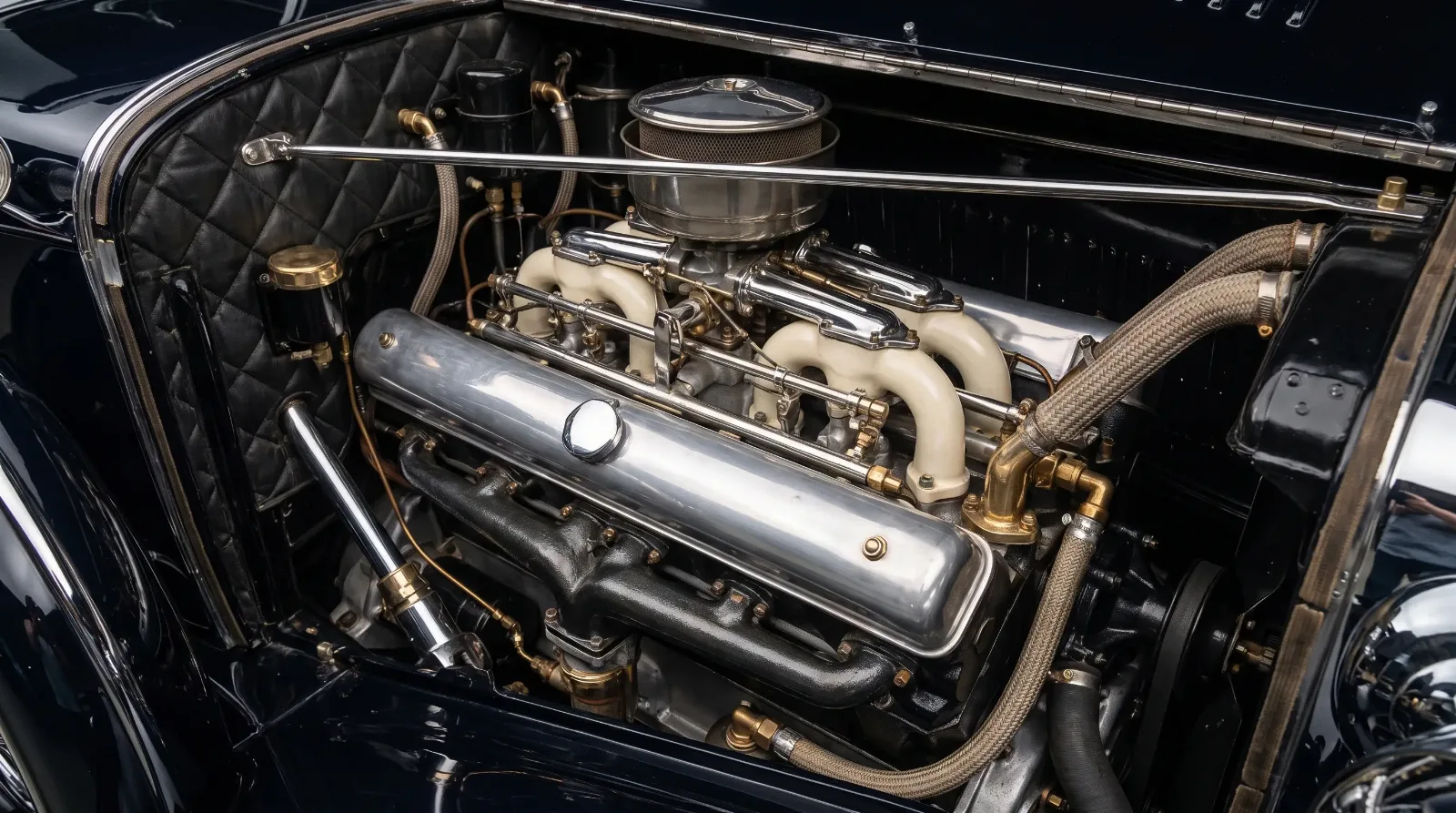
Nothing captures the cruelty of the timing like the multi-cylinder cars of the early 1930s. Cadillac launched its V16 in 1930. Marmon answered with its own sixteen. These were engineering statements meant for a confident, prosperous world, and they landed in a country standing in bread lines. Cadillac could absorb the loss and treat the V16 as a halo. Marmon could not, and it took the company down with it.
That contrast, the same magnificent idea saving one firm and sinking another, is the clearest lesson of the period. It was never only about the car. For the wider view, there is the story of the classic luxury car.
The fall of the Cord empire
The most spectacular collapse belonged to E.L. Cord's group, which held Auburn, Cord, and Duesenberg under one roof. For a few years it was one of the most exciting operations in the industry, home to the front-drive Cord 810 and the mighty Duesenberg. Excitement did not pay the bills. Auburn's sales fell away, the Cord 810 and 812 arrived with teething troubles that hurt their reputation, and the whole enterprise unwound by 1937, taking Duesenberg down with it.
It is a telling end. The Cord empire failed not because it lacked ambition or engineering but because it never had the deep, stable, mass-market base that carried Cadillac and Lincoln. When the specialty cars stopped selling, there was nothing underneath to catch the fall. The finest names in the group died together.
What the survivors inherited
There is a second half to this story that is easy to miss. Every buyer who would once have chosen a Peerless or a Pierce-Arrow still existed, or at least their successors did once the economy recovered. Those buyers had to go somewhere. With the independents gone, they flowed toward the survivors, and Cadillac in particular came out of the 1930s with far less competition at the top of the American market than it had faced going in.
The Depression, in other words, did not just kill companies. It cleared the field. The crowded, fiercely competitive luxury market of the 1920s became, by the late 1930s, a much smaller contest dominated by makes with corporate parents. That reshaping set the terms for the postwar era, when American luxury would mean something narrower and more concentrated than it ever had before.
What the Depression left behind
When the dust settled in the late 1930s, the crowded, competitive American luxury field of the 1920s had been reduced to a handful of survivors. The variety was gone. The independents that had pushed each other to build ever finer machines were mostly memories, and the cars they left behind became some of the most treasured classics precisely because so few were made and so few makers lasted.
Out of that thinning came a new order, and one marque used the corporate strength of General Motors to climb to the very top of it. That rise is next: next: Cadillac's Rise to GM's Flagship Marque.
Related Reading
Have a
Classic Car
for Sale?
Reach thousands of serious classic car collectors across the US.
Sell It Here →
Are You a Classic Car Dealer?
List your full inventory and connect with targeted classic car buyers.
Join as a Dealer →

About the author
Patrick Walsh
Automotive journalist covering classic car shows, events, and the enthusiast community across North America.
More in History & Heritage
Comments (1)
R
Roy Sandoval
1 month ago
Seller said it was all original when I asked about the engine. VIN tag told a different story. Always check the details.