
For more than sixty years, the two most storied names in British luxury motoring came off the same lines in the same Cheshire town. The factory at Crewe built Rolls-Royce and Bentley cars side by side, often the same shell heading for different grilles, and that shared birthplace is the physical fact underneath the whole badge-engineered relationship. To understand why a Silver Cloud and a Bentley S-Series are so nearly the same car, you have to understand the building they were made in.
History & Heritage
6 min read
Inside Crewe: The Factory That Built Rolls-Royce and Bentley Side by Side
How the Crewe factory built Rolls-Royce and Bentley side by side for decades, from wartime Merlin engines to the shared V8 and the eventual split.
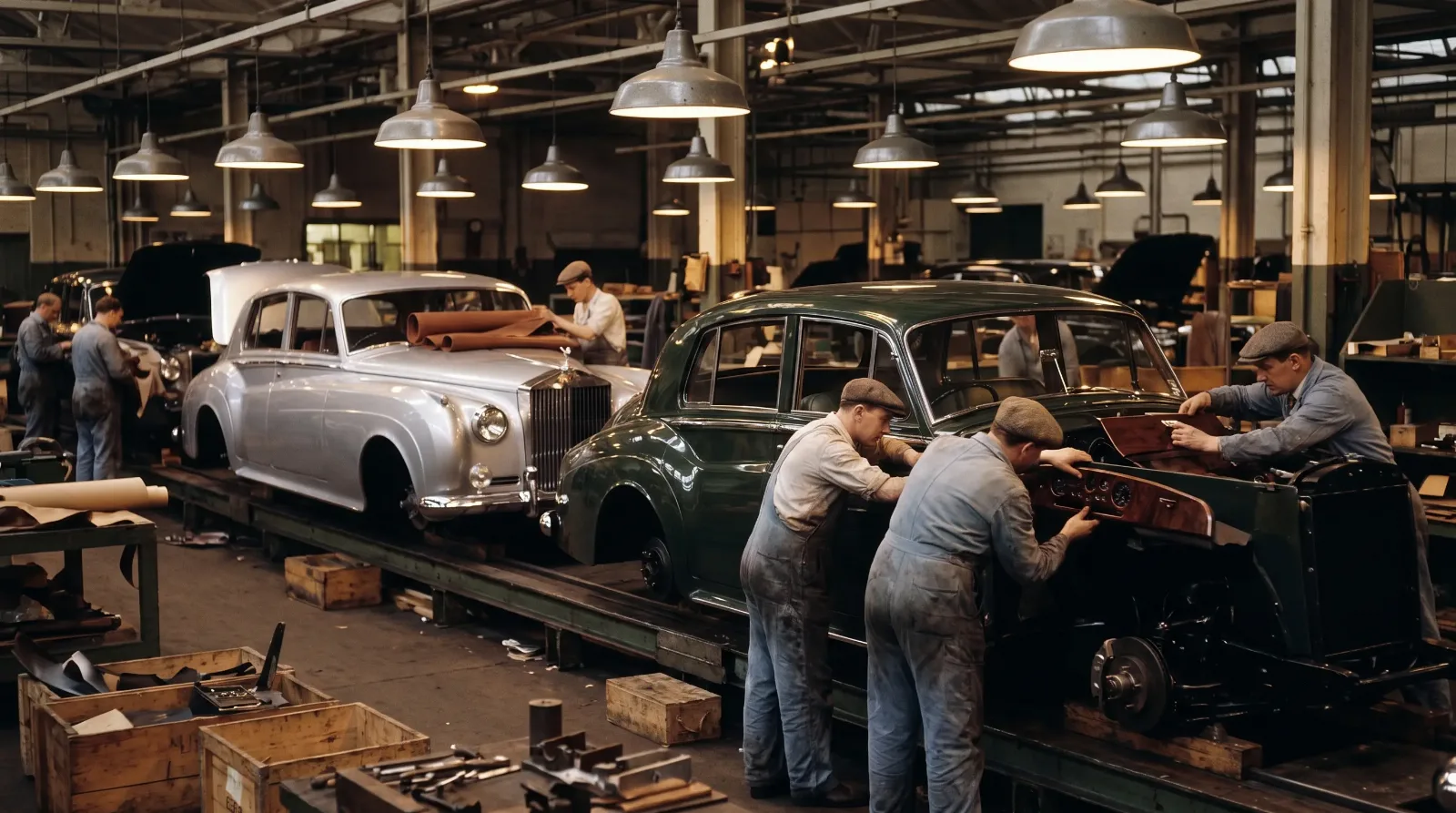
Crewe was not originally a car factory at all, and that origin story matters, because it explains how a maker of hand-built luxury cars ended up with a plant built for volume aircraft-engine work. The site's history runs directly into the Rolls-Royce and Bentley sibling story, and it shaped how both marques were built for the rest of the century.
A shadow factory for aero engines
Rolls-Royce established the Crewe site in 1938, not to build cars but as a "shadow factory" for aircraft engine production ahead of the Second World War. During the war it produced Merlin aero engines, the powerplant associated with the Spitfire and other Allied aircraft. This was volume manufacturing on a scale the prewar car works at Derby had never attempted, and it left Crewe with a large, modern plant and a workforce experienced in production discipline.
When the war ended, Rolls-Royce moved its motor-car production to Crewe rather than back to Derby. That decision put luxury car assembly inside a facility originally laid out for mass aero-engine work, and it is part of why the postwar cars leaned toward standardized bodies and repeatable production rather than the purely bespoke, chassis-only tradition of the 1930s. The building shaped the product.
Two marques, one assembly hall
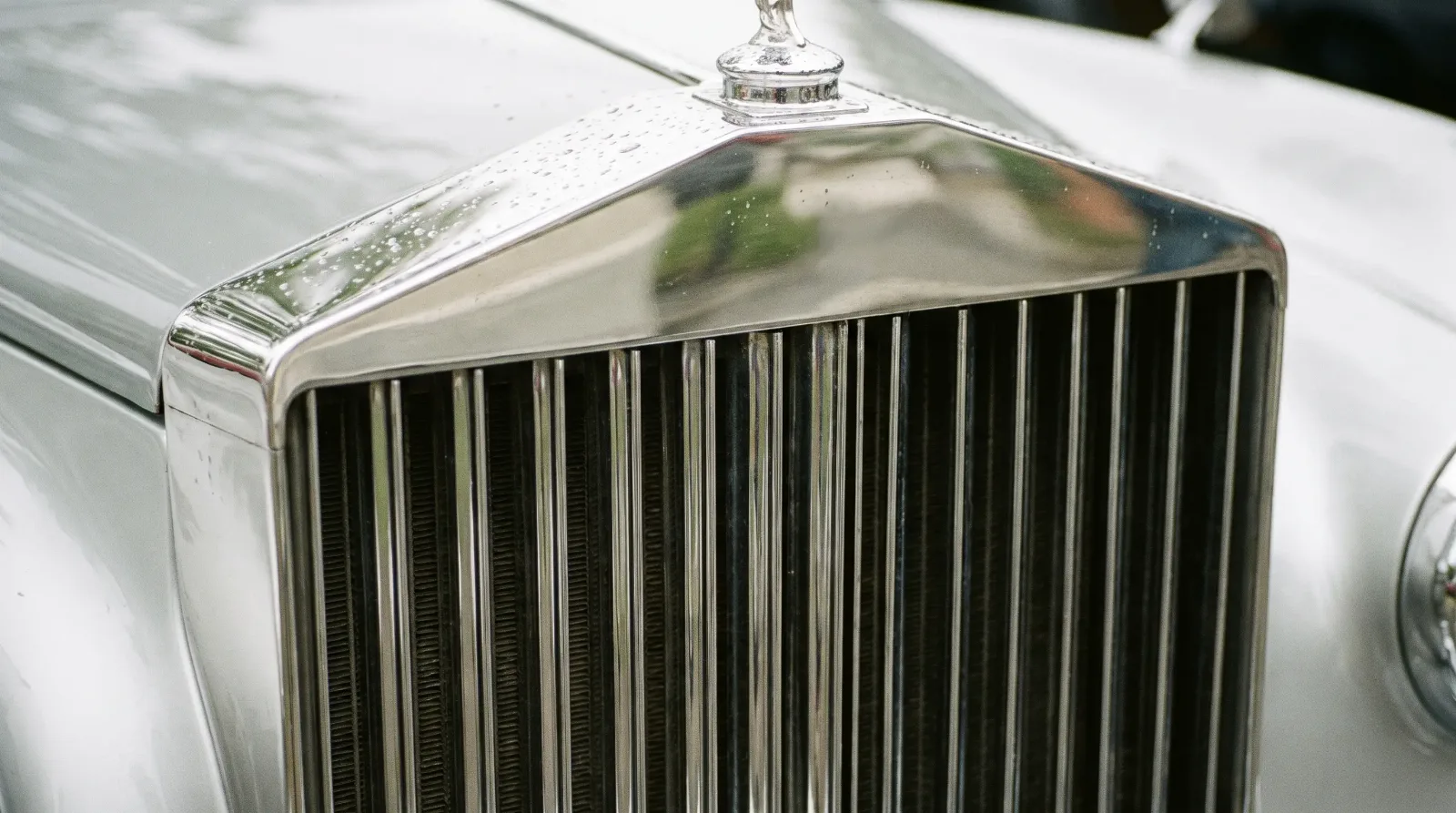
From the postwar years onward, both Rolls-Royce and Bentley cars were assembled at Crewe together. Because the two marques shared so much of their engineering, the same lines, the same craftsmen, and the same processes served both. A car might be near-complete before the marque-specific elements, principally the radiator grille and badging, settled its final identity as a Rolls-Royce or a Bentley. The distinction that mattered so much to buyers was, on the factory floor, one of the last things applied.
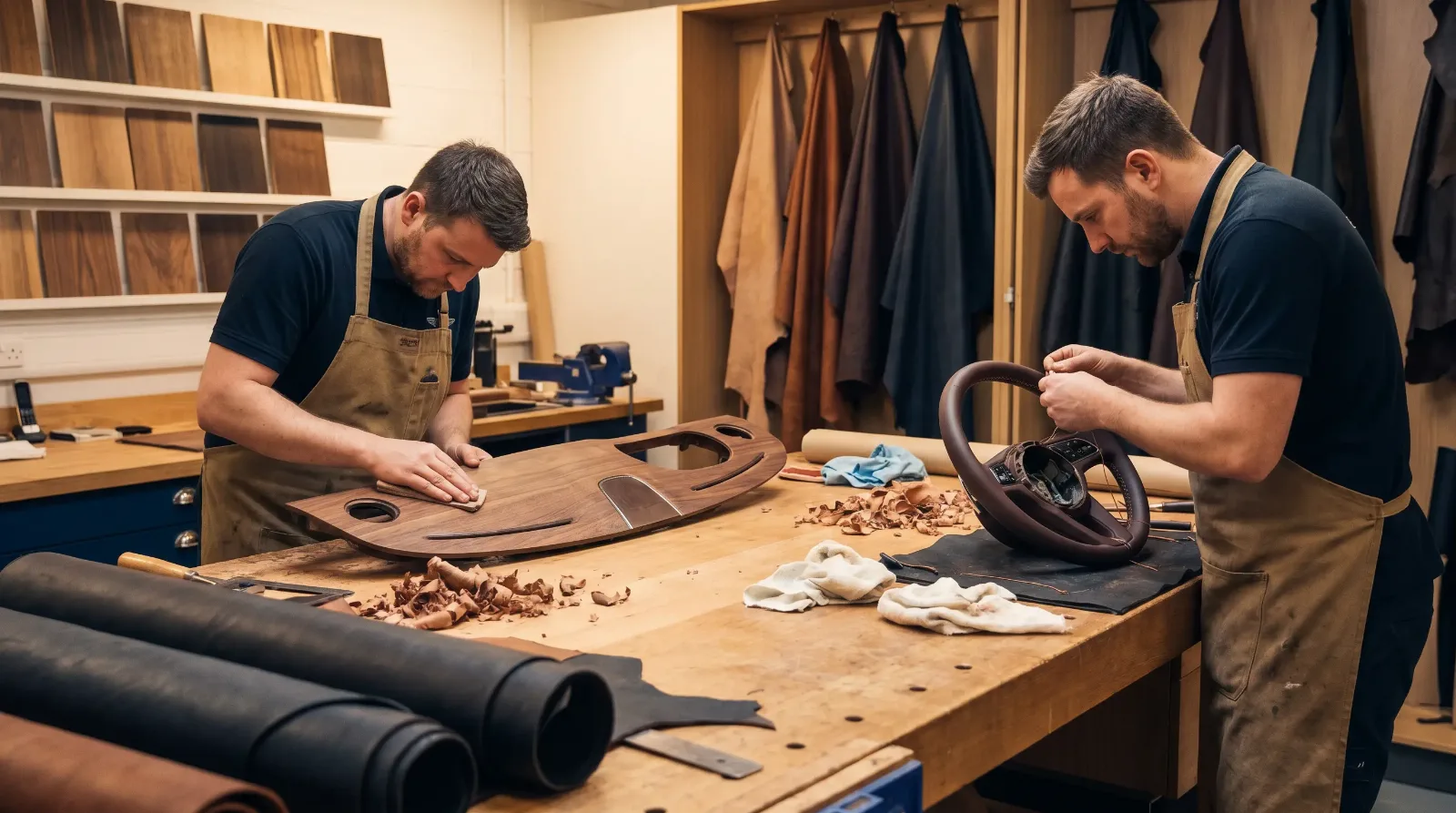
The craftsmanship at Crewe was famous in specific, non-promotional ways. Bodies were leaded and finished by hand, paint was built up in many coats and hand-polished, and the woodwork and hide trim were fitted in dedicated shops by specialists. The engines, including the aluminum V8 introduced in 1959, were assembled and tested to a standard the factory guarded closely. This combination of production-scale organization with hand-finished detail is what made Crewe distinctive, neither a pure coachbuilding shop nor an ordinary car plant.
The wood and leather shops deserve particular mention, because they are where the shared cars gained the small differences that a discerning buyer noticed. The veneers were matched from consecutive slices of the same log so that the grain ran symmetrically across a dashboard, and the hides were selected and cut by hand to keep blemishes out of the visible panels. Whether the finished car wore a Rolls-Royce or a Bentley badge, this interior work came from the same benches and the same hands. A Crewe interior is one of the more reliable ways to recognize the era, and it is a large part of why cars from this plant still feel different inside from anything mass-produced.
"What makes Crewe worth studying is the contradiction it resolved. It was a wartime production plant that learned to build cars finished by hand, and both those truths are visible in every car that left it."
Sarah Whitfield
The V8 and the postwar cars
The aluminum V8 engine that arrived in 1959 became the mechanical heart of Crewe's output for decades, powering both marques through the Silver Cloud and S-Series, then the Silver Shadow and T-Series, and onward. Building a common engine for both badges was the clearest expression of what Crewe was, a single manufacturing operation serving two nameplates. The engineering investment was shared, and the volume of two badges helped justify the cost of building to Crewe's standards.
That shared engineering also had a practical benefit for owners that persists today. Because so much of the mechanical hardware was common across both marques and across long production runs, the pool of knowledge and spare parts is broader than it would be for a truly bespoke car. A specialist who knows the Crewe V8 knows it whether it sits in a Rolls-Royce or a Bentley engine bay. For a collector, that commonality is one of the more reassuring features of an era otherwise defined by hand work and low volumes.
| Milestone | Detail |
|---|---|
| Site established | 1938, as a shadow factory |
| Wartime role | Merlin aero-engine production |
| Postwar shift | Rolls-Royce and Bentley car assembly moves to Crewe |
| Shared V8 introduced | 1959, aluminum V8 for both marques |
| Marques built together | Both, side by side, for decades |
| Separation of marques | Agreed 1998, effective January 2003 |
The end of the shared factory
The arrangement held until the corporate breakup of the late 1990s, when the rights to the two marques were separated between BMW and Volkswagen. In the settlement, Bentley remained at Crewe while the Rolls-Royce car marque moved to an entirely new home. After decades of sharing an assembly hall, the two names finally parted, and Crewe became a Bentley factory alone. The deal was struck in 1998, and the handover of the Rolls-Royce name to BMW took effect on 1 January 2003, when Rolls-Royce production began at Goodwood.
That ending closed a chapter that had defined both marques since the war. For most collectors, the era that matters, the years of Silver Clouds and Bentley S-Series, of Shadows and T-Series, is precisely the era when the two cars were built together at Crewe. Understanding that shared origin is central to the complete classic luxury car story, because it explains why these cars are siblings in the truest sense, born in the same building.
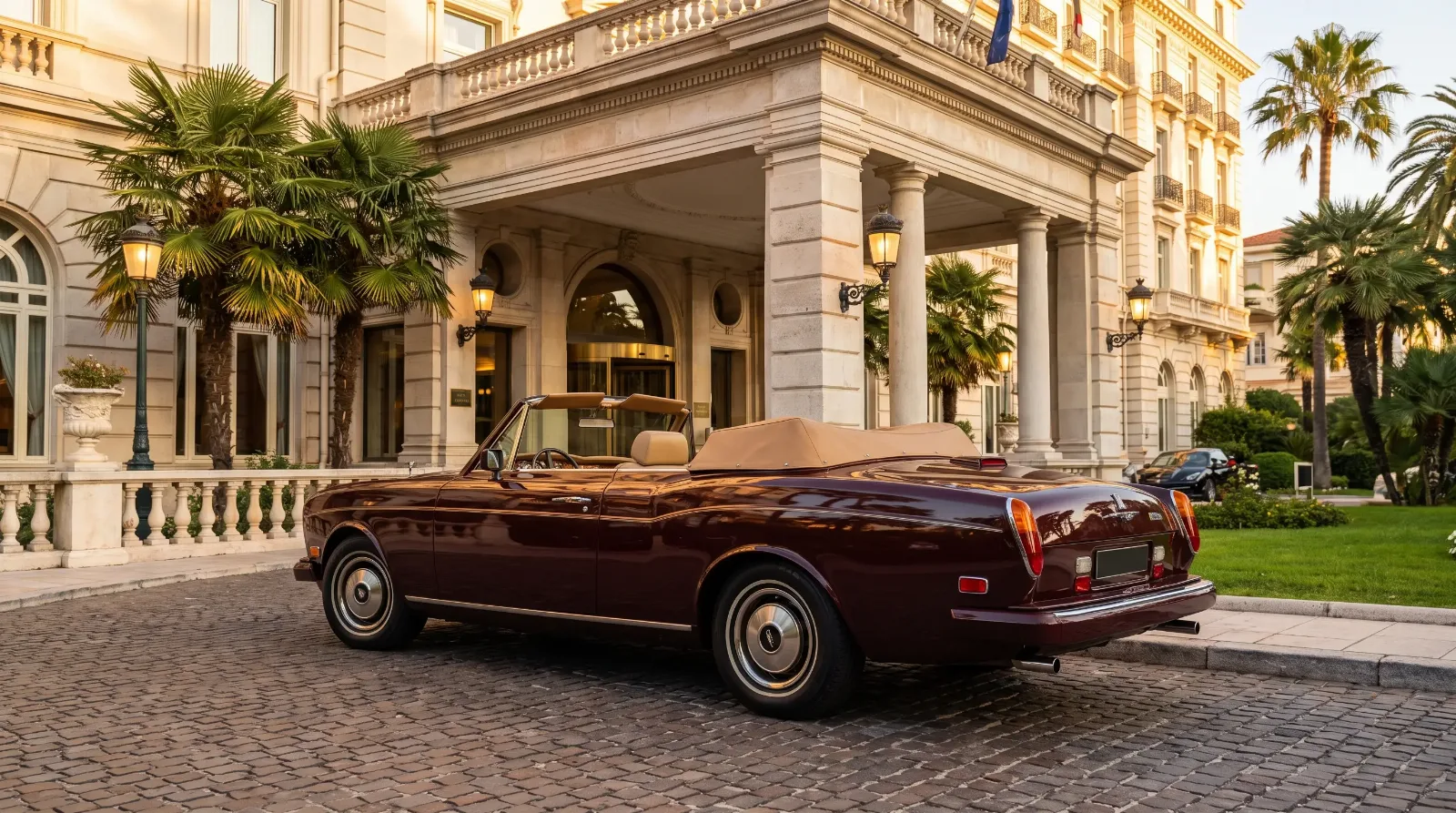
Not every car that left Crewe wore a fixed roof, and the open cars followed their own logic across the two marques. Those are worth comparing on their own terms, which we take up in next: Drophead and Convertible Variants Compared Across the Two Marques.
Related Reading
Have a
Classic Car
for Sale?
Reach thousands of serious classic car collectors across the US.
Sell It Here →
Are You a Classic Car Dealer?
List your full inventory and connect with targeted classic car buyers.
Join as a Dealer →

About the author
Sarah Whitfield
Third-generation classic car collector specializing in pre-war American and European coachbuilt automobiles. Researcher and concours enthusiast.
More in History & Heritage
Comments
Be the first to comment on this article.