
Open cars were always the emotional peak of the Rolls-Royce and Bentley ranges, and they are where the two marques quietly diverged and then, for long stretches, became almost the same car with a different radiator. A drophead was never a volume product. It was coachbuilt, expensive, and built in small numbers, which is exactly why the survivors are studied so closely today. To compare the convertible variants across both names is to watch the whole postwar relationship in miniature, from the coachbuilt era through the shared bodyshells of the Corniche years.
History & Heritage
6 min read
Drophead and Convertible Variants Compared Across the Two Marques
Rolls-Royce and Bentley convertible and drophead variants compared: coachbuilt S-series dropheads, the long-lived Corniche, and the turbocharged Bentley Azure.
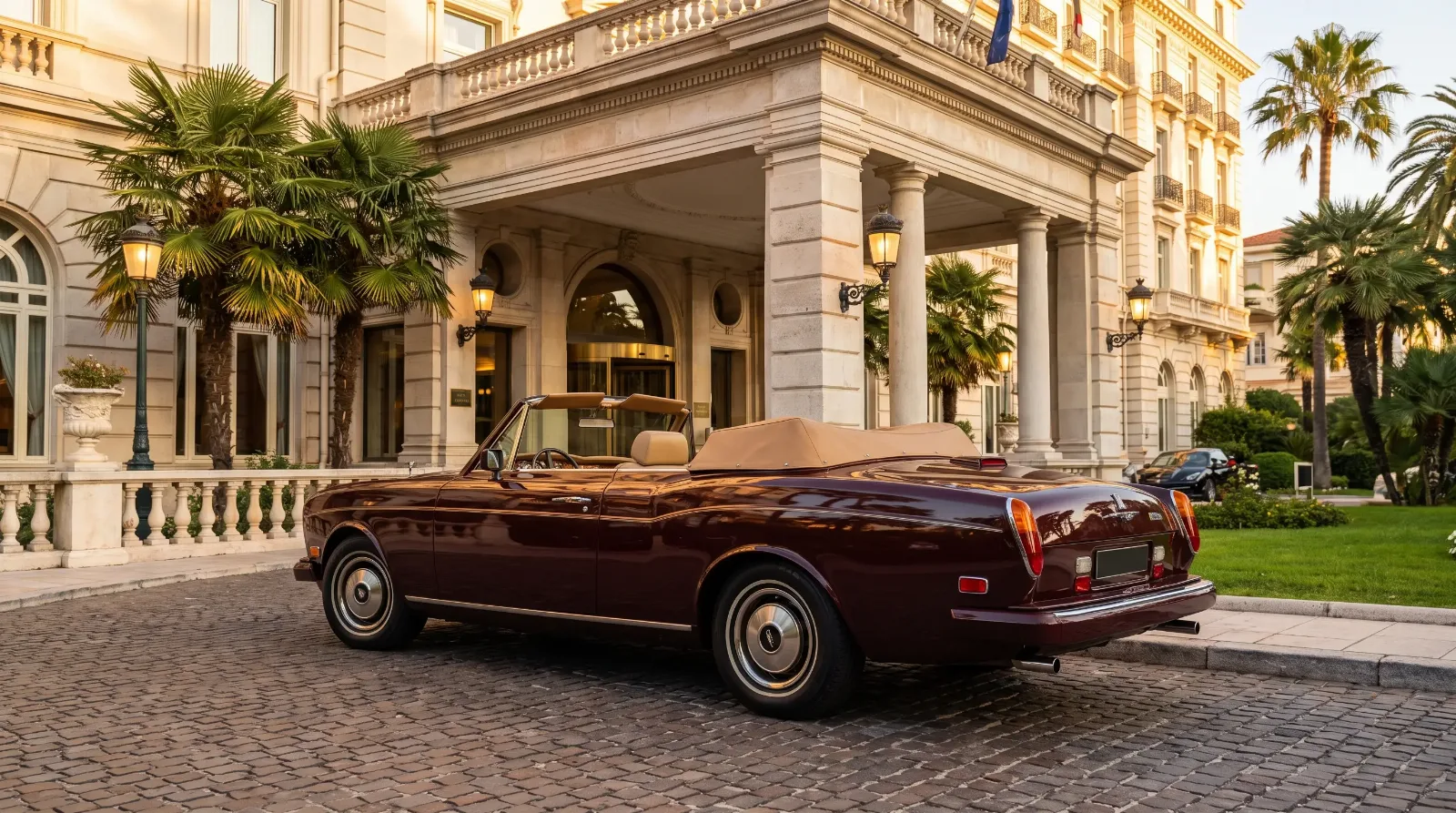
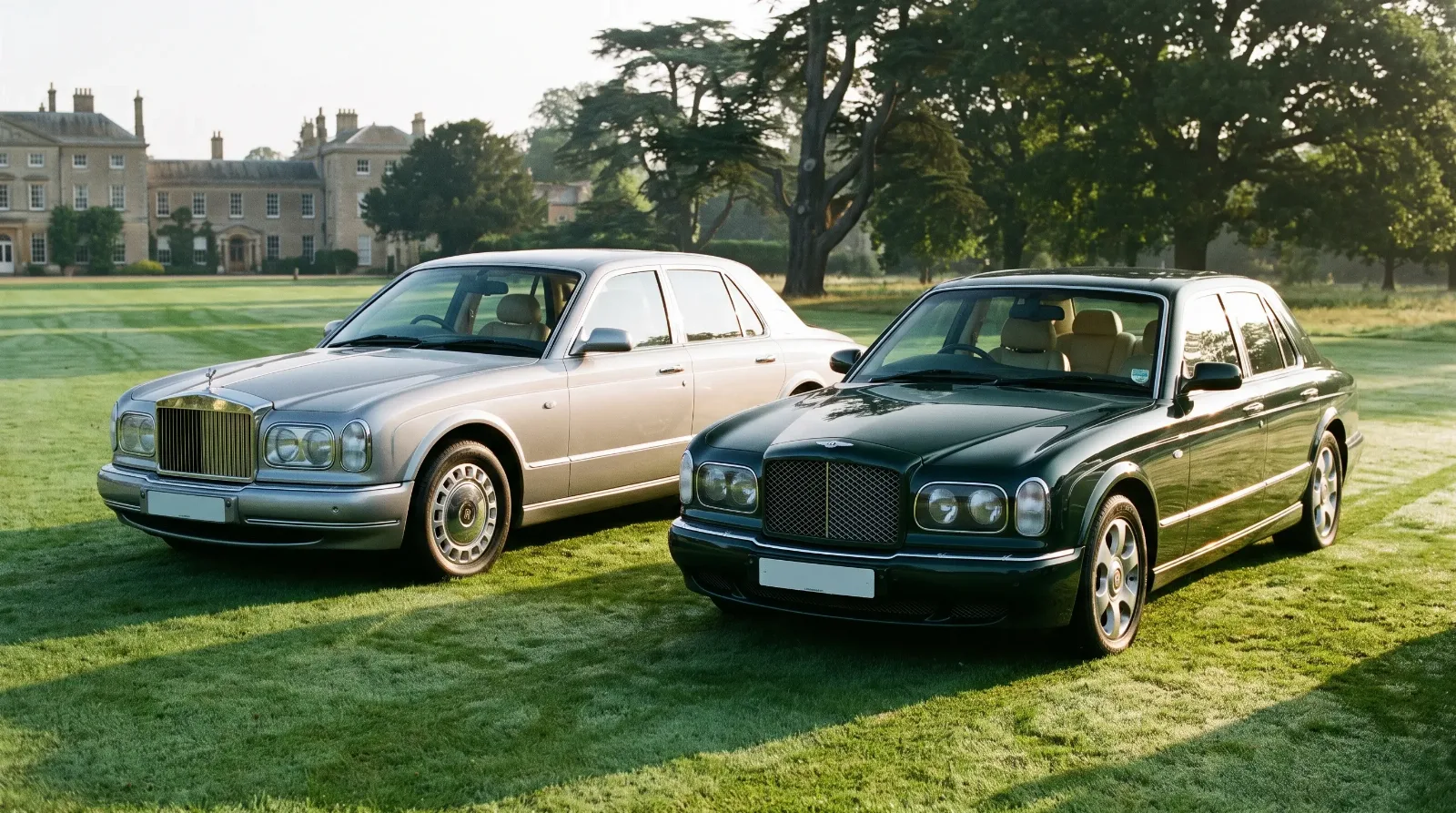
The pattern that governs these cars is the same one that governs everything else in the badge-engineered rivalry: shared engineering, separate grilles, and a sporting reputation on the Bentley side that the open bodies expressed more freely than the saloons ever could. In the drophead line, that difference of temperament is easier to see than anywhere else in the catalogue.
The coachbuilt drophead era
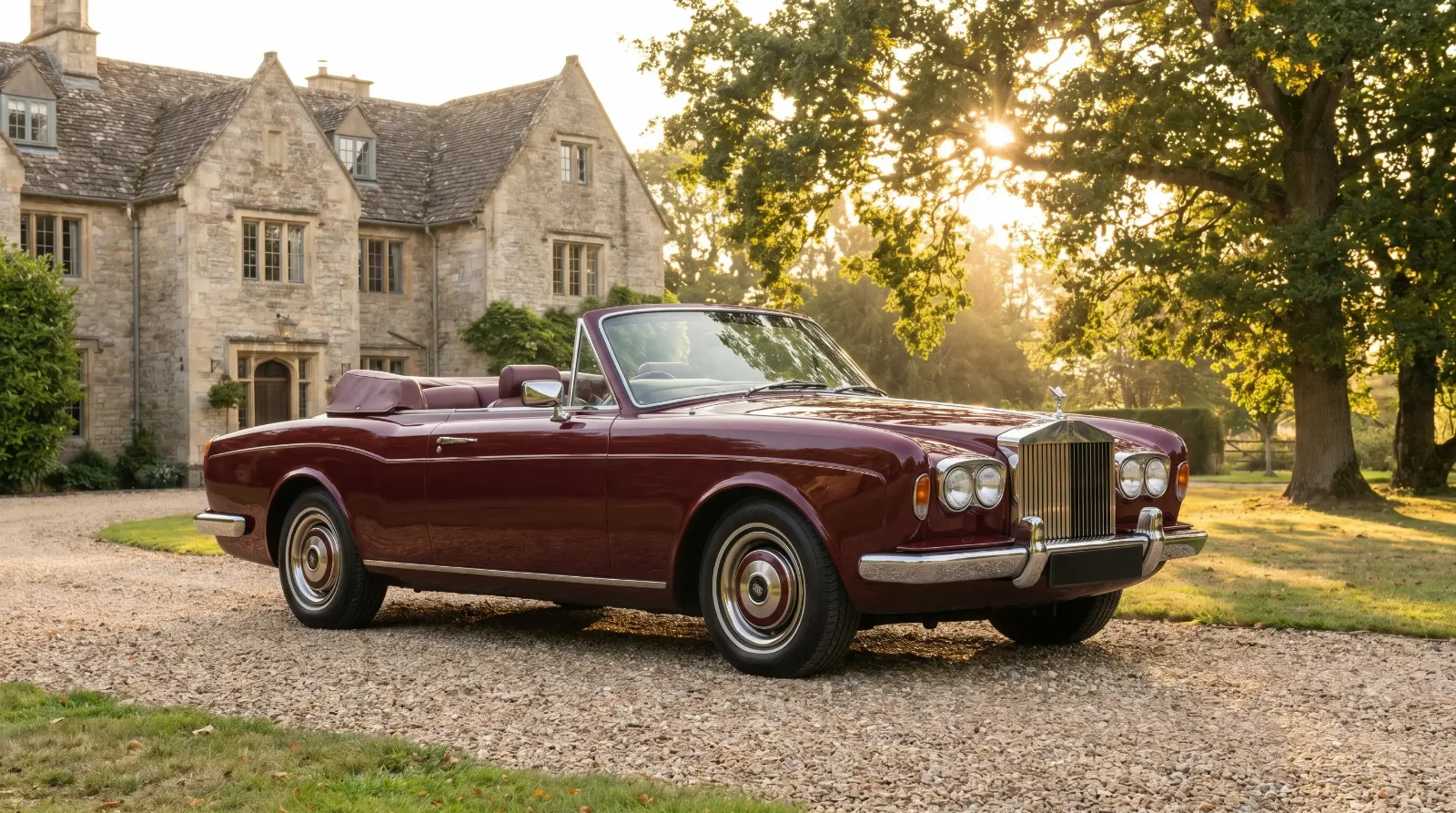
Through the Silver Cloud and Bentley S-series years, roughly 1955 to 1966, there was no such thing as a factory convertible in the modern sense. Rolls-Royce and Bentley supplied a chassis, and coachbuilders clothed it. The two firms that mattered most for open cars were H.J. Mulliner and Park Ward, both of which Rolls-Royce eventually absorbed and merged into Mulliner Park Ward in 1961.
On the Bentley side, the drophead coupé built on the S-series Continental chassis is the celebrated car of this period. The Continental designation carried the sporting intent W.O. Bentley had built the marque on, and the open Continentals were faster-geared, more rakishly bodied cars aimed at the owner-driver. The equivalent Rolls-Royce Silver Cloud dropheads were built in far smaller numbers, because the buyer who wanted refinement usually wanted a roof, and the buyer who wanted an open sporting car usually wanted the Bentley badge. That split in demand is the clearest surviving evidence of how differently the two marques were understood at the time.
The Silver Shadow, the T-series, and the birth of the Corniche
The 1965 Silver Shadow and its Bentley T-series twin brought monocoque construction and, with it, a new kind of two-door. From 1966, Mulliner Park Ward built a two-door saloon on the Shadow floorpan, and from 1967 an open drophead coupé followed. Both were offered as a Rolls-Royce and a Bentley, though the Rolls-Royce versions vastly outsold the Bentleys, since by this point the Bentley badge had lost most of its distinct identity.
In March 1971 these two-door cars were renamed. The Rolls-Royce version became the Corniche, and a Bentley Corniche was cataloged alongside it. The Bentley Corniche was built in tiny quantities, so few that it is one of the rarer badge variants of the whole era, and Rolls-Royce quietly dropped the Bentley two-door before long. The open Corniche went on to become the longest-lived convertible in the company's history, surviving through a series of revisions well into the 1990s while the saloons around it were replaced twice over.
How the open cars compared, marque to marque
Reduced to specifics, the convertible line shows the same story repeating: a shared body, a shared drivetrain, and a Bentley variant that was rarer and, in the earlier era, more overtly sporting. The table below sets the principal open cars side by side. Production figures for coachbuilt cars are approximate and vary by source, so treat them as orders of magnitude rather than exact counts.
| Open model | Marque | Era | Notes |
|---|---|---|---|
| S-series Continental drophead | Bentley | 1955-1966 | Coachbuilt, sporting, the desirable open car of its day |
| Silver Cloud drophead | Rolls-Royce | 1955-1966 | Coachbuilt in very small numbers |
| Two-door drophead coupé | Both | 1967-1971 | Mulliner Park Ward body on Shadow/T floorpan |
| Corniche convertible | Rolls-Royce | 1971-1990s | Longest-lived; multiple series revisions |
| Corniche convertible | Bentley | 1971-1980s | Very low volume; badge dropped, later revived as Continental |
| Azure | Bentley | 1995 onward | Convertible on the Continental R platform, turbocharged |
When Bentley reclaimed the open car
The most interesting turn came late. For most of the badge-engineered decades the Bentley convertible was an afterthought, a rebadged Rolls-Royce that few buyers chose. Then, in 1984, Bentley revived its two-door as the Continental, essentially the Corniche body under a Bentley grille, and in 1995 launched the Azure on the turbocharged Continental R platform. The Azure was the first modern open Bentley that was genuinely its own car rather than a Rolls-Royce with a changed badge, and its turbocharged engine finally gave the open Bentley the performance its name had always implied. If you want to see how far the sporting side of the family had traveled by then, the Azure is the car to study, and browsing classic luxury cars for sale shows how the market now separates these later Bentley convertibles from their Rolls-Royce cousins on price.
"The dropheads are where you can actually see the difference the badges were supposed to mean. On the closed cars it was mostly a grille. On the open Continentals and the Azure, the Bentley really was the faster, harder-edged car, exactly as W.O. would have wanted."
Sarah Whitfield
What the convertible line tells the collector
For a buyer today, the open cars sort into two useful categories. The coachbuilt dropheads of the 1950s and early 1960s, especially the Bentley S-series Continentals, are blue-chip collector cars whose value tracks the coachbuilder's name and the quality of the body as much as the mechanicals. The Corniche and its relatives are more attainable, more usable, and more numerous, though a mid-1990s Corniche or a Bentley Azure carries the full weight of Crewe hydraulics and running costs to match. Across all of them the same rule holds that runs through the classic luxury car story: an open Rolls-Royce or Bentley was the most expensive way to buy the car when new, and it remains the version that asks the most of an owner now.
The convertible line is also the last chapter before the corporate map was redrawn. The cars that carried these two badges through the 1990s were built by a company about to be pulled in two directions at once. Read on: next: 1998.
Related Reading
Have a
Classic Car
for Sale?
Reach thousands of serious classic car collectors across the US.
Sell It Here →
Are You a Classic Car Dealer?
List your full inventory and connect with targeted classic car buyers.
Join as a Dealer →

About the author
Sarah Whitfield
Third-generation classic car collector specializing in pre-war American and European coachbuilt automobiles. Researcher and concours enthusiast.
More in History & Heritage
Comments
Be the first to comment on this article.