
Ask a room full of collectors to name the one car that means "classic," in the strict, capital-C sense, and a lot of hands point to the same place. Duesenberg. The name became slang for the best of anything, "it's a duesy," and the machine earned it. When people talk about the Duesenberg Full Classic Car Club of America connection, they are really talking about how one American car set the standard that a whole hobby later organized itself around.
History & Heritage
6 min read
Duesenberg and the Birth of the CCCA “Full Classic” Era
How the Duesenberg Model J became the Full Classic Car Club of America's reference standard for America's greatest prewar cars.
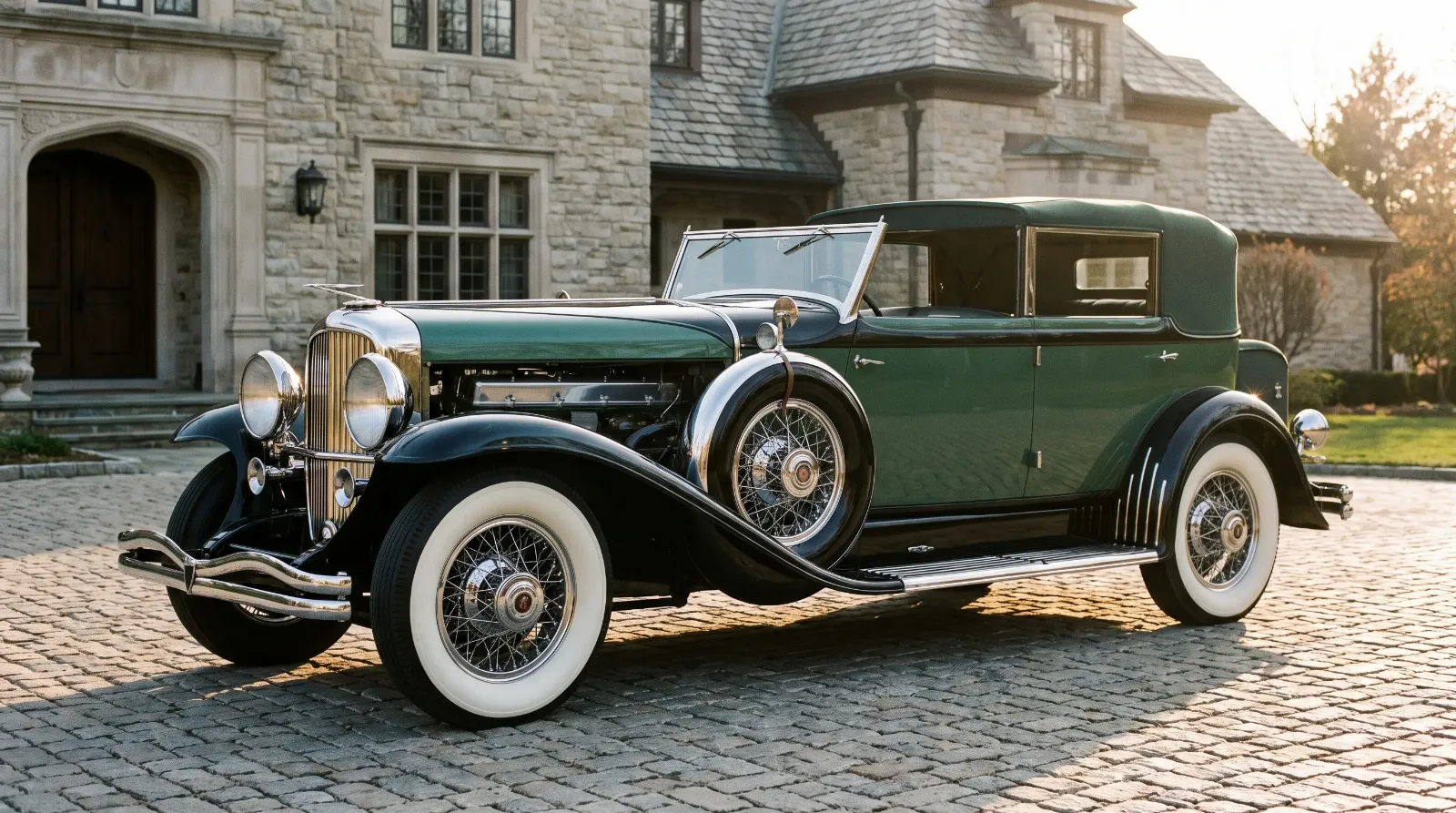
The story runs from a New York auto salon in 1928 to a club formed in a very different America more than twenty years later. It is worth telling in order, because the car came first and the definition came after.
The car that stopped the room
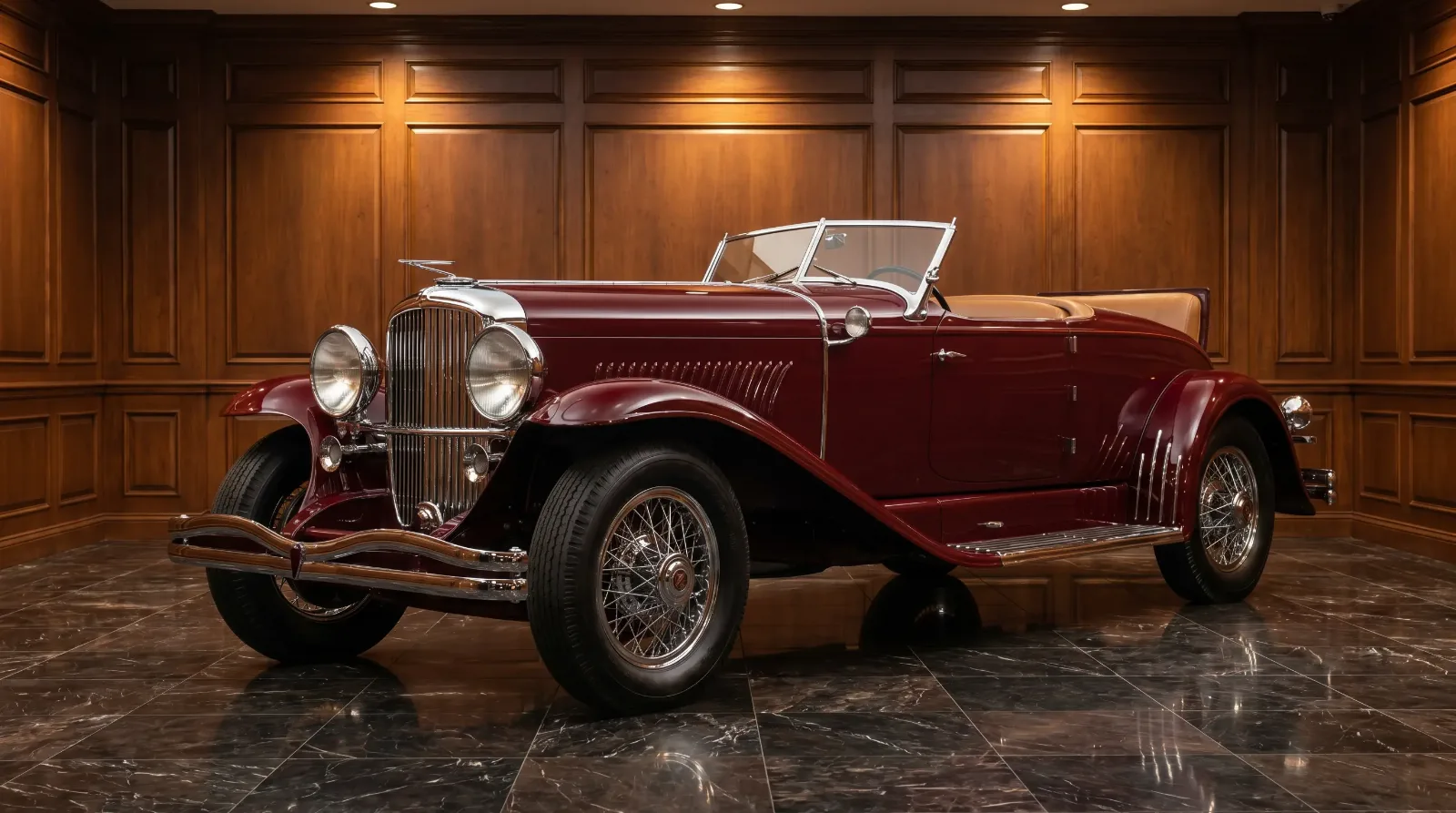
The Duesenberg Model J was unveiled at the New York Salon in December 1928. It arrived into a booming economy, months before the crash, and it was built to be the finest automobile in the world without much argument. The company behind it belonged to E.L. Cord, whose Auburn Automobile Company had brought in the Duesenberg brothers, Fred and August, to build something that would out-Rolls the Rolls.
They did. The Model J used a big twin-cam straight-eight, an engine rated at around 265 horsepower at a time when a good luxury car might make half that. It was fast, it was enormous, and it was expensive in a way that few Americans could imagine. Duesenberg sold the chassis. What went on top was up to the buyer and his coachbuilder.
Building a Duesenberg, one car at a time
Here is the part that still catches people. You did not walk into a showroom and drive out in a finished Model J. You bought the chassis, then you commissioned a body from a coachbuilder, a Murphy, a LeBaron, a Rollston, and waited while craftsmen built it to your specification. No two were quite alike. That is why surviving Duesenbergs are studied individually, almost like paintings, rather than as examples of a production run. If you want the wider setting, this is a good moment to see how the segment got here.
Total production was small. Something on the order of 481 Model J chassis were built across the whole run from 1928 into the late 1930s. From 1932 a supercharged version, the SJ, pushed output higher still, to around 320 horsepower, with the outside exhaust pipes that became one of the most recognizable details in American motoring.
| Spec | Duesenberg Model J |
|---|---|
| Introduced | New York Salon, December 1928 |
| Engine | Twin-cam straight-eight, ~420 cu in |
| Power (J) | Around 265 hp |
| Power (SJ, supercharged) | Around 320 hp |
| Bodywork | Coachbuilt to order |
| Approx. chassis built | 481 (1928 to late 1930s) |
A different America builds a club
Fast forward. The Duesenberg company was gone by 1937, taken down with the rest of Cord's empire. The war came and went. By the early 1950s the great prewar cars were just used cars, big, thirsty, and out of fashion, and a lot of them were scrapped. That is the moment a small group of enthusiasts decided somebody ought to protect them.
The Classic Car Club of America was founded in 1952. Its whole reason for existing was to recognize and preserve a specific category of car, and it needed a definition. The club coined the term "Full Classic," a distinctive or fine automobile from a defined era, and it drew up an approved list of makes and models that qualified. The era was eventually set as 1915 through 1948.
"The club did not invent the greatness of these cars. It just noticed, before it was too late, that nobody else was going to save them. Duesenberg was Exhibit A."
Patrick Walsh
Why Duesenberg anchors the definition
When the CCCA drew up its list, the Duesenberg Model J sat right at the top of it. Not every expensive prewar car made the cut, and the debates over what belongs on the Full Classic list can still get lively at a meet. But nobody argued about the Duesenberg. It was the car the whole idea was built to protect, the clearest example of what "Full Classic" was supposed to mean.
That is why the two things are so tangled together. You cannot really explain the CCCA's Full Classic without pointing at a Duesenberg, and you cannot fully appreciate a Duesenberg's place in the hobby without understanding the club that made it the reference standard. The idea and the object grew up defining each other. For the full sweep of how this all fits, there is the classic luxury car story.
The owners who made it a legend
Part of what cemented the Duesenberg was who drove one. The Model J was the car of movie stars and tycoons in the early 1930s, and the company was not shy about it. Gary Cooper and Clark Gable both owned short-chassis SSJ roadsters, two of the most famous Duesenbergs of all. The list of owners ran through Hollywood, Wall Street, and European royalty, and every one of them added to the aura.
That matters for how the car is remembered. A Duesenberg was not just expensive. It was the visible marker of having arrived at the very top, and the culture of the era treated it that way. The slang, "it's a duesy," did not come from nowhere. It came from a public that understood exactly what the car represented, even if almost none of them would ever sit in one.
What actually qualifies as a Full Classic
The club's list is more particular than people assume. Being old and expensive is not enough. The CCCA judges each make and model on its merits, and plenty of well-known prewar cars did not make the cut while others did. The approved roster leans toward the fine, distinctive, and often coachbuilt cars of the 1915 to 1948 window, which is why a Duesenberg qualifies without debate and a mass-market car of the same year does not.
This is the useful thing to hold onto. Full Classic is a defined category with a gatekeeper, not a loose compliment. The Duesenberg sits at the head of that category because it is the car the whole standard was built to honor.
The standard it set
The Model J did something lasting. It gave American collectors a yardstick, a car so clearly at the summit that everything else could be measured against it. Long after the marque died, that yardstick survived, first in the memories of the people who saw the cars new, then formally in a club's rulebook.
The prewar luxury field had other giants, and the one that arguably built the deepest and most durable American reputation is next. That story picks up with next: Packard's Rise to America's Premier Prewar Luxury Marque.
Related Reading
Have a
Classic Car
for Sale?
Reach thousands of serious classic car collectors across the US.
Sell It Here →
Are You a Classic Car Dealer?
List your full inventory and connect with targeted classic car buyers.
Join as a Dealer →

About the author
Patrick Walsh
Automotive journalist covering classic car shows, events, and the enthusiast community across North America.
More in History & Heritage
Comments
Be the first to comment on this article.