
By the mid-1950s both marques had learned the same lesson: the most powerful advertisement a luxury company could build was a single, flawless coupe that sat above the ordinary range and told buyers what the marque was capable of at its best. Cadillac built the Eldorado. Lincoln, or rather a special division created for the purpose, built the Continental Mark II. The two cars met in 1956, and they could hardly have argued their cases more differently.
History & Heritage
5 min read
Eldorado vs Continental Mark II: The Personal Luxury Coupe Duel
Eldorado vs Continental Mark II: Cadillac's finned showpiece against Ford's hand-built $10,000 loss leader. How the 1956 luxury coupe duel played out.
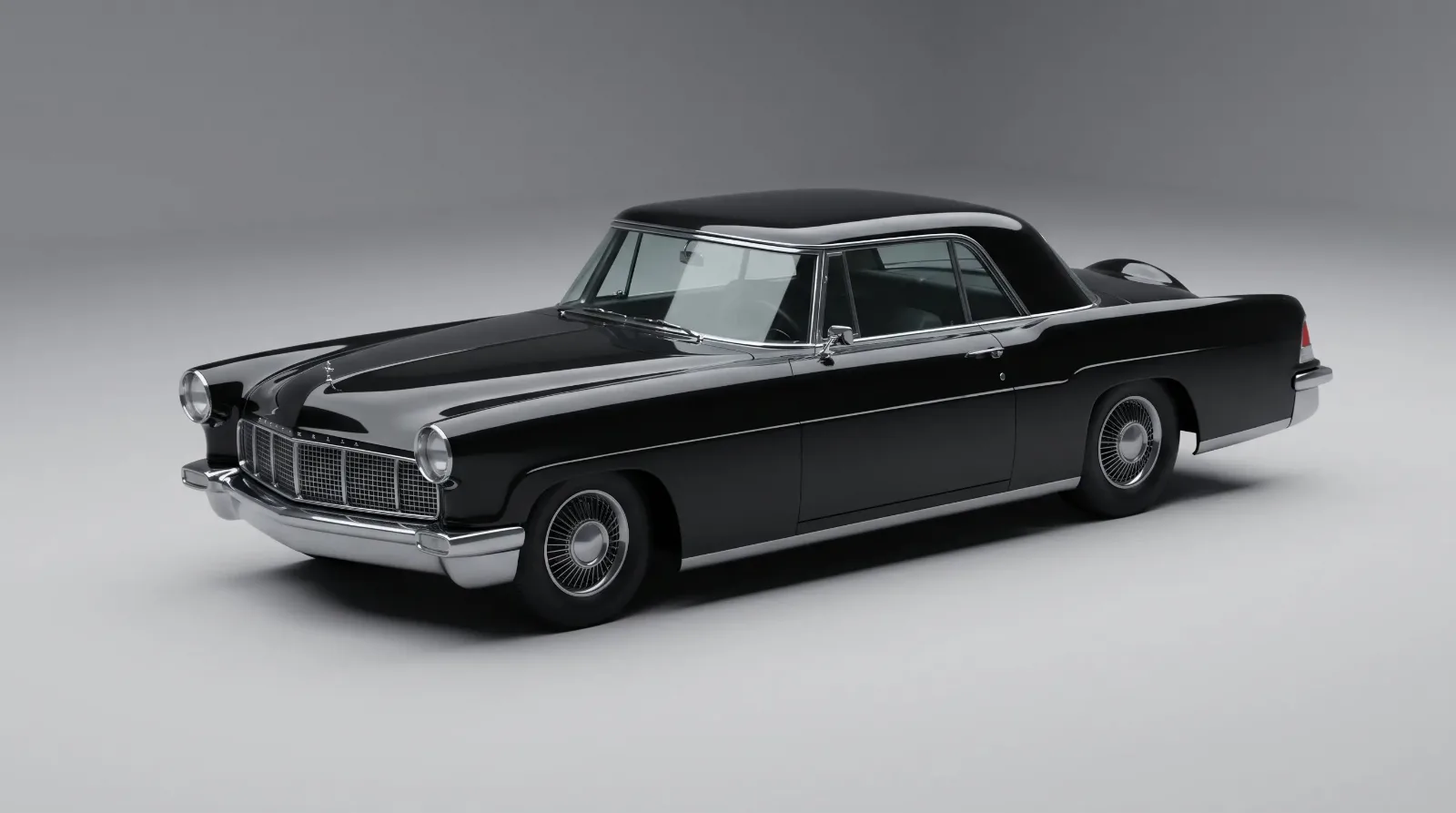
This was the sharpest single duel in the Cadillac vs Lincoln luxury war. One car shouted. The other whispered. One made money for its maker. The other lost it deliberately, as a matter of pride. Understanding why explains a great deal about how each company saw itself.
Two philosophies of the personal coupe
The personal luxury coupe was not about carrying people or hauling luggage. It was about presence. A buyer at this level already owned transportation. What they wanted was a statement, and the question each marque had to answer was what kind of statement to make. Cadillac chose abundance, chrome, fins, and visible richness. Continental chose restraint, the argument that true luxury does not need to announce itself. Both were valid readings of the American 1950s. They simply pointed in opposite directions, and the buyers who could afford either car tended to sort themselves by temperament as much as by budget.
The Eldorado, Cadillac's showpiece
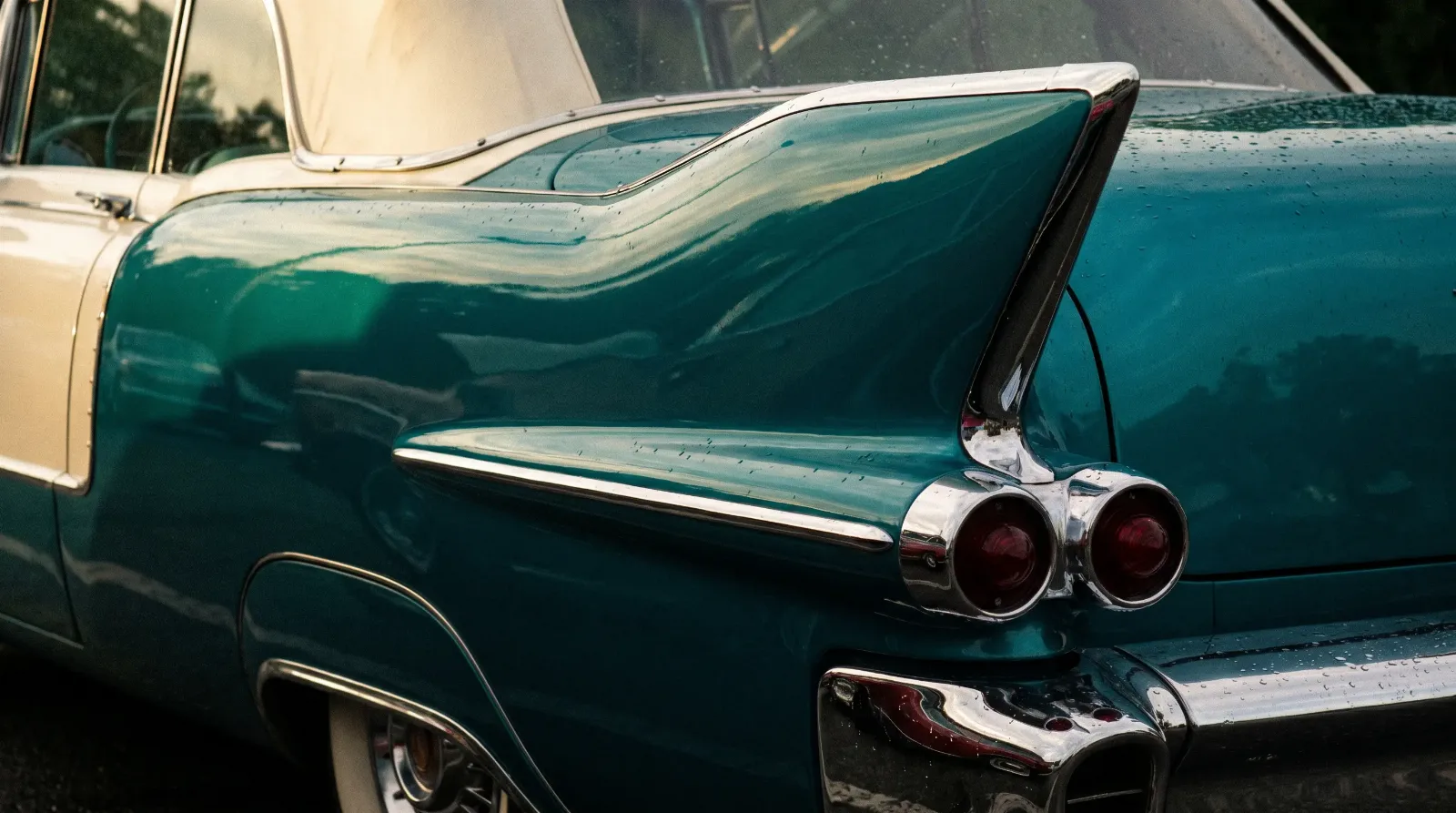
The Eldorado name arrived in 1953 on a limited, expensive convertible, only a few hundred built at a price near that of two ordinary Cadillacs. By 1956 the Eldorado had grown into a proper sub-range with two body styles, the Seville hardtop coupe and the Biarritz convertible. It carried Cadillac's 365 cubic inch V8, in dual-carburetor tune producing around 305 horsepower, and it wore the division's boldest styling, including the sharpening tailfins that would define the late fifties.
The Eldorado was flamboyant on purpose. It took every visual cue that said Cadillac and amplified it. And crucially, it was a profitable, repeatable product. Cadillac built the Eldorado in the thousands, priced it high but not ruinously so, and used it as a halo that buyers could actually aspire to reach. In 1956 the Seville and Biarritz together ran to roughly 6,000 cars, a large number for a car of this class.
The Continental Mark II, luxury without compromise
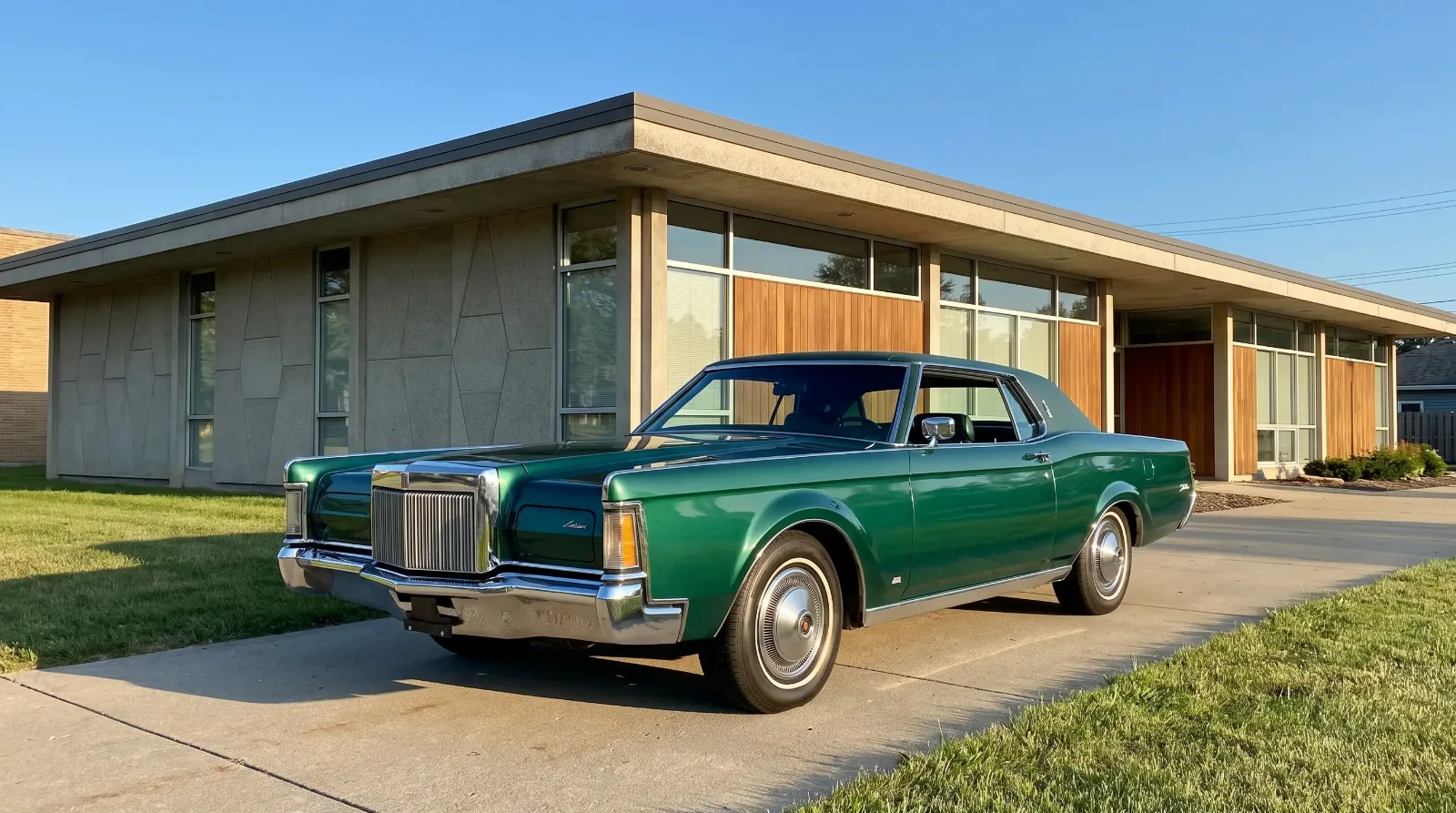
Ford's answer was of a different order. The Continental Mark II, launched for 1956, was not sold as a Lincoln at all. Ford created a separate Continental Division to build it, positioning the car as its own marque, a revival of the pure ideal Edsel Ford had established with the original Continental. The styling, overseen by a team that included John Reinhart and engineer Harley Copp, was deliberately clean, long and low with a restrained grille and almost no ornament, crowned by a subtly raised trunk that echoed the classic spare-tire hump without carrying a spare at all.
Where the Eldorado dazzled, the Mark II composed itself. It ran the Lincoln 368 cubic inch V8, but the engines were specially selected and balanced before installation, a level of preparation ordinary production never received. The interiors used leathers chosen from carefully inspected hides, some sourced from Scotland, and each car was road-tested and then finished by hand before shipping. This was a car built to a standard rather than a price, and the standard was extraordinarily high. Ford even shipped the cars in fitted covers rather than the usual transport wax, a small detail that signaled how the whole program was run.
Price, exclusivity, and the money problem
The commercial logic separated the two cars as much as the styling did. Cadillac priced the Eldorado to sell in volume and make a margin. Continental priced the Mark II beyond reach and accepted a loss on each one. That decision bought Ford enormous prestige and a car that has never left the front rank of American collectibles, but it was not sustainable, and the Mark II lasted only two model years, 1956 and 1957, with total production of roughly 3,000 cars across the run.
| Head to head, 1956 | Cadillac Eldorado | Continental Mark II |
|---|---|---|
| Body styles | Seville hardtop, Biarritz convertible | Hardtop coupe only |
| Engine | 365 cid V8, ~305 hp (dual quad) | 368 cid V8, ~285 hp, hand-balanced |
| Styling | Bold, finned, chrome-rich | Clean, restrained, minimal ornament |
| Approx. price | Around $6,500 | Around $10,000 |
| Approx. production | ~6,000 in 1956 | ~3,000 total, 1956-57 |
| Business result | Profitable halo | Prestige loss leader |
Which car won
The verdict depends on what you are measuring. As a business proposition, Cadillac won cleanly. The Eldorado made money, sustained itself for decades, and gave Cadillac a halo that ordinary buyers could actually reach. As an object, many collectors give the Mark II the edge. Its restraint has aged better than the Eldorado's exuberance, and its hand-built quality and tiny production give it a rarity the Cadillac cannot claim. The market reflects this split. Fine Mark IIs generally command more than comparable 1956 Eldorados, though both sit well within reach of a serious collector browsing the current classic luxury cars for sale.
"The Eldorado was built to be sold and the Mark II was built to be admired, and each succeeded completely at its own aim. Cadillac made a profit and a legend. Continental made a loss and a masterpiece. Judging them against each other misses that they were never really trying to win the same prize."
Sarah Whitfield
The Mark II's short life left the field to Cadillac for a few years, but Lincoln was not finished with the personal luxury coupe. When the Continental name returned to a coupe in the following decade, the duel resumed on new terms. Read on: next: Continental Mark III and IV vs Eldorado.
Related Reading
Have a
Classic Car
for Sale?
Reach thousands of serious classic car collectors across the US.
Sell It Here →
Are You a Classic Car Dealer?
List your full inventory and connect with targeted classic car buyers.
Join as a Dealer →
#automotive history
#personal luxury coupe
#Cadillac Eldorado
#Lincoln
#Continental Mark II
#1950s luxury

About the author
Sarah Whitfield
Third-generation classic car collector specializing in pre-war American and European coachbuilt automobiles. Researcher and concours enthusiast.
More in History & Heritage
Comments
Be the first to comment on this article.