
The paperwork changed before the hardware did. By the time a 1972 Chevelle buyer read a window sticker with a number thirty or forty percent lower than the 1970 equivalent, the engine underneath hadn't been gutted overnight. The compression had already come down a year earlier, and the rating system itself had just been rewritten. Understanding the second-generation story means understanding that 1971 and 1972 aren't a single cliff. They're two separate decisions, made for two separate reasons, that happened to land back to back.
History & Heritage
6 min read
Emissions Tightening 1971-72: The Slow Squeeze on Power
Why 1971-72 Chevelle big-block power numbers dropped fast, and how the gross-to-net rating switch changed what the window sticker really meant.
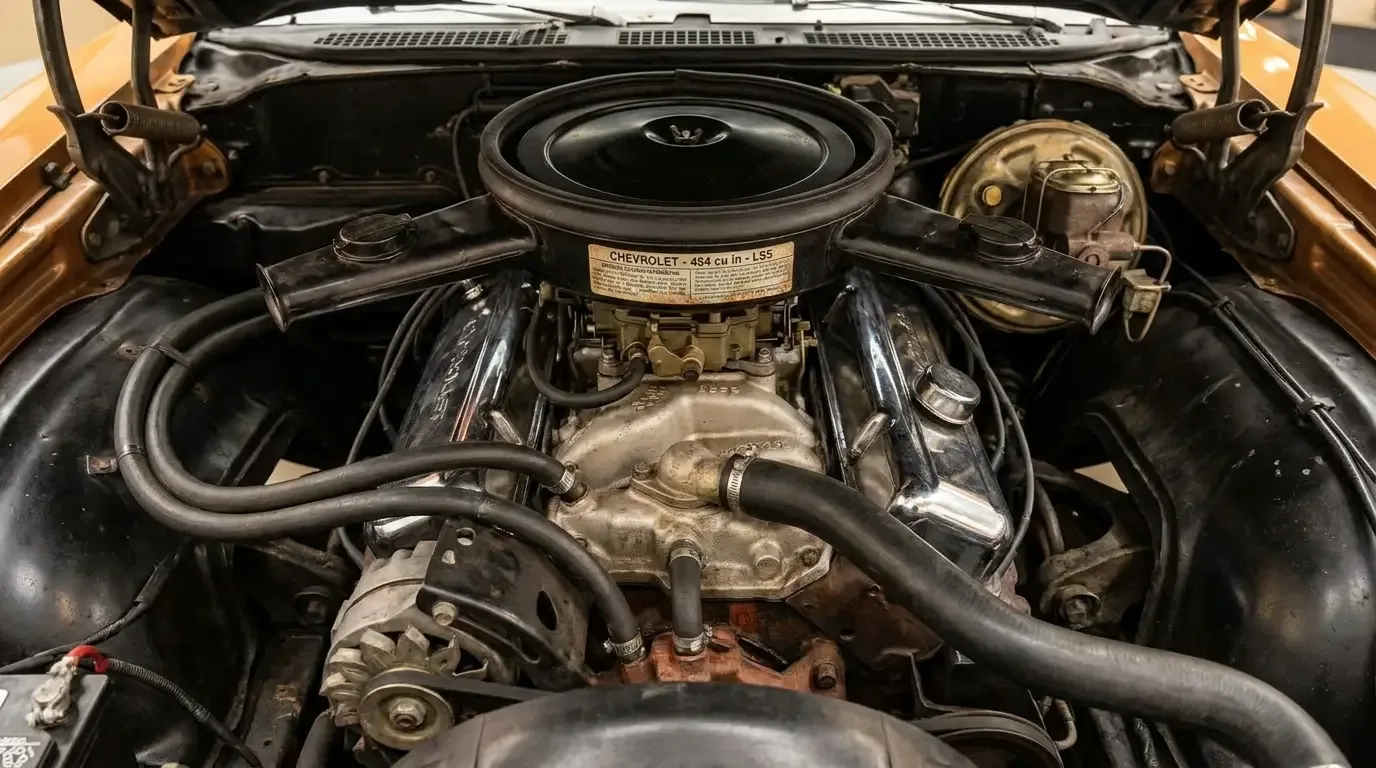
I've spent enough time with factory documentation on these cars to know that the "big block got weak" story people tell at swap meets skips the actual sequence. The compression drop and the rating change were not the same event, and conflating them is the single most common mistake I see in write-ups of this era.
Why compression dropped before anyone required a catalytic converter
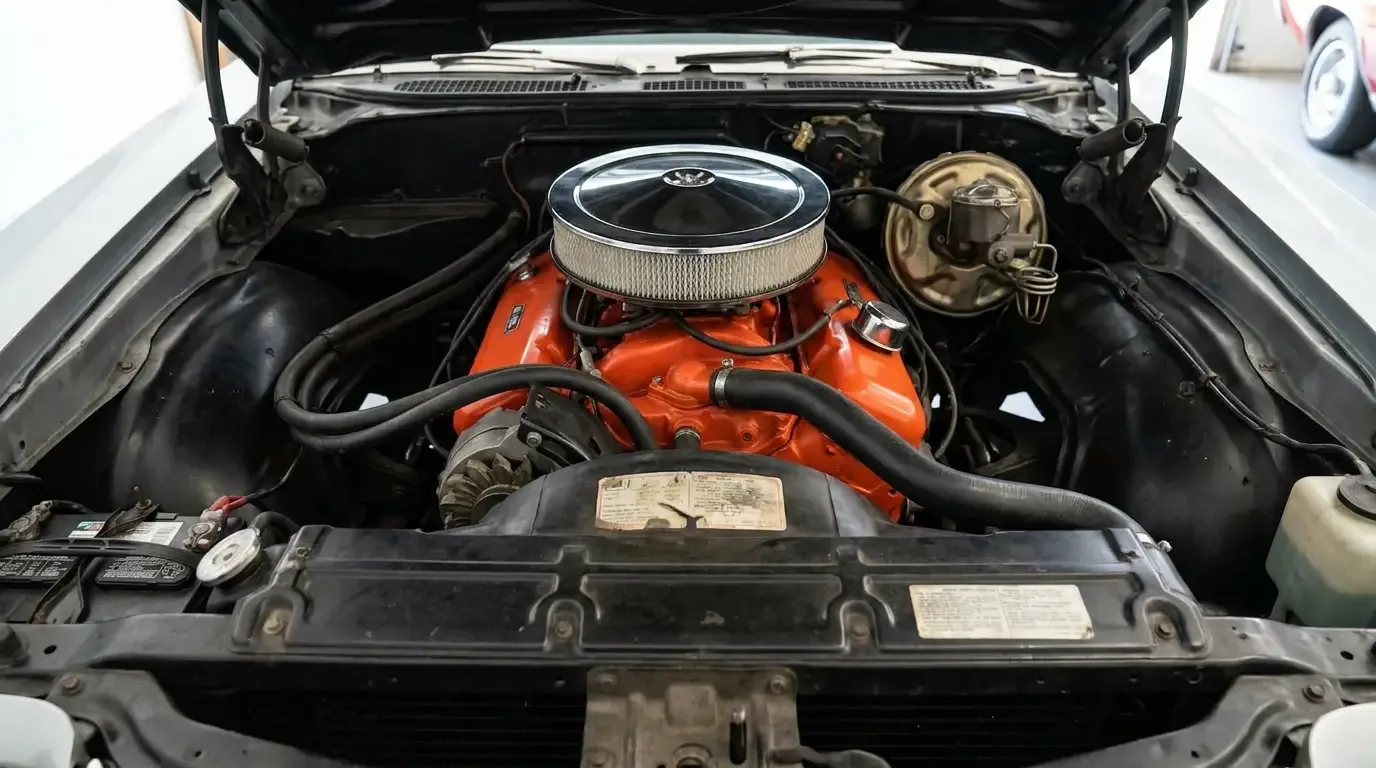
Catalytic converters didn't arrive on GM products until the 1975 model year, tied to the emissions standards written into the Clean Air Act Amendments of 1970. But converters need unleaded fuel to survive, and unleaded fuel needs low-compression engines to avoid pinging without it. GM's engineering answer arrived three years ahead of the hardware it was preparing for: starting with the 1971 model year, compression ratios across the entire lineup, Chevelle included, came down hard so the engines could tolerate the lower-octane, reduced-lead fuel that was already becoming standard at the pump.
The 396/402 big block, which had run around 10.25:1 compression in 1970 top-tune form, dropped to 8.5:1 for 1971. The 454 saw a similar cut, though not an identical one: the LS5 fell to 8.5:1, while the LS6, in its final Chevelle year, was set at 9.0:1. This wasn't a horsepower cut aimed at strangling muscle cars. It was a fuel-compatibility decision that happened to cut horsepower as a side effect, because compression and output are tied together at the crankshaft whether Chevrolet wanted that outcome or not.
1971: the unleaded-ready compression cut
1971 is the year the real mechanical change happened. The LS6 454, rated at 450 gross horsepower in 1970, came back for 1971 at 425 gross horsepower, its last year in the Chevelle lineup entirely. The LS5 454 actually rose from 360 gross horsepower in 1970 to 365 gross horsepower on paper for 1971, a small paper gain, which looks like it held steady until you account for the compression change underneath the number, plus the head-flow improvements Chevrolet made to claw the number back up. The SS396 (badged 402 cubic inches after a running-change in the small print, still called SS396 on the car) saw a comparable compression reduction.
The 1971 figures are still gross horsepower, meaning they were measured on a test stand without accessories, without a full exhaust system, and often with more optimistic dyno conditions than an installed engine ever sees. That matters for the next part of the story, because 1972 didn't just cut power again. It changed how power was measured.
1972: net horsepower and the paperwork illusion
For 1972, the entire domestic auto industry moved to SAE net horsepower ratings, measured with the engine installed as it would actually run: full exhaust, accessories, production air cleaner, the works. A 1972 LS5 454 Chevelle carried a rating of 270 net horsepower, a number that reads like a collapse next to 1970's 360 gross. Some of that drop is real. The compression cut from 1971 was still in effect, and 1972 saw further tuning changes aimed at emissions compliance. But a meaningful chunk of the gap on paper is measurement method, not lost mechanical output.
This is the detail that trips up people comparing spec sheets across this window without accounting for the switch. A gross-rated 1970 engine and a net-rated 1972 engine of similar actual displacement and state of tune can be closer in real-world output than the numbers suggest, even though the 1972 car is unquestionably the weaker combination once you factor in the compression reduction too.
What buyers get wrong about this transition
The most common error I run into is treating 1971 and 1972 as a single flat decline, as though Chevrolet just kept turning one dial down. They're two different engineering stories stacked on top of each other. 1971 is a compression story tied to fuel chemistry. 1972 is a measurement story tied to federal reporting requirements, layered onto a second year of the same reduced compression. If you're evaluating a car from either year, the build sheet and casting numbers matter more than the horsepower figure printed in a brochure, because the brochure number depends on which of those two changes you're comparing against.
There's also a documentation trap specific to 1972. Because the net rating made every engine look weaker, some sellers lean on gross-equivalent estimates to make a 1972 car sound more competitive with a 1970. Ask for the actual build sheet or window sticker language rather than accepting a converted number secondhand.
| Model year | Big-block option | Rating basis | Advertised output |
|---|---|---|---|
| 1970 | LS6 454 | Gross | 450 hp |
| 1970 | LS5 454 | Gross | 360 hp |
| 1971 | LS6 454 (last year) | Gross | 425 hp |
| 1971 | LS5 454 | Gross | 365 hp |
| 1972 | LS5 454 (sole big-block) | Net | 270 hp |
Reading the numbers on a build sheet today
None of this makes a 1971 or 1972 Chevelle a lesser car to own. It makes it a different car to evaluate, and that's the whole point of tracing the Chevrolet Chevelle story year by year instead of treating the whole run as one undifferentiated muscle-car block. The compression figures stamped into the casting and the engine code on the tag tell you more than any advertised horsepower number from either side of the gross-to-net divide. If you're cross-shopping a 1971 against a 1972, compare compression ratios and casting numbers first, then treat the printed horsepower figure as context rather than a verdict.
"The tank sticker matters. Not because it tells you everything, it doesn't, but because it's the factory's own record of what left the line. A 1971 or 1972 big-block Chevelle without its documentation isn't worthless, but you're negotiating on assumptions instead of facts."
Tom Ramirez
The squeeze on power across 1971 and 1972 wasn't a single event and it wasn't really about muscle cars specifically. It was the first visible result of fuel and emissions policy working through the entire product line, and the Chevelle happened to be one of the more dramatic places to see it land. Understanding why the numbers dropped the way they did is worth more than memorizing the numbers themselves. For where this fits into next: The Concours Wagon, the compression and rating changes covered here apply just as much to the family-hauler variants as they do to the SS-badged cars.
Sources and notes
- Heacock Classic, "The Ultimate Muscle Car: The 1970 LS6 Chevelle" (450 hp, 11.25:1 compression)
- Chevy Hardcore, "Bringing A Classic LS6 454 Back To Factory Specs" (1971 LS6, 425 hp, 9.0:1 compression)
- ClassicCars.com Journal, "Pick of the Day: 1971 Chevrolet Chevelle SS 454" (LS5, 365 hp, 8.5:1 compression)
- Automobile-Catalog, 1972 Chevelle SS 454 Sport Coupe specs (270 net hp)
- Muscle Car Club, "Chevy 396 & 402 Big Block Guide" (1971 402, 8.5:1 compression, 300 hp)
- U.S. EPA, Timeline of Major Accomplishments in Transportation and Air Pollution (1975 catalytic converter mandate, Clean Air Act Amendments of 1970)
Related Reading
Have a
Chevrolet Chevelle
for Sale?
Reach thousands of serious classic car collectors across the US.
Sell It Here →
Are You a Classic Car Dealer?
List your full inventory and connect with targeted classic car buyers.
Join as a Dealer →

About the author
Tom Ramirez
Corvette researcher and historian based in Bowling Green, Kentucky. Two decades documenting Corvette production history from original factory records.
Related Listings - Chevrolet Chevelle
More in History & Heritage

Comments
Be the first to comment on this article.